-260719-4-edited.png)
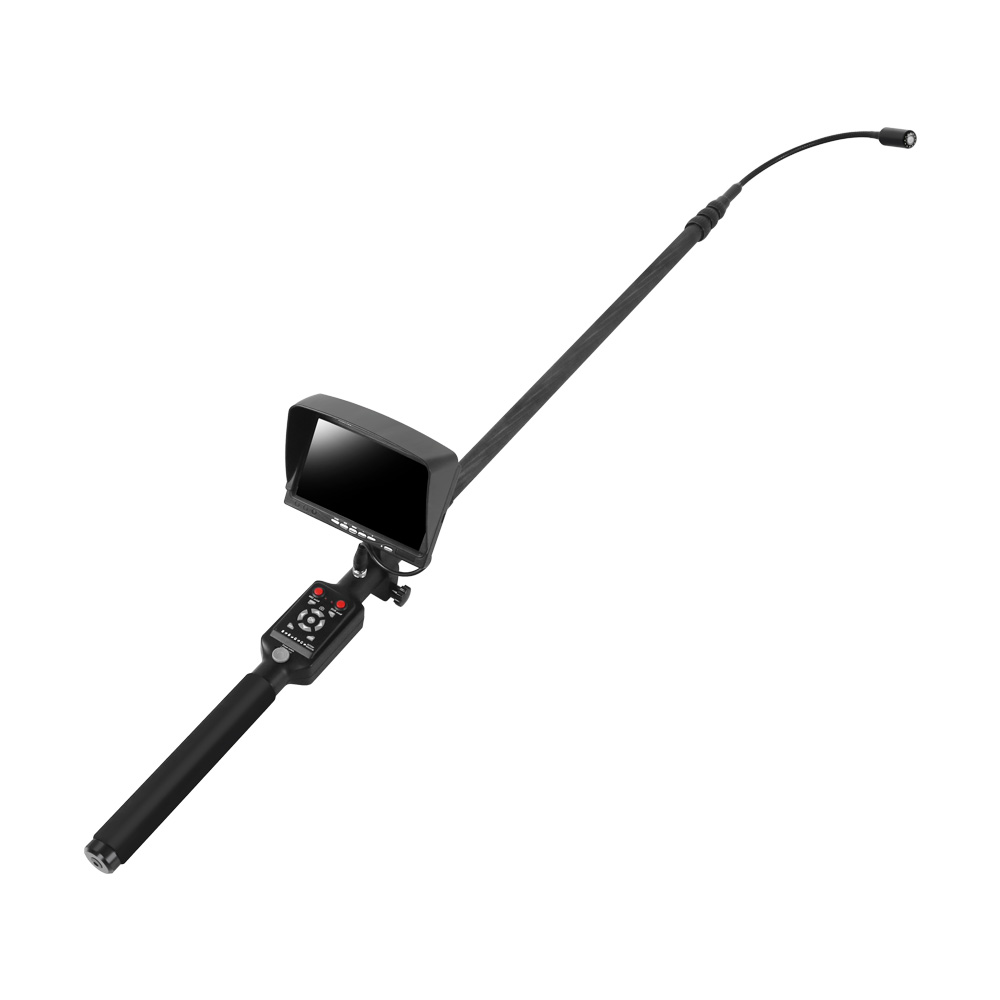
For manufacturers of NDT equipment, battery performance is not merely a supporting function. It directly affects signal stability, imaging clarity, operational uptime, and ultimately the credibility of inspection results. As NDT applications become more portable, field-oriented, and digitally connected, the limitations of generic battery solutions become increasingly evident.
This is why customized 18650 lithium-ion battery packs have become a strategic choice for NDT systems—and why Tefoo Energy approaches battery design as a critical part of the inspection system rather than a replaceable accessory.
NDT Equipment Operates Under Unique Technical and Operational Constraints
Unlike consumer or even general industrial devices, NDT instruments must deliver consistent performance under conditions that combine high technical sensitivity with real-world operational variability. Portable ultrasonic flaw detectors, handheld X-ray systems, eddy current testers, radiographic inspection units, and phased-array instruments are often used in environments where temperature, vibration, dust, and electromagnetic interference cannot be fully controlled.
In these scenarios, power instability does more than shorten runtime. It can introduce noise, distort signals, interrupt scans, or invalidate inspection data. A battery that behaves unpredictably becomes a hidden variable in a process that depends on repeatability and confidence.
Tefoo Energy designs battery solutions for NDT equipment by starting with a fundamental assumption: the battery must never be the reason an inspection result is questioned.
Why 18650 Cells Remain the Preferred Choice for NDT Systems
NDT equipment manufacturers value proven technology over experimental gains. The 18650 lithium-ion format remains widely adopted because of its mechanical robustness, predictable electrical behavior, and mature global supply chain.
Tefoo Energy uses Panasonic 18650 cells, known for their high energy density and exceptional stability. In NDT applications, stability is critical. Devices such as ultrasonic detectors or handheld X-ray machines rely on consistent power delivery to maintain signal strength, timing accuracy, and image resolution.
Equally important is lifecycle predictability. NDT equipment often remains in service for many years, sometimes decades. The maturity of the 18650 ecosystem reduces the risk of component obsolescence and supports long-term product continuity.
Safety and Compliance for Inspection Environments
Many NDT applications take place in safety-critical industries such as aerospace, oil and gas, energy, transportation, and heavy manufacturing. Battery safety is therefore not just an internal engineering concern—it is part of the overall risk profile of the inspection operation.
Tefoo Energy’s lithium-ion battery packs are designed to comply with CCC certification, as well as IEC 62133 and UN 38.3 standards. These certifications support safe transportation, storage, and deployment of NDT equipment across global markets.
Beyond formal compliance, the battery architecture integrates comprehensive safety protection mechanisms, including overcharge, over-discharge, overcurrent, overtemperature, and short-circuit protection. Multiple layers of safety redundancy ensure that even under abnormal conditions—such as field misuse or harsh environments—the battery remains stable and contained.
For NDT equipment deployed in confined spaces or hazardous locations, this layered safety approach is essential.
Stable Power for High-Precision Measurement and Imaging
NDT instruments often draw power in complex patterns. High peak currents may be required during signal transmission, imaging pulses, or X-ray emission, followed by lower-power monitoring or data processing phases. Generic battery packs not designed for these profiles may exhibit voltage sag, thermal stress, or accelerated aging.
Tefoo Energy addresses this by tailoring the battery pack’s electrical configuration to the specific duty cycle of the NDT system. The result is stable voltage behavior across operating modes, supporting consistent measurement accuracy and repeatable inspection results.
This stability is particularly important in portable and handheld NDT devices, where battery performance directly affects usability and inspection efficiency.
Intelligent Communication Between Battery and NDT System
Modern NDT equipment increasingly incorporates digital interfaces, data logging, and connectivity. In such systems, a battery that cannot communicate its status becomes a blind spot.
Tefoo Energy integrates a standard SMBus v1.1 interface, enabling the host NDT system to monitor battery temperature, state of charge, and operational health in real time. This allows the system to manage power proactively, schedule maintenance, and avoid unexpected shutdowns during inspections.
A high-precision fuel gauge ensures accurate power estimation, while an integrated LED SOC indicator provides immediate visual feedback for technicians during field operations, equipment checks, or maintenance procedures.
Charging Optimization and Long-Term Battery Health
NDT equipment is often charged in varied and sometimes suboptimal environments, including workshops, vehicles, or temporary field stations. Improper charging behavior can shorten battery life and compromise reliability.
Tefoo Energy applies JEITA charging optimization rules, dynamically adjusting charging parameters based on temperature conditions. This protects the cells from thermal stress and supports stable long-term performance.
An integrated balancing function ensures uniform behavior across all cells in the pack, effectively extending battery life. As a result, the battery retains up to 80% of its initial capacity after 500 charge cycles, enabling predictable maintenance planning and reducing lifecycle costs for NDT equipment operators.
Designed for Field Service and Lifecycle Management
NDT equipment must remain operational with minimal downtime. Tefoo Energy’s battery packs feature a finger-type metal interface and easy-to-disassemble design, allowing efficient servicing or replacement without extensive disassembly of the host device.
High-reliability construction and clear power visualization support practical field maintenance, ensuring that power-related issues do not delay inspections or compromise project timelines.
This service-oriented design aligns with the realities of NDT deployment, where access to specialized repair facilities may be limited.
Supporting a Wide Range of NDT Applications
Customized 18650 battery packs from Tefoo Energy are well suited for a broad range of NDT equipment, including ultrasonic testing instruments, radiographic inspection systems, handheld X-ray machines, eddy current detectors, phased-array inspection devices, and portable flaw detectors.
Across these applications, the battery’s role is consistent: deliver stable power, support precision measurement, communicate transparently with the system, and remain safe under demanding conditions.
Removing Barriers from Development to Deployment
NDT equipment programs often evolve from prototype validation to full-scale production and long-term field deployment. Tefoo Energy supports this progression by offering no minimum order quantity, available stock, and no development, mold, or certification fees.
This approach allows manufacturers to qualify a single battery solution early and carry it through the entire product lifecycle, reducing redesign risk and simplifying supply chain management.
Why NDT Equipment Manufacturers Choose Tefoo Energy
Tefoo Energy positions itself as a long-term partner for precision power solutions. By combining certified safety, Panasonic cell quality, intelligent system interfaces, robust mechanical design, and flexible supply models, the company helps NDT equipment manufacturers deliver reliable inspection systems with confidence.
In non-destructive testing, trust is built on consistency. A battery that behaves predictably becomes an invisible but essential contributor to accurate inspection outcomes.
FAQ – NDT Engineering & Deployment Perspective
Q1: Why is a customized battery important for NDT equipment?
Because NDT instruments have unique power profiles and accuracy requirements that generic battery packs are not designed to support reliably.
Q2: How does stable power affect inspection accuracy?
Stable voltage and current delivery reduce signal distortion, improve imaging clarity, and ensure repeatable measurement results.
Q3: Are certifications relevant for NDT battery solutions?
Yes. CCC, IEC 62133, and UN 38.3 compliance support safe deployment, transportation, and global market access.
Q4: How is long-term battery reliability ensured in field conditions?
Through Panasonic 18650 cells, JEITA-compliant charging, cell balancing, and multi-layer safety redundancy.
Q5: Can this solution support both portable and high-power NDT devices?
Yes. The battery architecture can be tailored to support a wide range of NDT equipment power requirements and duty cycles.