-260719-4-edited.png)
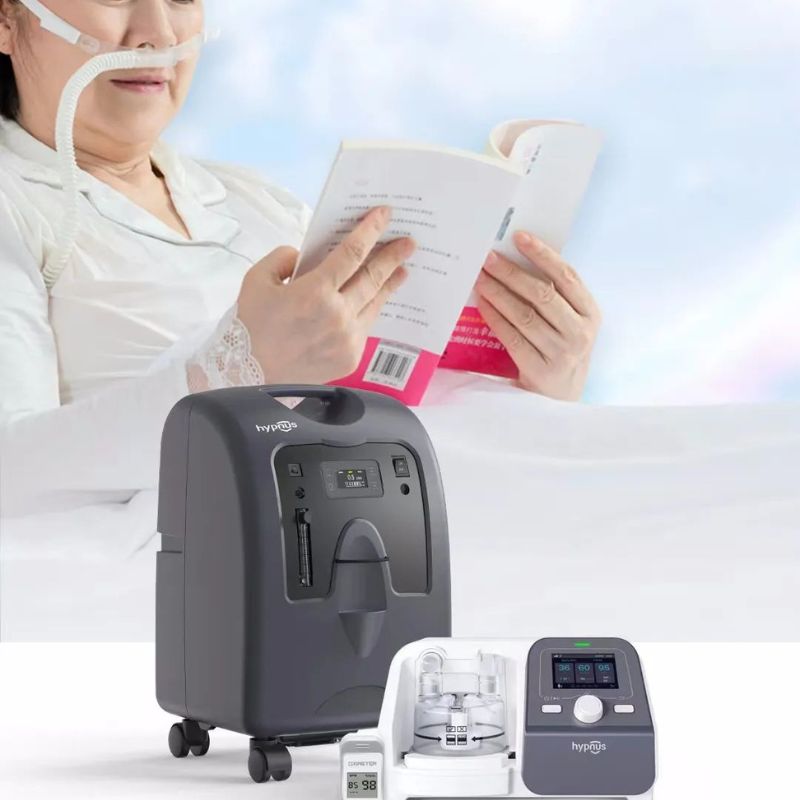
In respiratory care, power reliability is inseparable from patient safety. Ventilators are not auxiliary medical devices; they are life-sustaining systems that must operate continuously, predictably, and safely across a wide range of clinical and emergency scenarios.
In respiratory care, power reliability is inseparable from patient safety. Ventilators are not auxiliary medical devices; they are life-sustaining systems that must operate continuously, predictably, and safely across a wide range of clinical and emergency scenarios.
Whether deployed in intensive care units, emergency transport, home healthcare, or disaster response environments, ventilators must remain operational regardless of grid stability, mobility requirements, or charging availability. In this context, the battery is not a backup—it is an integral part of the system’s safety architecture.
This is why ventilator manufacturers increasingly rely on customized 18650 lithium-ion battery packs, designed specifically for medical-grade reliability, system integration, and regulatory compliance. Tefoo Energy approaches ventilator battery design as a system-level responsibility rather than a component selection exercise.
Ventilators Demand a Different Power Philosophy
Unlike many medical devices, ventilators cannot tolerate unexpected shutdowns, unstable voltage behavior, or ambiguous runtime estimation. Power interruptions directly affect therapy continuity and patient outcomes.
Ventilators also operate under diverse conditions. Some are stationary but must survive grid outages. Others are mobile, used during patient transport or in field hospitals. Charging conditions vary, duty cycles differ, and long-term reliability is mandatory.
A generic battery solution, optimized only for capacity or size, introduces unacceptable uncertainty. Tefoo Energy designs ventilator battery systems around continuous operation, predictable behavior, and clear system communication.
Why 18650 Cells Are Trusted in Ventilator Systems
Ventilator manufacturers prioritize stability, traceability, and long-term availability. The 18650 lithium-ion format remains widely adopted in critical medical systems because of its proven performance and mature global supply chain.
Tefoo Energy uses Panasonic 18650 cells, offering high energy density combined with exceptional stability. For ventilators, this stability ensures consistent airflow control, sensor accuracy, and system responsiveness over extended operation periods.
Equally important, the maturity of the 18650 ecosystem reduces lifecycle risk, supporting ventilator platforms that must remain in production and service for many years.
Safety and Certification as a Baseline Requirement
In respiratory care, safety is not a differentiator—it is a baseline expectation. Tefoo Energy’s ventilator battery packs are designed to comply with CCC certification, as well as internationally recognized standards such as IEC 62133 and UN 38.3, supporting global medical deployment and transport.
Beyond certification, the battery system integrates comprehensive safety protection functions, including overcharge, over-discharge, overcurrent, overtemperature, and short-circuit protection. Multiple layers of safety redundancy ensure that failures are isolated at the battery level and do not propagate into the ventilator system.
This approach aligns with the risk management expectations of modern medical device regulations.
📊 Table 1: Power Architecture Options for Ventilators
| Power Architecture | System Shutdown Required | Supports Continuous Ventilation | Typical Risk Profile |
| Fixed internal battery | Yes | No | Acceptable only for non-critical devices |
| Replaceable battery | Yes | Limited | Therapy interruption during replacement |
| Hot-swappable battery | No | Yes | Designed for life-sustaining systems |
For ventilators, this comparison makes one point clear: power architecture directly affects clinical risk.
Continuous Operation Through Hot-Swappable Design
Many modern ventilators require uninterrupted operation during battery replacement, particularly in transport, emergency, or ICU overflow scenarios. Tefoo Energy supports hot-swappable battery architectures, allowing depleted battery modules to be replaced without shutting down the ventilator.
This design decouples battery charging cycles from therapy continuity, ensuring that power availability never becomes a limiting factor in patient care.
Intelligent Communication Between Battery and Ventilator
Ventilators rely heavily on system awareness. The host device must know not only how much power remains, but also the health and thermal status of the battery.
Tefoo Energy integrates a standard SMBus v1.1 interface, enabling real-time communication between the battery and ventilator system. This allows the ventilator to monitor battery temperature, state of charge, and operational health continuously.
A high-precision fuel gauge ensures accurate remaining runtime estimation—critical for clinicians making decisions during transport or emergency care. An integrated LED SOC indicator provides immediate visual feedback during maintenance or battery replacement.
📊 Table 2: Battery-to-System Communication in Ventilators
| System Requirement | Why It Matters in Ventilators | Tefoo Energy Solution |
| Accurate runtime estimation | Prevents unexpected therapy interruption | High-precision fuel gauge |
| Thermal monitoring | Protects patients and electronics | Host-accessible temperature data |
| Immediate status recognition | Supports hot-swap operation | SMBus v1.1 interface |
| Clear service indication | Simplifies clinical maintenance | Integrated LED SOC indicator |
Optimized Charging for Clinical and Emergency Environments
Ventilators may be charged in hospitals, ambulances, temporary wards, or home settings. Temperature and power quality vary widely, increasing the risk of battery stress.
Tefoo Energy applies JEITA charging optimization rules, dynamically adjusting charging behavior based on temperature conditions. This protects battery cells from thermal stress and supports stable long-term performance.
An integrated balancing function ensures uniform cell behavior across the pack, extending service life and maintaining predictable performance. The battery retains up to 80% of its initial capacity after 500 charge cycles, supporting long-term clinical reliability.
Designed for Serviceability and Lifecycle Management
Ventilators are expected to operate reliably over long service lives. Tefoo Energy’s battery packs feature a finger-type metal interface and easy-to-disassemble design, enabling efficient inspection, replacement, or refurbishment when required.
This service-oriented design aligns with hospital maintenance workflows and reduces device downtime during routine checks or battery replacement.
📊 Table 3: Lifecycle and Operational Value for Ventilator Systems
| Aspect | Generic Battery | Tefoo Energy Ventilator Battery |
| Power continuity | Limited | Continuous |
| Battery replacement | Requires shutdown | Hot-swappable |
| Maintenance predictability | Low | High |
| Certification readiness | Project-dependent | Pre-aligned |
| Long-term availability | Uncertain | Stable 18650 ecosystem |
Application Scenarios in Respiratory Care
Customized 18650 battery packs from Tefoo Energy are suitable for a wide range of ventilator applications, including ICU ventilators, transport ventilators, emergency ventilators, home-care respiratory systems, and field-deployed medical units.
Across all these scenarios, the role of the battery remains consistent: support uninterrupted ventilation, communicate transparently with the system, and operate safely under all conditions.
Why Ventilator Manufacturers Choose Tefoo Energy
Tefoo Energy positions itself as a long-term energy partner for critical medical systems. By combining certified safety, Panasonic cell quality, intelligent communication, hot-swappable capability, and flexible supply models, the company helps ventilator manufacturers reduce risk while improving system reliability.
In respiratory care, power stability is patient safety. A well-designed battery system ensures that ventilation never depends on assumptions.
FAQ – Ventilator Battery System Perspective
Q1: Why is a customized battery necessary for ventilators?
Because ventilators have zero tolerance for unexpected power loss and require predictable, system-integrated behavior.
Q2: Is hot-swappable power really necessary for ventilators?
In transport, emergency, and high-acuity scenarios, hot-swap capability significantly reduces clinical risk.
Q3: How does accurate SOC estimation impact patient care?
It enables clinicians to make informed decisions and prevents unexpected therapy interruption.
Q4: Are certifications sufficient for global medical deployment?
CCC, IEC 62133, and UN 38.3 provide a strong foundation for international medical device compliance.
Q5: Can the same battery platform support multiple ventilator models?
Yes. Modular and customized design allows reuse across product lines with minimal redesign.