-260719-4-edited.png)
Applications of Ground Penetrating Radar
Building inspections often encounter issues such as missing blueprints or voids beneath surface layers. To determine structural configurations or identify potential hazards beneath surfaces, appropriate detection methods must be employed. Traditional destructive exploration techniques like manual cone probing and mechanical drilling are inefficient, yield limited conclusions, and cause structural damage. Therefore, it is essential to select inspection technologies that are non-destructive to port structures and offer high efficiency and speed.

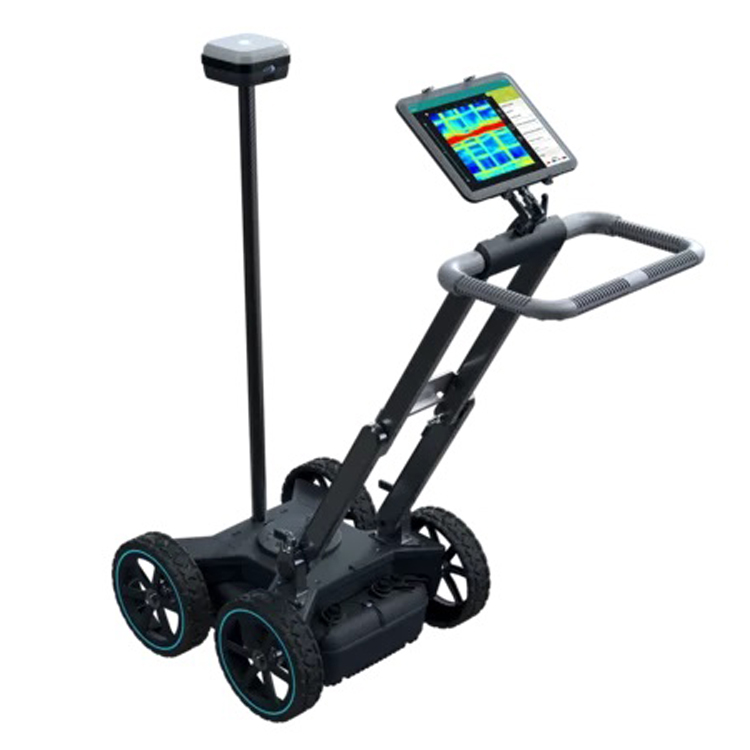
Ground-penetrating radar is a tool that uses electromagnetic waves to detect objects underground, enabling the acquisition of information such as the location, shape, size, and depth of subsurface materials without disturbing the surface. Due to its advantages of simple operation, high efficiency, rapid performance, and the ability to conduct large-area continuous scanning, ground-penetrating radar technology has found extensive application in multiple fields including hydrogeology, mining exploration, highway and railway construction, architecture, and municipal engineering.
Working Principle of Ground Penetrating Radar
At its core, ground penetrating radar technology operates on the principle of transmitting and receiving high-frequency electromagnetic waves. A transmitter antenna emits electromagnetic waves of varying frequencies into the target medium. These waves are reflected back and captured by a receiver antenna, thereby revealing the structure of the target object. Different materials exhibit distinct electromagnetic properties, specifically varying dielectric constants, which determine the differing propagation speeds of electromagnetic waves through these materials.
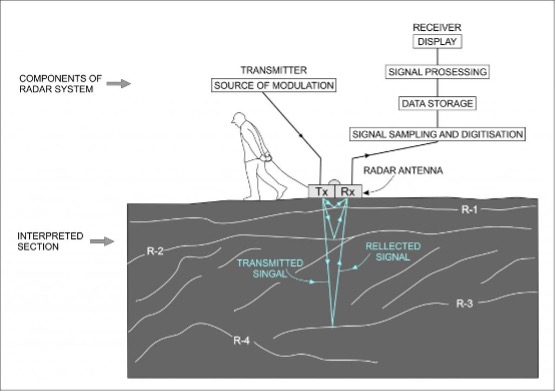
During the propagation of electromagnetic waves through a medium, reflections occur when encountering electrically dissimilar media (such as cracks, non-compact regions, voids, or different materials). By processing and analyzing the received electromagnetic waves, parameters like waveform, intensity, and bidirectional propagation time are used to infer the spatial location, structure, electrical properties, and geometric shape of the medium.
In nature, each material possesses distinct electromagnetic properties. Even identical materials exhibit varying electromagnetic reflection characteristics due to differences in moisture content and particle porosity. As electromagnetic waves propagate through subsurface media, continuous reflection and transmission occur, determined by the dielectric property differences between the target medium and surrounding materials. This process is accompanied by varying degrees of attenuation, reflected in the waveform characteristics.
Throughout the entire “transmission-emission-reception” process of electromagnetic waves, the subsurface medium can be regarded as a complex set of filters. After filtering, the transmitted electromagnetic waves exhibit amplitude changes, frequency reduction, phase shifts, and variations in reflection time. Finally, by interpreting and analyzing the kinematic and dynamic characteristics of these reflected waveforms, inferences about target objects can be made and structural models of subsurface materials can be established.
How to Choose Batteries for Ground Penetrating Radar?
Traditional field-based ground penetrating radar testers utilize lead-acid batteries as mobile backup power sources. However, due to inherent drawbacks such as low energy density, heavy weight, inefficient rate discharge, and non-environmental friendliness, lead-acid batteries no longer meet the backup power requirements of modern portable industrial instruments and equipment.
Lithium battery packs, with their unique advantages of high energy density, light weight, compact size, long cycle life, high safety, and excellent voltage consistency, have become the preferred replacement for lead-acid batteries across numerous industrial instrumentation fields.
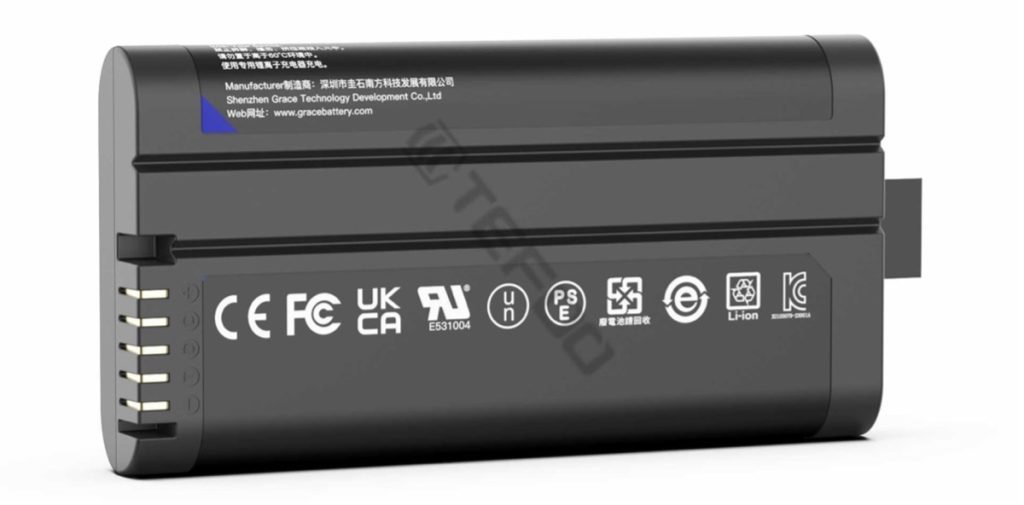
TEFOO Ground Penetrating Radar Lithium-Ion Battery Packs
1. Safe, stable operation with extended cycle life, aligning with low-carbon and eco-friendly values.
2. Integrated Battery Management System (BMS) with multi-level protection features.
3. Cell material utilizes Li-Ni-Co-Mn-O (ternary material).
4. All units incorporate genuine Panasonic cells as building blocks, ensuring battery pack consistency, stability, and safety.
5. Supports multi-parallel and multi-series configurations with modular battery intelligent design.