-260719-4-edited.png)

What is the IEC 62133 Certification Standard?
Behind every qualified lithium battery lies rigorous scrutiny through over 30 extreme environmental tests and hundreds of technical parameters. The IEC 62133 standard established by the International Electrotechnical Commission (IEC) has become the core technical specification for global lithium battery safety. From smartphones to power tools, from medical devices to drones, the battery safety of nearly all portable electronics relies on this standard.
With over 40 countries and regions—including the EU, Japan, and South Korea—adopting it as mandatory market access requirements, mastering IEC 62133 certification is not only about product safety but directly determines whether enterprises can unlock global market access.
IEC 62133-2:2017 is the most renowned export standard for lithium-ion batteries, covering those used in IT devices, GPS systems, wearables, smartwatches, Bluetooth devices, wireless sensors, tools, laboratory equipment, household appliances, and medical devices.
Simply put, IEC 62133 is a battery certification standard primarily focused on safety testing. Obtaining this certification demonstrates that your battery products are safe, high-quality, and reliable.
Development History of IEC 62133
In December 2012, the International Electrotechnical Commission (IEC) formally released the second edition of the international safety standard IEC 62133 for battery products: IEC 62133:2012 (ed2.0). This standard primarily addresses safety requirements for single cells and battery packs containing alkaline or non-acid electrolytes, as well as portable sealed single cells and battery packs (including lithium batteries, nickel-metal hydride batteries, nickel-cadmium batteries, etc.).
In February 2017, the International Electrotechnical Commission (IEC) formally released the international safety standard IEC 62133-2:2017 for lithium-ion battery products. This standard primarily addresses individual cells and battery packs, as well as portable sealed specialized batteries and battery packs containing alkaline or non-acid electrolytes (including lithium-ion polymer batteries, lithium-ion (Li-Ion) batteries, nickel-metal hydride batteries, nickel-cadmium batteries, etc.). The second edition will introduce significant changes related to lithium-ion batteries.
By 2025, regions such as the EU and Canada have mandated the 2017 edition. While the U.S. has not directly adopted it, the UL 2054 standard is highly aligned with this version.
| Test Project | Old version requirements | 2017 version update | Safety risk coverage |
| Cell external short circuit | 20±5°C environmental test | 55±5°C high-temperature environment test | Simulating high-temperature environment short circuit causing thermal runaway |
| Compression test | The shape variable reaches 50% or the pressure reaches 13 kN. | Precision Pressure Control (Prismatic electrode ≤400N, cylindrical <800N) | Avoid fire and explosion when the battery is mechanically compressed. |
| Overcharge test | Unified 2 times charging voltage | Grading Standard: Single cell 1.4 times (≤6V, multi-cell 1.2 times) | Prevent charger failure from causing overcharge explosion |
| Forced internal short test | No | New metal particle piercing test (mandatory in Japan, South Korea, Switzerland, and France) | Resolve the hidden short-circuit caused by manufacturing pollution |
Table 1: Main Updates and Safety Significance of IEC 62133-2:2017
IEC/EN 62133 Core Testing Content: Breakdown of 30 Rigorous Tests
The IEC 62133 testing framework simulates extreme scenarios a battery may encounter throughout its entire lifecycle from production to disposal, primarily categorized into three major types:
1. Electrical Safety Testing — Voltage and Current Death Boundaries
• External Short Circuit Test: Fully charged battery short-circuited at <0.1Ω resistance in a 55°C environment until temperature stabilizes for 1 hour post-cooling (must not ignite or explode)
• Overcharge Destruction Test: Continuous charging at 2× nominal voltage for 24 hours to assess overcharge protection circuit reliability
• Forced Discharge Test: Reverse discharge through a series-connected 12V power source to verify reverse connection resistance
2. Mechanical Strength Testing — Survival Challenges of Drops and Crushing
• 1-Meter Free Fall: Each of the 6 surfaces dropped once onto concrete or metal plate (6 drops total), requiring structural integrity with no leakage
• Compression Test: Cylindrical cells: 800N pressure (equivalent to an 80kg object crushing); Prismatic cells: 400N pressure applied until voltage drops to 50mV
• Vibration Test: 90-minute vibration at 10Hz-55Hz frequency range, simulating continuous mechanical stress during transportation
3. Environmental Adaptability Testing — Extreme Crossings from Arctic to Desert
• Temperature Cycle Shock: -70°C (4h) → 20°C (2h) → -40°C (4h) → 20°C (2h) per cycle, repeated 5 times consecutively. After completion, left undisturbed for 7 days to detect leakage.
• Low Pressure Simulation: Stored at 15,000 meters altitude (11.6kPa) for 6 hours to verify sealing integrity.
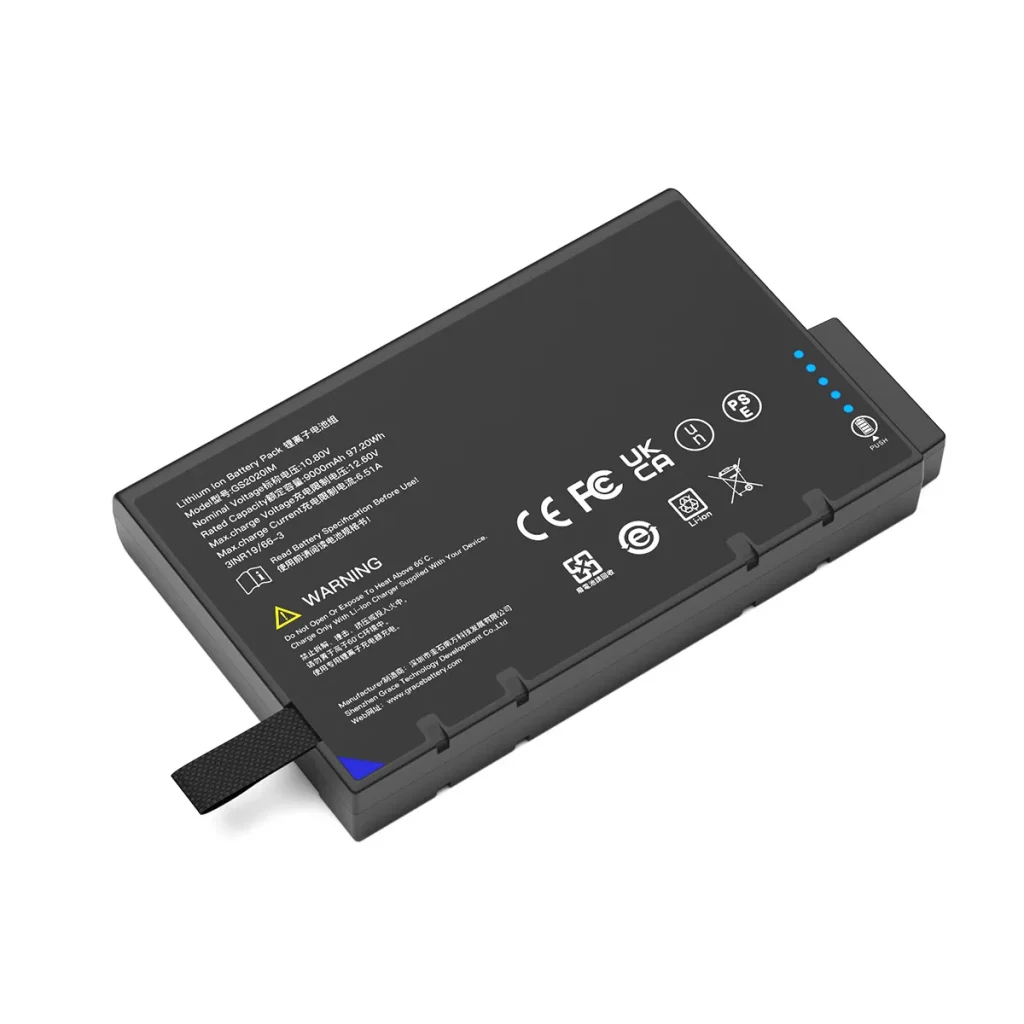
What other compliance certificates are required for the global lithium battery market?
1. European Union: Mandatory CE Certification
EN 62133-2:2017 is the mandatory battery standard for EU CE certification, particularly linked to the requirements of Annex M of EN 62368-2.
Additional 2025 Regulations: Must comply with the new EU Battery Regulation (EU) 2023/1542, including:
• Carbon Footprint Declaration
• Recycling QR Code
• Labeled Restriction of Hazardous Substances (Ca <0.002%, Pb <0.01%)
2. North America: UL Standards Synergy
• While not directly adopting IEC 62133, equivalent compliance is achieved through the following combinations:
• Cells: UL 1642 certification
Battery Packs: UL 2054 certification + UL 62368-1 (End-Use Equipment Standard)
Canada Specific Requirement: Must comply with CAN/CSA C22.2 No. 62133-2:20 (based on IEC 62133-2 with modifications)
3. Asia-Pacific Region: Localized IEC Implementation Certification
• Japan: Translated from JIS C 62133, requires PSE certification (with additional Japanese labeling requirements)
• South Korea: IEC 62133 reports enable fast-track KC certification, but Korean manuals are required.
• China: Aligns with GB 31241-2014 “Safety Requirements for Lithium-ion Batteries for Portable Electronic Products” and its technical specifications, plus the newly implemented CCC certification.
| Region | Trial Standard | Additional Requirements | Certification mark |
| European Union | EN 62133-2:2017 | Battery Passport (QR code), recycling identification | CE Certification |
| United States | UL 2054 + UL 1642 | Compliant with FCC Part 15B Electromagnetic Compatibility | UL symbol |
| Japan | JIS C 62133 (PSE) | Japanese warning label, local laboratory testing | Circular PSE |
| Korea | KC 62133 | Korean manual, localized packaging | KC Symbol |
Table 2: Differences in the Adaptation of IEC 62133 Across Major Markets
New Requirements for Solid-State Batteries and IoT
1. New Requirements for High-Energy-Density Batteries
• Silicon-based anode batteries: Added expansion force test (50 cycles at 200 kPa pressure in fully charged state)
• Solid-state batteries: Develop dedicated electrolyte leakage detection method (Current liquid electrolyte standards are inapplicable)
2. Certification Upgrades for Smart Batteries
IoT batteries with BLE/WiFi must meet:
• Cybersecurity: IEC 62443-4-2 protection (firmware tamper resistance)
• Wireless coexistence: ETSI EN 303 645 standard (signal interference resistance)
3. Accelerating Sustainability Compliance
• EU Battery Regulation Requirements:
Submit battery carbon footprint declarations starting 2027 Achieve 12%/4%/4% recycled cobalt/lithium/nickel by 2030
From Compliance Cost to Competitive Barrier
IEC 62133 has long transcended mere safety testing standards, evolving into a design philosophy for battery technology. Leading enterprises have integrated it into their product definition phase:
• When designing high-rate fast-charging batteries, optimizing separator ceramic coating thickness achieves a balance between safety and performance in compression testing;
• When developing low-temperature battery packs, leveraging temperature cycling test data to refine electrolyte formulations extends applicability to -40°C scenarios.
The global lithium battery market is projected to reach $180 billion by 2028, and IEC 62133 certification serves as the minimum entry ticket to this booming market. Companies that translate standard requirements into design language are transforming compliance costs into technological moats.
Because true safety is never merely about meeting lab standards—it’s about earning consumer trust.