-260719-4-edited.png)
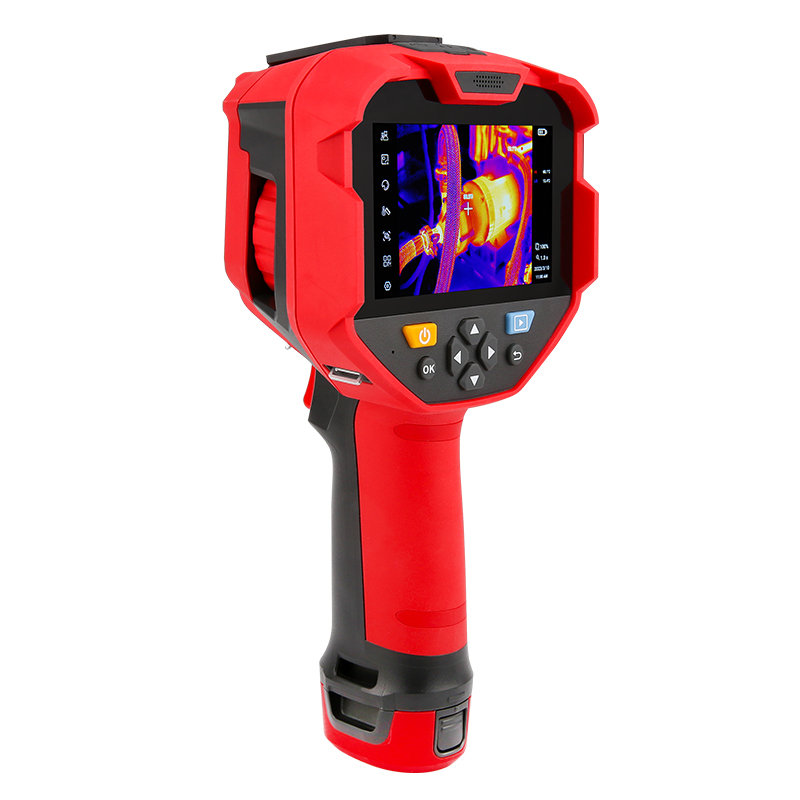
Infrared thermal imaging cameras utilize thermal imaging technology to assist firefighters in reconnaissance, search and rescue, and firefighting operations at disaster sites. Whether responding to fire incidents or emergency rescue situations, thermal imaging cameras provide firefighters with vision beyond the naked eye, making them an indispensable tool for professional firefighting operations. Proficient use of infrared thermal imaging cameras by firefighters enhances firefighting and rescue efficiency, enables anticipation of potential risks, and ensures the safety and effectiveness of fire rescue operations.
How Infrared Thermal Imaging Cameras Work
Every object in nature with a temperature above absolute zero (-273°C) constantly radiates heat outward. This radiant heat is emitted as infrared electromagnetic waves, which carry characteristic information about the object.
For instance, temperature variations. Infrared thermal imagers leverage this property: they use photoelectric infrared detectors to convert the power signals radiated from an object’s heated areas into electrical signals. An imaging device then processes these electrical signals, converting them into image signals transmitted to a screen. This yields a thermal image corresponding to the object’s surface heat distribution—the infrared thermal image we observe.
Thermal Imaging Components
Firefighting infrared thermal imagers consist of five components: optical system, infrared detector, amplifier, signal processor, and display. For firefighting applications, these devices typically feature explosion-proof, heat-resistant, waterproof, shockproof, and lightweight designs.
Rescue Scenarios for Infrared Thermal Imagers
1. Fire Reconnaissance
Reconnaissance primarily identifies the heat source and propagation path of combustion. This determines the initial room where the fire started, the specific location of the ignition point, and the direction of fire development and spread. It helps assess the stage of fire progression and establish the optimal attack route. Fire reconnaissance typically employs evaluation mode.
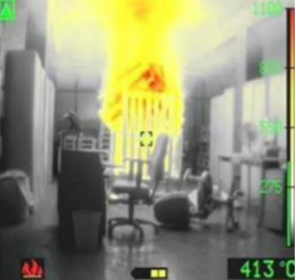
2. Use for Firefighting and Rescue Operations Inside Fire Scenes
Infrared imaging devices provide firefighters with clear visibility in environments with heavy smoke or low visibility, facilitating easier observation of conditions inside fire scenes. Primary applications within fire scenes include locating trapped individuals, identifying hidden hotspots, assisting with jet cooling operations, and finding escape routes.
In building fires, hidden combustion and smoldering often occur in numerous cavities such as suspended ceilings, insulation wall voids, and elevator shaft cable wells, making fire sources difficult to detect. If unnoticed, these can reignite. Utilizing fire detection and inspection modes enables rapid localization of concealed hotspots for precise suppression.
3. Traffic Accident Rescue Applications
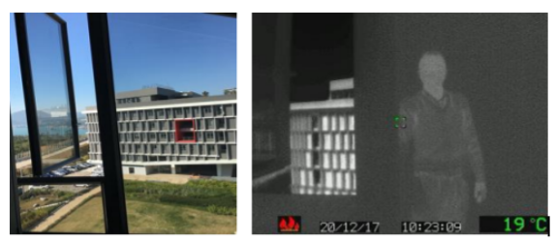
During vehicle accident rescues, particularly at night, the white-hot mode can detect hidden leaks of substances like fuel or hazardous chemicals. It helps determine the incident’s scope and scale, including the number of vehicles involved and their locations, as well as the positions of personnel and vehicles in low-visibility conditions such as darkness, snow, or fog. Additionally, it enables the identification of rescue personnel locations in low-visibility scenarios, facilitating effective on-site safety management.
4. Tank Capacity Detection
When uninsulated oil tanks and other containers are exposed to thermal radiation, the higher thermal mass of the stored substance compared to an empty tank creates a temperature differential. Thermal imaging cameras can easily determine the liquid level in storage tanks. They can also be used to inspect tank trucks and liquefied gas cylinders at fire scenes to assess explosion risks from hazardous sources.
At special disaster sites like petroleum and chemical plants, the presence of numerous storage tanks containing flammable substances makes them high-risk areas for disaster response. During fires at such facilities, collecting data on tank temperature and liquid level is crucial for commanders’ decision-making. The specific liquid level of petrochemical products and raw materials inside storage tanks cannot be directly observed with the naked eye. However, when these liquids are stored, a temperature difference occurs due to the greater heat capacity of the stored combustible liquid compared to the empty tank area.
How to Choose Batteries for Infrared Thermal Imaging Cameras?
Lithium-ion batteries are currently the most common type used in infrared thermal imaging cameras. They offer advantages such as high energy density, fast charging speeds, and low self-discharge rates, providing stable power support suitable for extended continuous use.
Select a battery with appropriate capacity based on the device’s power consumption and usage scenario. For example, devices used in high-intensity tasks like firefighting, rescue operations, or power line inspections should opt for larger capacity batteries (e.g., 5000mAh or higher). The TEFOO Standard Battery Pack GS2024HH, with its 6900mAh lithium-ion capacity, fully meets these demands, ensuring sustained operation in complex environments.
For devices primarily used in routine inspections or short-term applications, smaller-capacity batteries can be chosen to reduce overall weight. Ensure the battery’s voltage, interface, and dimensions are fully compatible with the infrared thermal imager. Different thermal imager models may require specific battery specifications; always refer to the device manual or manufacturer’s recommended battery model.
Prioritize well-known brands and certified batteries to ensure performance, safety, and longevity. High-quality batteries typically offer superior charge/discharge cycle counts and stability, reducing the risk of device downtime due to battery failure.
Pay attention to charging methods and duration, adhering to the device manual’s charging requirements to avoid overcharging or over-discharging. When not in use for extended periods, remove the battery and recharge it periodically to prevent degradation. If battery replacement is necessary, select a replacement with identical specifications to the original battery or a certified third-party battery to ensure compatibility and performance.