-260719-4-edited.png)
What is a sound level meter?
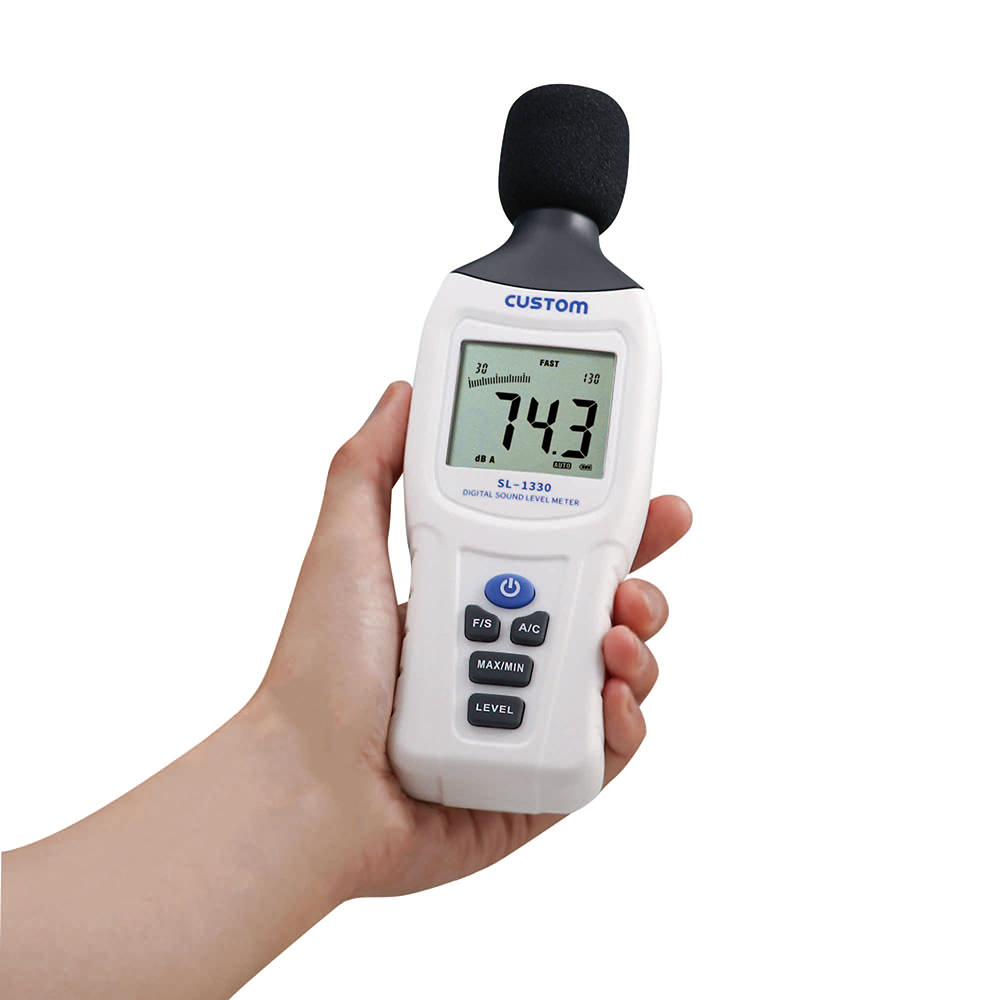
A sound level meter (SLM) is an instrument (typically handheld) used to measure sound levels in a standardized manner. It responds to sound in a manner similar to the human ear and can objectively measure sound pressure levels.
Sound level meters can be used to measure and manage noise from various sources, including factories, road and rail traffic, and construction projects. Beyond typical urban settings like sporting events, outdoor concerts, recreational parks, and residential/commercial districts, numerous distinct sound sources exist, each possessing unique characteristics.
How does a sound level meter work?
A sound level meter consists of a microphone, preamplifier, signal processor, and display. The microphone converts sound signals into equivalent electrical signals. The most suitable microphone type for sound level meters is the condenser microphone, which offers high precision, stability, and reliability. The electrical signal produced by the microphone is very weak, so it is first amplified by a preamplifier before being processed by the main processor.
Signal processing includes frequency weighting and time weighting of the signal according to international standards (e.g., IEC 61672-1, which sound level meters comply with).
Time Weighting
Time weighting refers to how a sound level meter responds to changes in sound pressure. It provides an exponential average of the fluctuating signal, yielding easily readable values. This analyzer employs fast, slow, and impulse (or “F,” “S,” and “I”) time weightings, which are required by most international and national standards. Environmental assessment standards typically specify which time weighting to use.
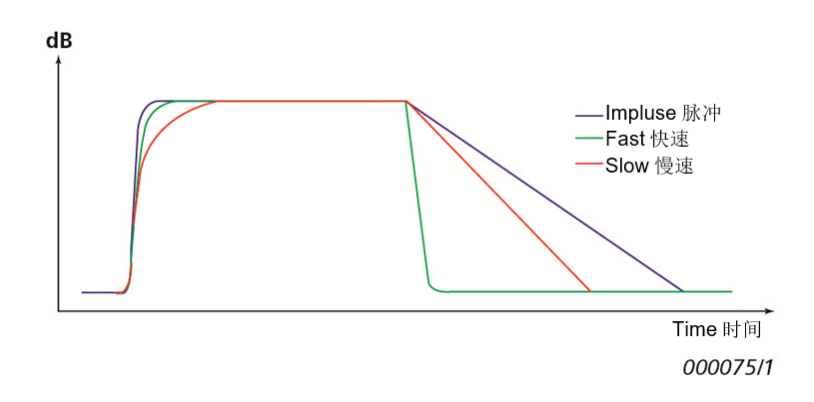
The signal is processed through a weighted filter, displaying the sound pressure level on the analyzer screen in decibels (dB) relative to a reference value of 20μPa. The sound pressure level value is updated at least once per second.
In short, evaluating fluctuating noise levels means obtaining an average sound level value. Globally, the “equivalent continuous sound level” Leq is recognized as the fundamental averaging parameter. Leq represents the amount of energy within the measured fluctuating sound pressure levels, remaining stable throughout the measurement period. It quantifies the average energy under varying sound levels.
Although extensive research indicates a strong correlation between Leq and annoyance levels, it is not a direct measure of annoyance. Leq can be measured directly using the most professional sound level meters (sometimes called integrating sound level meters). When using an A-weighting filter, it is denoted as LAeq, representing the measurement of the equivalent continuous sound level through an A-weighting filter.
Frequency Weighting
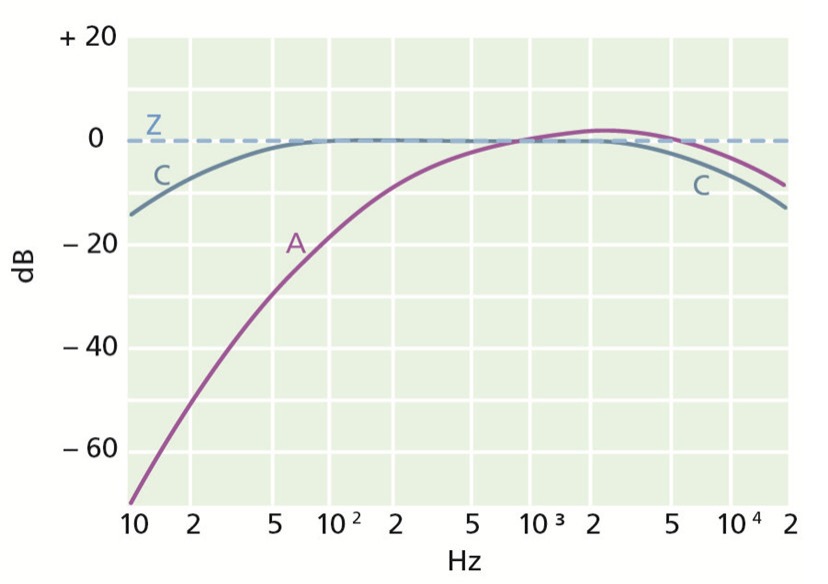
Frequency weighting adjusts how a sound level meter responds to different sound frequencies. This is necessary because human ear sensitivity to sound varies with frequency. IEC 61672-1 defines frequency weightings A, C, and Z, though other weightings are occasionally used in specialized applications.
A-weighting – dBA/dB(A)
A-weighting adjusts signals to mimic the human ear’s response at moderate sound levels. It is based on the 40dB equal-loudness contour. Noise parameters typically include the letter “A” (e.g., LAeq) to indicate that frequency weighting is incorporated in the measurement.
A-weighting is required for nearly all environmental and workplace noise measurements, as specified in international and national standards and guidelines. The A-weighting filter covers the entire audio range from 10Hz to 20kHz.
C-Weighting – dBC/dB(C)
Human ear response varies with sound level. C-frequency weighting corresponds to the 100dB isopleth curve, representing human ear response at considerably high sound levels. C-weighting is primarily used to evaluate peak sound pressure levels. It can also be used for measuring entertainment noise, though low-frequency noise transmission may pose challenges.
Z-Weighting – dBZ/dB(Z)
The “zero” frequency weighting provides a flat frequency response between 10 Hz and 20 kHz ±1.5 dB, excluding the microphone’s inherent response.
Today, the A-weighting network is the most widely used frequency weighting. C-weighting has limited relevance to subjective testing because the equal-loudness contours were derived from experiments using pure tones: most everyday sounds are not pure tones but highly complex signals composed of many different tones.
Battery Maintenance for Sound Level Meters
When using a sound level meter, observe the following precautions: Ensure the battery terminals are not reversed. Remove batteries when the meter is not in use for extended periods to prevent corrosion from battery leakage. Replace batteries promptly when voltage becomes insufficient during operation.
As the sound level meter is battery-powered, verify that the battery voltage meets requirements. Set the meter switch to the “Battery” position and the “Attenuator” to any setting. The meter reading should fall within the rated battery voltage range; otherwise, replace the batteries. When installing batteries or connecting an external power source, pay close attention to polarity. Never reverse the battery polarity.
Daily Maintenance Tips for Sound Level Meters
1. Keep the instrument’s exterior clean;
2. Store the microphone in a dry place when not in use;
3. Keep the microphone diaphragm clean and avoid touching it with your hands;
4. Remove batteries promptly after use. For long-term storage, power on the device for 2 hours monthly. During rainy seasons, power on for 2 hours weekly;
5. Send the device for calibration by a metrology department periodically.