
By the R&D Engineering Team, TEFOO Energy | November 2026
1. Introduction: Why the Right OEM Battery Determines Your Monitor’s Clinical Reliability
Portable patient monitors are the frontline of continuous vital-sign monitoring in emergency rooms, intensive care units, ambulance transport, and ward rounds. Unlike fixed bedside monitors that draw mains power, these devices rely entirely on their internal lithium-ion battery packs to maintain uninterrupted ECG, SpO₂, NIBP, and temperature readings during patient transfer and power outage. A battery failure is not merely an inconvenience — it can interrupt critical waveform data and directly compromise patient safety.
The global medical device battery pack market reached approximately USD 2.37 billion in 2026 [2], with the ECG/patient monitor lithium battery segment alone valued at roughly USD 808 million [3], growing at a double-digit pace driven by portable and wearable monitoring trends. Medical-grade lithium-ion cell demand is projected to expand from USD 313 million in 2026 to USD 686 million by 2035 (CAGR 9.1%) [1]. For medical equipment manufacturers, selecting an OEM rechargeable battery supplier is therefore not a commodity sourcing decision — it is a clinical-safety and regulatory decision that shapes product reliability, service revenue, and time-to-market.
This guide, written from the perspective of a battery-pack R&D engineer who has designed smart packs for dozens of patient-monitor OEM programs, walks you through the technical requirements that matter, the real trade-offs between supplier categories, and the criteria your team should use when evaluating a patient monitor battery supplier for medical equipment manufacturers.
2. Core Technical Requirements for Patient Monitor Battery Packs
2.1 Safety Standards and Regulatory Compliance
Medical lithium-ion packs must satisfy a layered set of standards — cell-level safety, transport safety, end-product EMC/electrical safety, and regional market access. The following table summarizes the standards that a credible OEM supplier should already hold or support:
Table 1. Key Standards and Certifications for Patient Monitor Battery Packs (2026)
| Standard / Certification | Scope | Why It Matters for OEMs |
| IEC 62133-2 | Safety requirements for portable sealed secondary lithium cells and batteries | Baseline cell/pack safety recognized by IEC; required by most CB and IECEE schemes |
| UN38.3 | Transport safety: altitude, thermal, vibration, shock, short circuit, impact, overcharge | Mandatory for air, sea, and land shipment of lithium batteries globally; test summary must ship with each lot |
| IEC 60601-1 / 60601-1-2 | Medical electrical equipment: general safety and EMC | End-product standard; the battery pack must not introduce unsafe voltage, leakage current, or EMC emission |
| ISO 13485 | Medical device quality management system | Critical for traceability, change control, and audit support during your FDA / NMPA / CE technical file review |
| UL 2054 / UL 62133 | US market battery safety certification | Required by UL-listed medical device OEMs and by many US hospital GPO procurement specifications |
| CE / UKCA / FCC / PSE / CCC | Regional market access marks | A global-ready pack saves you from re-certifying the end device for each region |
| EU Battery Regulation 2023/1542 | EU battery sustainability, labeling, carbon footprint, and battery passport | Phased application from 2024 through 2027; an experienced supplier will already design for recycled-content and documentation obligations |
In practice, we see many medical OEMs defaulting to consumer-grade cell vendors that hold IEC 62133 but lack ISO 13485-controlled production. That mismatch becomes painful during a Notified Body audit: auditors expect a documented battery-supplier approval process, incoming inspection reports, and change notification agreements — not just a test report sheet.
2.2 Smart BMS and SMBus Communication
Modern patient monitors are no longer fed by a dumb voltage source. They expect a smart battery that negotiates charging, reports fuel gauge data, and flags faults over SMBus (System Management Bus, based on I²C at up to 100 kHz). A medical-grade SMBus v1.1 pack should expose at minimum:
- State of Charge (SOC) accuracy within ±3% — the monitor’s battery icon and low-battery alarm depend on it.
- State of Health (SOH) and cycle count, enabling predictive replacement before degradation affects runtime.
- Pack voltage, pack current, and individual cell temperature for thermal monitoring near the patient.
- Charge/discharge FET status and fault codes (over-voltage, under-voltage, over-temperature, short circuit).
- Manufacturer name, device chemistry, and serial number for asset management and recall traceability.
From an engineering standpoint, the BMS is the real safety device. Cells are the fuel; the BMS is the guardian. A medical-grade BMS must implement passive or active cell balancing, back-to-back MOSFET protection (so a single FET failure cannot disable either charging or discharging), redundant second-level protection — typically a resettable fuse or thermal fuse — and under-temperature charge lockout to prevent lithium plating in cold-climate ambulance use.
2.3 Runtime, Cycle Life, and Energy Density
A typical 12.1-inch portable patient monitor draws 40–80 W during continuous operation. The OEM battery pack is therefore usually a 10.8 V / 11.1 V (3S1P) or 14.8 V (4S1P) configuration with 2500–5200 mAh, delivering 2–5 hours of runtime on a single charge. Design targets we commonly commit to with monitor OEMs include:
- ≥ 500 full charge-discharge cycles at 25°C, retaining ≥ 80% initial capacity.
- Operating temperature: 0–55°C discharge, 0–45°C charge (hospital-grade; ambulance-grade extends to -20°C with derating).
- Storage: 12 months at 40–60% SOC and 23°C, with self-discharge under 3% per month.
- Weight target: under 450 g for a 3S2P 5200 mAh pack, so the monitor remains carry-friendly during ward rounds.
2.4 Mechanical and Environmental Design
Patient monitors are dropped, disinfected, and exposed to varying humidity. The pack enclosure must be UV-stable PC/ABS compatible with hospital-grade disinfectants (CaviWipes, 70% isopropyl alcohol, hydrogen peroxide wipes), carry a UL94 V-0 flame-retardant rating, and meet the monitor’s IEC 60601-1 mechanical drop and enclosure-discharge tests. Connector choice — blade, JST, or custom — must also be keyed to prevent reverse insertion, and contact plating should be gold over nickel for low-resistance contact over 5 years of mating cycles.
3. OEM Battery Supplier Landscape: Comparing the Four Categories
When medical equipment manufacturers search for a patient monitor battery supplier, they typically encounter four types of vendors. Each has a distinct value proposition and risk profile. The table below compares them along the dimensions that matter most to an OEM program manager.
Table 2. Comparison of Patient Monitor Battery Supplier Categories (2026)
| Dimension | A. Consumer Cell Trader | B. Standard Battery Pack Maker | C. Medical-Grade OEM Pack Developer | D. Large Tier-1 (e.g. Tadiran, Vitzrocell) |
| Typical MOQ | 50–500 pcs | 500–2,000 pcs | 500–5,000 pcs (NPI-friendly) | 5,000–50,000+ pcs |
| ISO 13485 QMS | No | Sometimes | Yes, with audit support | Yes, full medical-grade |
| SMBus / Smart BMS design | No, dumb packs | Limited, off-the-shelf | Custom firmware, register mapping, host-side driver support | Full custom, long lead time |
| Regulatory documentation | Test reports only | Partial; may have gaps in the technical file | Full technical file: IEC 62133, UN38.3, CB, ISO 13485, DoCs | Full but expensive and slow |
| Cell selection flexibility | Whatever is in stock | 1–2 brands | Panasonic, Samsung SDI, Murata, EVE, LG—matched to your cost/SA goals | Own cells or restricted list |
| NPI / prototype lead time | 1–2 weeks | 4–6 weeks | 2–4 weeks for EVT, 8–10 weeks for DVT | 16–24 weeks |
| Unit price at 5k pcs | Lowest | Low–Medium | Medium (premium for QMS and engineering) | Highest |
| Best fit | Replacement / aftermarket | Non-critical portable devices | Patient monitors, ventilators, infusion pumps — medical OEMs | High-volume, well-funded Class III device programs |
| Common pitfalls | No traceability, safety recalls, transport holds | BMS firmware bugs discovered late; weak audit support | Must verify actual medical track record, not just marketing | Minimum order kills mid-volume programs; slow response |
3.1 What We Observe as Practicing R&D Engineers
After supporting more than a dozen patient-monitor OEM launches, the patterns are consistent. Class A traders occasionally win a first quote on price but almost always lose the program after the first regulatory audit — they cannot produce a controlled BOM, an incoming-inspection record, or a cell-datasheet traceability chain. Class B pack makers can build good hardware but often treat SMBus firmware as an afterthought; we have seen field returns where the host monitor reported 0% SOC while the pack was actually at 40%, because the fuel-gauge algorithm was never tuned to the host’s discharge current profile.
Class C medical-grade OEM developers — the category TEFOO operates in — sit in the middle: competitive price, medical-grade QMS, and the engineering bandwidth to co-develop the pack with your electrical and mechanical teams. Class D tier-1 vendors are excellent when volumes justify them, but their NPI timelines and tooling charges are rarely justified below 10,000 packs per year.
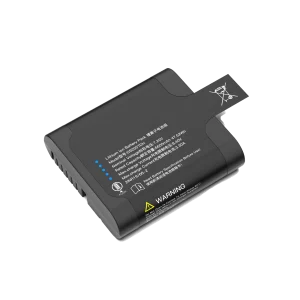
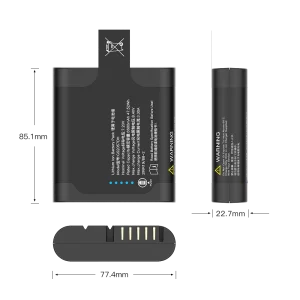
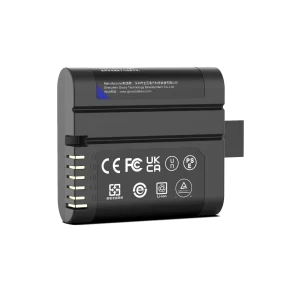
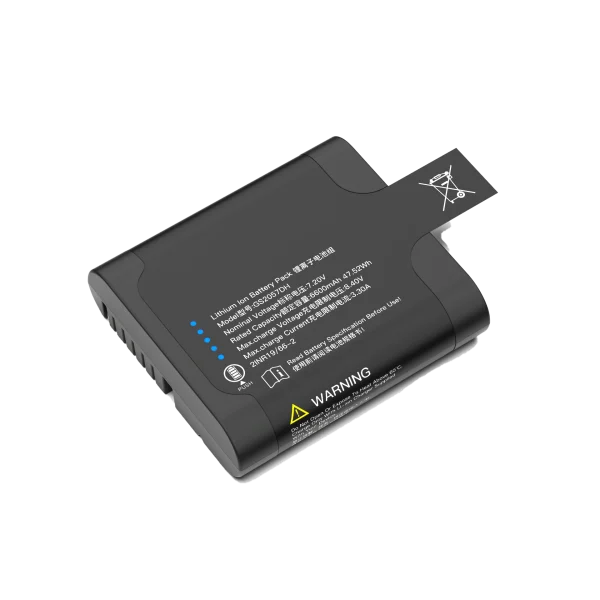
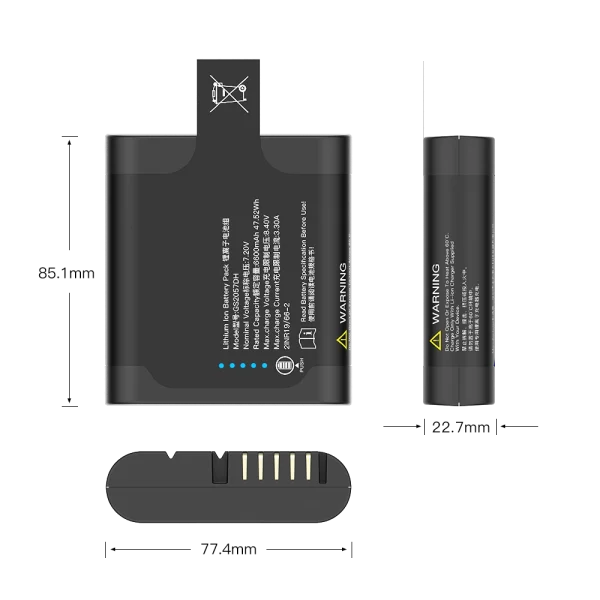
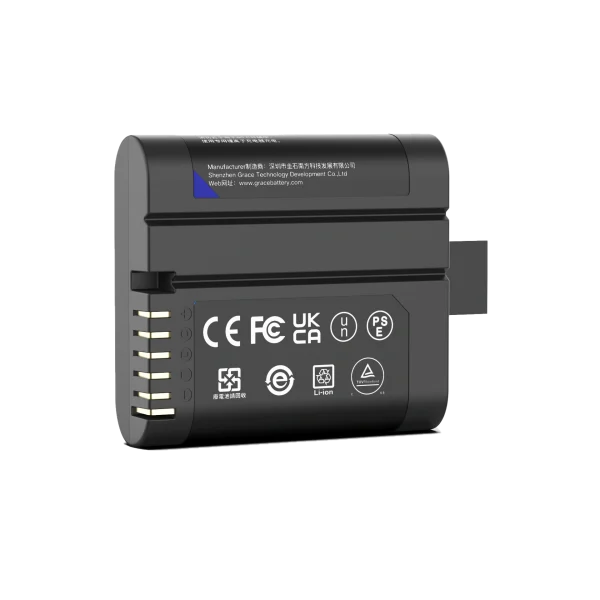
GS2057DH
7.2V/6900mAh/47.52Wh
4. Eight-Point Checklist for Evaluating a Patient Monitor Battery Supplier
Before issuing an RFP, we recommend your team score each supplier on the following eight criteria. A score below 3 on any medical-critical item (marked ★) is an automatic disqualifier.
- ★ QMS certification: ISO 13485 with current on-site audit, plus a documented supplier-change-notification agreement.
- ★ Regulatory file completeness: IEC 62133, UN38.3 test summaries, CB scheme, and regional DoCs (CE, UKCA, FCC, PSE, CCC) available on request.
- BMS engineering depth: in-house firmware team that can implement your SMBus register map, support your monitor’s charge profile, and debug host-side communication logs.
- Cell qualification: ability to source Grade-A cells from Panasonic, Samsung SDI, Murata, EVE, or LG, with 100% incoming capacity/IR sorting — not mixed-stock commodity cells.
- Design verification capacity: own chamber for -20–60°C cycling, vibration/short-circuit/over-discharge rigs, and drop-test equipment.
- NPI responsiveness: EVT samples within 3–4 weeks, weekly build-to-plan meetings, and a named project engineer.
- After-sales and warranty: 12–24-month warranty, field-failure analysis (FA) turnaround under 10 working days, and batch-recall support.
- Sustainability readiness: EU 2023/1542 compliance plan, recycled-content capability, and end-of-life take-back documentation.
5. Frequently Asked Questions
Q1. Can I use a consumer-grade 18650 pack to reduce cost?
Technically, a consumer pack may power the monitor on the bench. Regulatorily and clinically, it is not defensible. Patient monitors are IEC 60601-1 Class I/II medical devices; the battery is a recognized safety-critical component. A consumer pack lacks ISO 13485 traceability, redundant protection, and the controlled documentation your Notified Body expects. The cost saving is typically 10–15% at pack level but exposes you to recalls, delayed CE/FDA clearance, and liability risk that dwarfs the saving.
Q2. How long does a custom OEM battery program take, from kickoff to mass production?
A realistic timeline is 12–16 weeks: EVT (2–3 weeks), DVT including safety and transport testing (6–8 weeks), regulatory document package (2–3 weeks overlapping with DVT), and PVT (2–3 weeks). Pre-certified smart platforms — for example, a 10.8 V 3300 mAh 3S1P SMBus pack with Panasonic cells already certified to CE, IEC 62133, UN38.3, PSE, and UKCA — can shorten this to 6–8 weeks because the cell and safety tests are already complete.
Q3. What SMBus data should our monitor firmware expect from the pack?
At minimum, your host should read ManufacturerAccess(), BatteryTemperature(), Voltage(), Current(), RelativeStateOfCharge(), RunTimeToEmpty(), AverageTimeToEmpty(), CycleCount(), and SerialNumber(). A good OEM supplier will provide a complete register map document and, ideally, an SMBus protocol analyzer trace from the EVT build — ask for this during due diligence.
Q4. Is it better to design a custom pack or use an off-the-shelf compatible battery?
Off-the-shelf compatible packs are fine for aftermarket replacement volume, but they will not give you the mechanical fit, thermal path, or SMBus integration that a new monitor platform requires. For a new product launch, a custom OEM pack — even one built on a pre-certified cell platform — protects your industrial design, your service model, and your regulatory file. Hybrid strategies (custom enclosure + pre-certified electrical platform) are the most common and most cost-effective approach we see.
Q5. How do we protect against cell-level recalls from upstream suppliers?
Three practical steps: (1) qualify at least two cell brands for your pack geometry, so you can switch without mechanical redesign; (2) require your pack supplier to maintain incoming lot traceability down to cell date code and shipment lot; (3) negotiate a contract clause that passes through cell-vendor recall obligations and replacement-cost coverage. A medical-grade OEM partner should already have these procedures in place.
6. Conclusion
Choosing an OEM rechargeable battery for portable patient monitors is a decision that couples electrical performance, clinical safety, regulatory compliance, and long-term supply-chain reliability. As the global portable monitoring segment continues to grow at a 9–11% annual clip, medical equipment manufacturers will be best served by a supplier that treats the battery not as a commodity bolt-on but as a co-developed medical subsystem — one that ships with ISO 13485 traceability, a fully tuned SMBus interface, redundant BMS protection, and a regulatory file that travels with your device through FDA, CE, and NMPA reviews.
At TEFOO Energy, our R&D team has designed smart lithium-ion packs — including SMBus v1.1 configurations based on Panasonic, Samsung SDI, and EVE cells — for patient monitors, ventilators, infusion pumps, and surgical equipment across the US, EU, and Asian markets. Our packs ship with a complete IEC 62133, UN38.3, CE, UKCA, FCC, PSE, and CCC documentation package and an ISO 13485 controlled quality system. If you are specing a next-generation portable patient monitor and would like a pre-certified smart platform or a fully custom OEM pack, our engineering team can share a reference design and EVT sample within three weeks.
7. References and Further Reading
[1] Emergen Research. Medical Lithium-Ion Cell Market Size, Share & Trends Report, 2026–2035. https://www.emergenresearch.com/industry-report/medical-lithium-ion-cell-market
[2] PW Consulting Chemical & Energy Research Center. Global Medical Equipment Battery Pack Market 2026. https://pmarketresearch.com/chemi/medical-equipment-battery-pack-market/
[3] PW Consulting Chemical & Energy Research Center. Global ECG Monitor Lithium Battery Market 2026. https://pmarketresearch.com/chemi/ecg-monitor-lithium-battery-market/
[4] International Electrotechnical Commission. IEC 62133-2:2017 (ed2.0) — Secondary cells and batteries containing alkaline or other non-acid electrolytes. https://www.iec.ch/
[5] ISO. ISO 13485:2016 — Medical devices — Quality management systems. https://www.iso.org/
[6] U.S. Food and Drug Administration. Recognized Consensus Standards: Medical Devices. https://www.accessdata.fda.gov/scripts/cdrh/cfdocs/cfStandards/
[7] European Parliament and Council. Regulation (EU) 2023/1542 concerning batteries and waste batteries. https://eur-lex.europa.eu/eli/reg/2023/1542/oj
[8] CM Batteries. Lithium-Ion Battery Pack Certification White Paper (UN38.3, IEC 62133). 2025. https://cmbatteries.com/wp-content/uploads/2025/12/Lithium-Ion-Battery-Pack-Certificate-Guide-White-paper.pdf
About the author: This article is written by TEFOO Energy’s battery R&D team, a group of senior lithium-ion engineers with 15+ years of experience designing medical-grade smart battery packs. TEFOO is an ISO 13485 / ISO 9001 / ISO 14001 certified OEM battery manufacturer specializing in smart BMS systems, SMBus communication, and custom lithium pack solutions for medical and industrial equipment. Disclosure: TEFOO Energy is itself an OEM supplier of medical battery packs, and the author has a commercial interest in the topic discussed. This article is intended for general technical information purposes and does not constitute regulatory, legal, or safety advice; readers should consult qualified notified bodies and regulatory counsel for their specific device clearance. Last reviewed: November 2026.