An engineer-to-engineer handbook on cell selection, BMS architecture, regulatory compliance, and OEM partner evaluation
By the TEFOO Engineering Team | Last updated: November 2026
1. Introduction
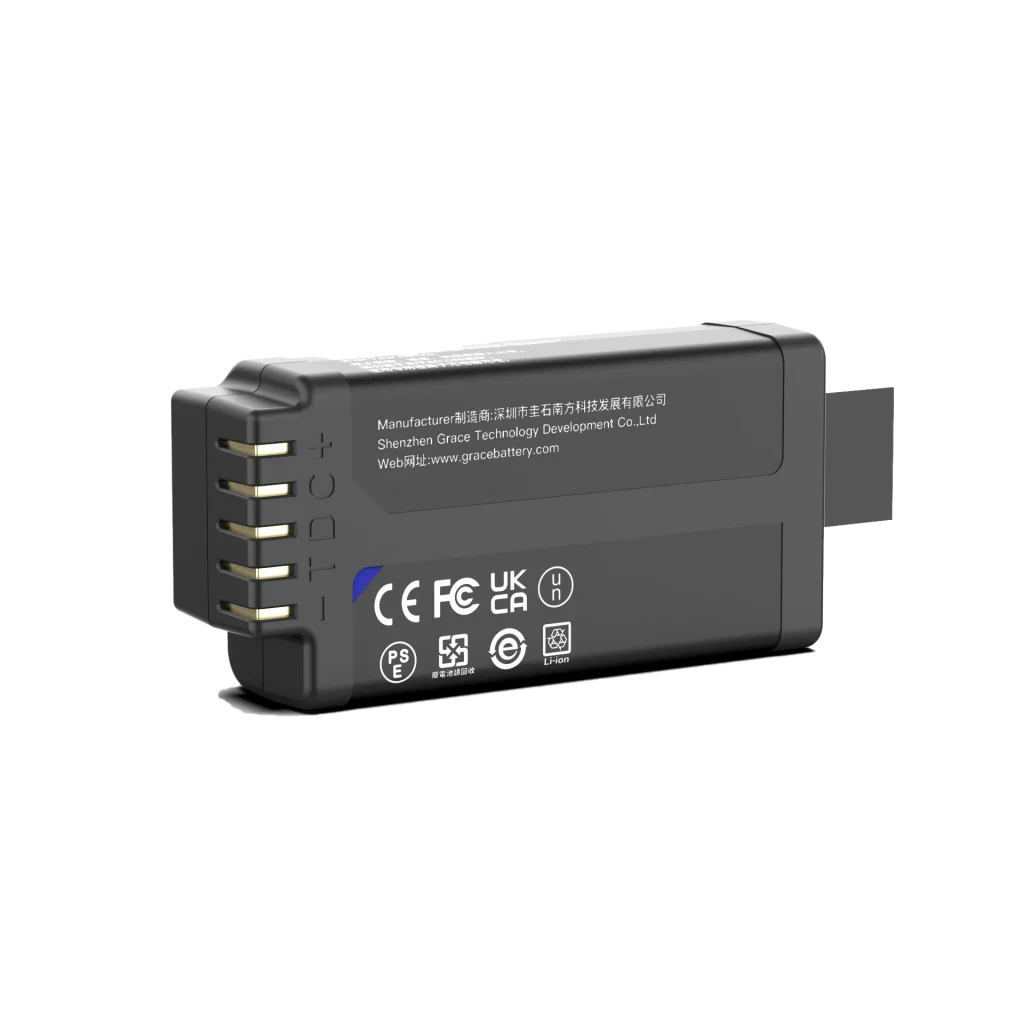
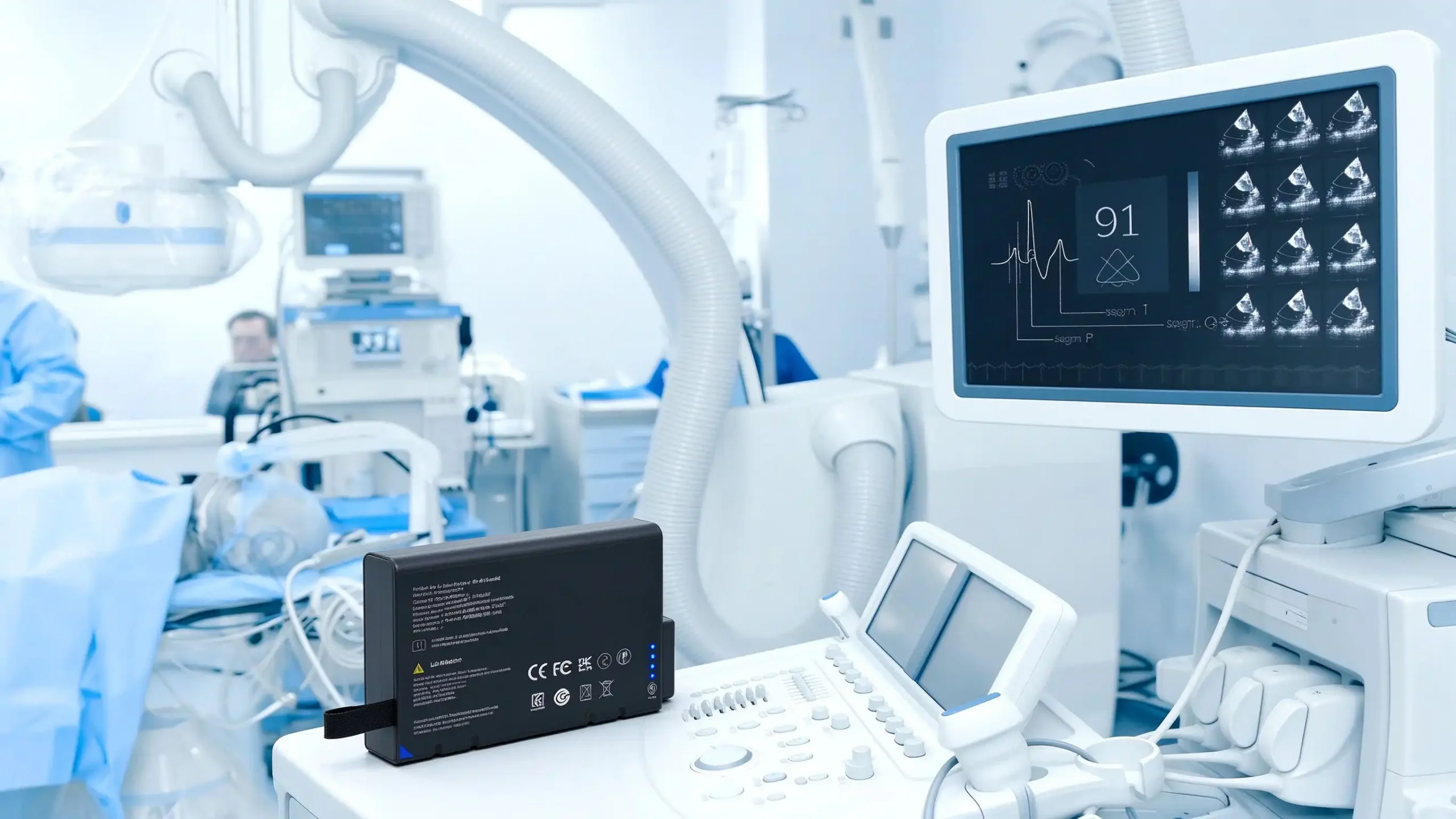
Medical equipment has moved decisively off the wall. Patient monitors, ventilators, infusion pumps, portable ultrasound systems, mobile X-ray carts, wearable defibrillators, and surgical power tools now depend on embedded, rechargeable battery packs that must deliver uninterrupted power across multi-year clinical service life. For original equipment manufacturers (OEMs), selecting a standard off-the-shelf battery is rarely viable: the mechanical envelope, voltage profile, communication protocol, and safety case of each device are unique. Custom lithium ion battery modules engineered for medical equipment are therefore not a commodity purchase but a regulated, co-developed subsystem.
This guide is written from the perspective of an R&D engineer who has designed, validated, and shipped custom battery modules to medical device OEMs across North America, the European Union, and Asia-Pacific. It covers the technical decisions, certification landscape, and vendor-selection criteria that determine whether a medical battery program launches on time, survives a Notified Body audit, and performs reliably in the field for five to eight years.
2. Why Medical Equipment OEMs Need Custom Lithium Ion Battery Modules
Standard battery packs are optimized for consumer electronics: thin form factors, low bill-of-materials cost, and a two-to-three-year calendar life. Medical devices impose a different envelope of requirements. A custom module is justified when any of the following constraints cannot be met by a catalog SKU.
2.1 Mechanical and envelope constraints
Mobile diagnostic carts, handheld ultrasound probes, and wearable patient monitors each have a fixed internal volume dictated by industrial design. A custom pack allows prismatic or pouch cells to be arranged around the device’s PCB, display, and cooling path, rather than forcing the device to accommodate a rectangular consumer pack. Enclosure materials also differ: medical packs often require UL94 V-0 flame-retardant housings, IP54 to IP67 sealing, and integration with the device’s IEC 60601-1 applied-parts insulation scheme.
2.2 Electrical and runtime requirements
A patient monitor may require 14.8 V at 3 A continuous with a 20 A peak for pump actuation; a portable ventilator may need 25.2 V with a 60-minute reserve at maximum support settings. Matching the series-parallel cell configuration, continuous discharge rating, and peak-current capability to the device’s actual load profile avoids oversizing (which increases cost and weight) and undersizing (which triggers undervoltage shutdown during critical use).
2.3 Communication and host-system integration
Modern medical devices do not treat the battery as a dumb power reservoir. The host system expects fuel-gauge data, state-of-charge (SOC), state-of-health (SOH), cycle count, and fault status over SMBus (SMBus 3.0 / SMBus 1.1) or I²C. A custom firmware stack, typically built around a battery-side fuel-gauge IC such as the TI bq series or Renesas RAJ240054, must be tuned to the actual cell model and matched to the OEM’s device-side driver. This level of integration is effectively impossible with a generic retail pack.
2.4 Safety and regulatory traceability
Medical batteries are subject to dual regulation: as lithium cells under IEC 62133 / UL 62133 and as a component of a medical electrical system under IEC 60601-1 and IEC 60601-1-2 (EMC). A custom program gives the OEM full traceability of cell lot numbers, BMS firmware revisions, and test reports — a prerequisite for a 510(k) submission or CE technical file.
3. Core Technical Design Considerations
3.1 Cell chemistry selection
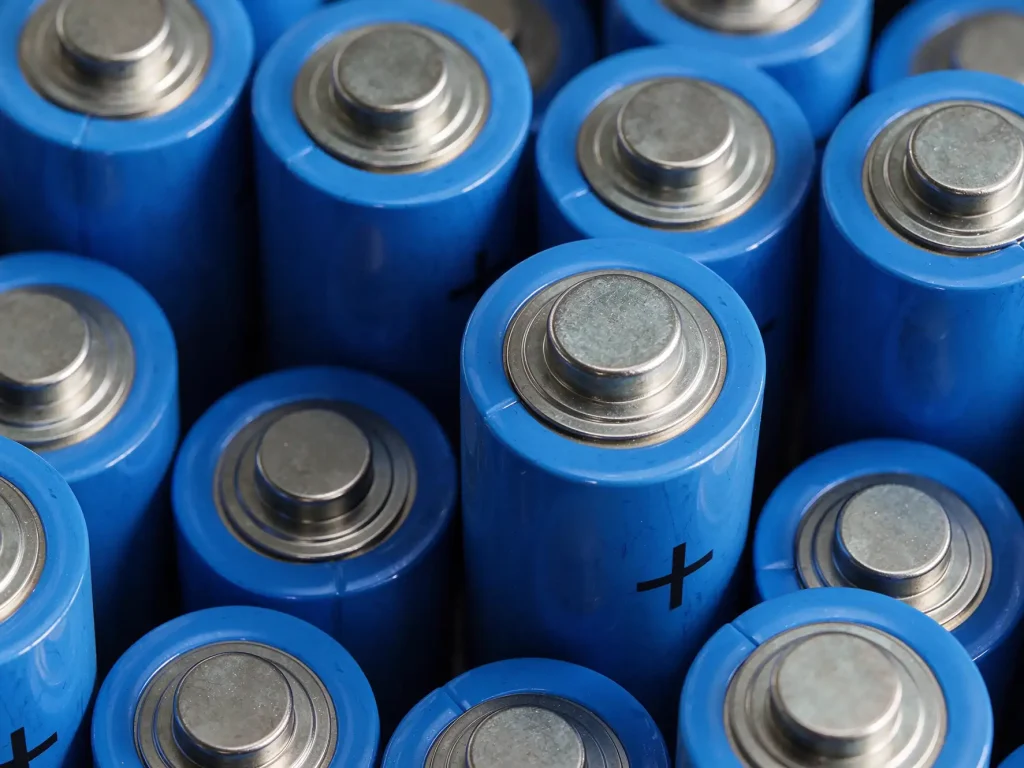
The first engineering decision is the cell chemistry. Medical packs most commonly use lithium iron phosphate (LFP) or nickel manganese cobalt oxide (NMC), with narrow use cases for lithium titanate (LTO). The choice is driven by energy density, cycle life, thermal stability, and the device’s operating-temperature envelope.
| Chemistry | Nominal Voltage | Energy Density | Cycle Life (80% DoD) | Thermal Runaway Onset | Typical Medical Use |
| NMC (LiNiMnCoO₂) | 3.6 V / cell | High (220–280 Wh/kg) | 500–1,500 cycles | ~150–180 °C | Patient monitors, infusion pumps, portable ultrasound |
| LFP (LiFePO₄) | 3.2 V / cell | Medium (120–160 Wh/kg) | 2,000–6,000 cycles | ~270 °C | Hospital carts, stationary UPS, long-service-life devices |
| LTO (Li₄Ti₅O₁∉) | 2.3 V / cell | Low (60–90 Wh/kg) | 6,000–20,000 cycles | >300 °C | High-cycling, fast-charge, extreme-temperature devices |
Table 1. Comparative overview of lithium chemistries used in medical-grade battery modules (2026 engineering reference).
For most portable medical OEM programs, NMC cells from tier-1 manufacturers (Samsung SDI, LG Energy Solution, Murata, Panasonic, or EVE Energy) remain the default: they offer the best balance of volumetric energy density and proven safety. LFP is increasingly specified for hospital-floor carts and devices expected to serve eight years or longer, where cycle life and abuse tolerance outweigh the weight penalty.
3.2 Battery Management System (BMS) architecture
The BMS is the safety-critical brain of the module. A medical-grade BMS should implement, at minimum:
- Cell-level over-voltage (OVP) and under-voltage (UVP) protection, typically 4.25 V / 2.5 V for NMC.
- Over-current protection (OCP) on both charge and discharge paths, with hardware comparator backup.
- Short-circuit detection with sub-millisecond hardware response.
- Overtemperature protection using NTC or thermistor chains on both the cell surface and the FET board.
- Cell balancing (passive or active) to maintain pack capacity across 5+ years of service.
- State-of-charge and state-of-health estimation via a fuel-gauge IC with gas-gauge algorithm calibrated to the actual cell model.
- Fault logging and event memory accessible over SMBus for field diagnostics.
For IEC 60601-1 compliance, the BMS topology should be reviewed against the standard’s single-fault requirement: a single component failure must not result in a safety hazard. This often drives the use of redundant voltage-monitoring channels or a two-contactor discharge path in higher-voltage packs.
3.3 SMBus and host communication
SMBus (System Management Bus) is the de-facto communication layer between medical batteries and their host devices. A well-implemented SMBus stack exposes the following commands that OEM firmware relies on:
- ManufacturerAccess (0x00) and DeviceType (0x01) for device identification.
- Temperature (0x08), Voltage (0x09), Current (0x0A) for real-time telemetry.
- RelativeStateOfCharge (0x0D) and FullChargeCapacity (0x10) for fuel-gauge display.
- AbsoluteStateOfHealth (0x4F) for predictive maintenance alerts.
- BatteryStatus (0x16) and AlarmWarning (0x12) for fault and warning signaling.
Interoperability testing between the custom pack and the OEM’s device firmware is one of the most common schedule risks in medical battery programs. A mature OEM partner should provide an SMBus protocol document, register map, and a golden sample for host-side integration testing before design verification begins.
3.4 Mechanical, thermal, and environmental design
Medical devices operate across a wide range: 10–40 °C ambient in hospitals, but –10 °C during transport and up to 60 °C in sterilization-adjacent environments. The pack enclosure must survive 15–25 mm drop tests per IEC 60601-1, vibration and shock per IEC 60068, and, where required, IP ratings for fluid ingress. Thermal design — copper busbars, conformal coating, potting, and thermal pads to the device chassis — determines both cycle life and safety margin under continuous high-load discharge.
4. Regulatory and Certification Landscape (2026)
A custom medical battery module must clear a layered set of standards. The table below summarizes the certifications most often required for a pack shipped into the US, EU, and UK markets.
| Standard / Regulation | Scope | What It Governs | Typical Timing in Program |
| IEC 62133-1/-2 / UL 62133 | Cell and pack safety | Cells and sealed nickel / lithium batteries for portable use; over-charge, short-circuit, crush, thermal abuse | Cell qualification + pack design verification |
| IEC 60601-1 | Medical electrical equipment | General basic safety and essential performance; single-fault, leakage current, mechanical hazards | Part of the device’s overall certification; pack contributes to technical file |
| IEC 60601-1-2 (4th ed.) | EMC | Electromagnetic compatibility; pack EMI/EMS characterization | Parallel with device EMC testing |
| ISO 13485:2016 | Quality management | Medical device QMS; design controls, traceability, change control | OEM partner must hold or support ISO 13485-certified production |
| UN 38.3 | Transport | T1–T8 altitude, thermal, vibration, shock, short circuit, impact, over-charge, forced discharge | Required before air/sea shipment of any production lot |
| CE marking (EU) | Market access | Pack as a component of the medical device under MDR 2017/745; battery alone also under GPSR / Battery Regulation | Concurrent with device CE |
| UKCA marking | UK market access | Post-Brexit conformity for Great Britain | Concurrent with CE |
| UL/IEC 60601-1 / UL 2054 | North America | Component recognition for US and Canadian markets | Component recognition file preferred |
| EU Battery Regulation (EU) 2023/1542 | Sustainability & circularity | Carbon footprint declaration, recycled content, due diligence, labeling, battery passport from 2027+ | Design and documentation phase; compliance evidence required at placing on market |
| RoHS / REACH | Substance restriction | Restricted and hazardous substances in pack materials | Material declaration required at BOM freeze |
Table 2. Core certification framework for custom lithium ion battery modules shipped into medical equipment OEM programs (2026).
Two regulatory shifts deserve particular attention in 2026. First, the EU Battery Regulation (EU) 2023/1542 is phasing in carbon-footprint declarations, recycled-content reporting, and digital battery passport requirements that will affect industrial and medical batteries placed on the EU market. Second, MDR 2017/745 continues to tighten Notified Body scrutiny of critical components — including batteries — so design history files must now include substantially more pack-level documentation than under the old MDD.
5. Key Performance Metrics and Design Trade-offs
When defining the pack specification with an OEM, the following metrics should be locked at the design-input phase. Each represents a real trade-off that engineering teams must resolve explicitly rather than discover during verification.
- Rated capacity (Ah) and minimum available capacity at end-of-service-life (typically 80% of rated).
- Continuous and peak discharge current, derated over the operating-temperature range.
- Cycle life to 80% capacity retention at the device’s actual charge/discharge profile, not the cell vendor’s ideal 0.5C/0.5C curve.
- Calendar life — capacity fade over years of storage at 40–60% SOC, which often dominates in medical devices that sit on standby.
- Self-discharge, target ≤ 3% per month for a well-designed pack.
- Charge time and charge-temperature window (often restricted to 0–45 °C for medical safety).
- Volume and weight envelope matching the industrial-design CAD.
- Connector and harness: mated-cycle rating, contact resistance, and keying to prevent mis-mating.
6. Evaluating an OEM Battery Module Partner
For a medical OEM, the battery supplier is not a transactional vendor but an extension of the regulatory team. The following checklist should be scored during supplier qualification.
| Evaluation Dimension | What to Verify | Red Flag |
| Quality system | ISO 13485 certification covering battery pack design and manufacturing; design-control SOPs; change-control process | ISO 9001 only, with no medical device QMS |
| Engineering depth | In-house cell-application engineers, BMS firmware team, mechanical and thermal engineers; referenceable medical OEM customers | Sales-led team that resells cells and assembles packs on a bench |
| Certification readiness | Existing UN 38.3 summaries, IEC 62133 reports, UL 2054 / UL 60601 component recognition files, and experience supporting 510(k) / CE technical files | First-time attempts at medical certification on your program |
| BMS and firmware capability | Own or deeply embedded BMS hardware; SMBus / I²C protocol documentation; ability to modify fuel-gauge algorithm | Generic off-the-shelf BMS with no firmware customization |
| Cell sourcing & traceability | Direct tier-1 cell relationships; lot-level traceability; anti-counterfeit controls | Gray-market or distributor-sourced cells with no lot records |
| Production capacity | Stable capacity for pilot (50–500 units) and ramp (5,000–50,000 units/year); in-house pack assembly, welding (ultrasonic / laser), and EOL test | Contract assembly with no in-house test or aging |
| Regulatory support | Dedicated regulatory engineer; willingness to sign a technical documentation agreement and NDA | Vendor unwilling to share schematics, BOM, or test reports |
| Aftermarket and warranty | Field-replaceable pack program, return-material authorization, long-term component obsolescence notice | No field support; 6-month warranty only |
Table 3. Supplier-scorecard criteria for custom lithium ion battery modules in medical OEM programs.
In our own engineering practice at TEFOO, we have found that medical OEMs who score their candidates against this matrix before RFQ selection materially reduce late-stage certification surprises. The lowest unit-price quote is rarely the lowest total cost when a six-month Notified Body delay is factored in.
7. Representative Medical Applications
Custom lithium ion modules appear across virtually every portable medical category. Typical specifications include:
- Patient monitors and vital-sign screens: 11.1 V–14.8 V, 2–5 Ah, SMBus fuel gauge, hot-swappable dual-pack.
- Infusion and syringe pumps: 7.4 V–14.8 V, 2–4 Ah, low standby current (<50 µA), IPX1 drip protection.
- Portable ultrasound and diagnostic imaging: 14.8 V–25.2 V, 5’8 Ah, high peak-current for probe drive.
- Mobile X-ray carts and C-arms: 24 V–48 V, 10–30 Ah, high-power discharge for tube pulsing, active balancing.
- Wearable and home-care devices: 3.7 V–7.4 V, sub-1 Ah, compact pouch cells, low-noise BMS.
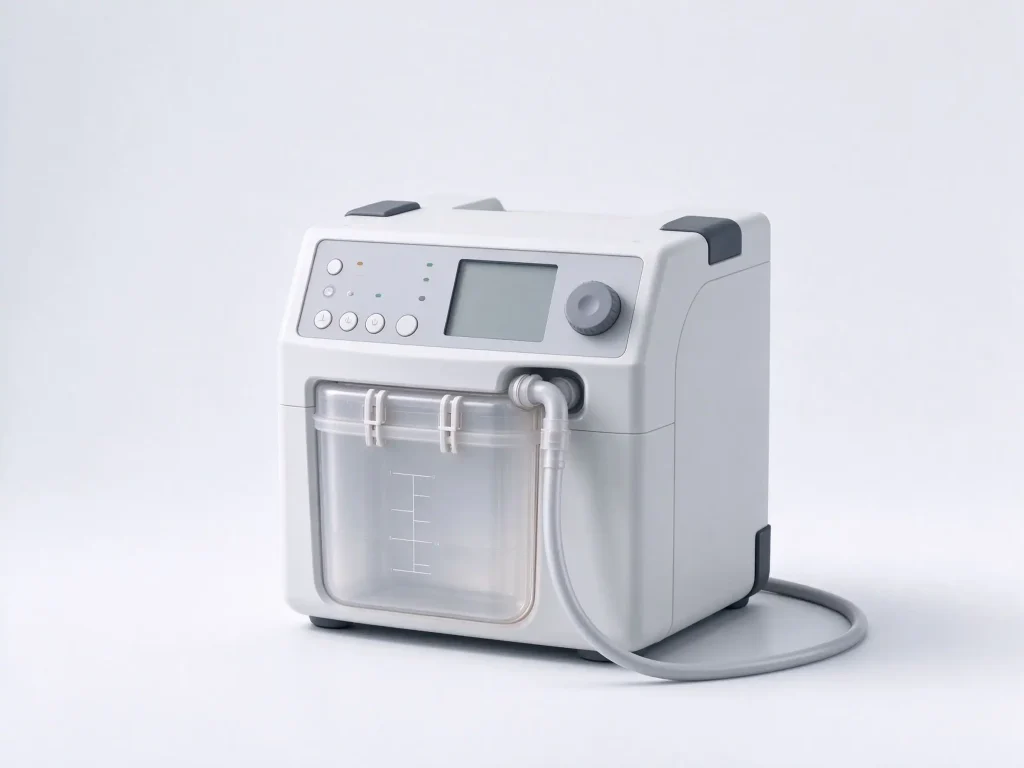
- Ventilators and anesthesia machines: 25.2 V–29.6 V, 4–8 Ah, redundant packs, 60-minute minimum backup.
8. Frequently Asked Questions
Q: What is the typical lead time for a custom medical battery module?
A mature OEM partner typically delivers engineering samples in 8–12 weeks from design freeze, and production-ready units (with UN 38.3, IEC 62133, and pilot-run validation) in 18–24 weeks. Plan an additional 8–12 weeks if pack-level certification is required from scratch.
Q: Can we use commercial off-the-shelf (COTS) cells in a medical pack?
Yes — but the cell must be from a tier-1 manufacturer with a recognized safety certificate (IEC 62133 / UL 1642 / UL 62133) and available with lot traceability. Rebranded or unqualified cells introduce unacceptable regulatory and field-safety risk.
Q: How does EU Battery Regulation 2023/1542 affect our medical battery program?
From 2025 onward, industrial and medical batteries placed on the EU market must comply with due-diligence obligations and carbon-footprint declarations; recycled-content labeling and the digital battery passport are phased in from 2027 onward. Engage your pack partner early to ensure material declarations and supply-chain data are collected from the start.
Q: Is SMBus mandatory for medical batteries?
Not legally mandated, but effectively required by modern medical device firmware. Without SMBus or I²C telemetry, the host cannot display accurate fuel gauge, detect SOH degradation, or log faults — all of which are increasingly expected in IEC 60601-1 risk files and MDR technical documentation.
Q: What warranty should we expect on a medical battery module?
A 2-year product warranty with a service-life target of 5 years or 500 full cycles (whichever comes first) is typical. LFP-based packs can reasonably target 8 years / 2,000 cycles. Warranty terms should be matched to the device’s declared service life.
Q: How do we handle battery obsolescence over a 7-year device lifecycle?
Require a last-time-buy (LTB) notice of at least 12 months, design the pack around second-sourceable cell footprints, and validate a pin-compatible alternative cell before the original goes end-of-life. A strong OEM partner will manage this on your behalf.
9. Conclusion
Custom lithium ion battery modules for medical equipment OEMs are among the most regulated and engineering-intensive subsystems in a modern medical device. Getting them right requires more than a cell vendor: it demands a partner who understands cell chemistry trade-offs, BMS firmware, SMBus integration, and the layered certification framework — IEC 62133, IEC 60601-1, ISO 13485, UN 38.3, CE/UKCA, and the evolving EU Battery Regulation 2023/1542.
For OEM program teams, the practical message is straightforward: treat the battery as a co-developed subsystem rather than a purchased component. Lock the mechanical envelope, electrical profile, and SMBus contract at design-input review; choose a supplier with a proven medical track record; and build regulatory traceability into every lot. Doing so converts the battery from a schedule risk into a silent, reliable enabler of the device’s clinical mission.
If you are scoping a new medical device program or re-architecting an existing pack, the TEFOO engineering team supports OEM partners from specification and prototype through full production, with ISO 13485-aligned processes, in-house BMS firmware, and global certification documentation tailored to 510(k), CE-MDR, and UKCA submissions.
Disclaimer: This article is for general engineering information. It does not constitute regulatory, legal, or medical advice. Certification requirements vary by device classification and target market; always consult a Notified Body or regulatory counsel for your specific submission.