1. Introduction
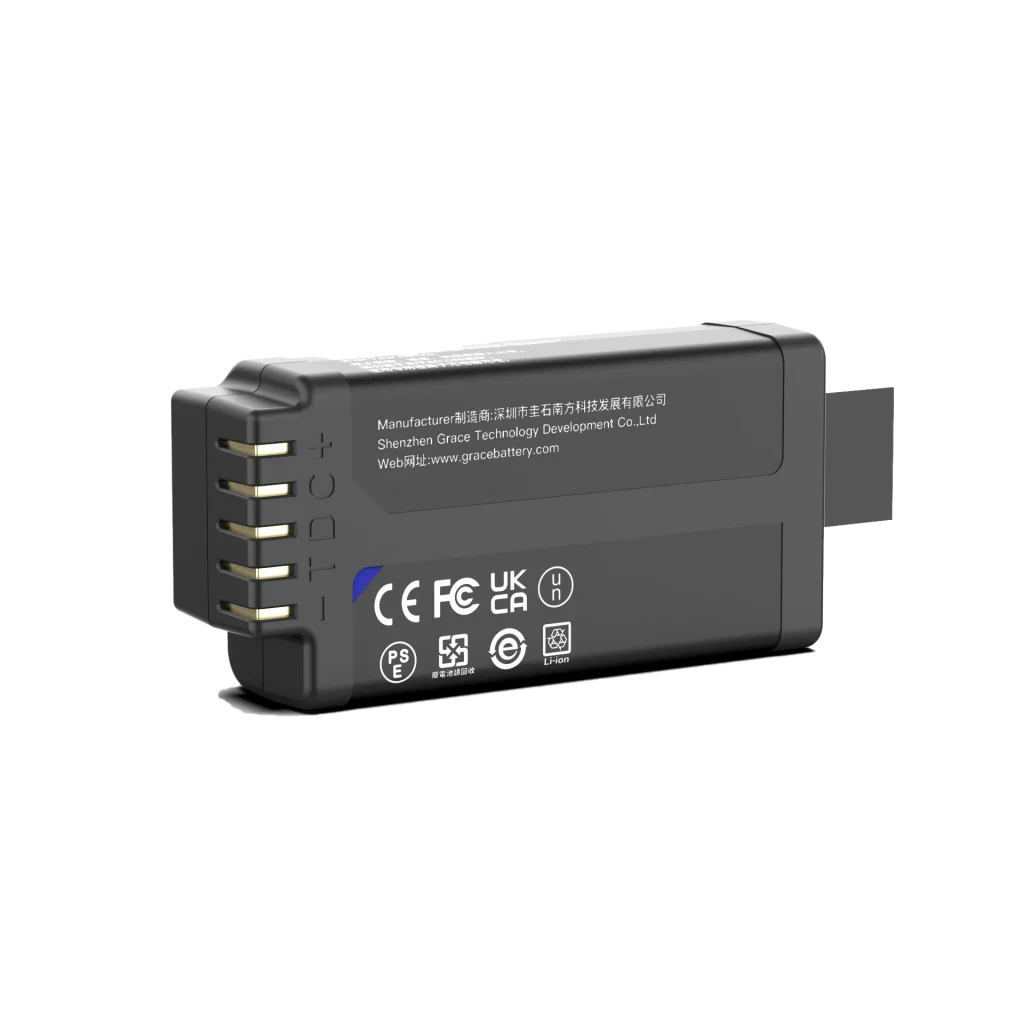
A CCC certified lithium battery is a rechargeable lithium-ion cell or battery pack that has passed China’s Compulsory Certification (CCC, China Compulsory Certification) for the products listed in the national CCC catalog, holds a valid CCC certificate issued by a designated certification body, and carries the CCC mark on the product or its label. If you source battery packs from China, or sell battery-powered equipment into the Chinese market, understanding the China CCC battery certification is essential to avoid customs holds, blocked sales, or non-compliant products.
This guide is written from a battery R&D engineering perspective. It explains which lithium batteries are actually covered by CCC, which Chinese mandatory standards apply, how the certification process works, how CCC differs from transport and international safety certifications such as UN38.3, IEC 62133 and UL, and how to assess whether a medical or industrial equipment battery falls within the CCC scope. All regulatory dates, product codes and standards cited below are traced to official SAMR and CNCA documents listed in the References section.
2. What Is a CCC Certified Lithium Battery?
CCC stands for China Compulsory Certification. It is the mandatory product conformity assessment system administered in China under the State Administration for Market Regulation (SAMR) and the Certification and Accreditation Administration of China (CNCA). Products within the CCC catalog must be certified by a designated certification body, tested to the applicable Chinese mandatory standards, and marked with the CCC logo before they may be manufactured, sold, imported or used in business activities in China.
For a lithium-ion cell or battery pack, being CCC certified means that the certified model has completed type testing and an initial factory inspection covering the manufacturer’s quality assurance capability and product consistency, and remains under post-certification surveillance. The certificate covers the specific models, ratings and manufacturing site listed on the certificate; a change to cell chemistry, protection circuit, configuration, key components or production site usually requires a certificate change or extension evaluation.
Two important boundaries should be understood from the outset. First, CCC is a market-access safety certification for the Chinese market; it is not a general endorsement of battery performance, cycle life or energy density, and it does not replace certifications required for export markets. Second, CCC applies only to products listed in the catalog. Not every lithium battery used in China requires CCC, and the catalog scope can be adjusted over time, so the current official catalog description and definition should always be checked before making a compliance decision.

3. Which Lithium Batteries Are Covered by the China CCC Battery Certification?
Under the current implementation rule CNCA-C09-02:2026, the CCC catalog covers three related product categories: power banks, lithium-ion cells and battery packs for portable electronic products, and the cells and packs built into power banks. The table below summarizes the catalog codes, scope and applicable standards.
| Code | Product category | Scope description | CCC test standard(s) |
| 0914 | Power bank (mobile power supply) | A movable power source containing lithium-ion cells and/or packs, with AC/DC input and output, weighing no more than 18 kg; examples include consumer power banks and portable outdoor/backup power stations. | GB 4943.1-2022; GB 31241-2022; GB 47372-2026 |
| 0915 | Li-ion cells and battery packs for portable electronic products | Cells and packs used in portable office products, mobile communication products, portable audio/video products and similar portable devices. A portable electronic product is a movable product weighing no more than 18 kg that is intended to be frequently carried by the user. | GB 31241-2022 |
| 0916 | Li-ion cells and battery packs internal to power banks | Cells and packs designed to be built into a certified power bank (0914). | GB 31241-2022 |
Scope boundaries and exclusions
- Portable-electronics definition: the equipment powered by the battery is expected to be frequently carried by a user and weighs no more than 18 kg. Fixed-installation, stationary rack, vehicle-integrated or heavy industrial power systems do not automatically fall into the 0915 category.
- Exclusion noted in the catalog: lithium-ion cells and battery packs used in e-cigarettes are excluded from the 0915 scope.
- Phased expansion: when lithium batteries were first brought under CCC management in 2023, the authorities stated that certification would initially cover batteries for portable electronic products, while batteries for other electrical and electronic products would be added later when conditions mature. The current catalog should therefore be rechecked for any update.
- Built-in vs. standalone: whether a pack is considered part of the end device, part of a power bank, or a standalone portable-electronics pack affects its catalog classification. When the classification is ambiguous, request a scope determination from a designated CCC certification body rather than assuming one category.
4. Applicable Standards and Current Certification Rules
CCC certification for these products is carried out under the implementation rule CNCA-C09-02:2026, Compulsory Product Certification Implementation Rules for Power Banks, Lithium-ion Cells and Battery Packs (Trial). The applicable mandatory national standards are listed below; the rule states that the latest version of each standard applies in principle.
| Standard | Full title | Applied to |
| GB 31241-2022 | Safety technical specification for lithium-ion cells and batteries used in portable electronic devices | 0915 portable-electronics cells/packs; 0916 power-bank internal cells/packs; 0914 power banks |
| GB 4943.1-2022 | Audio/video, information and communication technology equipment – Part 1: Safety requirements | 0914 power banks |
| GB 47372-2026 | Safety specification for power banks | 0914 power banks and their internal cells/packs; enters mandatory implementation on 2027-04-01 |
The rule history matters for planning a certification project. The first dedicated rule for these products, CNCA-C09-02:2025, took effect on 2025-08-15, replacing the earlier general electronics rule CNCA-C09-01:2023 for batteries and power banks. In 2026, CNCA Announcement No.7 added GB 47372-2026 to the standard list and issued the revised rule CNCA-C09-02:2026.
5. CCC Certification Timeline and Key Milestones
The following timeline lists only the implementation dates explicitly stated in the official announcements and rules. Certification planning should use these dates, together with the current rule version published by CNCA.
| Date | Milestone | Source |
| 2023-03-16 | SAMR Announcement No.10 of 2023 brings lithium-ion cells, battery packs and power banks under CCC management. | [1] |
| 2023-08-01 | Designated certification bodies begin accepting CCC certification applications for the newly catalogued products. | [1] |
| 2024-01-01 | GB 31241-2022 enters mandatory implementation. | [1] |
| 2024-08-01 | From this date, catalogued products without a CCC certificate and CCC mark must not be manufactured, sold, imported or used in other business activities. | [1] |
| 2025-08-15 | Dedicated rule CNCA-C09-02:2025 takes effect; the general rule CNCA-C09-01:2023 no longer applies to batteries and power banks. | [2] |
| 2026-05-31 | CNCA Announcement No.7 of 2026 adds GB 47372-2026 and issues the revised rule CNCA-C09-02:2026. | [3][4] |
| 2027-03-31 | End of the transition period: until this date, bodies may apply the 2025 or 2026 rule according to the applicant’s choice. | [3] |
| 2027-04-01 | GB 47372-2026 is implemented; the 2026 rule becomes mandatory. Previously certified power banks and their internal batteries must complete supplementary testing and inspection items and certificate conversion before this date. | [3][4] |
6. The Certification Process: From Application to Surveillance
Under CNCA-C09-02:2026, the certification mode for these products is: type test + initial factory inspection + post-certification surveillance. The initial factory inspection covers the factory’s quality assurance capability and product consistency. Post-certification surveillance consists of follow-up inspection, production-site sampling test and/or market sampling test, applied individually or in combination.
Typical project steps
- Application and unit division: the applicant submits the application to a designated certification body. Models are grouped into certification units according to cell chemistry, safety design, form factor, winding/stacking construction, hard case/pouch type, nominal voltage, charging limit voltage and capacity range; packs also depend on series/parallel configuration and protection circuit layout.
- Type testing: representative samples are tested to the applicable GB standards. Sample quantities and the capacity-derating interval (for example, maximum rated capacity covering down to 80% within a unit) follow the sampling requirements of the implementation rule.
- Initial factory inspection: the body audits the manufacturer’s quality assurance capability and verifies that mass-produced products remain consistent with the certified sample, including key components such as protection boards, MOSFETs, protection ICs, PTC/NTC sensors, wires, PCBs and encapsulation materials.
- Certificate evaluation and issuance: after the test report and factory inspection are accepted, the body issues the CCC certificate covering the listed models and ratings.
- Marking: the CCC mark is applied to the product body or label. For batteries limited by size or construction, a reduced printed, molded or laser-coded CCC mark is permitted, with lettering sized to suit the battery dimensions.
- Post-certification surveillance and maintenance: the certificate remains valid subject to surveillance. Any change to the holder, manufacturer, product name, model, standard, safety-related design, key components or production conditions must be reported for certificate change evaluation; expanding the certified product range requires a certificate extension.
Certificate validity and renewal
A CCC certificate covered by this rule is valid for five years. To continue using the certificate, the applicant must submit a renewal application within 90 days before expiry. If the last post-certification surveillance during the validity period passed, the designated body issues a renewed certificate upon receiving the renewal application. Products under a suspended, withdrawn or cancelled certificate, products beyond validity, or products whose required change has not been confirmed must not carry the mark or be released.
7. CCC vs UN38.3, IEC 62133, UL and CE: What Each One Covers
Battery buyers often confuse CCC with transport tests and international safety certifications. They answer different questions and do not replace one another. The table below summarizes the most common schemes encountered when sourcing lithium batteries from China.
| Scheme | Nature | Primary market | What it demonstrates |
| CCC | Mandatory product certification (market access) | China | Compliance with Chinese mandatory safety standards for catalogued cells, packs and power banks; required to sell or import catalogued products into China. |
| UN38.3 | UN transport safety test (T1-T8) | Global | Cell and pack transport safety for air, sea, rail and road shipment; required to ship battery goods, independent of market access. |
| IEC 62133 | International voluntary safety standard | Global | Safety requirements for portable sealed secondary cells and batteries; frequently referenced in overseas buyer specifications and audits. |
| UL 2054 / UL 2271 | North American safety certification/listing | USA and Canada | Fire, electric shock and abuse safety assessed for the North American market. |
| CE / UKCA | Regulatory conformity marking | EU / UK | Conformity with applicable EU or UK directives and regulations, including the applicable battery regulation; required for the European or UK market. |
Practical implication: a CCC certificate does not prove UN38.3 transport compliance, and a UN38.3 test summary does not grant China market access. A product exported from China to the EU, North America or Southeast Asia typically needs the destination-market scheme in addition to any Chinese certification; a product sold domestically in China needs CCC only if it falls within the catalog.
8. Does Your Medical or Industrial Equipment Battery Need CCC?
This is one of the most common questions we receive as battery pack engineers, and the answer depends on catalog classification rather than on the end device alone. The 0915 category is defined around batteries for portable electronic products that weigh no more than 18 kg and are intended to be frequently carried. Fixed or built-in packs for stationary medical devices, industrial instruments, rack-mounted equipment or cabinet systems are not automatically within this scope.
When assessing a medical or industrial pack, we recommend working through the following points with the certification body:
- End-device classification: is the equipment a frequently carried portable device, a mobile cart, a handheld instrument, or a fixed/built-in unit? The weight and intended use of the powered equipment matter to the portable definition.
- Pack configuration: is the pack sold standalone, built into the equipment, or part of a power-bank-like product? Standalone packs and internal packs follow different catalog codes.
- Sales route: is the finished equipment or pack manufactured and sold in China, imported into China, or exported? CCC market-access obligations attach to products placed on the Chinese market.
- Applicable other requirements: even where CCC does not apply, medical and industrial batteries may still need GB 31241-type safety evaluation in buyer audits, UN38.3 for transport, IEC 62133 or destination-market certification, and compliance with the relevant medical device or industrial safety standard of the end equipment.
Because catalog boundaries and standard versions are updated periodically, the definitive answer should come from a designated CCC certification body’s scope determination for the specific model, nominal voltage, capacity and intended equipment. Do not rely on a supplier’s verbal statement that a pack is ‘CCC equivalent’ without a verifiable certificate.
9. How to Verify a CCC Certificate and Identify the Mark
When a supplier claims a CCC certified lithium battery, verify the evidence rather than accepting a logo on a datasheet:
- Check the certificate in the official national certification database maintained under CNCA: confirm the certificate number, certificate holder, producer, manufacturer site, product name and models, rated voltage and capacity, applicable standard, certificate status (valid, suspended, cancelled or withdrawn) and expiry date.
- Match the certified model list to the pack you are buying. A certificate covers only the models and ratings listed; a similar-looking model outside the list is not covered.
- Inspect the product mark: a certified product should carry the CCC mark on the body or label; space-constrained batteries may use a reduced printed, molded or laser-coded CCC mark.
- Watch for red flags: certificate expired or under suspension, holder name differing from the supplier, model numbers not listed, or a test report presented in place of a CCC certificate.
10. Frequently Asked Questions
Q: What is a CCC certified lithium battery?
A: It is a rechargeable lithium-ion cell or battery pack that has passed China’s Compulsory Certification for a catalogued product, holds a valid CCC certificate from a designated body, and carries the CCC mark. The certificate confirms that the listed model meets the applicable Chinese mandatory safety standards for the China market.
Q: Is CCC certification mandatory for all lithium batteries sold in China?
A: No. The mandatory scope currently covers catalogued products: cells and packs for portable electronic products (0915), power banks (0914), and cells and packs internal to power banks (0916). Other lithium batteries are not yet in the catalog, and scope can change, so confirm the current catalog with a designated certification body.
Q: Which standards apply to CCC lithium battery certification?
A: For 0915 portable-electronics cells/packs: GB 31241-2022. For 0916 power-bank internal cells/packs: GB 31241-2022. For 0914 power banks: GB 4943.1-2022, GB 31241-2022 and GB 47372-2026. The latest standard version applies in principle.
Q: How long is a CCC battery certificate valid?
A: The certificate is valid for five years and remains subject to post-certification surveillance. To continue certification, a renewal application must be submitted within 90 days before expiry.
Q: Does my medical or industrial equipment battery need CCC?
A: It depends on the catalog classification of the specific pack and equipment, not the end device alone. Fixed or built-in packs for stationary medical or industrial devices are not automatically in scope. Have the model assessed by a designated CCC body, and remember that other requirements such as UN38.3, IEC 62133 or destination-market certification may still apply.
Q: What does the CCC certification process involve?
A: The certification mode is type test plus initial factory inspection (quality assurance capability and product consistency) plus post-certification surveillance, followed by certificate issuance and marking. Changes to design, key components, configuration or production site require certificate change or extension evaluation.
Q: What is the difference between CCC and UN38.3?
A: CCC is China’s mandatory market-access safety certification for catalogued products; UN38.3 is a United Nations transport safety test required to ship batteries by air, sea, rail or road. They serve different purposes and neither replaces the other.
Q: How can I verify a supplier’s CCC certificate?
A: Look up the certificate number in the official CNCA national certification database and confirm the holder, models, ratings, standard, status and expiry. Match the certified model list to the product you are buying, and check the CCC mark on the product itself.
Q: Is GB 47372-2026 already required?
A: GB 47372-2026 enters mandatory implementation on 2027-04-01. Until 2027-03-31, certification bodies may apply the 2025 or 2026 rule according to the applicant’s choice; from 2027-04-01 the 2026 rule and the new standard apply fully, and previously certified power banks and their internal batteries must complete the required supplementary tests and certificate conversion.
11. Conclusion
For buyers and engineers working with lithium batteries in the Chinese market, a CCC certified lithium battery is the compliance baseline for products inside the CCC catalog: it means the model has been tested to the applicable GB standards, the manufacturer has passed an initial factory inspection, and the product remains under surveillance. The China CCC battery certification has been rolled out in phases, with dedicated rules in force since 2025 and a further standard and rule transition scheduled for 2027.
The practical takeaway is to classify your product against the current catalog before planning certification, distinguish CCC from transport and overseas-market schemes, and verify any supplier certificate through the official database. If you are developing a custom battery pack for medical or industrial equipment, aligning the cell selection, protection circuit, BMS and documentation with the applicable GB standards early in the design stage reduces the risk of rework when certification is required.
Author Information
R&D Engineering Team, TEFOO (Shenzhen Guishi Nanfang Technology Development Co., Ltd.). The authors are battery R&D engineers specializing in custom lithium-ion battery packs, smart battery management systems (BMS) and SMBus communication for medical and industrial equipment.
Conflict-of-interest disclosure
TEFOO designs and manufactures custom lithium battery packs and may supply products relevant to the certification discussed in this article. This article provides general technical and regulatory information current as of November 2026; it does not constitute legal, customs or certification advice. Certification scope, applicable standards and implementation rules are updated over time. Before making a compliance decision, confirm the current catalog, standards and procedure with a designated CCC certification body or the CNCA.
References
[1] SAMR Announcement No.10 of 2023, Announcement on Implementing Compulsory Product Certification Management for Lithium-ion Batteries and Other Products (2023-03-16). https://www.samr.gov.cn/zw/zfxxgk/fdzdgknr/rzjgs/art/2023/art_ad15150414fe40d3807857910bff7118.html
[2] CNCA Announcement No.15 of 2025, Issuance of the Compulsory Product Certification Implementation Rules for Power Banks, Lithium-ion Cells and Battery Packs (Trial) CNCA-C09-02:2025 (2025-08-01). https://www.cnca.gov.cn/zwxx/gg/2025/art/2025/art_915c12eceb7a4ad1a848e9598844e911.html
[3] CNCA Announcement No.7 of 2026, Adding Certification Standards for Power Banks and Related Products and Issuing the Revised Implementation Rules (2026-05-31). https://www.cnca.gov.cn/hlwfw/ywzl/qzxcprz/tzgg/art/2026/art_29efd9c22ba14fea80926995d496baac.html
[4] CNCA-C09-02:2026 Compulsory Product Certification Implementation Rules for Power Banks, Lithium-ion Cells and Battery Packs (Trial). https://www.cnca.gov.cn/cms_files/filemanager/953091537/attach/20265/a4685f7d247a4b4d80809495c18fbc91.pdf
[5] CQC, Adjustment of CCC Certification Standards for Power Banks and Lithium-ion Cells and Battery Packs (2026-06-01). https://www.cqc.com.cn/www/col68/91045.html