How to evaluate a medical battery OEM that supports FCC-aligned design, EMC control and a complete compliance documentation package
Written by the senior lithium-battery R&D engineering team, TEFOO— designers of custom smart-BMS lithium-ion battery packs with SMBus communication for medical and industrial equipment.
1. Introduction: What Is an FCC Certified Medical Battery OEM?
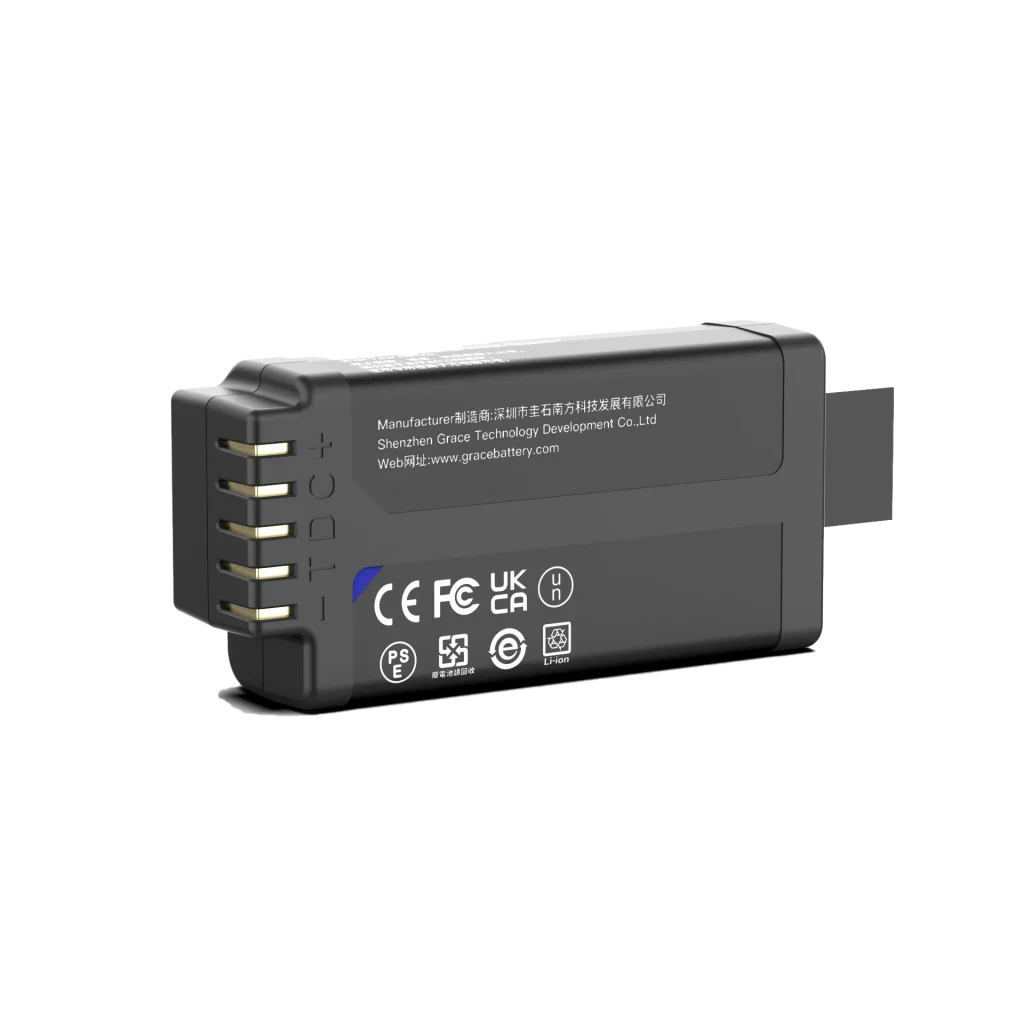
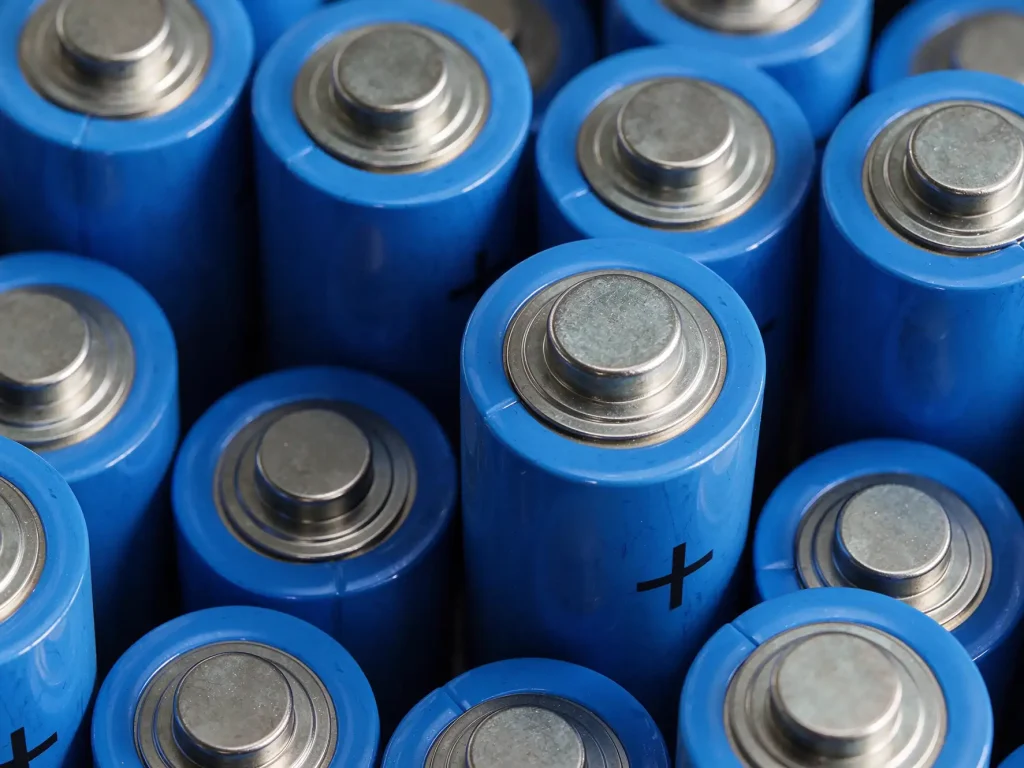
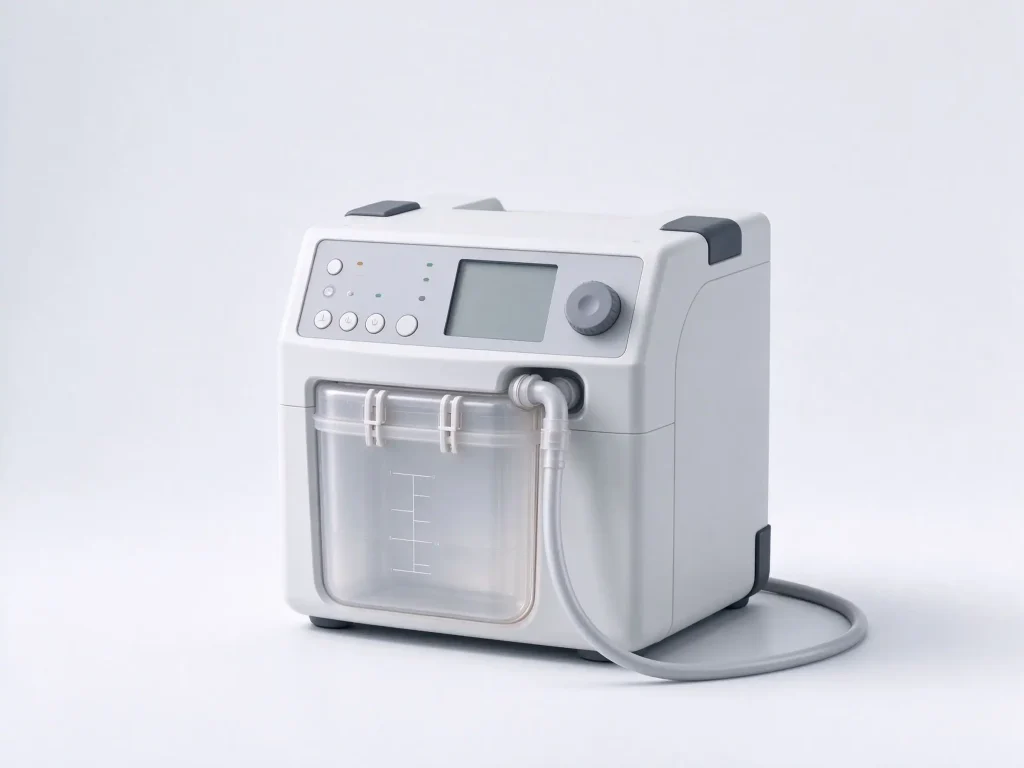
An FCC certified medical battery OEM is a battery pack manufacturer that designs, builds and supports custom lithium-ion battery assemblies for medical devices in a way that helps the finished product meet United States Federal Communications Commission (FCC) electromagnetic compatibility (EMC) requirements, together with the broader safety, quality and transport standards that medical equipment must satisfy before it reaches hospitals, clinics and home-care users.
From an engineering perspective, the phrase deserves a precise reading. The FCC does not normally certify a bare chemical cell or a passive battery in isolation; its authorization rules apply to electronic devices that may emit radio-frequency energy. In practice, a medical battery pack today is rarely passive: it contains a battery management system (BMS), protection circuitry, fuel-gauge and communication electronics, and sometimes wireless modules. These circuits can contribute conducted and radiated emissions, and the pack supplier must hand the device manufacturer the design evidence, test data and documentation needed to complete the product’s FCC authorization.
This guide, written from inside the battery R&D team, explains what FCC compliance actually means for a medical battery pack, which standards sit alongside the FCC requirements, the engineering capabilities buyers should verify, and a practical framework for comparing medical battery OEM partners. The goal is to help medical-device teams source a compliant, traceable and manufacturable battery program without relying on vague marketing claims.
2. What FCC Compliance Means for a Medical Battery Pack
2.1 FCC Part 15 Subpart B: SDoC vs Certification
Most medical electronics fall under 47 CFR Part 15 Subpart B, which covers unintentional radiators — devices that generate radio-frequency energy internally but are not designed to emit radio waves by radio. Two authorization routes are defined in §15.101 and Part 2 Subpart J:
- Supplier’s Declaration of Conformity (SDoC): the usual route for unintentional radiators. The responsible party has the product tested at an accredited laboratory, builds the supporting technical and test documentation, and declares conformity; no FCC-issued grant is required.
- Certification: a formal authorization issued by an FCC-recognized Telecommunication Certification Body (TCB). It is required for intentional radiators (for example packs or devices with Bluetooth, Wi-Fi, radio or cellular modules) and for certain device classes specified in the rules.
A competent medical battery OEM designs the pack’s BMS, switching regulators and communication lines to keep emissions low, provides layout and filtering recommendations, and supplies the reports and internal wiring records that the system integrator uses to choose and complete the correct route.
2.2 Class A vs Class B Emission Limits
Part 15 Subpart B divides equipment into two emission classes. Class A is intended for industrial and commercial environments; Class B is intended for residential environments, where limits are roughly 10 dB stricter because the equipment shares space with receivers and other sensitive electronics. A medical device used in a hospital corridor may be evaluated as Class A, while a device used in patients’ homes may require Class B performance. The pack’s filtering, layout and shielding should be chosen against the target class early in design, because changing suppression after prototyping is costly.
2.3 Where the FCC Responsibility Sits: Pack Supplier vs Device Manufacturer
A frequent source of misunderstanding is who holds the FCC responsibility. The legal responsible party is normally the manufacturer or importer that places the finished electronic device on the U.S. market, not the component maker further down the supply chain. The battery OEM’s role is to contribute compliant sub-assemblies and traceable evidence:
- Passive cells and packs without active electronics do not, by themselves, require an FCC authorization.
- Packs with an active BMS, DC-DC converter, fuel gauge or SMBus/I²C interface must be designed so that their emissions do not compromise the finished device’s EMC performance.
- Packs integrating a wireless module inherit the intentional-radiator rules, and the module’s FCC certification, antenna design and integration instructions must be documented.
One boundary worth checking: §15.103(e) exempts specialized medical digital devices generally used under the direction or supervision of a licensed health-care practitioner, whether in a facility or a patient’s home. That exemption does not apply to non-specialized devices marketed through retail channels to the general public, nor to devices used for record keeping or purposes not directly connected with medical treatment. Buyers should confirm which category their product falls into rather than assuming a blanket medical-device exemption.
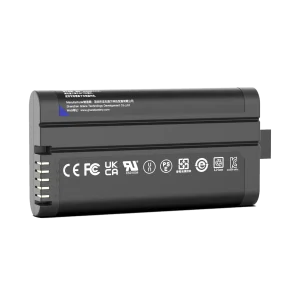
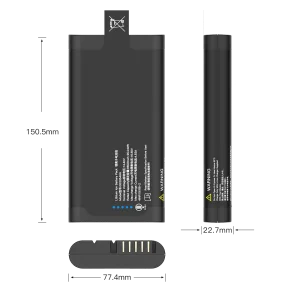
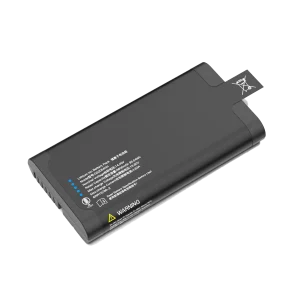
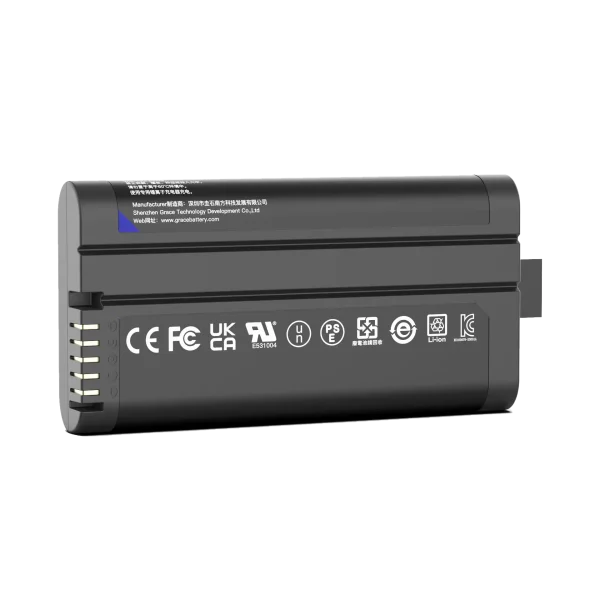
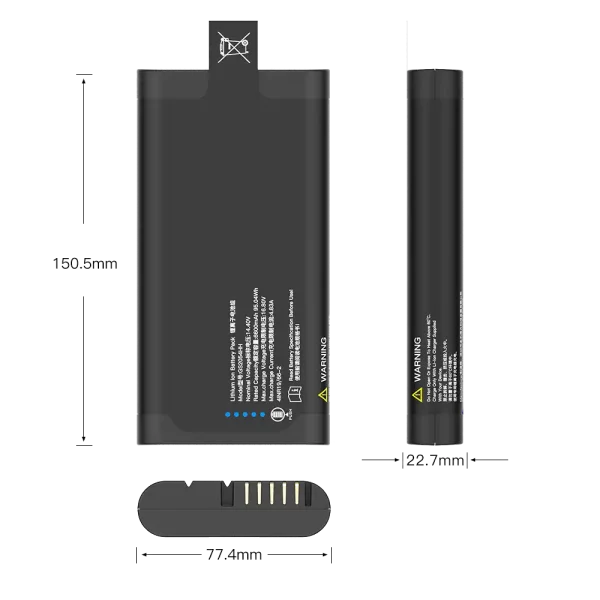
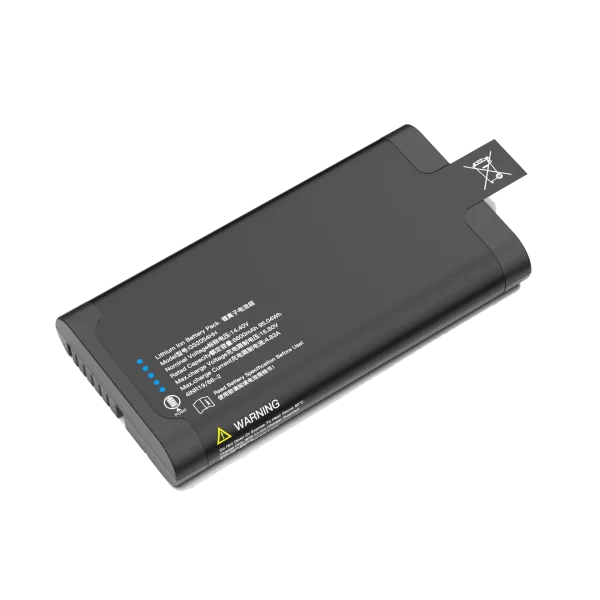
GS2054HH
14.4V/6900mAh/95.04Wh
3. The Compliance Matrix for Medical Battery Packs
FCC EMC is only one layer of a medical battery program. The table below lists the standards and regulations that an OEM should address together, and what each means for the pack design.
| Standard / Regulation | Scope | What It Means for the Battery Pack |
| 47 CFR Part 15 Subpart B (FCC) | U.S. EMC limits for unintentional radiators; conducted and radiated emissions. | BMS and power circuitry designed for low noise; filtering, layout and test evidence to support SDoC or Certification of the finished device. |
| IEC 60601-1 / EN 60601-1 | General safety and essential performance of medical electrical equipment. | The parent device-level standard; the pack is assessed within single-fault conditions, battery marking, replacement provisions and overcharge/overdischarge protection. |
| IEC 60601-1-2 (EMC) | Electromagnetic compatibility for medical electrical equipment. | Pack and BMS must contribute controlled emissions and adequate immunity in the device’s intended electromagnetic environment. |
| IEC 62133-2 | Safety requirements for portable sealed lithium-ion cells and batteries. | Cell and pack safety against overcharging, short circuit, forced discharge, overheating and mechanical abuse; commonly backed by a CB test certificate. |
| UL 1642 / UL 2054 | North-American safety standards for lithium cells and battery packs. | Cell-level and pack-level safety evaluation typically requested by North-American customers and NRTL certification. |
| UN 38.3 (UN Manual of Tests and Criteria) | Transport safety testing for lithium cells and batteries, tests T1–T8. | Required before lithium cells and batteries can be shipped by air, sea and road; a UN38.3 summary must accompany the shipment. |
| ISO 13485 | Quality management system for medical devices. | Demonstrates controlled design, production, traceability, change control and post-market procedures that medical-device buyers and regulators audit. |
| Regulation (EU) 2023/1542 | EU batteries and waste batteries: safety, sustainability, labeling, due diligence and end-of-life. | Applies to packs placed on the EU market; CE marking, labeling, capacity and chemical-content information, and phased QR-code / battery-passport obligations must be planned into the design. |
| RoHS / UKCA | Restriction of hazardous substances; UK conformity marking. | Material compliance and marking documentation for EU and UK market access, where applicable. |
Note: standards evolve, and harmonized editions and transition dates should be confirmed against the current official publication and the device’s intended market before design freeze.
4. Core Engineering Capabilities to Look For
A technically credible medical battery OEM is judged on its engineering depth, not on a compliance checklist alone. The following capabilities are what an R&D engineer would expect to see demonstrated during evaluation.
4.1 Smart BMS with Protection and Fuel Gauging
The BMS should provide cell-voltage, current and temperature monitoring; overcharge, overdischarge, over-current and short-circuit protection; balanced charging; and reliable state-of-charge and state-of-health estimation. For medical equipment, redundancy of protection and predictable behavior under single-fault conditions matter more than maximizing energy density.
4.2 SMBus / I²C Communication and Data Reporting
Many medical devices read battery data through SMBus or a similar digital interface: voltage, current, remaining capacity, cycle count, temperature and alarm flags. The OEM should be able to implement the required command set, profile the fuel gauge to the actual cell chemistry and load profile, and hand over communication protocols and register documentation to the device firmware team.
4.3 Cell Chemistry Selection, Grading and Traceability
The supplier should match chemistry (for example lithium-ion NMC or LFP variants where appropriate) to energy density, cycle life, temperature range, safety and cost targets, and should keep cell-level lot traceability. Cell datasheets, grade criteria and incoming-inspection records should be auditable under an ISO 13485-aligned quality system.
4.4 Thermal, Mechanical and Electrical Design
Pack design must address thermal runaway containment where required, mechanical retention and connector choice, crush and drop robustness, insulation and creepage/clearance, and the device’s enclosure integration. EMI design — grounding, filtering, separation of noisy and sensitive lines, and shielding — should be considered in the layout stage rather than added afterward.
4.5 Documentation and Regulatory Package
A production-ready OEM should deliver a structured package: BOM with cell and component certifications, cell and pack test reports, UN38.3 summary, BMS specification, communication protocol, drawing and 3D model, labeling and material declarations, and traceability records. This package shortens the customer’s regulatory submission and internal design review.
5. How to Compare Medical Battery OEM Partners
Rather than comparing vendors on price alone, evaluate each candidate against the dimensions that determine compliance risk, project timing and long-term supply stability. The table below summarizes a practical comparison framework.
| Evaluation Dimension | What to Verify | Warning Sign |
| Quality system | Documented ISO 13485-aligned design and production controls, change control and supplier management. | No quality manual, no audit records, or ad-hoc production outside a controlled system. |
| Compliance evidence | Actual cell/pack test reports and certificates on file; clear statement of which FCC route the pack supports and which responsibility stays with the device maker. | Generic claims of “certified” without reports, or pressure to accept the pack as fully FCC-certified on its own. |
| BMS and communication | Proven smart-BMS design, SMBus/I²C profiles, fuel-gauge calibration and alarm handling for medical loads. | Basic protection board only, no digital fuel gauge, or no protocol documentation. |
| EMI / FCC readiness | EMC-aware layout, filtering and characterization data; experience supporting SDoC or Certification submissions. | Emissions treated as a last-minute test with no pre-compliance measurements. |
| Traceability | Cell lot tracking, incoming inspection records and full BOM traceability from pack down to cell. | Mixed cell sourcing without lot records or change notification. |
| Design support | Application engineers who review load profile, duty cycle, thermal and mechanical requirements before quoting. | Price-only quotation with no requirements review or electrical modeling. |
| Regulatory scope | Coverage of target markets: U.S. FCC, IEC/UL safety, UN38.3, EU 2023/1542, RoHS, UKCA as applicable. | One-size-fits-all documentation that ignores destination-market rules. |
| Post-market support | Failure analysis, corrective action, spare-parts continuity and documentation retention. | No defined feedback loop or long-term record retention. |
As an illustration of how this framework reads in practice, TEFOO works as an OEM/ODM partner for medical and industrial device makers, developing custom smart-BMS lithium-ion packs with SMBus/I²C communication, cell-level traceability and a documentation package prepared to support the integrator’s regulatory and FCC submission. Certificates and test reports are configuration- and project-specific and are provided under confidentiality during evaluation, rather than quoted as blanket certifications.
6. Typical OEM Battery Program Workflow
- Requirements definition: operating voltage and capacity, load profile, duty cycle, cycle life, temperature range, mechanical envelope, connectors, communication protocol and target markets.
- Concept and cell selection: chemistry and cell form-factor selection, preliminary BMS architecture, thermal and mechanical concept, and cost/feasibility estimate.
- Design and prototyping: schematic and layout, BMS and fuel-gauge tuning, prototypes for bench validation, load testing and pre-compliance EMC measurement.
- Verification and certification support: safety, transport and environmental testing; compilation of reports and documentation to support the customer’s SDoC, Certification and device-level regulatory submission.
- Production and traceability: controlled manufacturing, incoming inspection, lot traceability, final inspection and released documentation per production batch.
- Post-market: failure feedback, corrective action, engineering change notice and long-term record retention.
7. Frequently Asked Questions
Q: What does “FCC certified medical battery OEM” mean?
A: It describes a battery pack manufacturer whose designs and documentation help medical-device products satisfy FCC EMC requirements. The OEM contributes low-emission pack design, BMS circuitry, test data and supporting records; the formal FCC authorization (SDoC or Certification) is completed for the finished electronic device by the responsible manufacturer or importer.
Q: Is a medical battery pack itself FCC certified?
A: Usually no. A passive chemical cell or battery does not by itself require FCC authorization. FCC rules apply to electronic devices; a pack with an active BMS, DC-DC converter, fuel gauge or wireless module contributes emissions data and design evidence to the finished device’s authorization. A pack containing a Bluetooth or Wi-Fi radio falls under the intentional-radiator rules.
Q: What is the difference between FCC SDoC and Certification?
A: SDoC (Supplier’s Declaration of Conformity) is the common route for unintentional radiators: testing at an accredited lab, technical documentation and a supplier declaration, without an FCC-issued grant. Certification is a formal TCB-issued authorization required for intentional radiators such as wireless modules and for certain specified device categories.
Q: Which standards apply to a medical battery besides FCC?
A: Common requirements include IEC 60601-1 and 60601-1-2 for medical equipment safety and EMC, IEC 62133-2 and UL 1642/UL 2054 for cell and pack safety, UN38.3 for transport, ISO 13485 for the quality system, and EU 2023/1542, RoHS and UKCA for EU/UK market access where applicable.
Q: Why does SMBus matter in a medical battery pack?
A: SMBus lets the device read voltage, current, remaining capacity, cycle count, temperature and alarm flags from the fuel gauge. This supports reliable power management, low-battery warnings and safe operation; the OEM must match the gauge profile to the actual cells and load and provide the protocol documentation to the firmware team.
Q: Does a medical battery need UN38.3 and ISO 13485?
A: UN38.3 transport testing is required before lithium cells and batteries can be shipped by air, sea or road. ISO 13485 is not a battery test standard; it describes the medical-device quality management system under which a supplier designs and produces, and it is commonly required or audited by medical-device buyers and regulators.
Q: How long does a custom medical battery OEM program take?
A: Timing depends on complexity, cell availability, testing and certification route. A typical program moves through requirements, concept, prototyping, verification and production; medical-grade validation and regulatory documentation can add weeks to months, so requirements and target markets should be fixed early to avoid rework.
Q: What documentation should a compliant medical battery supplier provide?
A: Expect a BOM with component certificates, cell and pack test reports, UN38.3 summary, BMS specification, communication protocol, mechanical drawings, labeling and material declarations, and lot traceability records. These let the device manufacturer complete its own design review, risk file and regulatory submission.
8. Conclusion
Choosing an FCC certified medical battery OEM is a decision about engineering depth, documentation discipline and regulatory alignment, not simply about unit price. The right partner designs a smart-BMS, communication-ready pack with controlled emissions, supports the finished device’s FCC SDoC or Certification route, and delivers the safety, transport, quality and market-access records that medical products require. By auditing candidates against a clear compliance matrix and comparison framework, medical-device teams can reduce certification risk, shorten submission time and build a battery program that remains traceable and supportable over the product life cycle.
9. Authoritative References
- 47 CFR Part 15 Subpart B — Unintentional Radiators, eCFR: https://www.ecfr.gov/current/title-47/chapter-I/subchapter-A/part-15/subpart-B
- 47 CFR §15.101 — Equipment authorization of unintentional radiators: https://www.ecfr.gov/current/title-47/chapter-I/subchapter-A/part-15/subpart-B/section-15.101
- 47 CFR §15.103 — Exempted devices: https://www.ecfr.gov/current/title-47/chapter-I/subchapter-A/part-15/subpart-B/section-15.103
- Regulation (EU) 2023/1542 concerning batteries and waste batteries, EUR-Lex: https://eur-lex.europa.eu/legal-content/EN/TXT/HTML/?uri=CELEX:32023R1542
- European Commission — Batteries: https://environment.ec.europa.eu/topics/waste-and-recycling/batteries_en