1. Introduction: What Is a Battery Pack with SMBus?
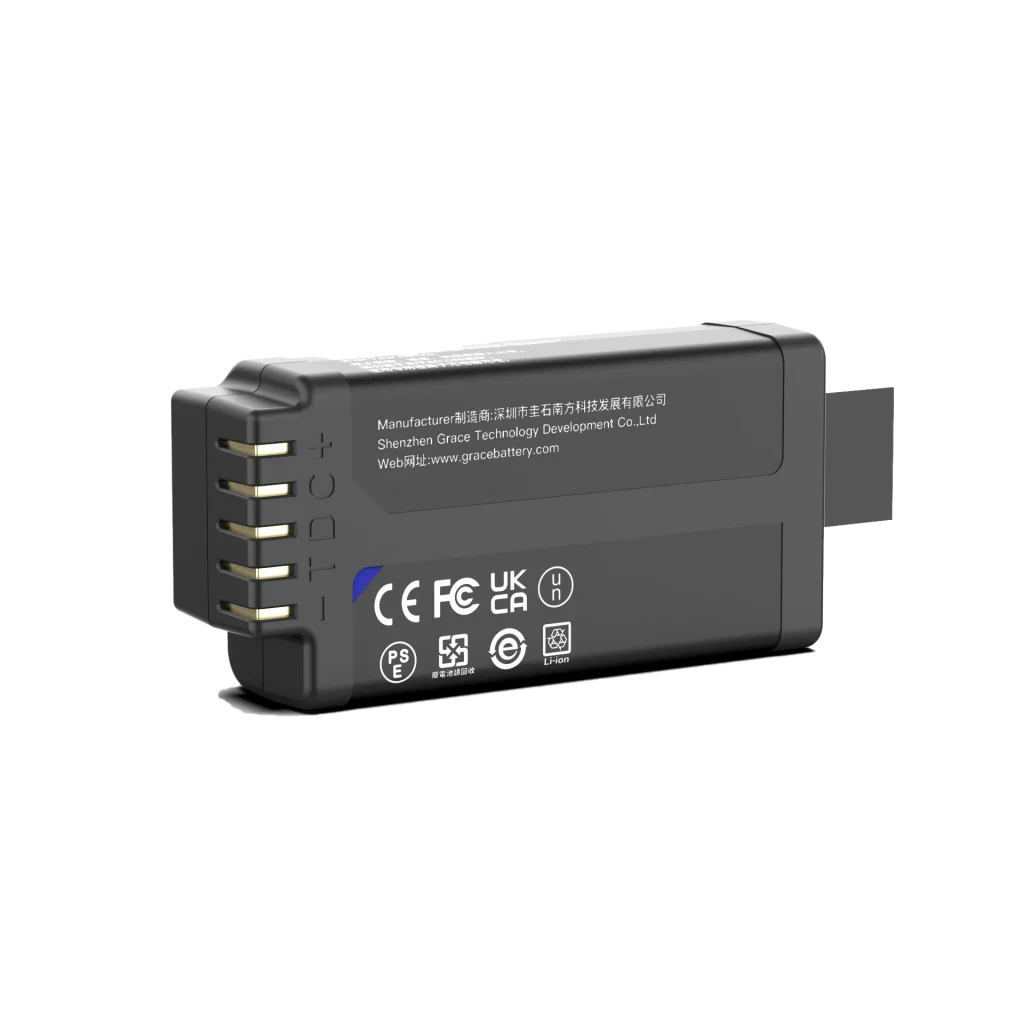
A battery pack with SMBus is a rechargeable lithium-ion battery assembly whose built-in battery management system (BMS) communicates with the host device and the charger through the System Management Bus (SMBus), a two-wire serial bus derived from I²C. Instead of exposing only raw terminal voltage and a few discrete protection signals, the pack reports standardized operating data — pack voltage, current, temperature, state of charge (SOC), state of health (SOH), remaining capacity, cycle count and alarm flags — using the Smart Battery System (SBS) data commands defined by the SBS-IF (Smart Battery System Implementers Forum).
In practical terms, an SMBus battery pack is a smart pack: the host can read how much energy remains, request charge parameters, and receive early warnings before a fault occurs, rather than estimating battery level from a single voltage measurement. For OEMs of portable medical devices, test and measurement instruments, industrial PDAs and field equipment, this communication channel directly affects user-facing runtime accuracy, charging safety, fleet traceability and regulatory documentation.
2. How an SMBus Battery Pack Works
2.1 Physical and protocol layer
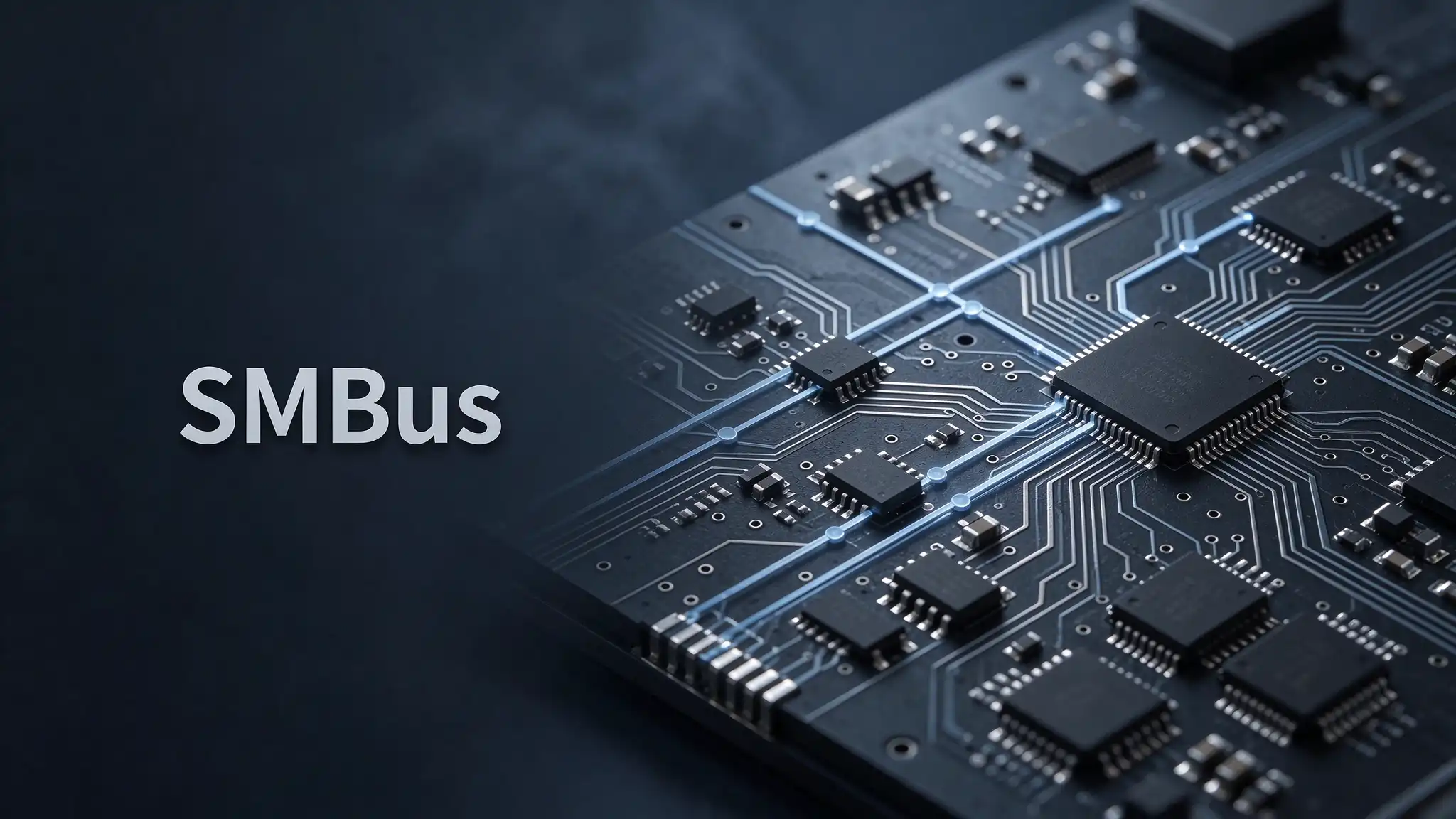
- SMBus is a two-wire bus: SMBC (clock) and SMBD (data), together with a common ground, typically operating at 3.3 V logic level.
- The standard bus clock is 100 kHz; newer SMBus 3.x revisions support higher-speed operation. The bus may be shared by the host controller, the smart charger and the battery pack.
- The pack’s BMS or fuel gauge acts as an SMBus slave at a fixed address; the host (SMBus master) reads commands, and the pack can alert the host through an ALERT# signal when a measured or calculated limit is crossed.
- Electrical design must account for pull-up resistors on the clock and data lines, bus capacitance budgeting, signal edge behavior and noise margins, especially in medical and industrial EMC environments.
2.2 SBS software layer
On top of the SMBus physical layer, the Smart Battery Data Specification defines the commands through which the battery exposes its state. Typical commands include Voltage, Current, Temperature, Relative State of Charge, Remaining Capacity, Full-Charge Capacity, Design Capacity, Cycle Count, Manufacturer Name, Serial Number and Battery Status. The host reads SOC and remaining capacity for its user interface; the smart charger reads battery parameters to adapt charge voltage and current; and the pack broadcasts critical alarms such as over-temperature, over-current or cell imbalance through the SMBus alert mechanism.
3. Key Data Exposed over SMBus
The table below lists the principal SBS data fields that an SMBus battery pack typically makes available, together with how the host or charger uses them.
| SBS data field | Typical unit | What the host / charger uses it for |
| Pack Voltage | V | Runtime estimation and undervoltage detection |
| Current | A | Charge/discharge power evaluation and coulomb counting |
| Temperature | °C | Thermal protection and charge-current derating |
| Relative SOC | % | Battery gauge and remaining-runtime display |
| Remaining Capacity | mAh / Wh | Predictive runtime for the host application |
| Full-Charge / Design Capacity | mAh / Wh | State-of-health estimation |
| Cycle Count | cycles | Warranty and service planning |
| SOH / Capacity Retention | % | End-of-life and replacement decision |
| Battery Status / Alarm Bits | bit flags | Fault and warning handling in the host |
| Manufacturer / Serial No. / Date | text / number | Traceability and fleet management |
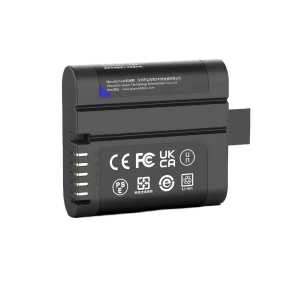
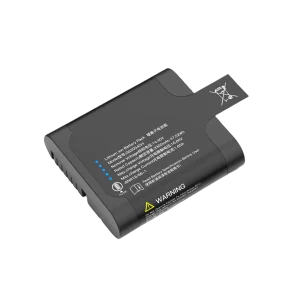
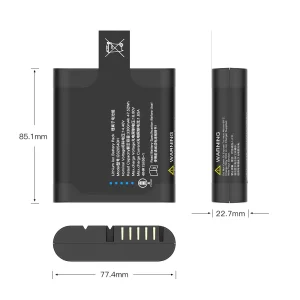
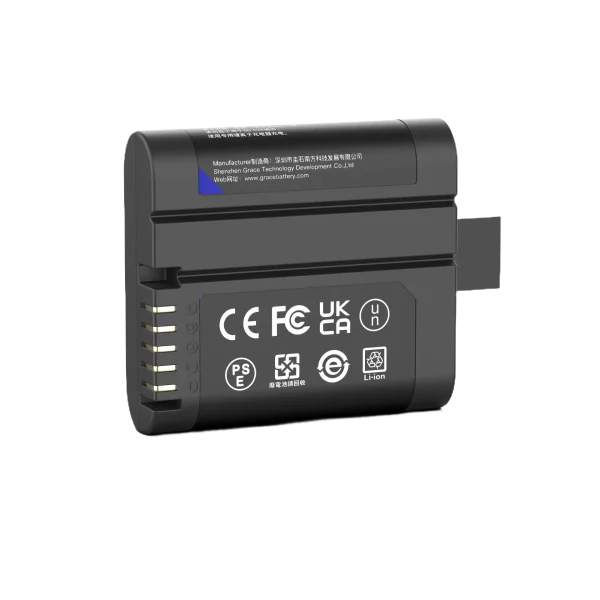
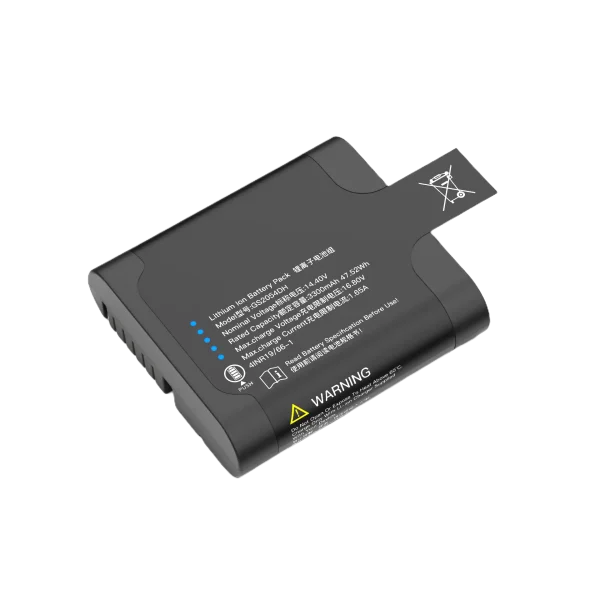
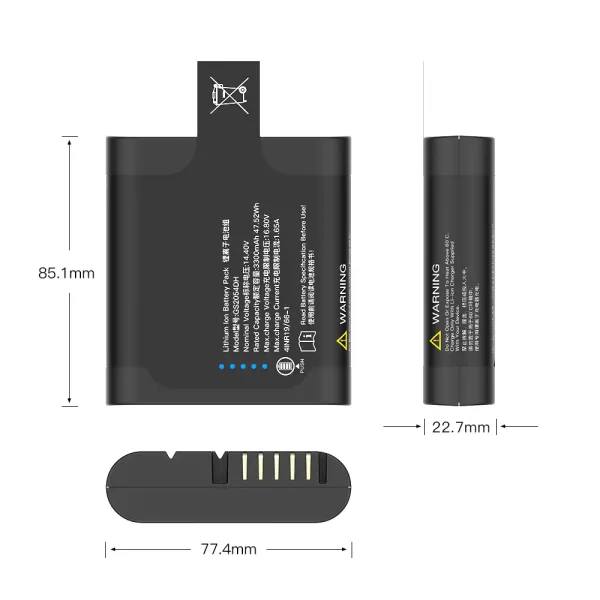
GS2054DH
14.4V/3450mAh/47.52Wh
4. Benefits of an SMBus-Equipped Battery Pack
- Accurate, calibrated fuel gauge: the host displays a reliable remaining-runtime estimate instead of a rough voltage-based approximation.
- Adaptive, safer charging: the charger follows battery-reported limits, reducing overcharge stress and improving cycle life.
- Granular fault diagnosis: alarms and measured data support field service and root-cause analysis.
- Fewer discrete signal wires: telemetry is carried over two bus wires, simplifying connector and harness design.
- Traceability and compliance: serial number, manufacture date and cycle data support quality records and EU 2023/1542 documentation.
- Standardized software interface: the SBS command set is defined by a public specification, easing integration across host platforms.
5. Communication Interface Comparison
SMBus is not the only way to connect a battery pack to a device. The comparison below summarizes the common interface options for smart and semi-smart lithium packs.
| Aspect | SMBus | CAN bus | Analog / 1-Wire | HDQ |
| Topology | Two-wire, multi-drop | Two-wire differential | Single signal line + ground | Single-wire |
| Data richness | Rich SBS telemetry | Rich, application-defined frames | Voltage, pulse or ID only | Basic ID / voltage |
| Typical use | Smart packs, medical and industrial portable devices | High-voltage/high-power systems, heavy industrial | Simple replacement packs, basic gauges | Some consumer and telecom packs |
| Cost level | Low to medium | Higher (transceiver and protocol stack) | Low | Low |
| Noise immunity | Good with proper layout | Excellent | Moderate | Moderate |
| Standardization | Public SBS command set | Frames often application-defined | Mostly vendor-specific | Vendor-specific |
SMBus is well suited to compact smart packs where standardized SOC, SOH and alarm reporting matter. CAN remains the preferred choice for high-voltage, high-power and heavy industrial architectures, where differential signaling and a broader frame definition are required.
6. Engineering Design Considerations
6.1 BMS and fuel-gauge architecture
- Define cell selection, series/parallel configuration, protection FETs, current sensing (shunt or coulomb counter) and the fuel-gauge algorithm early in the program.
- The SMBus firmware maps measured and calculated values to SBS commands; the host register map and command set must be agreed at design freeze to avoid late integration changes.
6.2 Electrical and layout
- Size pull-up resistors against bus capacitance; choose a clean bus topology; keep SMBC and SMBD away from power-current loops; add ESD and transient protection on connector pins; provide isolation where host and pack ground potentials differ.
6.3 Compatibility and validation
- Verify host read/write access, alert response, hot-swap behavior and charger handshake on the bench before system integration; repeat after any firmware or connector change.
6.4 Thermal and mechanical
- Place temperature sensors close to the heat-generating cells, provide adequate enclosure ventilation, and ensure connector retention and mechanical impact performance for portable and field use.
7. Compliance, Testing and Certifications
Applicable requirements depend on cell chemistry, pack energy, end equipment and destination market. The table lists the standards and regulations most commonly relevant to an SMBus lithium battery pack supplied into medical and industrial channels.
| Standard / Regulation | Scope for an SMBus battery pack |
| IEC 62133-2 | Safety requirements for sealed portable lithium cells and packs. |
| UN38.3 | Transport safety tests (T1–T8) for lithium batteries shipped by air, sea or road. |
| ISO 13485 | Quality management system for components entering medical-device supply chains. |
| IEC 60601-1 series | Medical electrical equipment safety context; the pack contributes to the host risk file. |
| CE / UKCA | Market-access marking for the EU and the United Kingdom. |
| EU 2023/1542 | Battery sustainability, safety, labelling and information duties; labelling requirements apply from 2026, QR-code marking from 2027, and a digital battery passport for qualifying industrial batteries from 18 February 2027. |
| RoHS / REACH | Restricted-substances documentation for the EU market. |
The exact clauses that apply should be confirmed with the notified body or compliance team for the specific product and target market.
8. Selecting an SMBus Battery Pack Supplier: Evaluation Dimensions
Rather than comparing vendors by headline capacity or marketing claims, OEMs should score suppliers on verifiable engineering and quality dimensions. The table below sets out the evaluation criteria that matter most for an SMBus smart pack program.
| Evaluation dimension | What to verify | Why it matters |
| BMS / fuel-gauge capability | In-house BMS firmware, SBS command implementation, gauge algorithm tuning | Determines SOC accuracy and alarm reliability. |
| SMBus / SBS compatibility | Register map, command set, alert behavior, host-side integration support | Avoids late-stage protocol mismatch between pack and device. |
| Customization | Cell configuration, mechanical form factor, connector, protection and charge parameters, OEM branding | Fits the device envelope and the intended use case. |
| Quality system | ISO 9001 / ISO 13485 alignment, traceability, incoming cell control, audit records | Consistent batch quality and medical documentation. |
| Test and validation | Electrical, environmental, life-cycle and abuse tests; reports and certificates | Reduces field-failure and certification risk. |
| Certification portfolio | UN38.3, IEC 62133-2, CE/UKCA and market-specific approvals | Supports smooth market access. |
| Supply chain | Cell sourcing stability, lead time, production capacity, after-sales support | Program continuity after launch. |
TEFOO designs smart lithium battery packs with an integrated BMS and SMBus/SBS communication for medical and industrial equipment. The company offers OEM customization of capacity, form factor, protection parameters and communication profiles, supported by controlled quality processes and validation reports. Specific certification and test data for a given project are provided in the corresponding datasheet and quotation package.
9. Common Applications
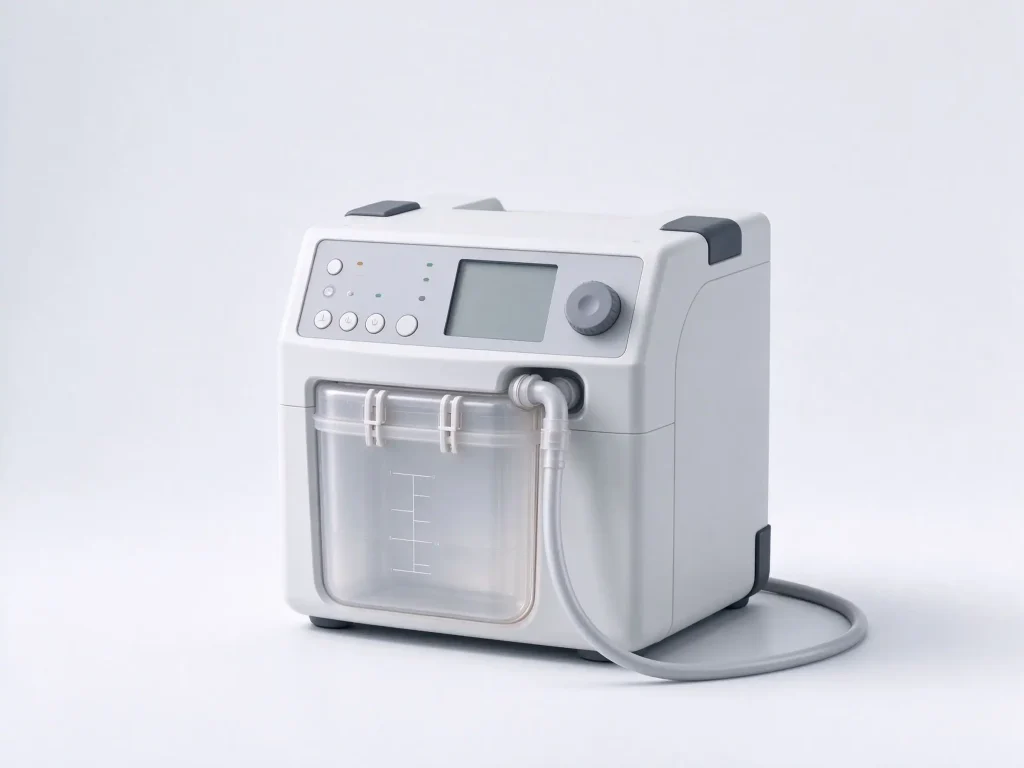
- Medical: patient monitors, ventilators, infusion pumps, portable ultrasound, wearable medical devices, surgical power tools and medical cart power.
- Test and measurement: portable oscilloscopes, geological radar (GPR), total stations, portable CMM, handheld analyzers, depth finders and field data loggers.
- Industrial: rugged industrial PDAs, tablets, portable communication units and field-maintenance equipment.
- Any portable device that requires accurate remaining-runtime indication and safe, traceable charging.
10. Frequently Asked Questions
Q1. What does SMBus mean on a battery pack?
SMBus (System Management Bus) is the two-wire serial bus over which the pack’s BMS exchanges standardized data with the host and charger. An SMBus pack reports voltage, current, temperature, SOC, SOH, capacity and alarm flags according to the SBS specification.
Q2. Is SMBus the same as I²C?
SMBus is derived from I²C and uses a similar two-wire clock/data structure, but it defines device protocols, timing, alert signaling and SBS battery commands that plain I²C does not. An SMBus device can often coexist with I²C devices with careful electrical design, but protocol behavior must follow the SMBus specification.
Q3. What is the difference between an SMBus battery pack and a non-SMBus analog pack?
An analog pack mainly outputs terminal voltage and basic protection signals, so the host estimates charge level crudely. An SMBus pack supplies calibrated SOC, remaining capacity, SOH, cycle count and alarms, enabling an accurate runtime display and adaptive charging.
Q4. Can an SMBus battery pack work with any host?
It works with a host that implements the SMBus/SBS master side and matches the agreed voltage level, register map and command set. Connector, electrical polarity and communication profile must be verified during integration; a custom OEM pack can be aligned to the host’s protocol requirements.
Q5. Which SBS data are most important for medical devices?
Temperature, current, voltage, relative and absolute SOC, remaining capacity and alarm flags are typically critical for patient-facing equipment; cycle count and serial number support service records and traceability under the applicable quality-management process.
Q6. What certifications should an SMBus lithium pack have?
The common baseline includes UN38.3 for transport, IEC 62133-2 for cell and pack safety, and CE/UKCA for market access. Medical programs commonly require ISO 13485-aligned quality documentation, and destination-market rules under EU 2023/1542 may add labelling and information obligations.
Q7. How accurate is the SOC reported by an SMBus pack?
Accuracy depends on the fuel-gauge algorithm, current sensing, calibration and aging model rather than on SMBus itself. A well-tuned BMS can deliver dependable runtime indication over pack life; the host should still retain its own low-battery safeguards.
Q8. Can SMBus packs be customized for a specific device?
Yes. OEM customization typically covers cell configuration, capacity, mechanical dimensions, connector, protection thresholds, charge parameters and the SMBus/SBS command profile, aligned to the host device and the target regulatory market.
Q9. How does EU 2023/1542 affect SMBus battery packs?
The regulation imposes sustainability, safety, labelling and information duties. Labelling requirements apply from 2026, QR-code marking from 2027, and a digital battery passport for qualifying industrial batteries from 18 February 2027. SMBus traceability data such as serial number, manufacture date and cycle count can support these records, though passport obligations depend on battery category and capacity.
11. Conclusion
A battery pack with SMBus turns a passive energy container into an observable, controllable power node. For medical and industrial OEMs, the core engineering value is accurate runtime visibility, safer charging, faster fault diagnosis and cleaner traceability. When selecting a supplier, decisions should be based on verifiable BMS and firmware capability, protocol compatibility, quality-system evidence and certification support rather than headline capacity alone.
References
[1] System Management Bus (SMBus) Specification, SMBus Implementers Forum — https://www.smbus.org/specs/
[2] Smart Battery Data Specification Revision 1.1, SBS-IF — https://sbs-forum.org/specs/sbdat110.pdf
[3] Regulation (EU) 2023/1542 concerning batteries and waste batteries, EUR-Lex — https://eur-lex.europa.eu/legal-content/EN/TXT/?uri=CELEX:32023R1542
[4] Batteries policy overview, European Commission, Environment — https://environment.ec.europa.eu/topics/waste-and-recycling/batteries_en