By the Senior Battery R&D Engineering Team, TEFOO Energy
Introduction
Portable medical devices — from patient monitors and infusion pumps to portable ultrasound machines and wearable diagnostic tools — depend on battery packs that deliver uninterrupted, safe, and predictable power. Unlike consumer electronics, where a battery failure causes inconvenience, a power interruption in a clinical setting can compromise patient safety and delay critical care. This is why medical device OEMs increasingly turn to specialized custom battery pack manufacturers rather than off-the-shelf cells.
The global market for lithium-ion batteries in medical devices was valued at approximately USD 4.71 billion in 2025 and is projected to reach USD 10.0 billion by 2035, growing at a compound annual growth rate (CAGR) of 7.8%. A separate industry estimate places the medical lithium battery segment at roughly USD 3.2 billion in early 2026, with a faster expansion trajectory toward USD 9.8 billion by 2033. The divergence between these figures reflects different scope definitions — the broader number includes implantable and diagnostic equipment, while the narrower figure focuses on rechargeable packs for portable devices. Regardless of the estimate, the trend is clear: demand for high-reliability, custom-engineered battery solutions is accelerating, driven by the rise of home-based care, telemedicine, and the Internet of Medical Things (IoMT).
As engineers who have spent over a decade designing smart battery packs for medical and industrial OEMs, we wrote this guide to help device manufacturers understand what a custom battery pack really entails, what compliance and performance standards matter, and how to evaluate an OEM partner. Our goal is to give you an engineering-level view — not a marketing pitch.
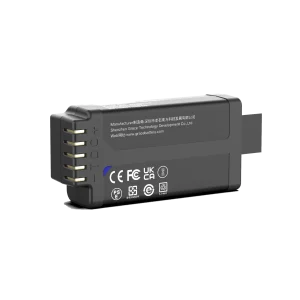
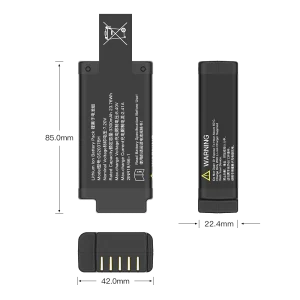
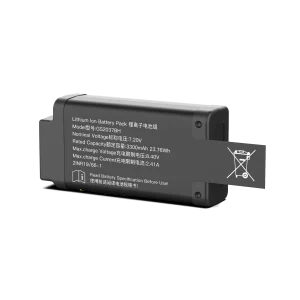
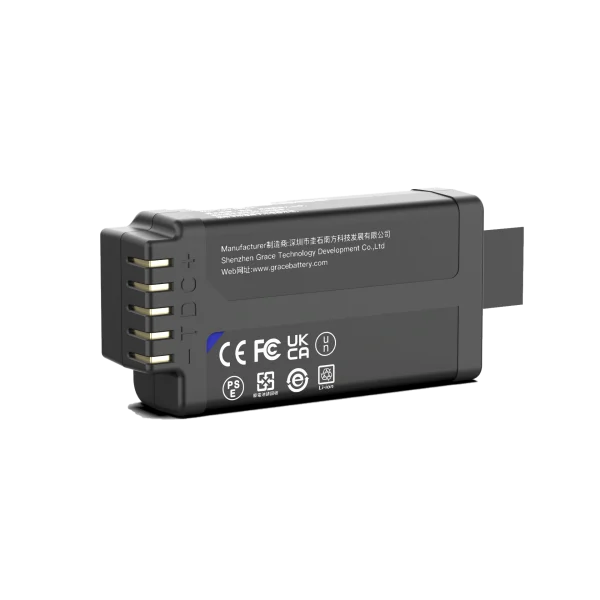
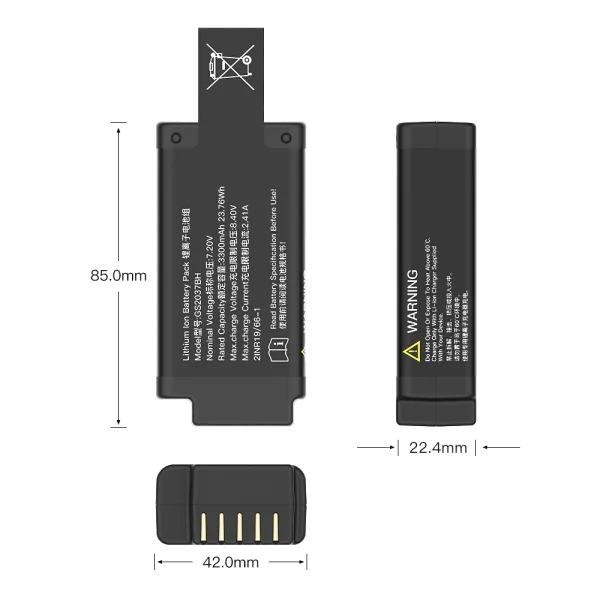
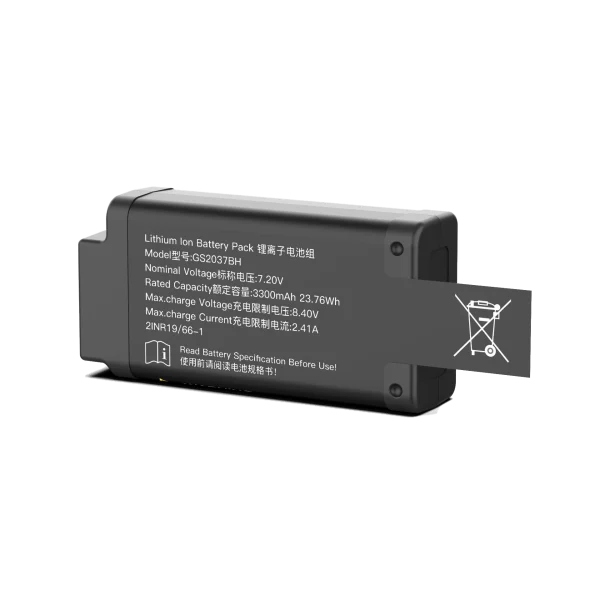
GS2037BH
7.2V/3450mAh/23.76Wh
Key Engineering Considerations for Portable Medical Battery Packs
1. Chemistry Selection
Choosing the right cell chemistry is the first and most consequential decision. For portable medical equipment, three chemistries dominate:
| Chemistry | Typical Voltage | Energy Density | Best Fit For |
| NMC (Nickel Manganese Cobalt) | 3.6–3.7 V/cell | High (150–220 Wh/kg) | Patient monitors, infusion pumps, portable ultrasound |
| LiPo (Lithium Polymer) | 3.7 V/cell | Medium-High, flexible form factor | Wearable devices, compact diagnostics, slim handheld tools |
| LiFePO4 (Lithium Iron Phosphate) | 3.2 V/cell | Lower (90–120 Wh/kg), longer cycle life | Stationary carts, high-cycle clinical equipment, backup power |
In our experience, NMC-based cylindrical cells (such as 18650 and 21700 formats) remain the workhorse for most portable medical devices. They offer the best balance of energy density, availability, and proven safety track record. LiPo cells are preferred when weight and shape are constrained, while LiFePO4 is chosen when cycle life and thermal stability outweigh energy density.
2. Battery Management System (BMS) Architecture
A medical-grade BMS is far more than a simple protection circuit. It must continuously monitor cell voltage, current, and temperature; balance cells; and communicate state-of-charge and health data to the host device. Core protection functions include:
- Overcharge protection: disconnects the charge path when any cell reaches 4.25–4.28 V, preventing lithium plating and thermal events.
- Over-discharge protection: cuts discharge when any cell drops below 2.5–3.0 V, avoiding irreversible capacity loss.
- Overcurrent and short-circuit protection: triggers within microseconds to prevent damage during fault conditions.
- Temperature monitoring: NTC thermistors and thermal cutoff (TCO) devices protect against overheating during charging or operation.
- State-of-charge (SOC) and state-of-health (SOH) fuel gauging: uses advanced gas-gauge ICs (e.g., TI bq series) to provide accurate remaining runtime data.
For higher-end devices, SMBus (System Management Bus) or I2C communication allows the medical equipment to read battery voltage, current, temperature, and cycle count directly from the pack. This is not optional for modern devices — it is how clinical staff know how much runtime remains before the next charge, and how device manufacturers implement predictive maintenance.
3. Safety Standards and Regulatory Compliance
Medical batteries operate in a heavily regulated environment. A custom pack manufacturer must understand the overlapping standards that apply to the battery itself, the device it powers, and the markets it will be sold into. The key frameworks include:
ISO 13485: Medical device quality management system. The battery manufacturer must operate under a QMS aligned with medical device requirements, even if the pack is a component.
IEC 62133: Safety requirements for portable sealed secondary lithium cells and batteries. This is the baseline safety test for portable battery packs shipped globally.
UL 1642 / UL 2054: Underwriters Laboratories standards for lithium cells and household/commercial battery packs. Often required for the North American market.
UN 38.3: Transport safety testing (altitude, temperature, vibration, shock, short circuit, impact, overcharge, forced discharge). Mandatory for shipping lithium batteries by air, sea, or road.
Regulation (EU) 2023/1542: The new EU Batteries Regulation, which replaced the 2006/66/EC Directive. It introduces carbon footprint requirements, digital battery passports, and — critically for medical devices — specific derogations under Article 11(3) for implantable active medical devices and certain in-vitro diagnostic devices, where interrupting battery power would directly compromise patient safety.
CE / UKCA / CCC: Marking requirements for the EU, UK, and China markets respectively, covering electromagnetic compatibility, electrical safety, and environmental reliability.
A common misconception among device OEMs is that they alone are responsible for regulatory compliance. In practice, the battery pack manufacturer plays a critical role: they must provide test reports, technical documentation, and manufacturing traceability that the device manufacturer can reference in their own regulatory submissions. Choosing a partner who already holds ISO 13485 and IEC 62133 certifications can shave months off your device certification timeline.
4. Communication Protocols
Modern smart medical batteries use SMBus 1.1 or I2C to communicate with the host device. This interface exposes data such as:
- Instantaneous voltage, current, and temperature
- State-of-charge (SOC) percentage and remaining runtime
- State-of-health (SOH) and cycle count
- Battery serial number, manufacturing date, and chemistry information
- Fault and warning flags (over-temperature, over-current, cell imbalance)
From an engineering perspective, the choice of fuel-gauge IC matters. Texas Instruments bq-series chips (such as the bq40z50 family) are widely used in medical-grade applications because they support advanced impedance track algorithms and are well-documented for certification purposes.
OEM Battery Pack Manufacturer Comparison
When evaluating custom battery pack partners for portable medical equipment, it helps to compare them across concrete engineering and compliance dimensions. The table below summarizes the key evaluation criteria and how leading OEM partners in the medical battery space generally position themselves. Specific vendor data should be verified directly with each manufacturer, as capabilities and certifications evolve.
| Evaluation Dimension | TEFOO Energy | Tier-1 Consumer Battery OEMs | Component Distributors |
| Medical QMS (ISO 13485) | Dedicated medical-grade QMS, component traceability | Often ISO 9001 only; medical extension varies | No QMS; resell standard packs |
| Cell Chemistry Platforms | NMC, LiPo, LiFePO4; 3.6 V–25.2 V platforms | Primarily NMC/LiPo for consumer devices | Single chemistry, limited options |
| Smart BMS / SMBus | Medical-grade fuel gauge ICs, SMBus 1.1/I2C support | Basic protection circuits; limited SMBus | No BMS customization; standard PCM only |
| Safety Certifications | IEC 62133, UL 1642/2054, UN 38.3, CE, UKCA, CCC | IEC 62133, UL for consumer market | Minimal; relies on cell vendor certs |
| Customization Depth | Voltage, capacity, form factor, connector, firmware, communication protocol | Form-factor and capacity limited; minimal firmware support | No customization; catalog products only |
| Typical MOQ | From pilot build (~50–100 pcs) to mass production | High MOQ for custom tooling | No MOQ but no customization |
| NPI Support | Full engineering support: schematic design, DV/PV testing, regulatory documentation | Manufacturing-only support; limited engineering collaboration | No engineering support |
The takeaway: consumer-grade battery OEMs and distributors are not the right fit for medical device projects. Medical packs require a manufacturer that understands quality system documentation, can provide certified component traceability, and supports the device manufacturer through regulatory submission. Specialized medical/industrial battery OEMs like TEFOO operate at this level — they are not competing on price alone; they are competing on engineering depth, compliance readiness, and time-to-market.
How to Evaluate a Custom Battery Partner
Based on our engineering experience, here is a practical checklist for shortlisting and selecting an OEM battery manufacturer for portable medical devices:
- Verify certifications: Ask for ISO 13485, IEC 62133, and UN 38.3 certificates. Confirm they are current and cover the specific pack configuration you need.
- Request design history: Ask for examples of similar medical battery packs they have designed. What voltages, capacities, and communication protocols have they implemented?
- Understand the BMS architecture: Ask which fuel-gauge IC they use, how they perform cell balancing, and how they handle temperature protection. A vague answer here is a red flag.
- Clarify the NPI process: How long does prototyping take? What DV/PV testing do they perform before mass production? How do they handle design changes and ECNs?
- Check component traceability: Can they provide full material declarations and cell-level traceability for each production batch? This is essential for regulatory audits.
- Assess post-sales support: What is their warranty policy? Do they provide firmware updates? How do they handle field returns and corrective action?
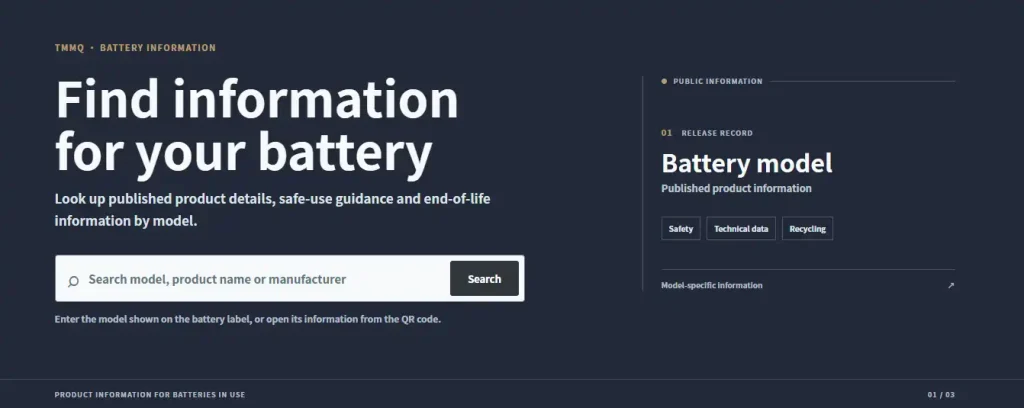
- Understand the EU 2023/1542 implications: If you sell into the EU, ask how they plan to support digital battery passport requirements and carbon footprint declarations. The regulation is phasing in, and the timeline for medical device exemptions needs careful tracking.
Frequently Asked Questions
What is the typical lead time for a custom medical battery pack?
A: For a standard smart battery platform with minor customization (voltage, capacity, connector), the lead time is typically 4–6 weeks for prototype samples and 8–12 weeks for first mass production. For a fully custom pack requiring new BMS firmware, mechanical design, and certification testing, plan for 4–6 months from design freeze to production delivery.
Can I use commercial off-the-shelf (COTS) batteries in a medical device?
A: Technically possible, but rarely advisable. COTS packs are not designed to meet medical-grade quality systems, lack full traceability, and may not support SMBus communication. For devices that require FDA/CE/NMPA certification, a custom pack built to ISO 13485 processes is the safer and often more cost-effective path in the long run.
What certifications does my battery pack need for the EU market?
A: At minimum, IEC 62133 (safety), UN 38.3 (transport), and CE marking under applicable directives. If your device is Class IIa or higher, the battery is considered a critical component, and your notified body will expect the pack to come from a certified manufacturer. Regulation (EU) 2023/1542 introduces additional sustainability and digital passport requirements that are phasing in through 2027–2028.
How does SMBus communication work in medical batteries?
A: SMBus is a two-wire serial interface (clock and data) based on I2C. The battery pack acts as a slave device, and the medical device polls it for voltage, current, temperature, SOC, and SOH data. Standard commands (ManufacturerAccess, BatteryStatus, AbsoluteStateOfCharge, etc.) are defined by the Smart Battery System (SBS) specification. This allows the device to display accurate remaining runtime and battery health to clinical staff.
What is the difference between a protection circuit module (PCM) and a battery management system (BMS)?
A: A PCM is a simple protection board with overcharge, over-discharge, and short-circuit protection — typically a few cents worth of components. A medical-grade BMS includes a fuel-gauge IC, cell balancing, temperature monitoring, and SMBus/I2C communication. It is a smart electronic system, not just a safety fuse. For portable medical devices, a true BMS is almost always required.
Can a battery manufacturer help with my FDA 510(k) submission?
A: They cannot prepare the 510(k) for you, but they can provide critical supporting documentation: test reports, electrical schematics, component listings, quality system certificates, and risk management file inputs. A specialized medical battery OEM will have experience providing these documents and can align them with your regulatory timeline.
How do EU 2023/1542 battery regulations affect medical device manufacturers?
A: The regulation introduces sustainability and labeling requirements for all batteries placed on the EU market. However, Article 11(3) provides a derogation for certain medical devices — specifically implantable active medical devices and certain in-vitro diagnostic devices — where battery removability and replaceability would compromise patient safety. For portable non-implantable medical devices, you should track the implementing guidelines and plan for digital battery passport requirements as they phase in.
Conclusion
Portable medical devices are only as reliable as the batteries that power them. As clinical care moves out of the hospital and into the home, and as IoMT devices demand richer telemetry, the bar for battery performance and safety continues to rise. A custom battery pack from an experienced OEM manufacturer is not a commodity purchase — it is a critical engineering partnership that directly impacts your device’s regulatory path, clinical usability, and long-term reputation.
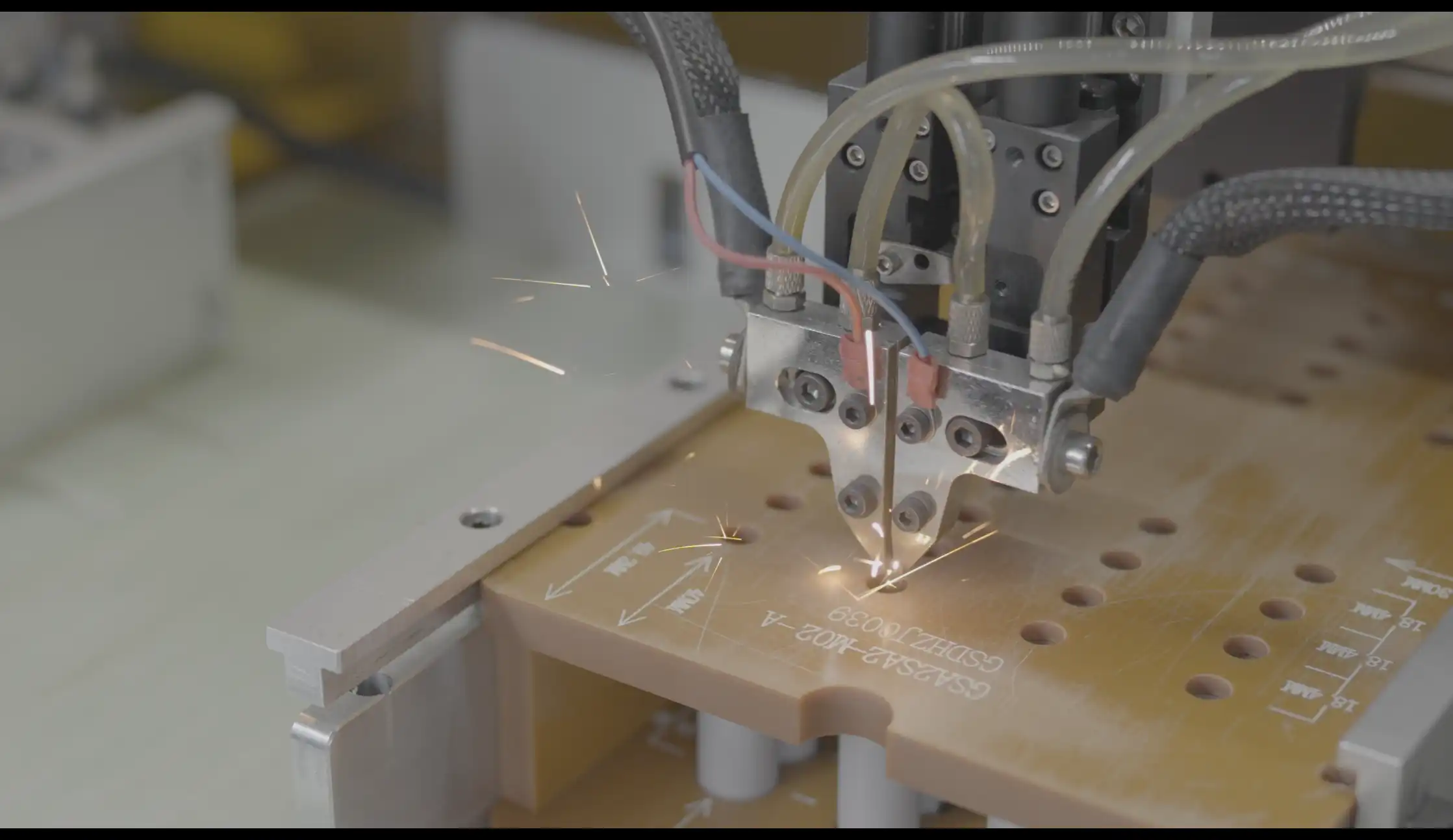
When evaluating partners, prioritize engineering depth, certification readiness, and quality system maturity over upfront cost. The cheapest pack that fails regulatory testing or needs redesign six months later is far more expensive than a well-engineered pack from a specialist who got it right the first time. At TEFOO, we work with medical device OEMs from early-stage concept through mass production, providing smart BMS design, certified manufacturing, and regulatory documentation support. If you are developing a portable medical device and need a reliable battery partner, we would be glad to discuss your requirements.
References
[1] WiseGuy Reports. “Lithium Ion Battery for Medical Device Market.” 2026. https://www.wiseguyreports.com/reports/lithium-ion-battery-for-medical-device-market
[2] openPR. “Medical Lithium Battery Market Size, Share & Growth Analysis.” March 2026. https://www.openpr.com/news/4440416/medical-lithium-battery-market-size-share-growth-analysis
[3] PW Consulting. “Global Medical Equipment Battery Pack Market 2026.” June 2026. https://pmarketresearch.com/chemi/medical-equipment-battery-pack-market/
[4] European Commission. “Regulation (EU) 2023/1542 concerning batteries and waste batteries.” EUR-Lex summary. https://eur-lex.europa.eu/summary/EN/LEGISSUM:4704179
[5] European Commission. “Commission guidelines to facilitate the harmonised application of provisions on the removability and replaceability of portable and LMT batteries in Regulation (EU) 2023/1542.” C/2026/5032. https://environment.ec.europa.eu/document/download/17491562-50cc-443a-897f-b50848ab0a8a_en?filename=C_2026_5032_1_EN_ACT_part1_v13.pdf
[6] International Electrotechnical Commission. IEC 62133:2017 — Secondary cells and batteries containing alkaline or other non-acid electrolytes — Safety requirements for portable sealed secondary lithium cells, and for batteries made from them.
[7] International Organization for Standardization. ISO 13485:2016 — Medical devices — Quality management systems.
[8] Underwriters Laboratories. UL 1642 — Standard for Lithium Batteries; UL 2054 — Standard for Household and Commercial Batteries.
[9] Texas Instruments. “Battery Management Systems Seminar.” SLYP852. https://www.ti.com/lit/ml/slyp852/slyp852.pdf
[10] TEFOO Energy. “Medical Device Battery Packs & Smart BMS Batteries.” https://www.tefoobattery.com/
Author Disclosure
This article was written by the Senior Battery R&D Engineering Team at TEFOO Energy . TEFOO is a manufacturer of custom lithium-ion battery packs and smart BMS solutions for medical, industrial, and defense OEMs. The article is intended for educational and informational purposes and does not constitute engineering, legal, or regulatory advice. Device manufacturers should consult their own regulatory affairs teams and notified bodies regarding specific compliance requirements. References to specific standards, components, or competitors are for engineering context only and do not imply endorsement.