By TEFOO Battery Engineering Team | Medical Battery Pack Division | November 2026
Executive Summary
Selecting a medical device battery pack supplier for high volume production is among the highest-risk supply-chain decisions an OEM makes. A pack that performs well in prototypes but fails at 10,000-unit scale can delay a FDA 510(k) submission by months, trigger field corrective actions, and erode hospital-channel confidence. This guide, written from the perspective of a senior battery R&D engineer, explains why design for manufacturability (DFM) support is the single most underrated criterion, and gives OEMs a practical framework to evaluate suppliers before signing a high-volume contract.
1. The 2026 Market Context: Why Supplier Choice Is a Strategic Decision
The global medical batteries market reached an estimated USD 1,065.75 million in 2025 and is projected to grow at a CAGR of 8.78% through 2033, reaching approximately USD 2,089.40 million, according to Future Market Report. The U.S. segment alone surpassed USD 450 million in 2025 and is expected to hit USD 783.67 million by 2035 (Precedence Research). Implantable and wearable medical devices are pulling demand upward faster than traditional stationary equipment — the micro-battery segment serving healthcare absorbed 34.5% of global micro-battery demand in 2025, and the FDA’s February 2026 rule change accelerated supplier consolidation among certified vendors (Mordor Intelligence).
For medical device OEMs, this growth creates a paradox: demand is rising, but the pool of suppliers that can deliver IEC 62133-compliant packs at scale — without sacrificing traceability, cycle-life consistency, or audit readiness — is narrowing. The wrong supplier does not merely add cost; it can compromise the device’s safety claim, which is inseparable from the regulatory submission.
2. What Is Design for Manufacturability (DFM) in Medical Battery Packs?
Design for Manufacturability (DFM) is the systematic practice of designing a product so that it can be produced reliably, repeatably, and economically at the target volume. In consumer electronics, a DFM oversight might raise unit cost by 5%. In medical device battery packs, the same oversight can cause a 12,000-unit lot to fail incoming inspection because of a spot-welding parameter that only manifests when cells are fed from a high-speed automation line.
For medical battery packs, DFM specifically covers five engineering dimensions:
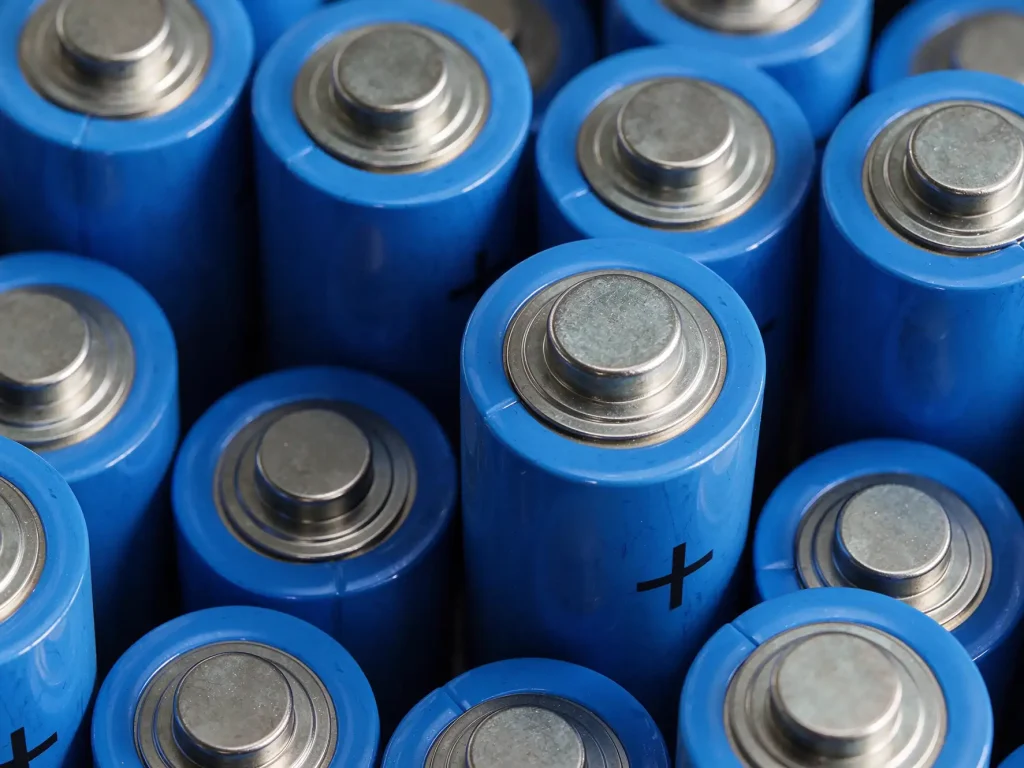
- Cell-to-cell variance control: sourcing strategy that keeps cell impedance, capacity, and internal resistance within tight bands across production lots.
- Mechanical stack-up design: tolerance analysis on cell spacing, PCB stand-off, and enclosure fit that survives injection-molded housing variation.
- BMS test-point accessibility: designing protection-board layout so that automated ATE fixtures can perform full functional test without manual probe rework.
- Welding and assembly process windows: defining ultrasonic or resistance-welding parameters that produce consistent pull-strength across thousands of joints.
- Testability and traceability integration: barcoded cell lots, serialized BMS firmware versions, and automated test-data logging that supports 21 CFR Part 11-style audit trails.
A medical battery pack supplier with design for manufacturability support brings this engineering mindset into the OEM’s design freeze stage — not after the tooling is cut. The economic difference is stark: industry experience from battery-pack contract manufacturers shows that resolving a DFM issue at the prototype stage costs roughly 100× less than resolving the same issue after mass-production tooling is complete, and 1,000× less if it is discovered through a field-return investigation.
3. Six Evaluation Criteria for a High-Volume Medical Battery Supplier
3.1 Certified Quality Management System
Minimum baseline: ISO 13485 (medical device QMS) for the pack assembly line, ISO 9001 for general manufacturing, and ISO 14001 for environmental control. Request the most recent certification audit report and verify the scope explicitly covers “secondary lithium battery packs for medical equipment” — not just consumer battery packs. A supplier whose ISO 13485 scope only covers power banks will not pass your customer audit.
3.2 Regulatory Certification Portfolio
For global market access, confirm the supplier can deliver: IEC 62133-2 (portable sealed secondary lithium cells), UL 2054 (pack safety) and UL 1642 (cell safety), UN 38.3 (transport, all eight test sequences), CE / UKCA marking, and for the EU market, compliance with Regulation (EU) 2023/1542.
Under EU 2023/1542, the 2026 Commission delegated act (July 14, 2026) explicitly exempts professional medical imaging and radiotherapy devices, in-vitro diagnostic devices, and on-body drug-delivery systems from the consumer-facing “user-replaceable battery” requirement — but the supplier must still document the safety rationale and prepare the Battery Passport data for industrial batteries above the 2 kWh threshold. Ask how the supplier’s documentation system maps to these exemptions.
3.3 In-House BMS and Firmware Capability
At high volume, relying on a third-party off-the-shelf BMS creates two bottlenecks: firmware customization lead time, and communication-protocol lock-in. A DFM-ready supplier should design its own protection board, support SMBus / I2C / HDQ communication per the device OEM’s system architecture, and run automated BMS firmware flashing and verification on the production line. For medical devices, the ability to log discharge curves, state-of-health, and fault history through SMBus is increasingly a customer requirement, not a nice-to-have.
3.4 Production Automation and Yield Data
Ask for the supplier’s last 12 months of first-pass yield (FPY) data on comparable medical packs, and the failure-mode Pareto chart. A high-volume line should target FPY above 97% on medical-grade packs. If the supplier cannot produce yield breakdowns by workstation (cell grading, spot welding, PCB assembly, final test), they are not measuring their process — and neither can you.
3.5 Traceability and Change Control
Medical device OEMs need cell-level lot traceability back to the original cell manufacturer. Confirm the supplier maintains a serialized record: cell lot ID → BMS serial → pack serial → shipment date. Also confirm change-control procedure: any change to cell supplier, PCB layout, enclosure material, or test parameter must trigger a documented deviation review and, where required, a design-history-file update package.
3.6 Scalable Capacity and Business Continuity
High volume does not mean “we can run extra shifts next month.” It means the supplier has dedicated SMT lines, automated welding fixtures, aging-burn-in chambers, and environmental test equipment that can absorb a 3× demand spike without subcontracting. Request the supplier’s capacity utilization report and subcontractor list — and audit whether any critical process steps are currently subcontracted.
4. DFM-Ready Supplier vs. Traditional Contract Manufacturer: Side-by-Side
The table below summarizes the practical difference between a medical battery pack supplier that provides DFM support and a traditional contract manufacturer that waits for a fully frozen design before quoting.
| Evaluation Dimension | DFM-Ready Supplier (TEFOO-style) | Traditional Contract Manufacturer |
| Engagement start | At OEM concept / ID stage, before tooling | After OEM design freeze, only quoting BOM |
| Design freeze cycle | 8–12 weeks with iterative DFM reviews | 20+ weeks with late-stage rework loops |
| First-pass yield at 10k units | Typically 96–98% | Often 88–93% with later fire-fighting |
| BMS / firmware customization | In-house, SMBus / I2C programmable | Off-the-shelf, limited protocol support |
| Cell traceability | Serialized, lot-level back to cell maker | Lot-level at best, often aggregated |
| Regulatory documentation package | Pre-built IEC 62133 / UN38.3 / EU 2023/1542 dossier | Test reports only, OEM assembles dossier |
| Cost impact of late design change | Minimal — caught at DFM review | High — tooling, re-test, and delay cost |
Table 1. Comparative evaluation of DFM-ready vs. traditional medical battery pack suppliers.
5. Compliance Landscape 2026: What Changes You Should Know
5.1 EU Regulation 2023/1542
The EU Battery Regulation entered into force in 2023 and is phasing in obligations through 2027. For medical device battery packs, the most practical changes in 2026 are: (a) the Digital Product Passport (DPP) / Battery Passport requirement for industrial batteries above 2 kWh, which means the supplier must provide material composition, carbon footprint, and supply-chain due-diligence data; (b) the July 2026 delegated act exempting professional medical imaging, radiotherapy, and IVD devices from the user-replaceability mandate — but the supplier must document the safety rationale; and (c) extended producer-responsibility (EPR) registration in each EU member state where packs are placed on the market.
5.2 IEC 62133-2:2026 Edition
The German DIN has published the 2026-08 draft of DIN EN IEC 62133-2 (VDE 0510-82), which tightens requirements for portable sealed secondary lithium cells used in medical equipment. Confirm your supplier’s test lab can update its test protocol to the 2026 edition without a re-tooling delay.
5.3 FDA and NRTL Expectations
The FDA’s February 2026 rule change on micro-battery applications tightened post-market surveillance expectations, and NRTLs (UL, TÜV) are now requiring more detailed pack-level construction review before issuing UL 2054. A DFM-ready supplier will already have updated its documentation templates to reflect these expectations.
6. How TEFOO Embeds DFM into Every Medical Battery Pack Program
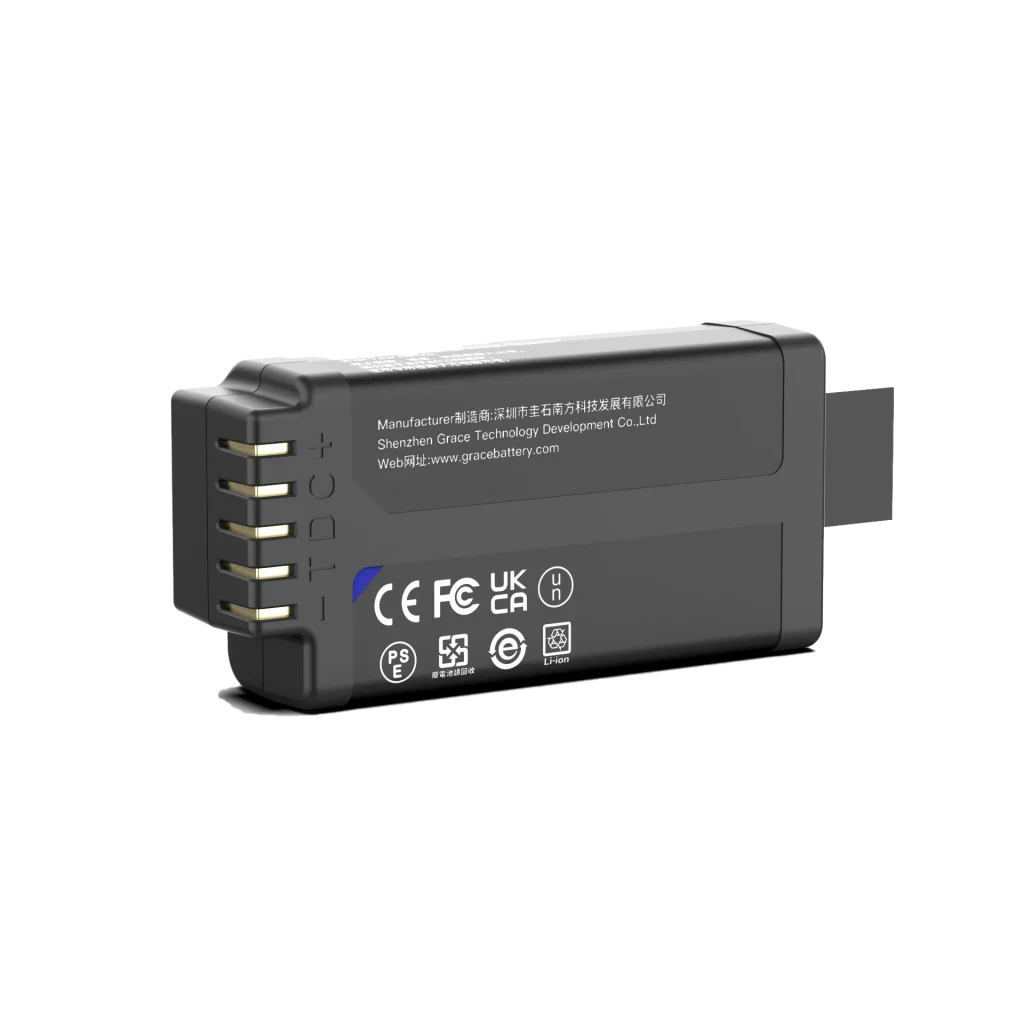
At TEFOO (Shenzhen Guishi Nanfang Technology Co., Ltd.), we have structured our medical battery pack division around the principle that a pack is not “built to a drawing” — it is designed jointly with the OEM for manufacturability. Our medical battery pack programs include:
- ISO 13485, ISO 9001, and ISO 14001 certified production line dedicated to medical device packs.
- In-house smart BMS design with SMBus / I2C communication, supporting SOH logging, fault recording, and per-cell balancing.
- Full certification portfolio: IEC 62133-2, UL 2054 / UL 1642, UN 38.3, CE, UKCA, CCC, and EU 2023/1542 readiness.
- DFM review at OEM concept stage: our engineers join the ID / MD review before tooling, flagging cell spacing, weld access, and test-fixture fit.
- Automated production with serialized traceability: every cell lot, BMS serial, and pack serial is logged and queryable.
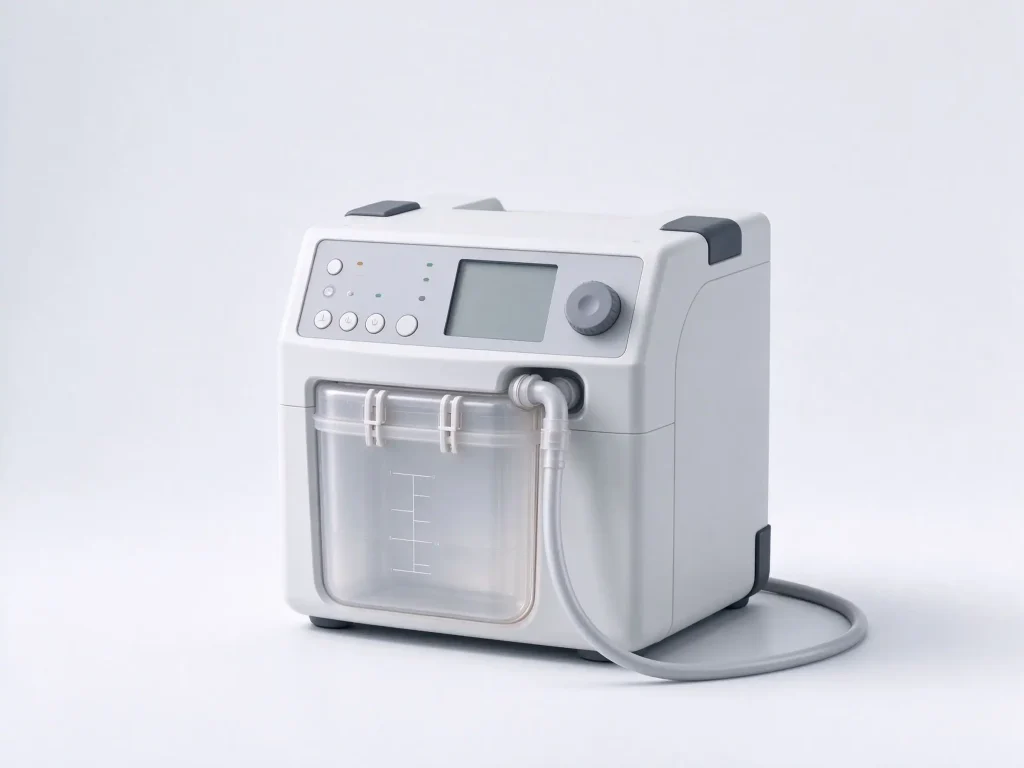
- OEM support across a wide medical device range: patient monitors, ventilators, portable ultrasound, infusion pumps, surgical power tools, handheld analyzers, geological / survey instruments, and industrial PDAs.
We do not compete on the cheapest unit price at 100 units. We compete on the lowest total cost of ownership at 10,000 units — because that is where medical device OEMs actually live.
7. Frequently Asked Questions
What volume qualifies as “high volume” for medical battery packs?
In the medical device industry, high volume typically means 5,000 units per year and above for a single SKU, or 20,000+ packs per year across a product family. Below this range, prototype-style DFM support may not be cost-effective; above it, the ROI of a DFM-ready supplier becomes unambiguous.
Can I use a consumer-electronics battery supplier for a medical device?
Technically yes, but practically no. Consumer battery suppliers typically lack ISO 13485, cannot provide cell-level lot traceability, and will not accept 21 CFR Part 11-style audit obligations. The cost savings on unit price are quickly erased by regulatory submissions and customer audits.
How long does it take to move from prototype to high-volume production?
With a DFM-ready supplier, the typical path is: concept review (2 weeks) → EVT prototype (4 weeks) → DFM revision + DVT (6 weeks) → PVT on production line (4 weeks) → mass production. Total: roughly 16–20 weeks. A traditional supplier, lacking early DFM review, often needs 28–36 weeks with multiple re-spins.
Does EU 2023/1542 require medical device batteries to be user-replaceable?
No. The July 14, 2026 Commission delegated act explicitly exempts professional medical imaging and radiotherapy devices, IVD devices, and on-body drug-delivery systems from the user-replaceability requirement, because field battery replacement could compromise sealing, sterility, or safety. However, the manufacturer must document the safety rationale and prepare Battery Passport data where applicable.
What is the biggest hidden cost of choosing the wrong supplier?
Field-return investigation and corrective action. A single field corrective action under FDA can cost USD 200,000–1,000,000 in direct costs, plus months of delay to the next product launch. This is why DFM up-front engineering is not an expense — it is insurance against an order of magnitude larger cost.
8. Conclusion
For medical device OEMs scaling into high volume, the choice of a medical battery pack supplier is not a procurement exercise — it is a product-development partnership. A supplier that brings design for manufacturability support to the table at concept stage will shorten your time-to-market, improve your first-pass yield, and make your regulatory dossier defensible. A supplier that only quotes on a frozen BOM will save you 5% on unit price while exposing you to 10× the cost of a late-stage redesign.
As you evaluate partners for 2026 and beyond, ask every candidate the same six questions: Do you hold ISO 13485 for medical packs? Can you show 12 months of first-pass yield data? Do you design your own BMS with SMBus support? Can you serialize cell-to-pack traceability? How do you handle EU 2023/1542 Battery Passport data? And — most importantly — will your engineering team join our design review before we cut tooling? The answers will tell you immediately whether you are talking to a manufacturing partner or a parts vendor.
If you are preparing a high-volume medical battery pack program and would like a DFM engineering review, the TEFOO medical battery team can provide a confidential feasibility assessment based on your device specification.
References and Data Sources
- Future Market Report. Medical Batteries Market (2026–2033). 2026. Market size USD 1,065.75M in 2025; CAGR 8.78%.
- Precedence Research. Medical Batteries Market Companies, Size & Trends 2026–2035. September 2026. U.S. market USD 450M+ in 2025; CAGR 5.70%.
- Mordor Intelligence. Micro Battery Market Size, Share & 2031 Growth Trends Report. June 2026. Healthcare absorbed 34.5% of micro-battery demand in 2025.
- PW Consulting. Worldwide Customized Battery Solution Market 2026. June 2026. Medical devices 29.77% end-use share.
- European Commission. Commission Delegated Regulation (EU) of 14 July 2026 on derogations for removability and replaceability of portable and LMT batteries under Regulation (EU) 2023/1542.
- DIN. DIN EN IEC 62133-2 ; VDE 0510-82:2026-08. Secondary cells and batteries containing alkaline or other non-acid electrolytes — Part 2.
- European Commission. EU Digital Product Passport FAQ for Batteries. October 2026.