How to Choose an Ultrasound Device Battery Supplier for Medical Equipment Brands: A 2026 Engineering Guide
1. Introduction
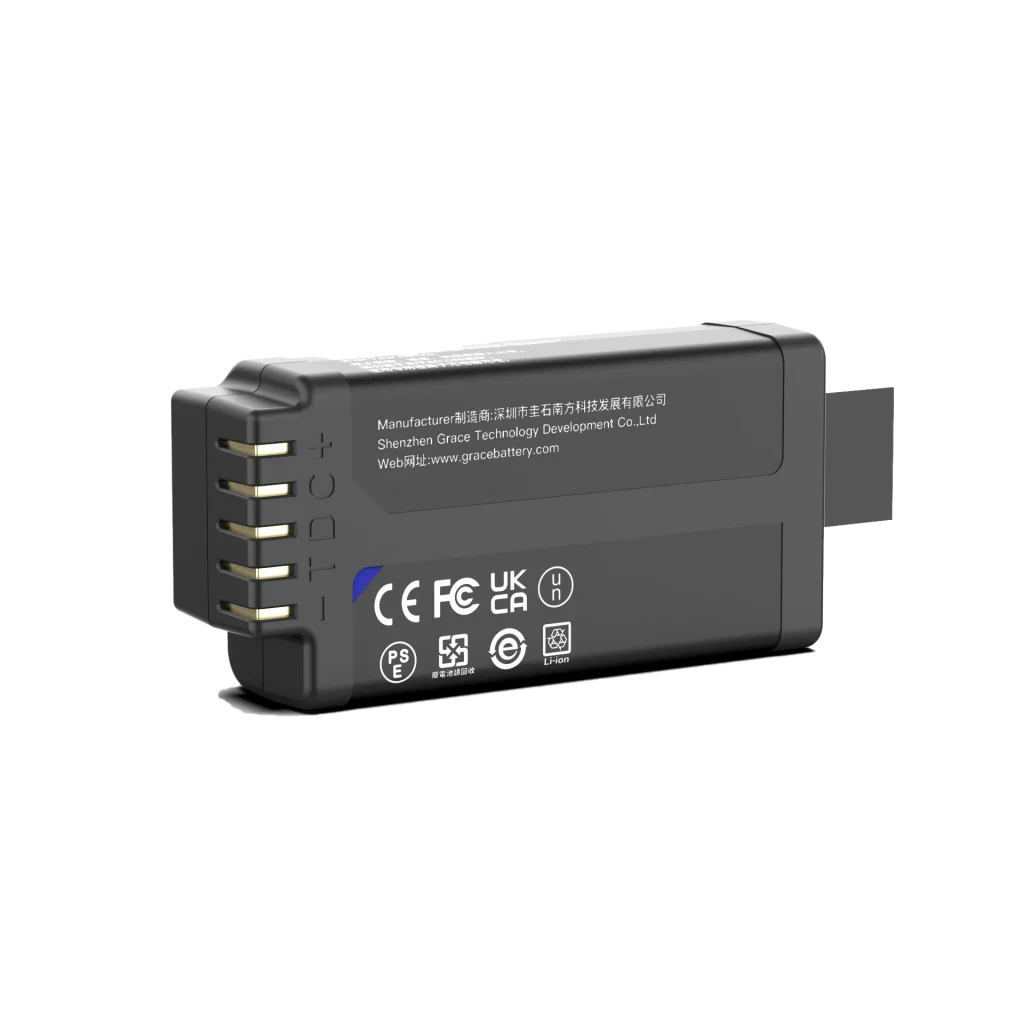
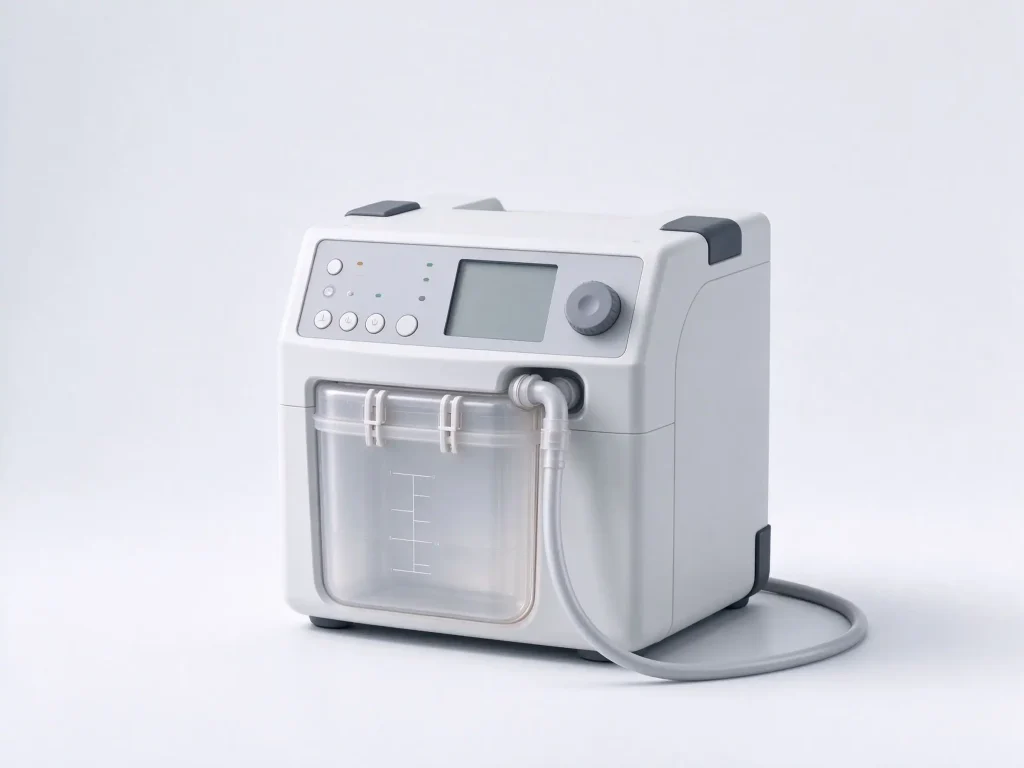
Portable and point-of-care ultrasound systems have become standard equipment in emergency departments, intensive care units, outpatient clinics, and field medical missions. As imaging performance converges between cart-based and handheld platforms, one component increasingly determines whether a product shipping on schedule can actually be used in the clinic: the rechargeable lithium-ion battery pack.
For medical equipment brands selecting an ultrasound device battery supplier, the decision is no longer a commoditized sourcing exercise. It is a regulated, traceability-sensitive engineering partnership that directly affects product safety, regulatory clearance (FDA 510(k), CE marking under MDR), supply-chain continuity, and the clinical user’s experience of uninterrupted imaging. This guide, written from a battery-engineering perspective, outlines the technical, regulatory, and commercial criteria that medical OEMs should use when qualifying a battery partner in 2026.
2. Why Battery Performance Is Mission-Critical for Ultrasound OEMs
Ultrasound scanners draw highly dynamic current: a B-mode imaging session may consume 25–45 W, while Doppler, color flow, and harmonic imaging peaks can push transient load above 60 W. A battery pack that cannot deliver stable voltage under these load steps risks rebooting the system mid-exam, degrading image quality, or prematurely dropping its state-of-charge (SOC) estimate.
Clinical workflows amplify the impact. In bedside and emergency use, clinicians cannot interrupt a scan to swap cells; in field and pre-hospital settings, wall power may be unavailable for hours. The battery is therefore not a peripheral consumable but part of the medical device’s basic safety and essential performance, as defined in IEC 60601-1. A supplier that treats the pack as a generic Li-ion assembly will systematically under-deliver on these requirements.
3. Core Technical Requirements for Medical-Grade Ultrasound Batteries
3.1 Voltage and Capacity Architecture
Most portable ultrasound platforms on the market in 2026 use one of three nominal architectures: 7.4 V (2S), 11.1 V (3S), or 14.8 V (4S) Li-ion packs, with capacities ranging from 5,000 mAh to 10,400 mAh depending on the number of probes and display size. Typical pack energy falls between 37 Wh and 115 Wh. OEMs should avoid suppliers that quote a single ‘one-size’ cell configuration; the right series/parallel count is a function of the ultrasound mainboard’s input voltage range, the maximum peak current, and the target run time per charge.
3.2 Cycle Life and Calendar Life
A reasonable design target for a clinical ultrasound battery is a minimum of 500 charge–discharge cycles to 80% of initial capacity at a 0.5 C rate, 25 °C. Packs intended for high-throughput imaging centers should be specified for 800 cycles or more. Calendar life under storage must also be addressed: cells stored at 40–60% SOC in a warm storage room should retain at least 70% capacity after two years.
3.3 Operating Environment
Medical-grade packs must support charging between 0 °C and 45 °C and discharge between −10 °C and 50 °C, per IEC 62133-2. For ultrasound systems used in tropical clinics or unheated field stations, the supplier should demonstrate low-temperature discharge performance and thermal-derating logic in the BMS rather than relying on cell datasheet numbers alone.
3.4 Smart BMS and Host Communication
Modern ultrasound hosts expect a smart battery that communicates over SMBus (System Management Bus, SMBus 3.0) or I²C-compliant fuel-gauge protocol. The host then displays accurate SOC, run-time remaining, cycle count, and battery health, and can trigger service alerts. A supplier with only a basic protection circuit (PCM) — overvoltage, overcurrent, short circuit — cannot meet the user experience of any mid-to-high-tier ultrasound brand. Host-side diagnostic logs are also increasingly required for post-market surveillance under MDR and FDA QSR.
4. Regulatory and Certification Landscape in 2026
For medical equipment brands, the battery pack is a regulated component. The following certifications and documentation are non-negotiable when evaluating an ultrasound device battery supplier:
| Standard / Regulation | Scope | What the OEM Should Request |
| ISO 13485:2016 | Quality management system for medical devices | Valid certificate covering battery pack design and manufacturing; audit report |
| IEC 62133-2:2017+A1:2021 | Safety requirements for sealed Ni-MH and Li-ion cells and packs | Full test report for the exact cell model and pack configuration, not just a certificate |
| UN 38.3 | Transport safety for lithium batteries (T1–T8 tests) | Test summary per cell and per pack; MSDS in the target destination language |
| UL 1642 / UL 2054 | Safety of lithium cells and household/commercial battery packs | UL certification for cells; UL 2054 for the pack if North America is a target market |
| CE / UKCA | EU and UK market access | Declaration of Conformity; test reports to EN 62133 and EN IEC 60601-1 |
| RoHS 3 / REACH | Hazardous substances restriction | Material declaration per IEC 62474; SVHC list update within 12 months |
| EU Battery Regulation 2023/1542 | Sustainability, labeling, battery passport, due diligence | Supplier’s compliance roadmap; carbon-footprint and recycled-content data readiness |
4.1 EU Battery Regulation 2023/1542 — What Changes for Ultrasound Brands
Regulation (EU) 2023/1542 has applied since 18 February 2024 and phased in obligations through 2027. Two points matter specifically for ultrasound OEMs. First, portable batteries used in medical imaging and radiotherapy devices fall within a documented derogation from the removability and replaceability requirement: the European Commission’s July 2026 delegated act explicitly lists professional medical imaging devices under Regulation (EU) 2017/745, allowing specialist service personnel — rather than the end user — to replace the pack. Second, the digital battery passport becomes applicable from 18 February 2027 for industrial batteries above 2 kWh and for EV batteries; while most portable ultrasound packs are below that threshold, brands shipping into Europe should still require their supplier to provide the data points (cell chemistry, carbon footprint, compliance documentation) that upstream customers and notified bodies will increasingly ask for.
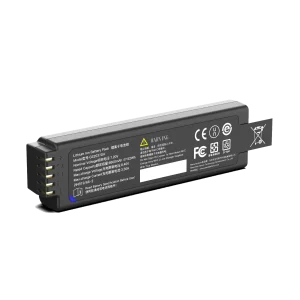
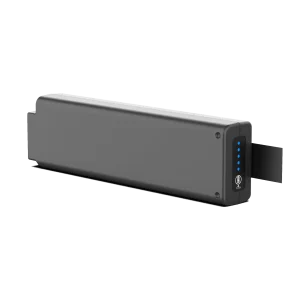
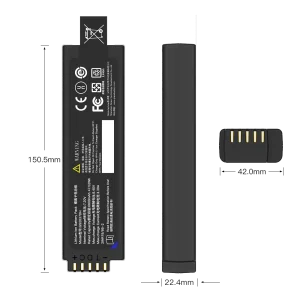
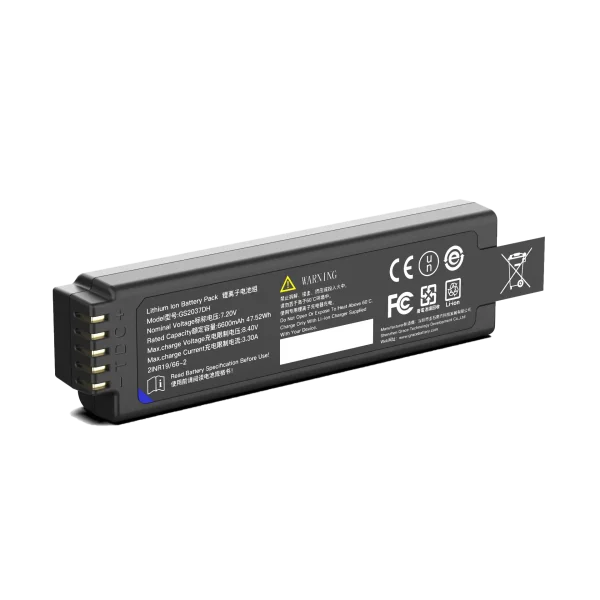
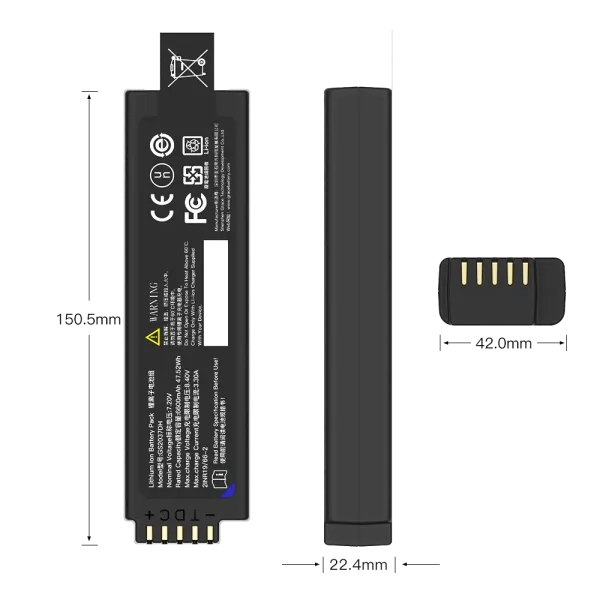
GS2037DH
7.2V/6900mAh/47.52Wh
5. Supplier Evaluation Matrix: Score Before You Select
Medical equipment brands should score each candidate supplier on the following dimensions rather than choosing on unit price alone. A 2026 market review of custom Li-ion battery suppliers consistently highlights that medical-device buyers prioritize documentation, traceability, and BMS in-house capability over raw cell cost.
| Evaluation Criterion | Why It Matters for Ultrasound OEMs | Red Flag |
| Cell sourcing and traceability | Grade-A cells from named manufacturers with batch records; traceability supports FDA and MDF post-market actions. | Cells sourced through open market or ‘equivalent brand’ substitutions without notice. |
| In-house BMS / firmware | Fuel-gauge algorithm, SMBus protocol, and derating logic can be tuned to the ultrasound host. | BMS bought off-the-shelf from a third board maker with no firmware ownership. |
| Regulatory documentation package | Supports 510(k), CE-technical file, and risk-management (ISO 14971) submissions. | Only a generic ‘CE certificate’ with no pack-specific test report. |
| NPI and sample lead time | Fast prototype iteration protects the OEM’s launch schedule. | Sample lead time longer than 8 weeks; no engineering communication channel. |
| MOQ and supply continuity | Medical devices have long product lifecycles (7–10 years); supplier must commit to continuity. | MOQ above pilot demand; no last-time-buy or end-of-life notice policy. |
| Quality system maturity | ISO 13485 covers the pack as a medical component; audit evidence is required by notified bodies. | ISO 9001 only, with no medical-device QMS extension. |
6. Smart BMS and SMBus Communication: The Differentiator
A smart battery for ultrasound is more than a protected cell stack. The BMS must implement the SMBus 3.0 message set — ManufacturerAccess, BatteryStatus, Voltage, Current, Temperature, RelativeSOC, FullChargeCapacity, RunTimeToEmpty — so the ultrasound host can render a trustworthy battery gauge. Without this, the host either shows a rough percentage estimated from voltage or forces the user to carry two hot-swap packs regardless of actual depletion.
From a design-in perspective, OEMs should require the supplier to co-validate the fuel-gauge algorithm against the ultrasound system’s actual current profile, not against a generic discharge curve. A pack calibrated on a resistive load can over-read SOC by 15–20% when the host enters a low-power idle state after scanning.
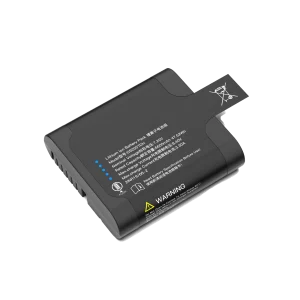
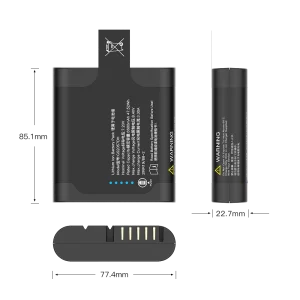
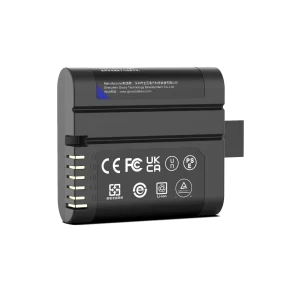
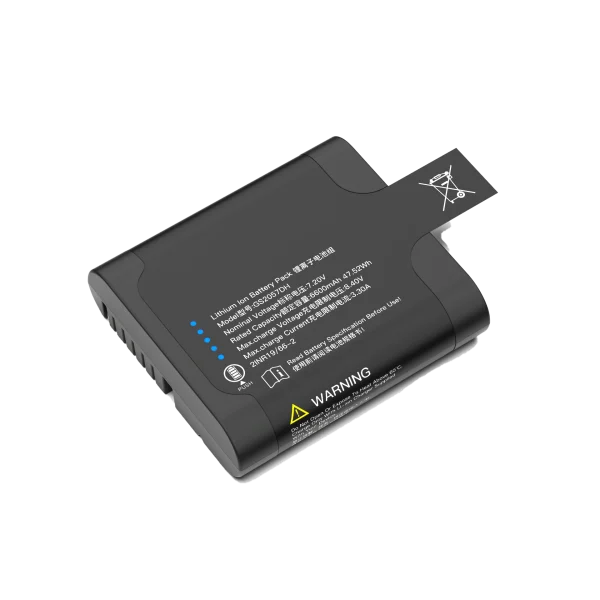
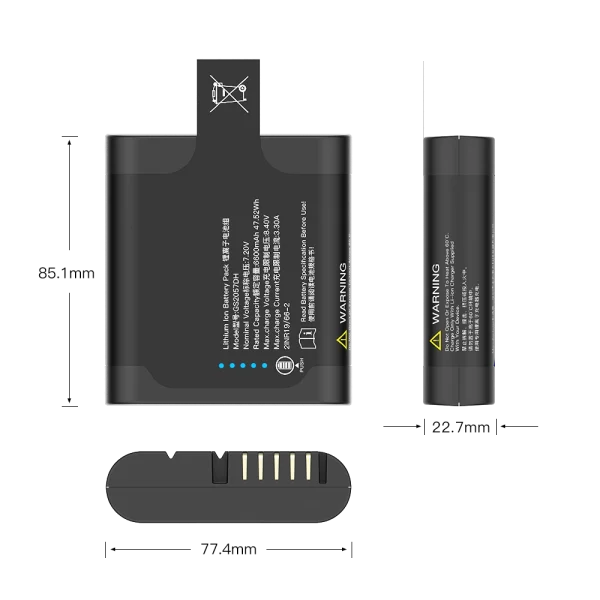
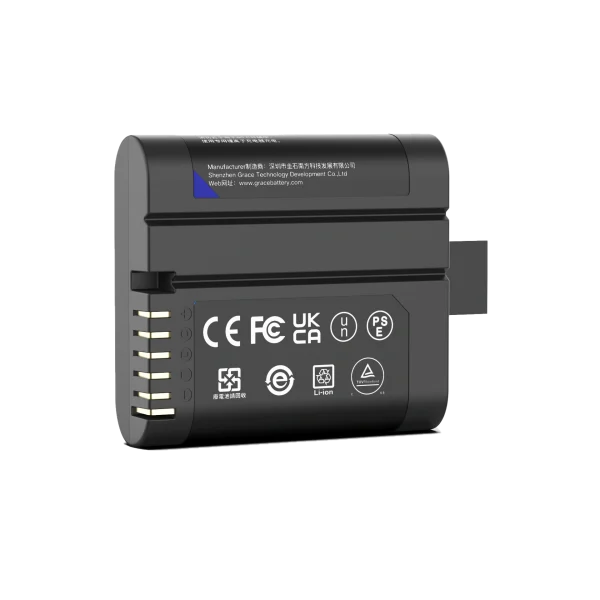
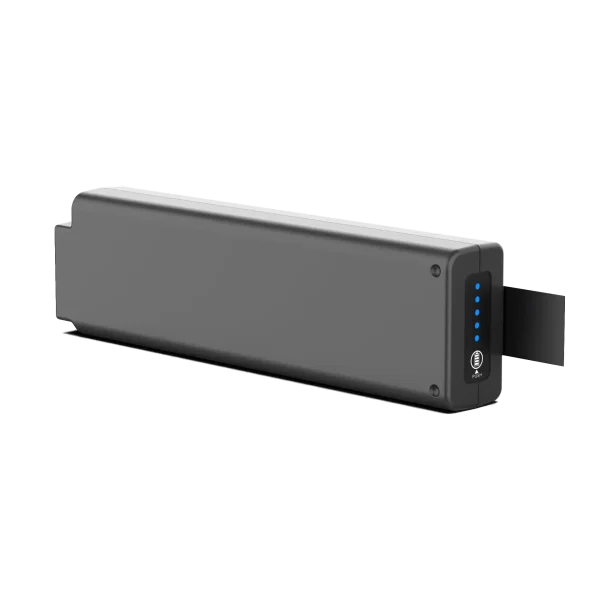
GS2057DH
7.2V/6900mAh/47.52Wh
7. How TEFOO Supports Medical Equipment Brands
TEFOO designs and manufactures custom smart lithium-ion battery packs for medical and industrial equipment, including portable ultrasound platforms. Our engineering team supports medical OEMs through the following:
- Custom pack architecture: 2S/3S/4S configurations with 18650 or 21700 grade-A cells, tailored to the host’s voltage window and run-time target.
- In-house smart BMS: SMBus 3.0-compatible fuel gauge, accurate SOC reporting, cell balancing, and overvoltage/overtemperature/short-circuit protection tuned to ultrasound load profiles.
- Regulatory documentation: ISO 13485:2016-certified quality system; IEC 62133-2, UN 38.3, and UL 1642/2054 test reports available per pack configuration; RoHS/REACH material declarations.
- Design-in partnership: schematic review, prototype samples in 3–4 weeks, host-communication handshake testing, and long-term supply continuity with change-control notice.
8. Frequently Asked Questions
Q: What certifications should an ultrasound device battery supplier hold?
A: At minimum: ISO 13485:2016 (medical QMS), IEC 62133-2 (Li-ion safety), UN 38.3 (transport), and UL 1642/UL 2054 for North American market access. CE/UKCA marking and RoHS/REACH declarations are required for Europe. Always request the pack-specific test report, not only the cell certificate.
Q: Can ultrasound batteries be replaced by the end user under EU 2023/1542?
A: Regulation (EU) 2023/1542 generally requires portable batteries to be removable and replaceable by end users, but professional medical imaging devices under MDR (EU) 2017/745 are covered by a derogation adopted in July 2026. For these devices, battery replacement by trained service personnel is permitted, preserving the device’s sealed and safe enclosure.
Q: What battery voltage and capacity do most portable ultrasound systems use?
A: Common architectures are 7.4 V (2S), 11.1 V (3S), and 14.8 V (4S) Li-ion packs, with capacities from 5,000 mAh to 10,400 mAh and pack energy between 37 Wh and 115 Wh. The exact configuration depends on the mainboard input range, probe power draw, and target run time.
Q: Why is SMBus communication important for an ultrasound battery?
A: SMBus allows the ultrasound host to read accurate state-of-charge, remaining run time, cycle count, and battery health. Without it, the host can only estimate SOC from voltage, leading to inaccurate gauge readings and interrupted imaging sessions.
Q: What cycle life should a medical ultrasound battery be specified for?
A: A reasonable minimum is 500 cycles to 80% capacity at 0.5 C, 25 °C. High-throughput imaging departments should specify 800 cycles or more. Calendar life — typically two years at 40–60% SOC storage — should also be confirmed.
Q: How long does custom ultrasound battery prototyping take?
A: Experienced medical battery suppliers can deliver first functional samples in 3–4 weeks after schematic and mechanical review. Design validation and regulatory testing typically add 8–12 weeks before production release.
Q: Does EU 2023/1542 require a battery passport for ultrasound packs in 2026?
A: The digital battery passport applies from 18 February 2027 to industrial batteries above 2 kWh and to EV batteries. Most portable ultrasound packs are below this threshold, but brands should still require their supplier to provide carbon-footprint and material-composition data to prepare for future downstream customer requirements.
Q: How should medical brands verify a supplier’s ISO 13485 certification?
A: Request the certificate number, the issuing notified body, and the scope (which must explicitly include medical battery pack design and manufacture). Ask for the last audit report’s major-nonconformance status and, where possible, conduct a supplier quality audit before release.
9. Conclusion
Selecting an ultrasound device battery supplier for medical equipment brands is a long-horizon engineering and regulatory decision, not a unit-price negotiation. The right partner brings grade-A cell traceability, an in-house smart BMS with SMBus support, a medical-grade quality system, and a documentation package that survives FDA and notified-body scrutiny. As EU Battery Regulation 2023/1542 continues to phase in through 2027, suppliers that can already provide carbon-footprint, recycled-content, and digital-data readiness will reduce compliance risk for the brands they serve. Evaluating candidates against the matrix in this guide — and verifying every certificate against the actual pack configuration — is the most reliable way to launch an ultrasound product that clinicians can depend on, shift after shift.
References
[1] European Parliament and Council. Regulation (EU) 2023/1542 concerning batteries and waste batteries. Official Journal of the European Union, 2023. Applied from 18 February 2024. https://environment.ec.europa.eu/topics/waste-and-recycling/batteries_en
[2] European Commission. Commission Delegated Regulation (EU) of 14.7.2026 on derogations for the removability and replaceability of portable batteries. Document ST 12056/2026 INIT. https://data.consilium.europa.eu/doc/document/ST-12056-2026-INIT/en/pdf
[3] European Commission. Guidance to support preparations for the Digital Batteries Passport, 21 August 2026. https://single-market-economy.ec.europa.eu/news/guidance-support-preparations-digital-batteries-passport-2026-08-21_en
[4] IEC 62133-2:2017+A1:2021. Secondary cells and batteries containing alkaline or other non-acid electrolytes — Safety requirements for portable sealed secondary lithium cells, and for batteries made from them, for use in portable applications — Part 2: Lithium systems. International Electrotechnical Commission.
[5] UL 1642, Standard for Lithium Batteries, 5th ed. UL 2054, Standard for Household and Commercial Batteries. Underwriters Laboratories.
[6] ISO 13485:2016. Medical devices — Quality management systems — Requirements for regulatory purposes. International Organization for Standardization.
[7] MedDeviceGuide. Battery Cell Sourcing for Portable Medical Devices: Supplier Qualification, 11 May 2026. https://meddeviceguide.com/blog/battery-cell-sourcing-portable-medical-devices-guide
[8] A&S Power. Portable Ultrasound Machine Battery Design: Engineering Guide for OEM Manufacturers, 13 July 2026. https://www.szaspower.com/industry-news/portable-ultrasound-machine-battery-design.html
About the Author
This article was prepared by the battery engineering team at TEFOO, a manufacturer of custom smart lithium-ion battery packs for medical and industrial equipment, with ISO 13485:2016-certified operations and SMBus-equipped BMS design capabilities.
Disclosure
TEFOO is itself a supplier of custom lithium-ion battery packs to medical equipment OEMs, including portable ultrasound platforms. This article is provided for general engineering and procurement guidance and does not constitute legal, regulatory, or certification advice. Readers should validate all requirements against the specific regulatory jurisdiction and notified-body expectations that apply to their product.