By Dr. Chen, Senior Battery Systems R&D Engineer, TEFOO
1. Introduction
The global medical equipment battery pack market reached approximately USD 2.25 billion in 2025 and is projected to grow at a compound annual growth rate of roughly 6–9% through the early 2030s, driven by the accelerating adoption of portable, wearable, and home-care medical devices [1][2]. From patient monitors and infusion pumps to portable ultrasound systems and surgical power tools, every Class II and Class III device depends on a battery pack that must perform reliably, safely, and in full regulatory compliance across a product’s multi-year service life.
Yet for many medical device OEMs, selecting the right partner to take a battery pack from initial prototype through to regulated mass production remains one of the highest-risk decisions in the program. A medical-grade battery pack is not a commodity assembly: it integrates cell chemistry selection, smart battery management system (BMS) firmware, communication protocol stacks (SMBus/I2C/CAN), mechanical packaging, thermal design, and a regulatory documentation package that must survive FDA 510(k) submissions, ISO 13485 audits, and EU MDR scrutiny. This guide, written from the perspective of a battery systems R&D engineer who has shipped more than 40 medical-grade pack programs, walks through what to look for in a prototyping and production supplier, what certifications actually mean on the bench, and how to structure the supplier evaluation process.
2. What Makes a Battery Pack “Medical Grade”?
Consumer-grade lithium-ion packs and medical-grade packs may share the same cylindrical 18650 or prismatic cell form factor on the outside, but the engineering and documentation gap between them is substantial. A medical device battery pack must satisfy three overlapping layers of requirements simultaneously.
2.1 Functional and Performance Layer
At the functional level, the pack must deliver the runtime, cycle life, and voltage stability the device requires under every clinical operating condition. This includes high- and low-temperature discharge performance (typically −10 °C to +50 °C for portable devices), capacity retention over the device’s shelf life, and accurate state-of-charge (SOC) fuel-gauge reporting that the host device can trust. For patient-facing devices, a 5% SOC error can mean the difference between a device that completes a scheduled procedure and one that unexpectedly shuts down mid-treatment.
2.2 Safety and Protection Layer
Safety protection is non-negotiable. A medical-grade pack must implement redundant over-voltage, under-voltage, over-current, short-circuit, and over-temperature protection — typically through a dual-chip architecture combining an analog front-end protector and a secondary microcontroller. IEC 62133-2:2017+A1:2021 is the baseline international safety standard for sealed secondary lithium cells and batteries, and virtually every regulated medical pack on the market today is tested to this standard [3].
2.3 Regulatory and Quality Layer
The regulatory layer is where many aspiring suppliers fall short. The pack itself is usually classified as an accessory or component of the medical device, not as a stand-alone medical device. Nevertheless, the pack manufacturer must operate under an ISO 13485:2016 quality management system, provide full traceability down to the cell lot level, and supply the technical documentation (design history file inputs, risk analysis per ISO 14971, and verification/validation reports) that the device OEM needs to support its own FDA 510(k), EU MDR CE marking, or NMPA registration submission [4].
3. Regulatory and Certification Landscape (2026 Update)
Medical battery suppliers operate across a patchwork of standards that have shifted materially in the last two years. The table below summarizes the certifications that a serious prototyping and production partner should already hold or be able to support as part of your program.
Table 1. Core certifications and standards relevant to medical device battery packs in 2026
| Standard / Certification | Scope | Why It Matters for Medical Packs |
| ISO 13485:2016 | Quality management system for medical devices | Mandatory baseline; the OEM will audit the supplier’s QMS as part of its own technical file. |
| IEC 62133-2:2017+A1:2021 | Safety requirements for sealed secondary lithium cells/batteries | Primary cell-level and pack-level safety test; required by most notified bodies and by FDA as a recognized consensus standard. |
| UN 38.3 | Transport safety of lithium batteries (T1–T8 tests) | Required by IATA, IMDG, and national transport regulators before any lithium battery can ship by air, sea, or road. |
| IEC 60601-1 / 60601-1-2 | General safety and EMC of medical electrical equipment | The pack must comply with the device-level safety and EMC standard; the supplier should provide test data to support the OEM’s system-level certification. |
| UL 2054 / UL 62133 | US safety standard for household/ commercial batteries | UL 62133 is increasingly accepted as the US adoption of IEC 62133; UL 2054 is still cited by some device listing labs. |
| CE marking (Battery Reg. 2023/1542) | EU battery sustainability, labelling, and passport requirements | From February 2027, EV and industrial batteries above 2 kWh will require a Digital Battery Passport; portable batteries in medical devices have targeted derogations but must still meet removability/replaceability and labelling rules [5][6]. |
| UKCA marking | UK product safety marking | Required for batteries placed on the Great Britain market post-Brexit. |
| RoHS 2 / REACH | Restriction of hazardous substances | Required for the EU and UK market; the supplier must declare substance compliance at pack level. |
| IEC 62321 series | Determination of regulated substances in electrotechnical products | Test method backing up RoHS and REACH declarations. |
Two regulatory shifts in 2025–2026 deserve special attention. First, the EU Battery Regulation (EU) 2023/1542 has begun phasing in obligations that reach into medical device packs. While professional medical imaging, radiotherapy, and in vitro diagnostic devices have been granted targeted derogations from the portable-battery removability and replaceability rules [5], the broader labelling, carbon-footprint declaration, and due-diligence obligations still apply. Second, the Digital Battery Passport — initially scoped to EV and industrial batteries above 2 kWh — is expected to extend downward over the next regulatory cycle, and suppliers that already maintain digital product records will be far ahead of the curve [6].
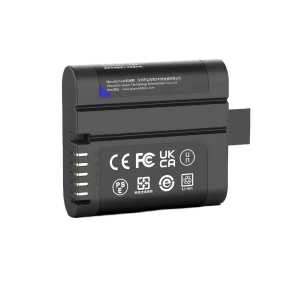
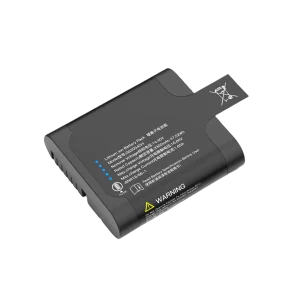
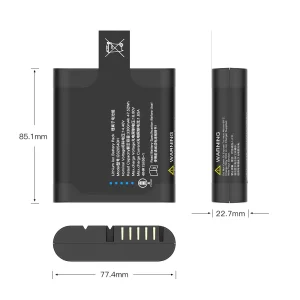
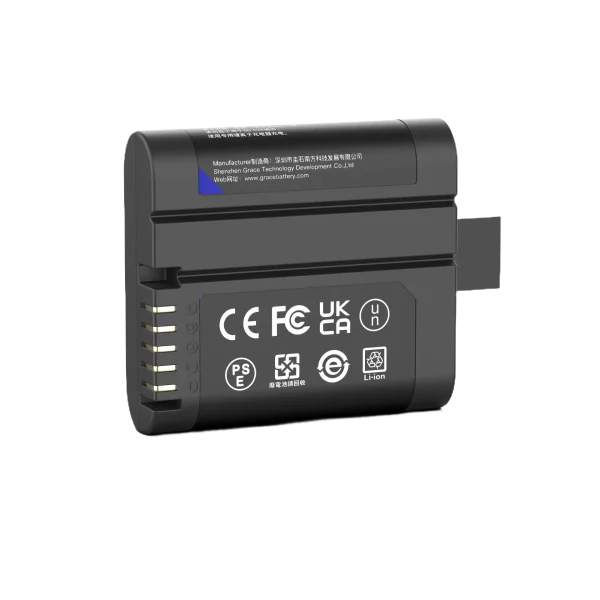
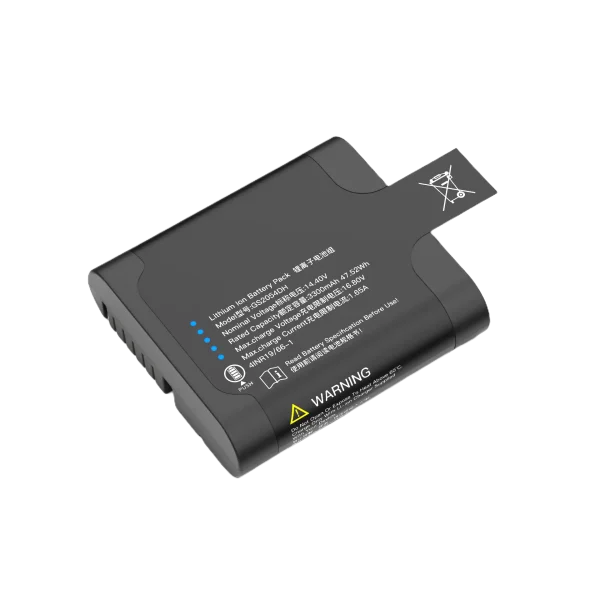
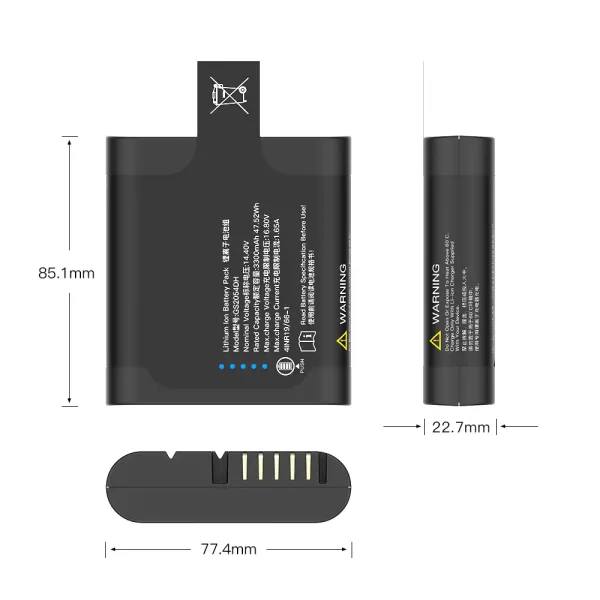
GS2054DH
14.4V/3450mAh/47.52Wh
4. From Prototype to Production: The Engineering Journey
A competent supplier does not simply build what you draw on a schematic. They should partner with you through four distinct phases, each with its own deliverables and gate reviews.
4.1 Phase 1: Requirements Definition and Architecture
The engineering conversation should start before any cells are selected. The supplier needs to understand the device’s worst-case discharge profile (not just the average), ambient temperature range, end-of-life capacity target, communication protocol requirements, mechanical envelope, and safety classification. For a smart pack, this is where the BMS chipset — for example, a TI BQ40Z50-R2 for 1S–4S packs or a BQ40Z80 for 2S–6S configurations — is chosen based on cell count, fuel-gauge accuracy needs, and authentication requirements [7][8].
4.2 Phase 2: Prototyping and Bench Validation
A professional prototyping run should deliver 5–20 functional packs with full traceability. At this stage the supplier should provide: (a) cycle-life and calendar-life preliminary data, (b) charge/discharge characterization curves across the full temperature range, (c) protection threshold verification, and (d) SMBus/SBS v1.1 communication logs demonstrating that the pack correctly reports voltage, current, temperature, remaining capacity, and battery status to the host charger and system [9]. This is also the phase where mechanical, thermal, and safety design iterations happen — expect two to three prototype rounds before design freeze.
4.3 Phase 3: Design Verification and Validation (DV/PV)
Before mass production, the pack must go through design verification testing: IEC 62133, UN 38.3, altitude simulation, thermal shock, vibration, mechanical shock, and enclosure drop tests. The supplier should have an in-house or trusted partner laboratory relationship that can run these tests, and — critically — should provide raw test data, not just summary reports. For medical programs, expect this phase to take 8–14 weeks, depending on whether any certification retests are needed.
4.4 Phase 4: Pilot Run and Mass Production
The pilot run (typically 50–200 units) is where the manufacturing process is qualified: soldering profile, ultrasonic welding parameters, epoxy potting, and end-of-line (EOL) test fixtures. A production-ready supplier should be able to demonstrate a capable process — measured by Cpk on critical characteristics such as contact resistance, weld pull-strength, and pack capacity — before releasing full-rate production. EOL testing should include 100% capacity check, communication loop-back, insulation resistance, and functional protection verification.
5. Key Selection Criteria for a Supplier
When evaluating potential medical battery pack partners, structure the technical due diligence around the following dimensions. The table below provides a scoring framework that you can adapt to your own program’s priorities.
Table 2. Supplier evaluation framework for medical device battery pack programs
| Evaluation Dimension | What to Ask For | Red Flag Signals |
| Quality System | ISO 13485:2016 certificate; last audit report summary; cell and component traceability records; change-control procedure for cell substitutions. | ISO 9001 only; no documented cell-approval list; “we’ll get ISO 13485 when you need it.” |
| BMS and Firmware Capability | In-house firmware engineering; experience with TI BQ series, Renesas, or NXP BMS chips; SMBus v1.1 / SBS 1.1 protocol stack; fuel-gauge modeling experience. | Pure hardware assembly house; firmware outsourced to an unnamed third party; no fuel-gauge tuning experience. |
| Prototyping Track Record | Number of medical pack programs shipped; example test reports from past customers (NDA-permitting); average prototype-to-production cycle time. | Only consumer power-bank references; no medical or industrial safety track record. |
| Certification Support | In-house or partner lab for IEC 62133, UN 38.3; experience supporting FDA 510(k) technical files and EU MDR submissions. | Sends you to a random test lab without prior pack-level experience; no familiarity with medical documentation expectations. |
| Manufacturing Readiness | Ultrasonic welding capability; EOL test fixtures; cleanroom or controlled assembly area; Cpk data on critical processes. | Manual soldering only; no dedicated EOL test; no process capability data. |
| Communication and Support | Dedicated program manager; English-speaking engineering contact; time-zone overlap; willingness to participate in design reviews. | Sales-only contact; engineering questions routed through email with multi-day latency. |
6. Comparative Thinking: Custom Design vs. Off-the-Shelf Packs
One of the first decisions you will face is whether to commission a fully custom pack or adapt an existing standard product. The trade-offs are worth stating explicitly.
An off-the-shelf smart battery pack — for example, a 14.8 V 5200 mAh SMBus pack built around a TI BQ40Z50-class BMS — can cut your development timeline by 3–6 months and reduce upfront NRE. It is appropriate when your device has a standard form factor, a well-defined power budget, and no mechanical or thermal constraints that a generic pack cannot meet. The trade-off is less differentiation and, in some cases, a larger-than-ideal pack that forces your device mechanical design around the battery rather than the other way around.
A custom pack, by contrast, lets you optimize cell geometry, enclosure shape, connector choice, BMS feature set, and communication protocol to the device. For wearable monitors, handheld ultrasound units, or surgical instruments where every millimeter and every gram matters, custom is almost always the right call — but it requires a supplier that can own the full electrical, mechanical, and firmware development, not just the assembly.
7. TEFOO’s Approach to Medical Battery Solutions
At TEFOO , we have built our medical battery business around the principle that a pack supplier should act as an extension of the device OEM’s engineering team — not as a contract assembler. Our medical-grade pack program is structured around three pillars.
7.1 Smart BMS with SMBus/I2C Communication
Our standard medical platform uses a smart BMS built on TI BQ-series fuel-gauge ICs, implementing the Smart Battery System (SBS) v1.1 specification over SMBus. The pack reports state-of-charge, state-of-health, remaining capacity, cycle count, cell voltage, temperature, and alarm thresholds directly to the host device and charger — enabling accurate fuel-gauge display, safe charge termination, and pack authentication. For devices requiring simpler integration, we also support I2C and CAN bus variants.
7.2 ISO 13485-Aligned Quality System
Our quality system is built around ISO 13485:2016 expectations, with full lot-level traceability from cell raw material through final pack shipment. Every cell entering our line is inspected, capacity-tested, and recorded against a unique serial number that travels with the pack. We provide the design verification documentation, risk-analysis support, and change-control records that medical device OEMs need to include in their own regulatory submissions.
7.3 Flexible Prototyping to Volume Ramp
We support runs from 5-unit engineering prototypes through tens of thousands of units per month, without the process transfer pain that often accompanies moving from a prototype shop to a mass-production house. Our pilot line and production line share the same assembly process, test fixtures, and quality plans — which means the pack you validate at prototype stage is the pack you will receive at volume.
8. Frequently Asked Questions
How long does it take to go from a medical battery pack concept to production?
A typical custom medical pack program takes 5–8 months from requirements kickoff to mass-production release. This includes 2–3 prototype iterations (6–10 weeks), design verification and certification testing (8–14 weeks), pilot-run process qualification (3–4 weeks), and final production ramp. Off-the-shelf packs adapted to your mechanical envelope can cut this to 8–12 weeks.
Do medical battery packs need to be ISO 13485 certified themselves?
The pack is usually not a stand-alone medical device and does not carry its own CE mark as a medical device. However, the supplier must operate under an ISO 13485:2016 quality system, and the pack must be documented as a critical component within the device manufacturer’s own ISO 13485 technical file. The device OEM carries the overall FDA 510(k) or EU MDR responsibility.
What is the difference between IEC 62133 and UN 38.3?
IEC 62133 is a safety design and construction standard: it specifies how the cell and pack must be built and tested for safe operation under normal and reasonable misuse. UN 38.3 is a transport safety test: it verifies that the battery will not vent, catch fire, or leak during shipping conditions (altitude, thermal cycling, vibration, shock, short circuit, impact, overcharge, and forced discharge). Both are required, but they cover different risks.
Can you help with the EU Battery Regulation 2023/1542 compliance?
Yes. We provide the material declarations, carbon-footprint data inputs, and labelling information that OEMs need to comply with Regulation (EU) 2023/1542. For medical devices, targeted derogations apply to professional imaging, radiotherapy, and in vitro diagnostic equipment — but we recommend building the data infrastructure early, as the Digital Battery Passport and extended producer responsibility obligations will tighten over the coming years.
What communication protocols should we specify for a smart medical pack?
SMBus v1.1 (compatible with the Smart Battery Data Specification) is the most common choice for portable medical devices, because it works with off-the-shelf smart battery chargers and host fuel-gauge stacks. I2C is appropriate for simpler embedded applications where the host MCU directly reads a custom BMS. CAN bus is reserved for higher-voltage mobile cart or stationery medical equipment. We recommend specifying SMBus v1.1 unless there is a strong architectural reason to choose otherwise.
How do you handle cell substitutions during production?
Cell substitutions are managed through a formal change-control process under our quality system. Any proposed change — whether driven by cell EOL, cost, or supply availability — requires re-qualification testing (capacity, cycle life, safety, and communication) before approval, and the customer is notified in advance per the agreed quality agreement. The end customer never receives a silently substituted pack.
9. Conclusion
Choosing a medical device battery pack prototyping and production supplier is a decision that will shape your product’s reliability, regulatory readiness, and time-to-market for years. The right partner brings deep BMS firmware expertise, an ISO 13485-aligned quality system, hands-on experience with IEC 62133 and UN 38.3 certification, and a prototyping-to-production process that does not force you through a painful transfer step. Treat the selection as a long-term engineering partnership rather than a procurement RFQ, and evaluate candidates on their test data, their documentation depth, and their willingness to co-design rather than simply quote a price.
If you are starting a new portable or wearable medical device program and would like to discuss your battery architecture, contact our engineering team for a requirements review — we can help you size the pack, select the BMS, and map out the certification timeline before your first prototype is built.
References
[1] PW Consulting Chemical & Energy Research Center. Global Medical Equipment Battery Pack Market 2026. June 2026. https://pmarketresearch.com/chemi/medical-equipment-battery-pack-market/
[2] Emergen Research. Medical Lithium-Ion Cell Market Size, Share & Trends Analysis Report 2026–2035. November 2026. https://www.emergenresearch.com/industry-report/medical-lithium-ion-cell-market
[3] IEC 62133-2:2017+A1:2021. Secondary cells and batteries containing alkaline or other non-acid electrolytes — Safety requirements for portable sealed secondary lithium cells, and for batteries made from them, for use in portable applications — Part 2: Lithium systems. International Electrotechnical Commission.
[4] ISO 13485:2016. Medical devices — Quality management systems — Requirements for regulatory purposes. International Organization for Standardization.
[5] European Commission. Commission Notice: Guidelines on the removability and replaceability of portable and LMT batteries under Regulation (EU) 2023/1542. 2026. https://environment.ec.europa.eu/document/download/17491562-50cc-443a-897f-b50848ab0a8a_en
[6] European Commission, DG GROW. Guidance Document: Digital Batteries Passport — Data Points by Category, updated August 2026. https://single-market-economy.ec.europa.eu/news/guidance-support-preparations-digital-batteries-passport-2026-08-21_en
[7] Texas Instruments. BQ40Z50-R2 1–4 Series Li-Ion Battery Pack Manager Data Sheet. SLUSBH0, October 2025. https://www.ti.com/lit/ds/symlink/bq40z50-r2.pdf
[8] Texas Instruments. BQ40Z80 2–6 Series Li-Ion Battery Pack Manager Data Sheet. SLUSBV4C. https://www.ti.com/lit/ds/slusbv4c/slusbv4c.pdf
[9] Smart Battery System (SBS) Specification, Revision 1.1. System Management Bus (SMBus) Specification Version 1.1. SBS Implementers Forum.
Author Bio and Disclosure
Dr. Chen is a Senior Battery Systems R&D Engineer at TEFOO , where he leads the design and validation of smart lithium-ion battery packs for medical and industrial instruments. He holds a Ph.D. in Electrochemical Energy Storage from a leading Chinese technical university and has over 12 years of experience in BMS firmware, fuel-gauge algorithm tuning, and medical-grade battery qualification. TEFOO is a custom battery pack manufacturer serving medical device OEMs in North America, Europe, and Asia-Pacific.
Disclosure: Dr. Chen is employed by TEFOO , which provides the medical battery pack prototyping and production services discussed in this article. This article is for general engineering and educational information only and does not constitute legal, regulatory, or medical advice. Readers should consult their own regulatory affairs and quality teams, and engage a qualified notified body or regulatory consultant, for specific product certification decisions. All third-party trademarks and product names referenced remain the property of their respective owners.