Prepared by the TEFOO Battery R&D Team — Senior Lithium Battery R&D Engineers
1. Introduction
A portable defibrillator — whether an automated external defibrillator (AED) in a public space or a defibrillator-monitor used in hospitals, ambulances and emergency teams — can only save a life if it has reliable power when the operator presses the shock button. The battery is part of the device’s essential performance: it must deliver the high pulse current needed to recharge the defibrillation capacitor rapidly, support monitoring and self-tests between events, and retain enough reserve power to complete a rescue sequence. Selecting the right custom rechargeable battery pack for portable defibrillators is therefore an engineering decision that directly affects clinical readiness.
This guide explains how a custom rechargeable battery pack for portable defibrillators is engineered, what electrical, mechanical and regulatory requirements it must meet, and how medical device original equipment manufacturers (OEMs) should evaluate a pack supplier. It is written from the perspective of a lithium battery R&D team that designs OEM and original design manufacturer (ODM) packs for medical and portable industrial equipment.
A key engineering point up front: not every portable defibrillator should use a rechargeable pack. Many always-ready public AEDs rely on primary lithium (Li/MnO2) cells for multi-year standby life; rechargeable lithium-ion packs are best suited to devices that are docked, charged between shifts or used in high-frequency professional settings. Section 4 compares the two paths so the chemistry choice matches the intended use.
2. What Is a Custom Rechargeable Battery Pack for Portable Defibrillators?
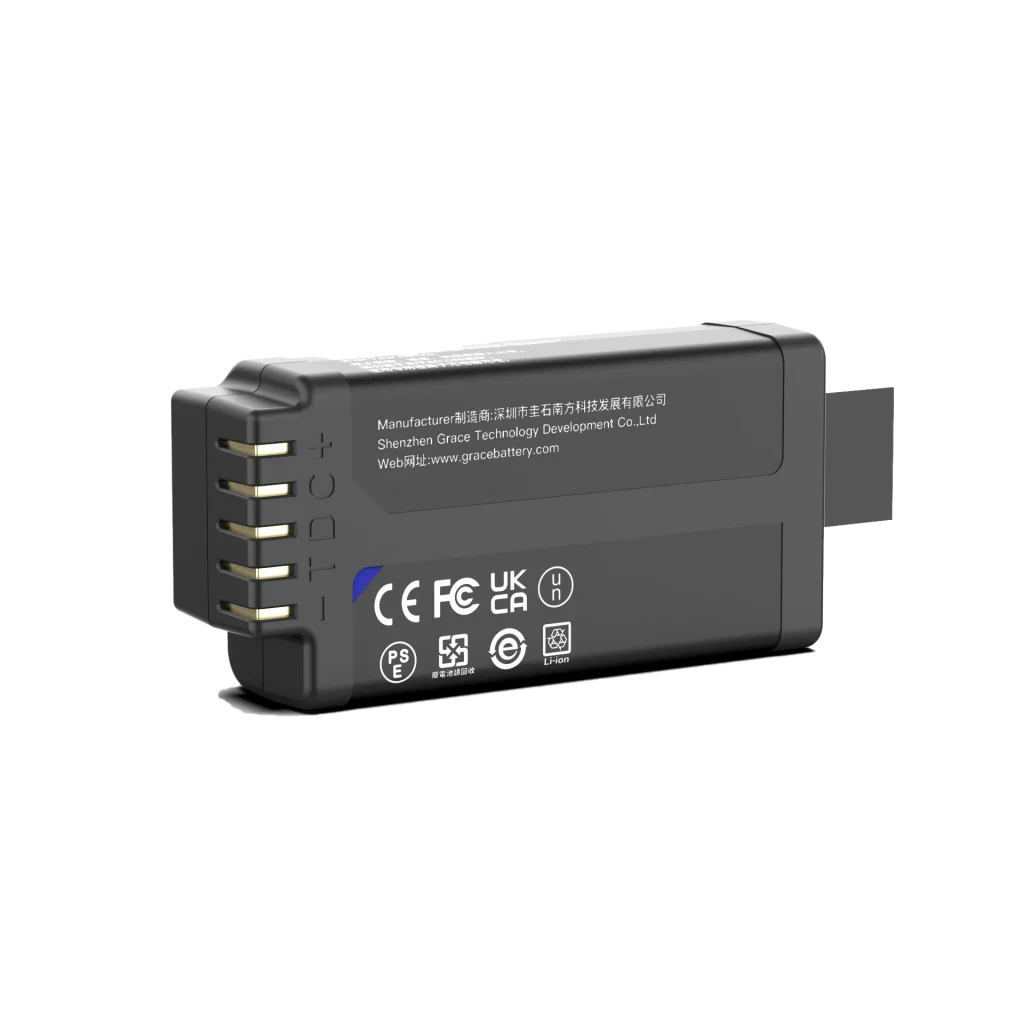
A custom rechargeable battery pack for portable defibrillators is an integrated energy module assembled from rechargeable lithium cells, a battery management system (BMS), protection devices, a fuel gauge, structural enclosure, connector and, where required, a digital communication interface. It is engineered to the electrical, mechanical and compliance requirements of a specific defibrillator model rather than selected from a generic off-the-shelf battery.
A typical medical-grade pack contains the following elements:
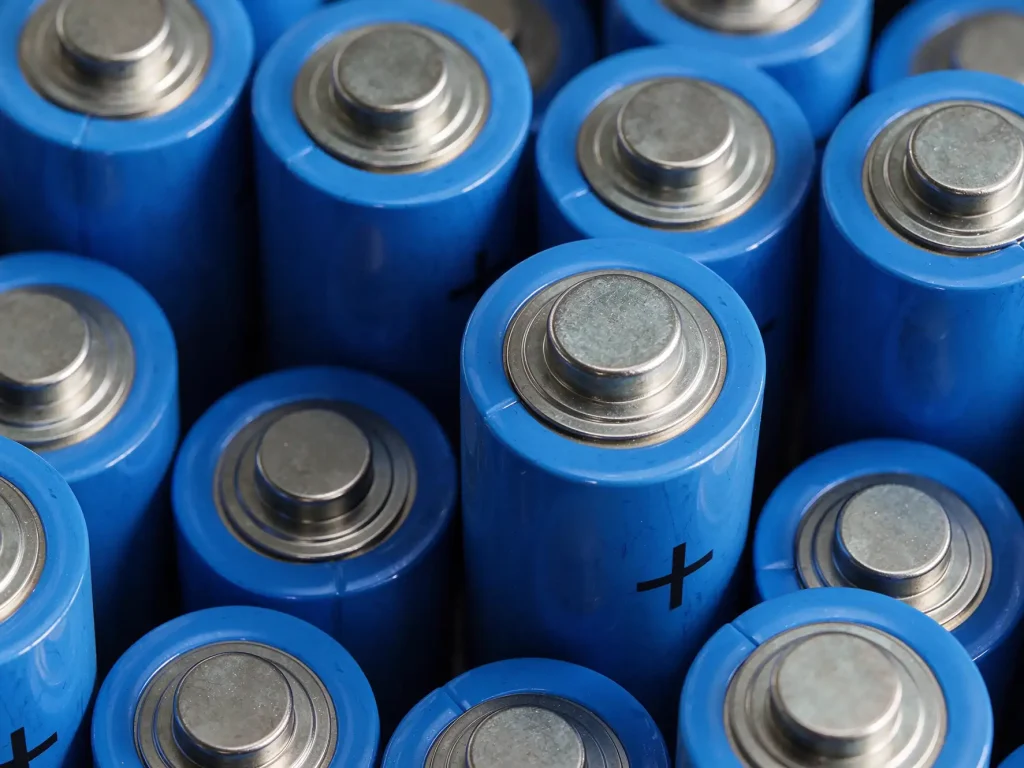
- Rechargeable cells (cylindrical 18650/21700 or pouch type), arranged in series and parallel to reach the target nominal voltage and capacity.
- BMS / protection circuit module (PCM): voltage, current and temperature protection, cell balancing and fault detection.
- Fuel gauge: state of charge (SOC), state of health (SOH), remaining capacity and cycle count.
- Protection devices: fuse or thermal cutoff, PTC where used, and the current-sense path.
- Mechanical assembly: enclosure, cell fixation, mounting, labels, polarity markings and connector.
- Communication: SMBus or I2C fuel-gauge protocol, or discrete analog signals to the host device.
- Documentation: cell lot traceability, test reports, risk-management inputs and declaration materials for conformity assessment.
Why custom? Defibrillators differ in voltage platform, peak current envelope, internal compartment, connector pinout, communication protocol, enclosure constraints and target certification route. A custom pack aligns these variables to the device; an off-the-shelf cell holder usually cannot satisfy the medical safety, traceability and interface requirements.
3. Core Electrical and Operational Requirements
3.1 High Pulse Current and Fast Capacitor Recharge
Defibrillation delivers a high-energy biphasic truncated exponential pulse. Published defibrillator data sheets list configurable energies from 150 J to 360 J per shock. The Stryker LIFEPAK 1000 datasheet, for example, specifies a 200/300/360 J sequence and charging to 200 J in under 9 seconds and to 360 J in under 15 seconds with a fresh pack [1]. To support this, the battery must supply sustained high pulse current without excessive voltage sag during capacitor recharge; internal resistance, cell selection and conductor/contact design all directly affect charge time and the device’s essential performance.
3.2 Shock Sequence Capacity and Monitoring Runtime
Pack capacity must cover the device’s defined minimum shock sequence, plus ECG monitoring, keypads, alarms and communication between shocks, with reserve capacity for the late stage of a rescue. The requirement should be expressed as: minimum number of full-energy shocks, maximum monitoring hours, and reserve margin under the worst-case state of charge and temperature.
3.3 Standby, Self-Discharge and Calendar Life
Rechargeable lithium-ion packs self-discharge over time and require periodic charging; this changes the maintenance model compared with primary cells. As a market reference, the Defibtech DBP-2009 rechargeable Li-ion pack is rated 11.1 VDC, 2.0 Ah, 22.2 Wh, recharges in under 3 hours, offers about 3 months of standby when installed, and supports a minimum of 250 shocks or 12 hours of ECG monitoring per charge [9][10]. By contrast, primary Li/MnO2 AED packs are specified for multi-year standby: the Mindray BeneHeart C1A uses a Li/MnO2 disposable pack rated 4200 mAh with 6-year standby at 20±5 °C under weekly self-test conditions [8]. These figures are reference points from specific products, not universal targets; each pack must be sized to its own device’s use pattern and maintenance plan.
3.4 Environmental, Mechanical and Low-Temperature Performance
Portable defibrillators move between ambulances, wards, public cabinets and outdoor events. The pack should be rated for the device’s operating-temperature range, humidity, vibration, drop and ingress requirements. The host device’s enclosure rating — such as IP55 when housed in the AED [11] — is not a pack rating by itself. Low-temperature discharge reduces available capacity and pulse current; derating curves and temperature-gated protection must be agreed at the requirements stage.
3.5 Cycle Life and State-of-Health Monitoring
Devices used daily in professional settings go through regular charge-discharge cycles. The cycle-life target, calendar life and replacement interval should be defined together with the device maintenance plan. The fuel gauge should report SOH, cycle count and fault status so the host can warn clinical staff before a pack reaches end of service.
4. Cell Chemistry Selection
Chemistry should follow the device’s use pattern rather than a default preference for rechargeable cells. The comparison below summarizes the main options; primary Li/MnO2 is included only as a reference point because this guide focuses on rechargeable packs.
| Dimension | Rechargeable NMC/NCA Li-ion | Rechargeable LiFePO4 | Primary Li/MnO2 (reference, non-rechargeable) |
| Energy density | High; suits compact portable devices | Moderate; lower voltage per cell | Very high per volume and weight |
| Pulse current | Strong; supports fast capacitor recharge | Good; check voltage window under pulse load | Strong high-pulse capability |
| Cycle life | Moderate to good, hundreds of cycles | Longer cycle life and thermal margin | Not applicable; single use |
| Standby / shelf | Moderate self-discharge; periodic charging required | Moderate self-discharge; periodic charging required | Multi-year shelf and standby life |
| Typical fit | Dock-charged monitor-defibrillators, EMS kits with a charging station | Devices favoring cycle durability and thermal margin where the voltage envelope allows | Always-ready AEDs with infrequent service and unattended standby |
| Rechargeable | Yes | Yes | No |
NMC/NCA packs offer the energy and pulse balance most often required by compact portable defibrillators. LiFePO4 trades energy density for longer cycle life and thermal margin and must be checked against the device’s voltage window before selection.
5. BMS and Electronic Design
- Protection chain: cell-level overvoltage, undervoltage, overcharge, overdischarge, discharge/charge overcurrent, short-circuit and temperature protection, plus secondary hardware protection (fuse or thermal cutoff) independent of the main BMS.
- Balancing: passive or active balancing matched to the cell arrangement and service-life target.
- Fuel gauge and state estimation: SOC, remaining capacity, SOH and cycle count, with impedance tracking where the host requires accurate reserve estimates.
- Communication: SMBus or I2C fuel-gauge protocol, or discrete signals for SOC, fault and pack-present detection; the protocol and data map are agreed with the device firmware team.
- Charger coordination: charge voltage and current profile, temperature-gated charging, charge interlock and safe-state handling if a fault is detected.
- Reliability and traceability: fault detection under single-fault conditions, documented cell lot traceability, controlled firmware versions and design change records aligned with the medical device quality system.
6. Mechanical, Thermal and Safety Design
- Form factor and mounting: compartment fit, fixation, strain relief, connector keying and polarity protection; no ambiguous mating that could cross-connect packs.
- Enclosure: flame-retardant material (for example UL 94 V-0 class where specified), durable label area, and venting or pressure relief considered for fault conditions.
- Thermal design: heat path from cells and BMS, cell spacing and barriers to slow thermal propagation; thermal interface and enclosure airflow coordinated with the host device.
- Serviceability: defined removal and replacement procedure, service labeling and accessible service parts consistent with the device’s maintenance instructions.
- Documentation: pack-level risk analysis aligned with ISO 14971:2019 [13], providing inputs to the device manufacturer’s medical risk file.
7. Regulatory and Compliance Framework
The finished defibrillator is the medical device under its manufacturer’s conformity process; the pack is a critical subsystem. The supplier’s role is to supply qualified cells, a validated pack design, test reports and documentation that support the device manufacturer’s file. Exact conformity routes should be confirmed with the notified body or regulatory counsel for the target market.
| Item | Role / scope | Relevance to the pack |
| IEC 60601-1:2005+AMD1:2012 CSV | General requirements for basic safety and essential performance of medical electrical equipment [2] | The pack integrates into the host’s basic safety and essential performance assessment. |
| IEC 60601-1-2 (EMC collateral standard) | Electromagnetic disturbances requirements and tests for medical electrical equipment | Pack electronics and fuel gauge must not emit excessive disturbance and must withstand the host’s EMC environment; verify the current edition with the test laboratory. |
| IEC 60601-2-4:2010+AMD1:2018 CSV | Particular requirements for the basic safety and essential performance of cardiac defibrillators [3] | Device-level particular requirements that shape power-source and essential-performance expectations. |
| ISO 13485:2016 | Medical devices — quality management systems — requirements for regulatory purposes [5] | Supplier QMS practices, documentation control and traceability aligned to medical device expectations. |
| ISO 14971:2019 | Application of risk management to medical devices [13] | Pack-level hazard analysis and risk controls feed the device manufacturer’s risk management file. |
| IEC 62133-2:2017+AMD1:2021 CSV | Safety requirements for portable sealed secondary lithium cells and batteries, lithium systems [4] | Pack and cell safety test baseline for portable rechargeable lithium batteries. |
| UN38.3 / IEC 62281 | Lithium battery transport safety (UN Manual of Tests and Criteria T1–T8) | Required for air, road and sea shipment of cells and packs; the FDA-listed AED battery manual references UN38.3 T1–T8 testing [11]. |
| UL 62133-2 / UL 2054 / UL 1973 | North American market-common battery safety certification routes | Selected per end-product and target market. UL 1973 covers stationary/auxiliary and light-rail applications and is not automatically a medical-device requirement. |
| Regulation (EU) 2023/1542 | EU batteries regulation: conformity assessment, EU declaration of conformity, CE marking, labelling and, for relevant categories, later passport and QR-code obligations [6][7] | Applies to the battery placed on the EU market; CE marking is affixed per Articles 19–20 after conformity assessment. |
| Regulation (EU) 2017/745 (MDR) | EU medical device regulation | Governs the finished defibrillator; the pack’s risk analysis and documentation feed the device technical file. |
| UKCA / UK(NI) | United Kingdom and Northern Ireland market marking rules [12] | Confirm the current UKCA or UK(NI) route for the battery category before market entry. |
8. Custom Pack Development Process (OEM)
A controlled development process keeps the pack traceable and ready for the device technical file. The typical stages are:
- 1. Requirements capture: electrical (voltage, capacity, peak current, pulse profile), mechanical (envelope, mounting, connector), environmental, communication, compliance and target markets.
- 2. Cell and architecture selection: cell model, series/parallel configuration, BMS platform, fuel gauge, preliminary BOM and risk outline.
- 3. Design: schematic, BMS firmware, mechanical enclosure and thermal layout; design FMEA and a design risk register.
- 4. Prototyping and bench validation: pulse discharge, cycle life, standby and self-discharge, temperature performance and protection verification.
- 5. Design verification (DVT): safety tests per target standards, transport testing, drop and vibration, EMC cooperation with the host device, and review of test reports.
- 6. Design transfer and production validation (PVT): process validation, incoming-inspection criteria, lot traceability and supplier/change-control documentation.
- 7. Serial production: controlled BOM, lot records, ongoing reliability monitoring and formal change notification for any supplier, cell or firmware substitution.
9. Evaluating a Custom Pack Supplier
| Evaluation dimension | What a capable supplier should demonstrate |
| Medical-oriented QMS | ISO 13485-aligned procedures, document control, traceability and complaint handling; willingness to be audited and to share quality records. |
| Cell qualification | Controlled cell sourcing, cell lot traceability, qualification data for pulse and cycle life, and no undocumented cell substitutions. |
| BMS and firmware | Proven protection chain, fuel-gauge and SOH implementation, SMBus/I2C or custom protocol support, and controlled firmware versioning. |
| Compliance documentation | Pack test reports, declarations, UN38.3 summaries and risk-management inputs aligned to the device file. |
| Engineering capability | Requirements review, prototype iteration, thermal and mechanical design support, and responsive action on DVT findings. |
| Change control | Formal notification of cell, supplier, material or firmware changes; revision history retained. |
| NPI and production capacity | Sample speed, pilot-line process validation, serial capacity and delivery reliability. |
| After-sales | Warranty policy, field-failure analysis, spare-pack availability and replacement guidance. |
Evidence to request before selection: sample packs, cell and pack test reports, a declaration-of-conformity template, reference projects in medical or portable high-reliability equipment (subject to NDA), and a written change-control process.
10. Frequently Asked Questions
Q1. What voltage and capacity are typical for a rechargeable defibrillator battery pack?
There is no universal value; the pack is sized to the device platform. Common Li-ion architectures are three- or four-cell-series packs with nominal voltages around 11.1 V or 14.8 V, with capacity chosen for the shock sequence, monitoring runtime and reserve margin. A published market reference is the Defibtech DBP-2009: 11.1 VDC, 2.0 Ah, 22.2 Wh [9].
Q2. Can a portable AED run on a rechargeable Li-ion pack instead of a primary lithium battery?
Some AED models offer an optional rechargeable pack, but many always-ready public AEDs use primary Li/MnO2 cells because they retain charge for years with no maintenance. Rechargeable packs require periodic charging and have shorter standby life; the choice must follow the device’s intended use, maintenance plan and applicable device standards.
Q3. Which certifications does a defibrillator battery need for the EU and US markets?
The finished device is certified under its own regulatory framework (EU MDR 2017/745 or the FDA pathway). At pack level, typical evidence includes IEC 62133-2 safety testing, UN38.3 transport qualification, EU 2023/1542 conformity assessment and CE marking, and North American options such as UL 62133-2 or UL 2054 where required. The exact route should be confirmed with the notified body or regulatory counsel.
Q4. How many charge cycles should a medical defibrillator pack last?
This depends on chemistry, depth of discharge and operating temperature. One published rechargeable AED pack reference is rated for roughly 300 charge/discharge cycles and about three years of service life [9]; the design target should instead be set from the device’s maintenance plan, with SOH monitoring to schedule replacement.
Q5. How does the battery pack communicate with the defibrillator?
Typically through an SMBus or I2C fuel-gauge interface, or through discrete signals. The host reads state of charge, remaining capacity, cycle count, state of health and fault flags; the protocol, data map and alarm thresholds must be agreed during requirements capture.
Q6. What is the difference between a cell, a battery pack and a BMS?
A cell is the individual electrochemical unit (for example an 18650 or pouch cell). A pack is the assembled module of cells plus protection, fuel gauge, enclosure and connector. The BMS is the electronic circuit that protects the cells, estimates state of charge and health, and manages communication with the host device.
Q7. How should rechargeable defibrillator packs be stored before installation?
Follow the manufacturer’s recommended state of charge, store in a controlled temperature environment, and schedule periodic charge checks to avoid deep discharge. Self-discharge rates differ by chemistry and design; storage limits should be verified in the pack specification rather than assumed.
Q8. Is a custom pack better than an off-the-shelf battery for a portable defibrillator?
Off-the-shelf cells or holders are reasonable for early prototyping, but a production medical device usually needs a custom pack to match the mechanical envelope, electrical pulse requirements, connector and communication interface, traceability and compliance documentation. Safety and certification, not convenience, should drive the final decision.
11. Conclusion
A reliable custom rechargeable battery pack for portable defibrillators is engineered around three priorities: delivering the pulse current and reserve energy the rescue sequence requires, maintaining trustworthy state-of-health visibility through the BMS, and carrying the documentation and traceability a medical device file demands. Chemistry should follow the device’s use pattern — rechargeable Li-ion for docked, professionally used equipment, primary cells where multi-year unattended standby is essential. Working with an experienced OEM pack supplier that can support requirements review, DVT validation, compliance documentation and controlled change control reduces the risk of late redesign and supports a faster, more defensible device approval.
Author and Disclosure
Author: TEFOO Battery R&D Team — Senior Lithium Battery R&D Engineers, TEFOO.
About the author: The TEFOO R&D team designs custom smart-BMS lithium battery packs and OEM/ODM power solutions for medical and portable industrial equipment, including SMBus communication and application-specific pack integration.
Conflict of interest: TEFOO designs and manufactures rechargeable lithium battery packs for medical and industrial equipment. This article is technical engineering guidance for information purposes only and does not constitute regulatory, legal or certification advice. The finished defibrillator manufacturer remains responsible for the device’s conformity to applicable regulations and standards.
References
[1] Stryker. LIFEPAK 1000 defibrillator data sheet. https://www.stryker.com/content/dam/stryker/ems/products/lifepak-1000/resources/lifepak-1000-data-sheet.pdf
[2] IEC. IEC 60601-1:2005+AMD1:2012 CSV, Medical electrical equipment — Part 1: General requirements for basic safety and essential performance. https://webstore.iec.ch/en/publication/2612
[3] IEC. IEC 60601-2-4:2010+AMD1:2018 CSV, Particular requirements for the basic safety and essential performance of cardiac defibrillators. https://webstore.iec.ch/en/publication/26882
[4] IEC. IEC 62133-2:2017+AMD1:2021 CSV, Secondary cells and batteries — Safety requirements for portable sealed secondary lithium cells and batteries, lithium systems. https://webstore.iec.ch/en/publication/70017
[5] ISO. ISO 13485:2016, Medical devices — Quality management systems — Requirements for regulatory purposes. https://www.iso.org/standard/59752.html
[6] European Union. Regulation (EU) 2023/1542 concerning batteries and waste batteries (consolidated text). https://eur-lex.europa.eu/legal-content/EN/TXT/HTML/?uri=CELEX:02023R1542-20240718
[7] EUR-Lex. Sustainability rules for batteries and waste batteries (summary). https://eur-lex.europa.eu/EN/legal-content/summary/sustainability-rules-for-batteries-and-waste-batteries.html
[8] Mindray. BeneHeart C1A Automated External Defibrillator datasheet. https://www.mindray.com/content/dam/xpace/en/resources/aed/specification/BeneHeart%20C1A%20Datasheet%20-%20EN.pdf
[9] Defibtech. DBP-2009 Rechargeable Battery Pack and Charging Stand User Manual (manual mirror). https://www.manualslib.com/manual/1721070/Defibtech-Dbp-2009.html
[10] Covarmed. Lifeline ECG / PRO rechargeable battery specification. https://www.covarmed.be/fr/batterie-rechargeable-lifeline-ecg-pro
[11] FDA Access Data. 9146-ABE / G5-ABE Battery Operation Manual (standards and UN38.3 reference). https://www.accessdata.fda.gov/cdrh_docs/pdf19/P190013C.pdf
[12] GOV.UK. EU Batteries Regulations in Northern Ireland. https://www.gov.uk/guidance/eu-batteries-regulations-in-northern-ireland
[13] ISO. ISO 14971:2019, Medical devices — Application of risk management to medical devices. https://www.iso.org/standard/72704.html