Introduction
For buyers sourcing lithium-ion battery packs for medical devices, industrial instruments, portable measurement equipment and similar professional applications, safety compliance is not a marketing claim; it is a documented test outcome. A CB test certificate is one of the most widely recognized pieces of evidence that a battery manufacturer has subjected a design to independent safety testing under IEC standards. This guide explains what a CB test certificate actually is, which standards apply to battery packs, what it proves and does not prove, and how an engineering team should verify it before placing an order.
1. What Is a CB Test Certificate?
The CB Scheme (Certification Bodies’ Scheme) is a multilateral conformity-assessment system operated by IECEE, the IEC System for Conformity Assessment Schemes for Electrotechnical Equipment and Components. Established in 1971, it allows test results produced in one participating country to be recognized in the others, reducing the need to retest the same product for each market.
Two documents make up the CB package:
- CB Test Report: the technical record produced by an accredited CB Testing Laboratory (CBTL), describing the product, the standard applied, test conditions, results and conclusions.
- CB Certificate: the formal certificate issued by a National Certification Body (NCB) on the basis of a satisfactory CB report, identifying the certificate holder, the product, the standard and the covered models.
When a buyer searches for a CB test certificate battery manufacturer, they are normally asking whether the manufacturer holds, or can supply, a valid CB certificate together with the underlying CB report for the exact battery model being quoted.
2. Which Standards a Battery CB Certificate Is Based On
A CB certificate does not exist in isolation; it is always tied to a specific standard edition. For rechargeable battery products, the most common standards used in the CB Scheme are listed below.
| Standard | Scope | Typical battery application |
| IEC 62133-1:2017 | Sealed portable secondary cells and batteries containing alkaline or other non-acid electrolytes, nickel systems. | Nickel-based portable battery packs. |
| IEC 62133-2:2017 | Sealed portable secondary lithium cells and batteries, lithium systems; requirements under intended use and reasonably foreseeable misuse. | Li-ion portable packs for medical and handheld industrial devices, portable instruments, power banks. |
| IEC 62619 | Safety requirements for secondary lithium cells and batteries used in industrial applications. | Industrial and energy-storage battery systems. |
| IEC 61960 | Electrical performance assessment referenced alongside the safety standard. | Supporting performance evaluation of secondary cells and batteries. |
For lithium-ion packs, the cell level and the pack level should both be checked. A certificate covering only the cells does not by itself certify the finished pack, and the reverse is also true.
Typical safety test families under IEC 62133-2 include overcharge, overdischarge, external short circuit, free fall, mechanical shock, vibration, crush or impact, thermal abuse and heating, together with other misuse-related conditions defined in the applicable clauses.
3. What a CB Certificate Proves, and What It Does Not
3.1 What it proves
- the tested representative design was evaluated against the listed IEC standard by an accredited laboratory and met the relevant requirements at the time of testing.
- the report provides a technical basis that other NCBs can use to convert the CB outcome into national certifications.
- the certificate identifies the holder, covered models, standard edition and rated parameters that were included in the evaluation.
3.2 What it does not prove
- it is not a type approval for every destination country; national deviations, local markings and additional local tests may still apply.
- it does not certify production quality or the consistency of mass production, and it does not prove that every shipped unit matches the tested sample; those are addressed by factory quality systems such as ISO 9001.
- it does not replace transport testing (UN38.3) or market-specific regulations such as the EU Battery Regulation.
- it does not remain valid indefinitely if the design, cells, BMS, materials or manufacturer change materially; such changes may require retesting or an amended certificate.
Validity note: according to IECEE, CB test certificates remain valid as long as the certified products continue to conform to the initial certification, unless canceled by the licensee. Product modifications, a new edition of the standard, or action by the NCB can affect current status, so the certificate should be reviewed at each sourcing cycle.
4. How to Verify a CB Test Certificate from a Battery Manufacturer
The following checklist is written for an engineering or procurement team qualifying a battery supplier. It is designed to turn a certificate image into a traceable compliance record.
- request both the CB certificate and the full CB test report, not a certificate image alone.
- confirm the issuing NCB and the testing CBTL are listed in the IECEE member system.
- match the exact product model, rated capacity, nominal voltage, chemistry and configuration to the unit you intend to buy; certificates often cover a family of models listed in the appendix.
- check the standard number and edition (for example IEC 62133-2:2017) and confirm it is the edition accepted in your target markets.
- verify whether the certificate covers the finished pack or only the cells; if only cells, ask for pack-level documentation.
- check the certificate status and any amendments or revision suffixes; where in doubt, ask the NCB to confirm validity.
- review the report’s national deviations section and the differences allowed for destination countries.
- ask for the supplier’s quality-system evidence (ISO 9001) and production traceability, so the tested sample can be connected to serial production.
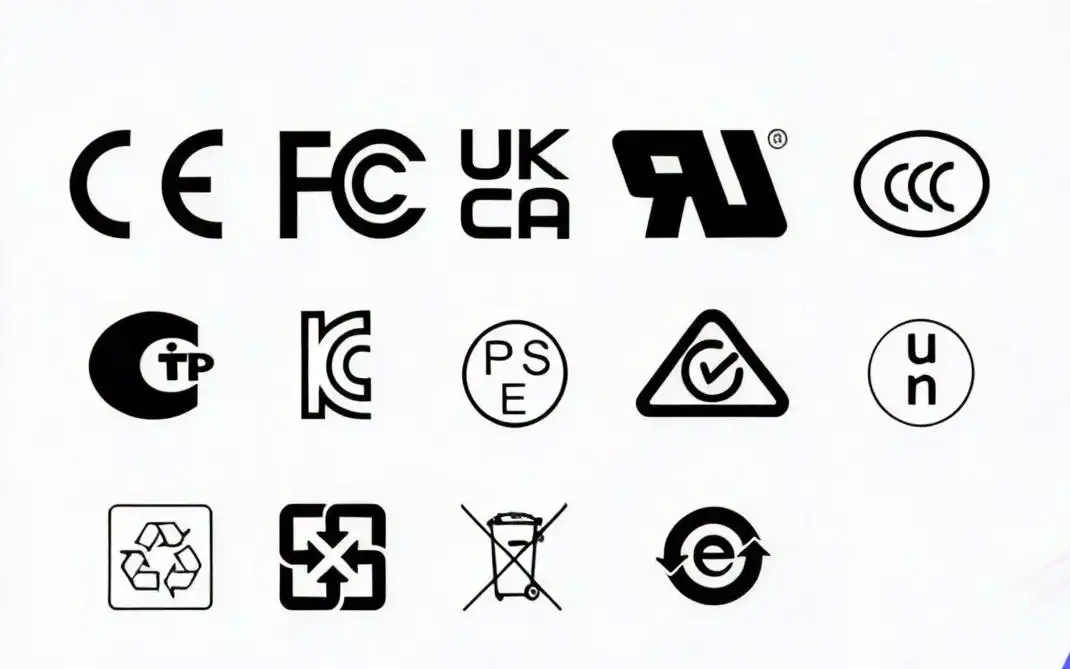
- confirm separate transport documentation (UN38.3 test summary) and any destination-market marks (CE, UKCA, KC, CCC) are in place.
5. Certified versus Non-Certified Battery Supplier
| Dimension | CB-certified manufacturer | Supplier without CB documentation |
| Independent test evidence | CB report plus certificate from an accredited body. | Internal test reports, or none provided. |
| Market access | Provides a basis for converting to CE, UKCA, KC, CCC and other national marks. | Retesting is required market by market. |
| Risk review | Safety assumptions traceable to specific standard clauses. | Assumptions cannot be independently verified. |
| Buyer due diligence | Easier qualification for medical and industrial buyers. | Extended qualification cycle and follow-up audit. |
| Production consistency | Normally paired with ISO 9001 and batch traceability. | Production controls and traceability are often unclear. |
| Typical sourcing outcome | Faster approval and lower compliance risk. | Delays, rejected shipments or redesign risk. |
6. CB Certificate versus Other Battery Certifications
Buyers often see CB, CE, UKCA, KC, CCC, UN38.3 and the EU Battery Regulation listed together. They solve different problems, and the CB certificate is only one layer of the compliance file.
| Mark or regulation | What it covers | Relationship to the CB certificate |
| CB Scheme (IEC 62133-2, IEC 62619) | International safety test basis for cells and batteries. | Starting technical point for conversion into national schemes. |
| CE (EU, LVD and harmonized EN standards) | European Union market access for safety. | Often derived from the CB report with EU deviations applied. |
| UKCA | United Kingdom market access marking. | May rely on equivalent accepted test evidence. |
| KC | Korea safety registration. | Converted from the CB package with Korean deviations. |
| CCC | China compulsory certification for listed products. | National scheme; the CB report supports but does not replace CCC. |
| UN38.3 | Transport safety of lithium cells and batteries, per the UN Manual of Tests and Criteria, Part III. | Separate test; required for shipment regardless of CB status. |
| (EU) 2023/1542 Battery Regulation | EU market surveillance: labeling, carbon footprint, due diligence, durability and recycling. | Legal framework running in parallel with product safety standards. |
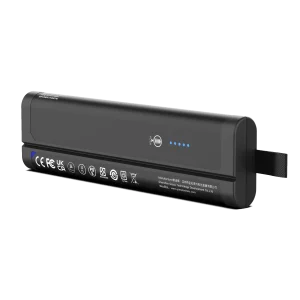
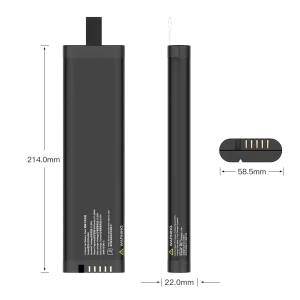
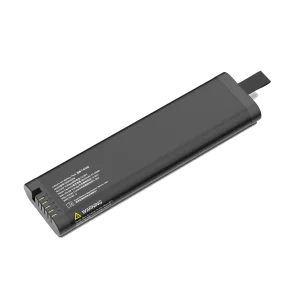
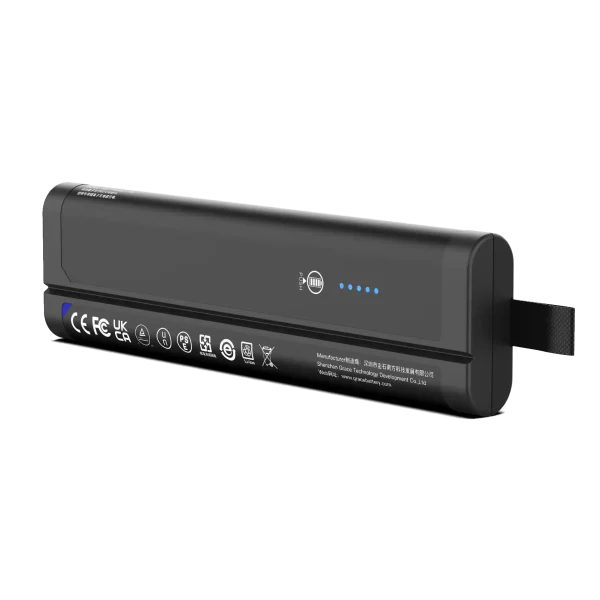
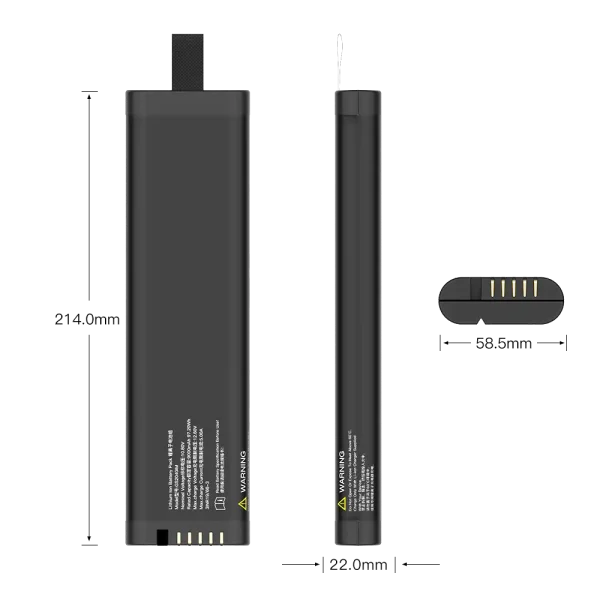
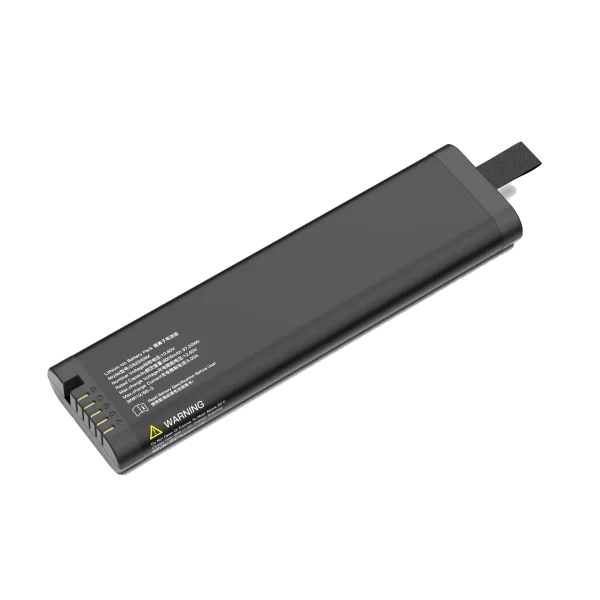
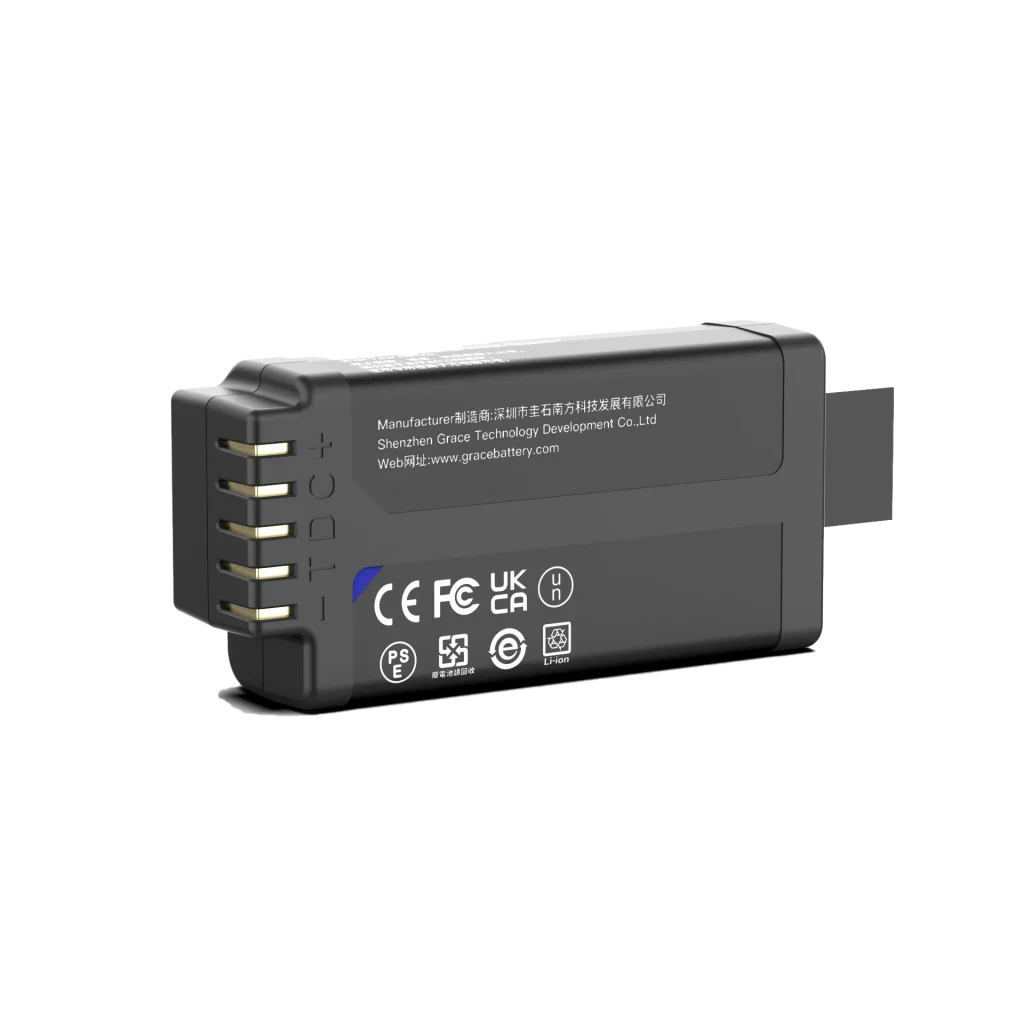
GS2040IM
10.8V/9300mAh/97.2Wh
7. Engineering Perspective: Preparing for CB Compliance
From an R&D standpoint, CB readiness starts before the prototype is built. Certification is the output of a controlled design process, not a document purchased at the end of production.
- Cell selection: require cell suppliers to provide cell-level IEC 62133-2 documentation, and verify that chemistry, manufacturer and part number are locked in the BOM.
- BMS design: design protection against overcharge, overdischarge, overcurrent and short circuit, and document thresholds and fault behavior so they can be defended during testing.
- Design consistency: treat the certified configuration as controlled; any change to cells, PCB, protection IC, enclosure or wiring goes through an engineering change review to assess whether retesting is required.
- Documentation package: keep schematic, BOM, cell datasheets, test reports and certificate on file so a buyer’s compliance engineer can review the same record the laboratory reviewed.
- Market mapping: identify target markets early so the CB report can address the relevant national deviations and avoid a second test campaign.
Engineering note from TEFOO: our team treats certification evidence as part of the product design record. When a medical or industrial application has specific safety expectations, we recommend reviewing the intended models and destination markets with the manufacturer’s engineering team before tooling or volume production is committed.
8. Frequently Asked Questions
Q: What is a CB test certificate for batteries?
A: It is the certificate issued by an IECEE National Certification Body after a battery design passes safety testing documented in a CB report from an accredited CBTL, typically to IEC 62133-2 for portable lithium-ion packs.
Q: Is a CB certificate the same as CE certification?
A: No. CB is an international test-and-reporting basis; CE is the EU market-access marking. A CB report often supports preparing the CE technical file, but EU deviations and the applicable EU directives and regulations must still be satisfied.
Q: How long is a battery CB certificate valid?
A: There is no fixed expiry date in the CB Scheme; it remains valid while the product continues to conform to the initial certification. Material design changes, standard edition transitions, or NCB cancellation can affect its status.
Q: Does a CB certificate cover the finished battery pack?
A: Check the scope carefully. Some certificates cover cells only; others cover the pack. The report’s model list and rated parameters define the actual coverage.
Q: Is UN38.3 part of the CB certificate?
A: No. UN38.3 is a transport safety test required for shipping lithium batteries; it is maintained separately from the CB safety certification.
Q: What should I ask a battery manufacturer to verify CB status?
A: Ask for the CB certificate plus the full CB report, the issuing NCB and CBTL, the standard edition, covered models, pack-versus-cell scope, certificate status, national deviations, and supporting ISO 9001 and UN38.3 documentation.
Structured-data note: mark this FAQ block with FAQPage schema (Question/Answer) so the answers can be eligible for rich results and AI answer engines.
9. Conclusion
A CB test certificate is credible evidence of safety testing when the certificate, the report and the tested design match the product you are buying. For medical and industrial battery packs, the engineering decision is not whether a manufacturer has a logo on a brochure, but whether the documentation can be traced to an accredited laboratory, a current standard edition and a controlled production design. Verify the scope, confirm the standard, pair the certificate with quality-system and transport evidence, and treat any design change as a potential compliance event.
Author and Expertise Statement
Author: Senior Lithium Battery R&D Engineer, TEFOO, Ltd. The author’s engineering work covers custom smart-BMS lithium battery packs, SMBus communication and OEM battery solutions for medical and industrial equipment.
This article is prepared for engineering and procurement audiences to support supplier qualification. It summarizes publicly available standards and scheme rules and does not constitute legal or certification advice for a specific product. Buyers should confirm the current edition and local requirements with the issuing NCB or an accredited certification body.
References
- IECEE FAQ – CB certificate validity and standard transitions: https://www.iecee.org/who-we-are/faq
- IEC 62133-2:2017 webstore record, secondary cells and batteries, lithium systems: https://webstore.iec.ch/en/publication/32662
- IECEE CBTL and member body directory: https://www.iecee.org/members/cbtls