Prepared by the Senior R&D Engineering Team, TEFOO | Published: 2026-11-16 | Revised: 2026-11-16
1. Introduction
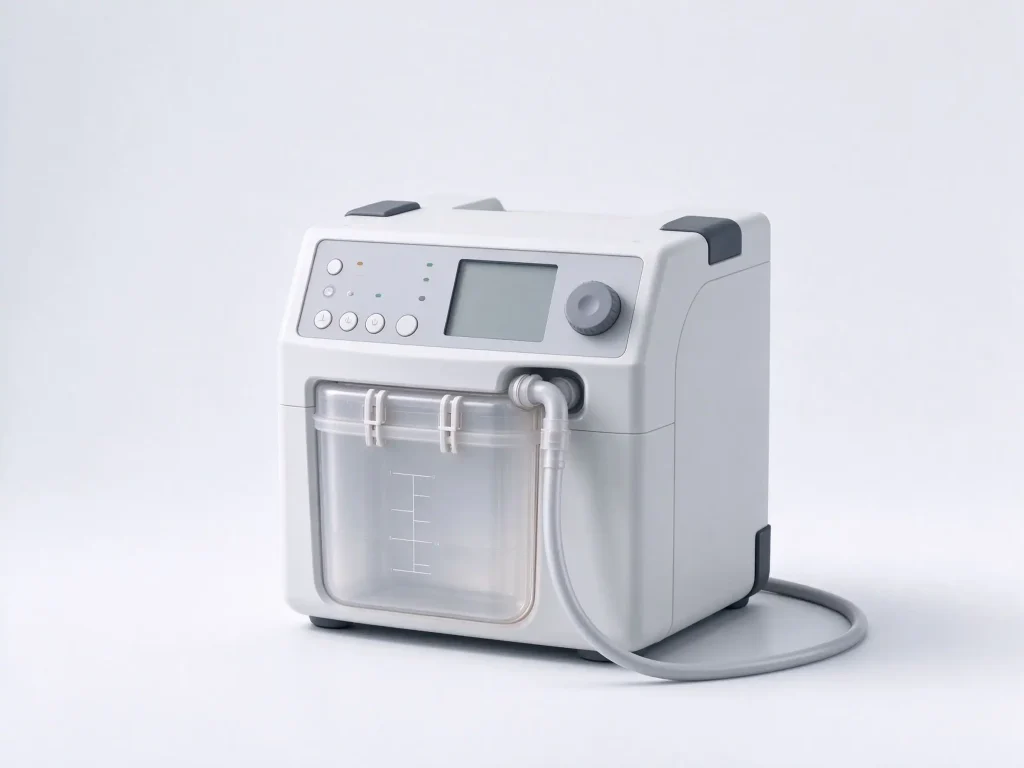
Wireless sensor nodes, industrial monitoring devices, Internet of Things (IoT) sensors and portable diagnostic instruments are increasingly deployed where a fixed mains supply is unavailable or impractical. The Sensor Power Li-ion Battery Pack is the rechargeable energy assembly that delivers stable, long-endurance power to these sensing devices, including the acquisition microcontroller, signal-conditioning circuits, sensors and radio module.
This guide is written from the perspective of a lithium-ion battery R&D engineer. It explains what a Sensor Power Li-ion Battery Pack is, how its capacity, protection and communication are designed around the real duty cycle of a sensor, which battery chemistries fit which use cases, which certifications matter in 2026, and how original equipment manufacturer (OEM) teams should evaluate pack suppliers. The guidance is intended for hardware engineers, product managers and procurement teams specifying rechargeable battery power for sensor and instrument products.
2. What Is a Sensor Power Li-ion Battery Pack
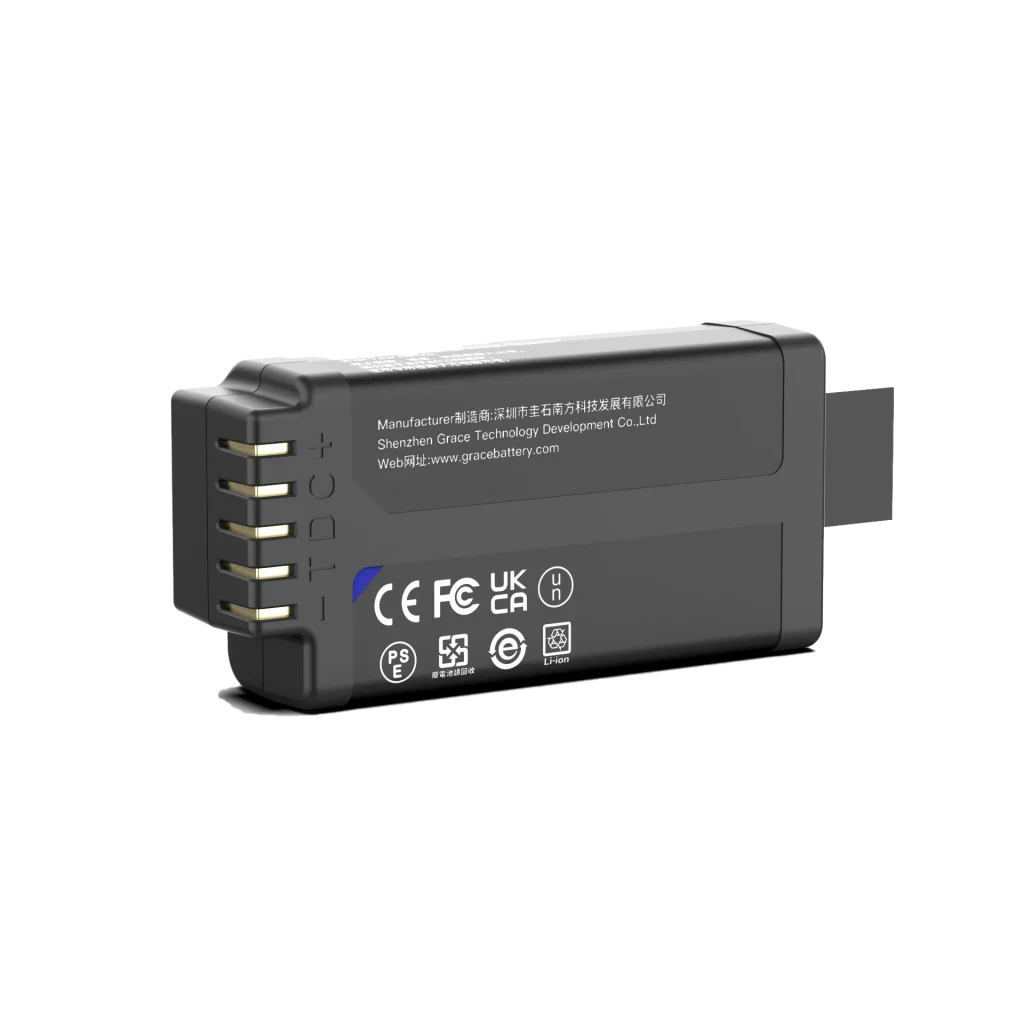
A Sensor Power Li-ion Battery Pack is a complete rechargeable pack built to power sensor electronics that operate untethered. Unlike a generic consumer power bank, it is engineered around the low-duty-cycle current profile of a sensing device: long periods in sleep, interrupted by short wake-up, sampling and radio-transmission pulses. The pack typically delivers a defined nominal voltage (for example 3.7 V, 7.4 V or 11.1 V, depending on cell configuration) and integrates protection, fuel gauging and a host communication interface.
A typical sensor power li-ion battery pack contains the following elements:
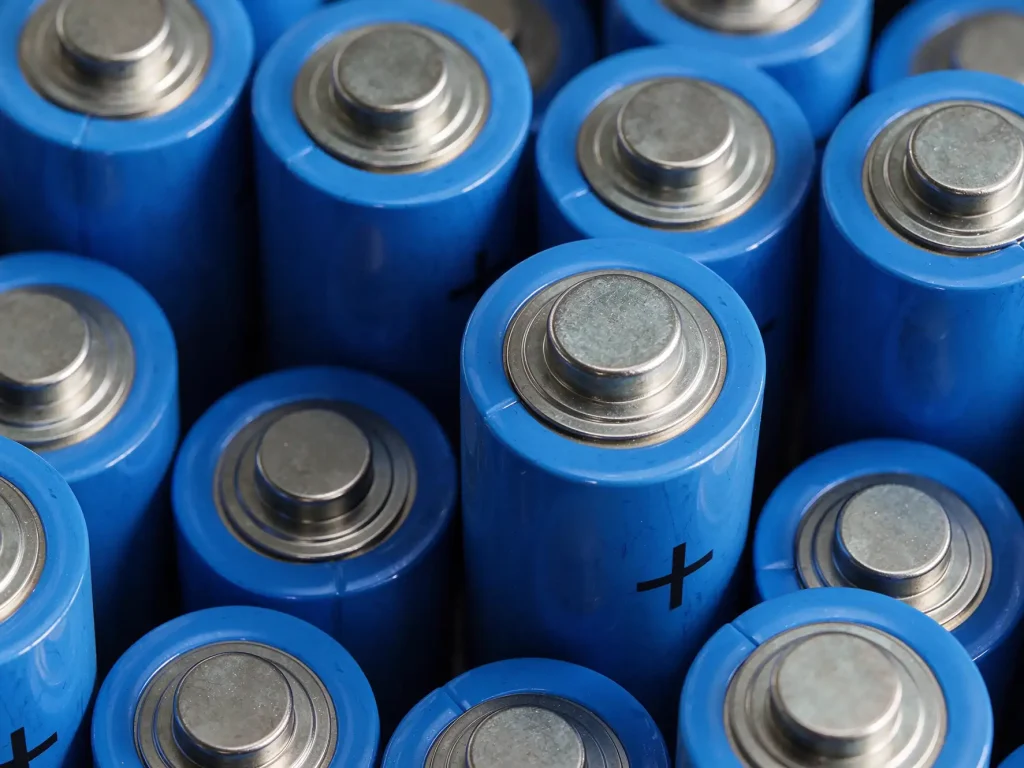
- Cells: cylindrical (such as 18650 or 21700), prismatic or pouch cells in NMC, NCA or LiFePO4 chemistry, arranged in series, parallel, or series-parallel combinations.
- Battery management system (BMS): over-charge, over-discharge, over-current, short-circuit and over-temperature protection, plus cell balancing for series strings.
- Fuel gauge: state-of-charge (SoC) estimation through Coulomb counting and voltage characterization, with aging compensation where required.
- Charging and power-path electronics: charge management aligned to a JEITA-style temperature profile, and a dynamic power path that lets the host run while the pack charges.
- Mechanical and interface parts: enclosure, mounting structure, connector, cable exit, label and, where needed, an ingress-protection rating.
- Communication channel: SMBus (Smart Battery System), I2C or CAN, allowing the host to read voltage, current, SoC, state of health (SOH), temperature and alarm flags.
3. Core Engineering Design Considerations for Sensor Packs
3.1 Capacity and run-time estimation
Run time is derived from usable capacity divided by average current, then adjusted for depth of discharge, temperature, aging, self-discharge and conversion losses. Sensor nodes are duty-cycled, so the pack should be sized against the sleep current and the average active current rather than against the peak transmit current alone. A capacity margin should be reserved for end-of-life degradation, because a cell that has reached its serviceable cycle life will hold less usable capacity than when new.
3.2 Average current versus peak pulse current
Radio transmit pulses draw short, high-current peaks that may range from tens of milliamperes to more than one ampere, depending on the radio (for example LoRa, NB-IoT, ZigBee, BLE or Wi-Fi). The pack internal resistance and cell pulse capability must hold the host supply rail above its brown-out threshold during these pulses. The peak current, pulse duration and allowed supply sag should be specified to the pack designer; a pack rated only for average current may cause the host to reset during transmission.
3.3 Operating temperature and derating
Specify the real ambient range, including enclosure heat trapping in outdoor and industrial installations. Charge and discharge limits differ: charging is normally restricted to a narrower temperature window than discharging. Both capacity and impedance derate at low temperature, and accelerated aging occurs at sustained high temperature; the pack design should apply the manufacturer’s charge-temperature profile and derating curves rather than assume room-temperature performance.
3.4 BMS protection and fuel gauging
Protection thresholds, balancing strategy and sleep-mode quiescent current must all be chosen for multi-year field deployment. A high quiescent current in the pack electronics can drain the pack faster than the sensor itself during long sleep periods. The fuel gauge should be calibrated to the selected cell and updated for aging, so reported SoC remains meaningful to the host and to the end user.
3.5 Communication protocol
Where the host needs battery status, the pack reports over SMBus, I2C or CAN. SMBus under the Smart Battery Specification is a common choice for standardized voltage, current, SoC, SOH, temperature and alarm access; a custom I2C interface may be used for simpler products; CAN is typical in higher-voltage industrial equipment. The protocol, register map and report refresh rate should be matched to the host design at the specification stage.
3.6 Mechanical fit, ingress protection and stress
Form factor, mounting method, connector type and cable exit determine how the pack fits the enclosure. Sealed outdoor or washable applications may require an IP rating such as IP65 or IP67. Vibration, shock, drop and the thermal interface between the pack and the enclosure should be considered alongside the electrical design, because mechanical failure is a common field cause of pack replacement.
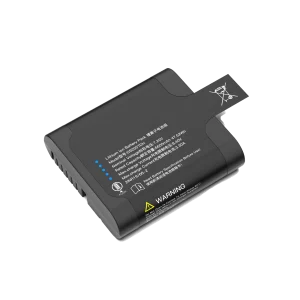
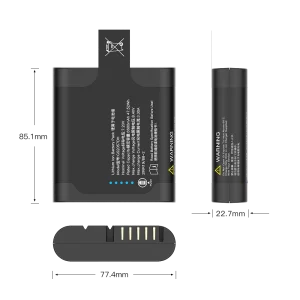
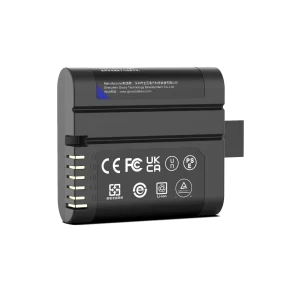
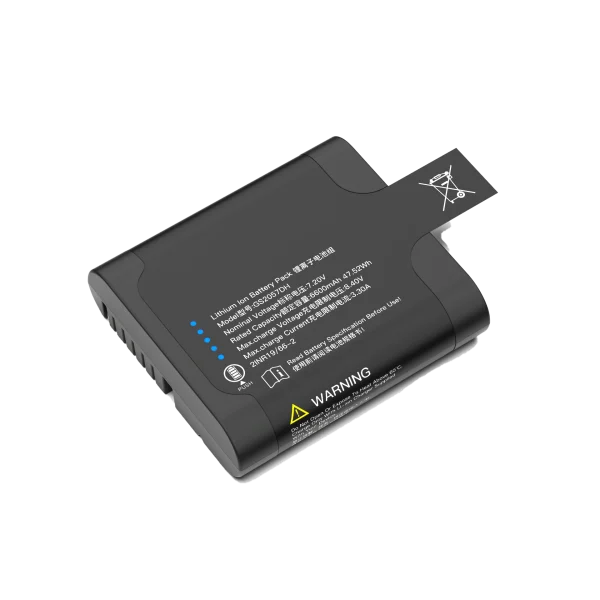
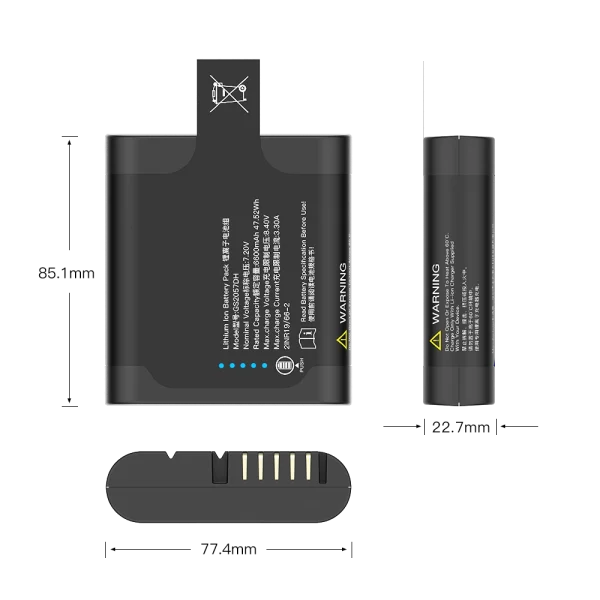
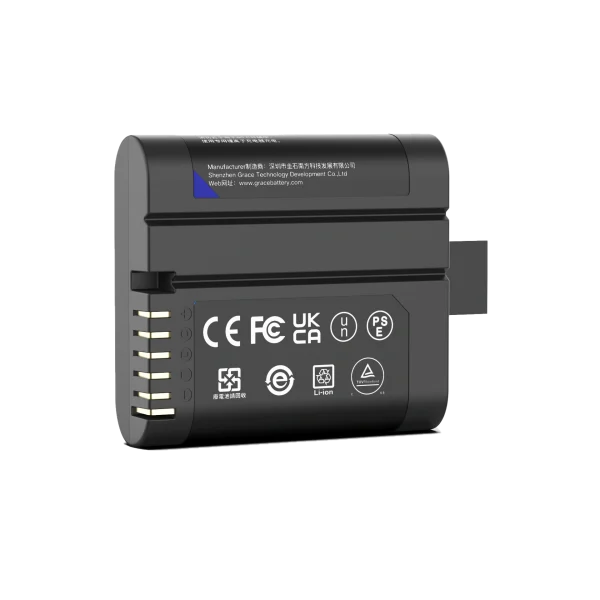
GS2057DH
7.2V/6900mAh/47.52Wh
4. Battery Chemistry Comparison for Sensor Power
No single chemistry is optimal for every sensor product. The table below compares the main rechargeable and non-rechargeable options used in sensor and instrument packs, based on energy density, cycle life, typical fit and practical caveats.
Table 1. Chemistry options for sensor power packs
| Chemistry | Typical form | Energy density | Cycle life | Best fit | Caveats |
| Li-ion (NMC/NCA) | Cylindrical / pouch | High | Moderate | General sensor and instrument packs; balanced energy and maturity | Requires accurate over-charge protection; thermal protection matters |
| Li-polymer | Pouch, thin or shaped | High, flexible form | Moderate | Space-constrained, curved or thin device designs | Lower mechanical ruggedness; pouch swelling and crush protection needed |
| LiFePO4 | Cylindrical / prismatic | Lower | Long | High-cycle, safety-critical or wide-temperature use cases | Lower cell voltage and energy density; strings often need multiple cells for common rails |
| Primary Li-SOCl2 (non-rechargeable) | Cylindrical / bobbin | Very high, very low self-discharge | Not rechargeable | Ultra-low-power sealed nodes deployed for years without access | Cannot recharge; limited recharge-style SoC feedback; transport and disposal rules apply |
| NiMH | Cylindrical / AA/AAA | Lower | Moderate to long | Legacy or low-cost products; tolerant of abuse | Lower energy density; self-discharge and memory effect; heavier for a given capacity |
5. Certification and Compliance Checklist
Certification requirements depend on the device category, the destination market and whether the pack is sold standalone or incorporated into another product. The checklist below lists the standards and regulations most commonly encountered for rechargeable sensor packs in 2026; final applicability should be confirmed with a notified body or certification laboratory.
Table 2. Common standards and regulations for sensor power li-ion packs
| Standard / Regulation | Scope | Relevance to sensor packs |
| ISO 9001 | Quality management system | Demonstrates consistent production quality, traceability and process control |
| ISO 13485 | Medical device quality management system | Applies where the pack is embedded in medical or in-vitro diagnostic (IVD) devices |
| IEC 62133-2:2017 | Safety requirements for portable sealed secondary lithium cells and batteries, under intended use and reasonably foreseeable misuse | Core safety standard for rechargeable li-ion portable packs; part 2 covers lithium systems and replaced the earlier IEC 62133:2012 edition |
| UL 2054 | Household and commercial battery safety | Common safety route for batteries marketed in the North American market |
| UN 38.3 | Transport safety tests (T1–T8) for lithium batteries | Required to ship lithium batteries by air, sea, rail or road; covers altitude, thermal, vibration, shock and other test conditions |
| CE | EU market conformity | Applies the applicable EU battery, safety and EMC requirements as relevant to the product |
| UKCA | Great Britain market conformity | Required for products placed on the Great Britain market where UKCA marking applies |
| FCC | Electromagnetic interference | Relevant when the product or its electronics are marketed in the United States |
| CB scheme | International test-report framework | Provides a single test report that supports multi-country certification |
| PSE | Japan electrical product safety | Applies to battery products sold in Japan where PSE coverage applies |
| KC | Korea safety certification | Applies to relevant battery products marketed in Korea |
| BSMI | Taiwan safety and regulatory registration | Applies to relevant products marketed in Taiwan |
| EU Regulation 2023/1542 | EU battery regulation covering sustainability, safety, labeling, due diligence and end-of-life management | Applies to portable, industrial, LMT, EV and SLI batteries incorporated into or added to products; labeling requirements apply from 2026, the QR-code requirement from 2027, and a battery passport is required for industrial, EV and LMT batteries |
GS2057DH
7.2V/6900mAh/47.52Wh
6. How to Evaluate an OEM Sensor Pack Supplier
For an OEM program, the pack supplier should be involved early, ideally before the host battery compartment and power budget are finalized. The following criteria separate a capable custom pack partner from a generic assembler.
- Application engineering: ability to translate the measured sleep, active and peak current profile, temperature range and required service life into a defensible cell and BMS selection.
- BMS and firmware capability: protection functions, fuel gauge accuracy, SMBus/I2C/CAN communication, and low-quiescent-current design for long deployment.
- Customization: form factor, cell configuration, connector, cable, label, housing and mechanical fit tailored to the device.
- Quality and traceability: ISO 9001 (and ISO 13485 for medical programs), cell-lot traceability, incoming inspection, formation and aging records.
- Compliance readiness: existing IEC 62133-2 and UN 38.3 test reports, plus market-specific certificates such as CE, UKCA, UL, FCC, PSE, KC or BSMI as required.
- Supply continuity: stable cell sourcing, production capacity, lead time and long-term support for products deployed over several years.
- Validation support: run-time verification, temperature cycling, pulse-load, drop and vibration test reports that back the published specifications.
TEFOO supplies custom smart-BMS li-ion battery packs with SMBus communication for industrial and medical sensor and instrument OEMs, supporting cell selection, mechanical customization and certification documentation tailored to the application.
7. Frequently Asked Questions
7.1 What is a Sensor Power Li-ion Battery Pack
It is a rechargeable lithium-ion battery assembly designed specifically to power wireless sensor nodes, IoT devices and portable instruments. It integrates cells, protection circuitry, often a fuel gauge and a communication interface, and is sized to the sensor’s sleep, active and transmit-pulse current profile.
7.2 How long will a sensor battery pack last
Run time depends on usable capacity, average and peak current, depth of discharge, operating temperature and aging. Estimate it as usable capacity divided by average current, then apply margin for temperature, self-discharge and end-of-life degradation. A pack sized only for room-temperature average current may underperform in outdoor or high-pulse conditions.
7.3 Can the pack report state of charge to the host device
Yes. With a fuel gauge and an SMBus, I2C or CAN interface, the pack can report voltage, current, SoC, SOH, temperature and alarm flags to the host. The protocol and register map should be agreed during design, rather than added after the host hardware is frozen.
7.4 What is the difference between Li-ion, Li-polymer and LiFePO4 for sensors
Li-ion offers a balanced combination of energy density and maturity; Li-polymer enables thin, flexible or shaped pouches; LiFePO4 provides longer cycle life and stronger thermal stability at a lower energy density. The choice should follow the product’s energy density, cycle life, form factor and safety priorities.
7.5 Which certifications are required before shipping sensor packs to the EU or US
For a rechargeable li-ion pack, IEC 62133-2 and UN 38.3 are typical starting points; CE and EU 2023/1542 labeling apply in the EU, while UL 2054 and FCC may apply in the United States. Exact requirements depend on the device category and market, and should be confirmed with a certification laboratory.
7.6 Is a rechargeable li-ion pack better than a primary lithium battery for a sensor
A rechargeable pack is preferable where the device can be recharged periodically or paired with energy harvesting. A primary lithium cell suits sealed, multi-year deployments where replacement or charging is impractical. The trade-off is between recharge convenience and the ultra-long shelf life and low self-discharge of primary cells.
7.7 How should the pack be sized for a radio-equipped sensor
Characterize sleep current, average active current and peak transmit current with their durations, then size the capacity for average energy plus a rail-voltage margin during peaks. Add margin for depth of discharge, low-temperature derating and end-of-life aging.
7.8 What protection features should the BMS include
At minimum: over-charge, over-discharge, over-current, short-circuit and over-temperature protection. Series strings need cell balancing, and long-deployment products need a low-quiescent-current sleep design so the protection electronics do not drain the pack during idle periods.
7.9 What temperature range can sensor packs operate in
Discharge is commonly wider than charge: many packs discharge between roughly −20 °C and 60 °C, while charging is restricted to a narrower window. Capacity and internal resistance derate at the extremes, so the specified range must match the real enclosure and ambient conditions.
8. Conclusion
A dependable Sensor Power Li-ion Battery Pack is not selected from a generic capacity rating; it results from matching cell chemistry, usable capacity, BMS protection, fuel gauging, communication protocol, mechanical design and certification to the sensor’s actual duty cycle and deployment environment. For OEM teams, involving the pack supplier at the specification stage — before the compartment, power budget and host protocol are finalized — reduces field failures, re-certification work and run-time shortfalls.
When these engineering and compliance dimensions are addressed early, the pack delivers predictable run time, reliable status feedback and market-ready safety for industrial, IoT and portable instrument sensor products.
Reference
- IEC 62133-2:2017, Secondary cells and batteries containing alkaline or other non-acid electrolytes — Part 2: Lithium systems: https://webstore.iec.ch/en/publication/32662
- Consolidated text of Regulation (EU) 2023/1542: https://eur-lex.europa.eu/legal-content/EN/TXT/HTML/?uri=CELEX:02023R1542-20240718
- European Commission, Batteries environment policy: https://environment.ec.europa.eu/topics/waste-and-recycling/batteries_en