-260719-4-edited.png)

What are smart batteries and how do they work?
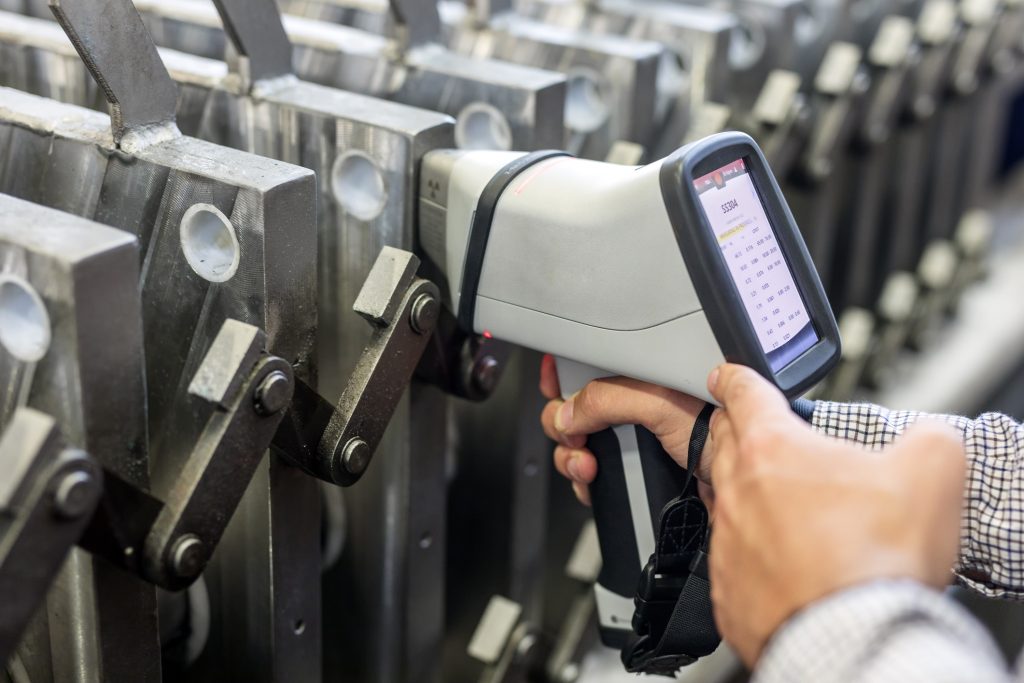
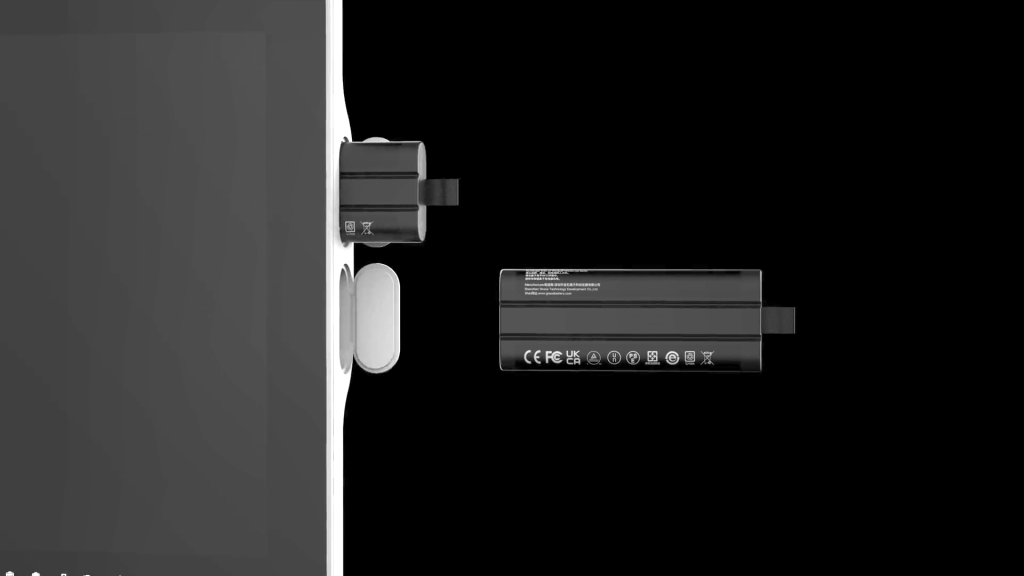
Smart batteries are designed to be integrated into portable devices as part of a broader “intelligent power management system.” This typically includes smart batteries, smart chargers, and a system management bus (SMBus) for communication between different components.
In a traditional portable device setup, any battery is just a “dumb” chemical power battery. Battery gauging, remaining capacity assessment, and any decisions about power usage are entirely informed by readings “obtained” by the host device. Such readings are largely speculative, usually based on voltage measurements from the battery through the host device, or (less accurately) through a coulomb counter in the host.
However, in an intelligent power management system, the battery can highly accurately “tell” the host how much charge it has left and how it wishes to be charged.
Generally, the battery, smart charger, and host device communicate with each other to maximize the product’s safety, efficiency, and performance. For instance, a smart battery only requests charging when needed, rather than placing a constant, steady “drain” on the host system. As a result, smart batteries are more energy-efficient when charging.
Smart batteries can also tell the host device when to shut down based on their own assessment of remaining capacity, thereby maximizing “runtime per discharge cycle.” This approach is far superior to using a fixed voltage cutoff as found in “dumb” systems.
Thus, host portable systems using smart battery technology can provide users with accurate, meaningful runtime information. This is clearly crucial for critical mission devices that cannot afford power failures.
Measurement and Adaptation
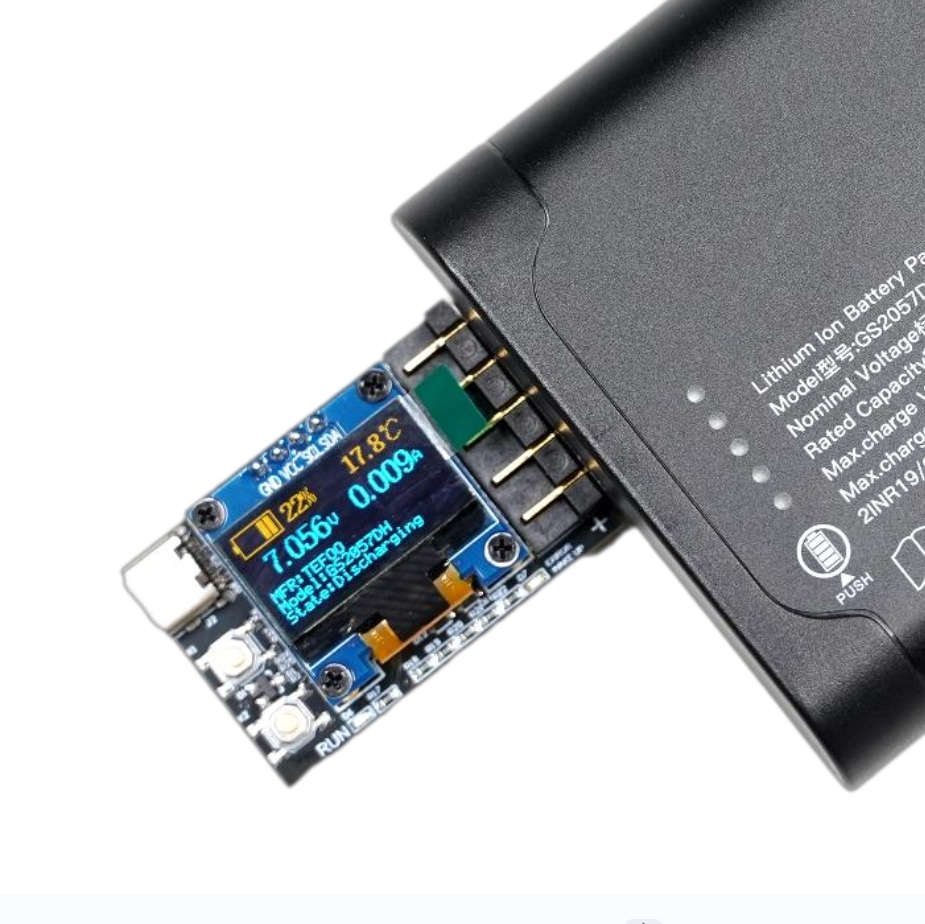
Smart batteries continuously track their own capacity, whether charging, discharging, or in storage. Battery capacity is reported in milliampere-hours (mAh) with a resolution of 1mAh. Actual capacity is reported in mAh and as a percentage (of the original design capacity and the battery’s last charge time).
Battery gauges employ certain correction factors to adjust for variations in battery temperature, charge rate, discharge rate, etc. Smart battery meters are also often adaptive, modifying the adjustments they make as the battery ages and its chemical characteristics and ability to hold a charge change.
As a result, smart batteries can typically predict their capacity within ±1% (a significant advantage compared to the ±20% accuracy found in products using “dumb” batteries).
Smart batteries can also modify charging algorithms based on changing environmental conditions, thereby extending battery life: if a battery is charged in very cold or very hot conditions, it may be damaged. Therefore, smart batteries will reduce the charging current when the battery is warm to reduce the likelihood of damage and prevent charging entirely when the battery is abnormally cold or hot.
Standardized Communication and Future-Proofing
Smart batteries maximize charging efficiency and safety by requesting their own charging voltage and current from compatible smart chargers. This approach ensures that the battery is charged only when needed at the most appropriate voltage and current.
“Compliance with SMBus (System Management Bus) and SBDS (Smart Battery Data Specification)” means that smart batteries comply with open standards that OEM device developers can easily access.
The SBS (Smart Battery System) specification and the accompanying SMBus specification were initially created by Duracell and Intel in 1994 and involve the transmission of battery information over a two-wire communication bus. Together with the SBCS (Smart Battery Charger Specification) and SBSMC (Smart Battery System Manager Specification), the SBS standards describe all the information that can be communicated between smart batteries, chargers, and host devices.
Thanks to continuous communication about its status, charging curves, etc., intelligent power systems can future-proof a product’s power supply: if newer battery technologies are developed (e.g., with higher storage capacity and different charging methods), these new batteries can simply be “swapped in” without replacing the chargers on-site. Existing chargers will simply receive different charging instructions from the battery and adjust accordingly.
In the long run, this simple fact often makes intelligent power systems more economical, especially with very expensive medical equipment or where battery life is paramount (e.g., in anesthesia workstations, ventilators, and remote patient monitoring).
Easy Integration
Interestingly, we find that customers tend to think they need to do a lot of work to make batteries work in their systems.
However, the reality is that electronic component manufacturers such as Texas Instruments (TI) and Linear Technology have provided excellent and highly reliable high-integration reference designs for their smart chargers and power management ICs. These reference designs make the integration of smart batteries very easy. Moreover, the openness of various communication protocols makes it easy for device software engineers to query the battery and extract useful information, such as remaining capacity, empty run time, cycle life, etc.
Smart Chargers
Despite the relatively small increase in cost, smart batteries and smart charging systems provide the right choice for many portable devices, with clear advantages in terms of life, charging, safety, and future-proofing.
The smart charging system market is now quite mature. However, designers often overlook the option of implementing a smart charging system. In addition, the level of battery life and adaptability that designers can gain from specific intelligent power technologies has been changing. Therefore, we always recommend that designers collaborate with reliable third-party battery experts to ensure they specify the most appropriate smart charging solution for their devices.