By Author · Senior Battery R&D Engineer · TEFOO · October 2026
1. Introduction
Inertial motion capture suits — the wearable, IMU-based systems used in virtual production, game and film animation, sports science, and increasingly in AI and robotics training-data pipelines — share one component that studios and performers never think about until it fails mid-capture: the battery.
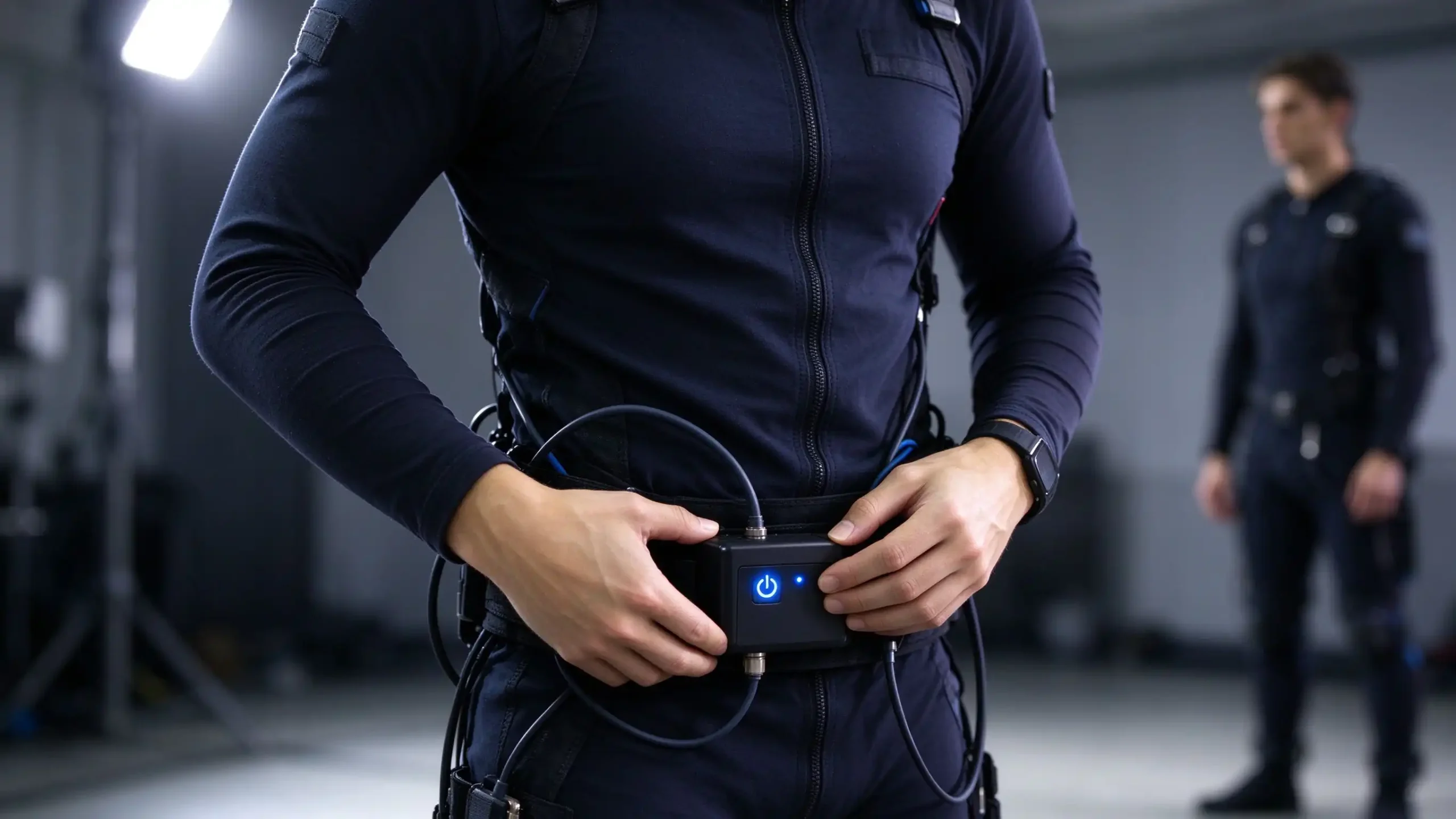
Unlike camera-based systems that are powered from the studio floor, a mocap suit is a self-contained wearable computer. Up to 17 wireless sensors stream orientation data to a central hub at update rates as high as 240 Hz; the hub fuses the data and transmits it over Wi-Fi; and the entire system rides on the performer’s body, powered by nothing but the cell in a pocket or backpack.
The numbers explain why this is becoming a purchase decision. The global 3D motion capture market is projected to grow from USD 387.2 million in 2026 to USD 1,025.4 million by 2034, a CAGR of 12.9% (Fortune Business Insights) [1]. The flexible battery market — the category that enables slim, wearable power — is growing from USD 0.33 billion in 2025 to USD 0.41 billion in 2026, a CAGR of 22.9% (Research and Markets) [2]. Power delivery is quietly becoming as important as sensor accuracy.
As a battery R&D engineer who has spent years designing smart lithium battery packs for medical and industrial equipment — the same engineering discipline that wearable mocap power demands — I want to share what actually goes into a mocap suit power bank and a wearable battery pack: the power budget behind a capture session, how leading platforms solve it, how a purpose-built pack is engineered, and how to choose a partner who will not leave your shoot dead on arrival.
2. Powering a Mocap Suit: The Engineering Problem
A modern IMU-based mocap suit is a distributed embedded system. Each body-worn sensor module contains a 9-axis IMU (accelerometer, gyroscope, magnetometer) sampling continuously; a central hub aggregates the streams, runs sensor fusion, and streams frames wirelessly to the workstation; and an optional on-body recorder buffers data so a lost wireless link never loses a take. The battery has to feed all of it, on a moving, sweating performer.
Three things make this power problem harder than a smartphone’s:
Sustained peak load, not standby. Sensors sample at 60–240 Hz all day while the radio and fusion engine run continuously. Realistic systems draw roughly 3–15 W in continuous operation — several times a phone’s active load — so usable capacity, not just voltage, dominates runtime.
Weight and form factor are ergonomics. The pack rides on a performer who is jumping, rolling and gesticulating for hours. Energy density, thickness and placement matter as much as capacity. A generic 10,000 mAh brick in a pocket is a poor solution for a two-hour take.
Failure modes are mid-scene. A marginal power bank can brown-out under load spikes; a pack without a smart BMS can report a wrong state of charge and shut down mid-motion; an unprotected cell can overheat against the body.
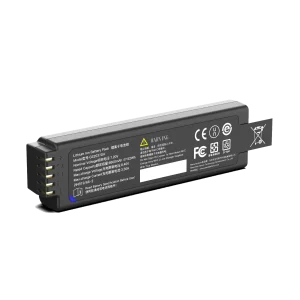
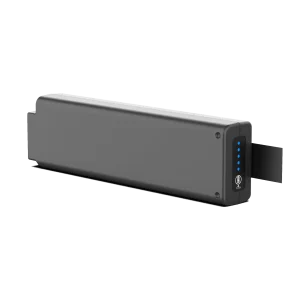
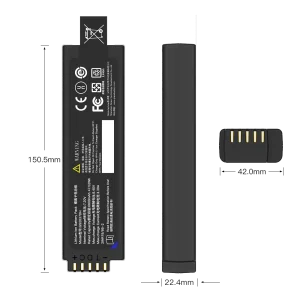
So a real wearable battery pack for mocap must combine: high-energy-density lithium cells; a slim, mechanically robust package; a BMS with full protection plus accurate state-of-charge (SoC) reporting; certified safety (IEC 62133-2, UN 38.3, UL 2054); and, for professional use, hot-swappable power so capture never stops.
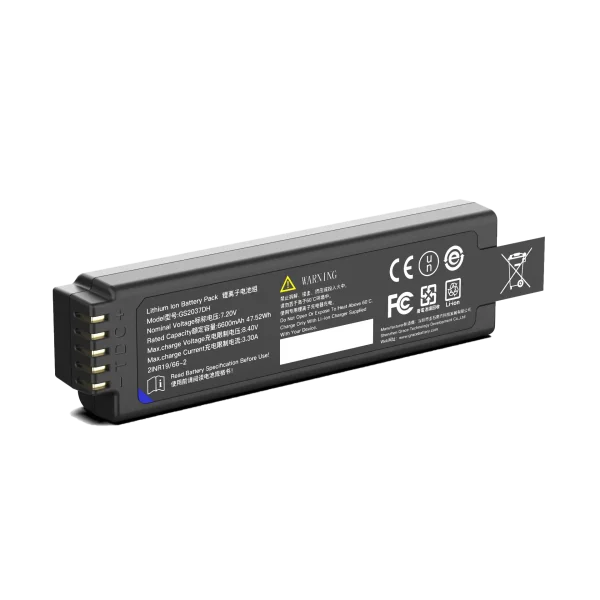
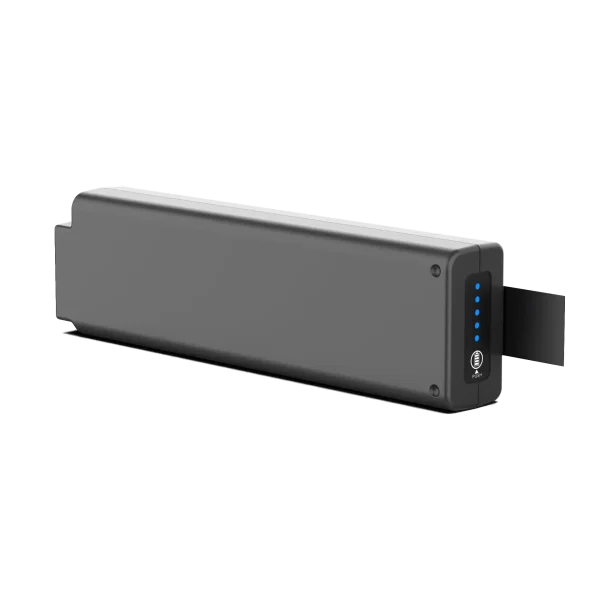
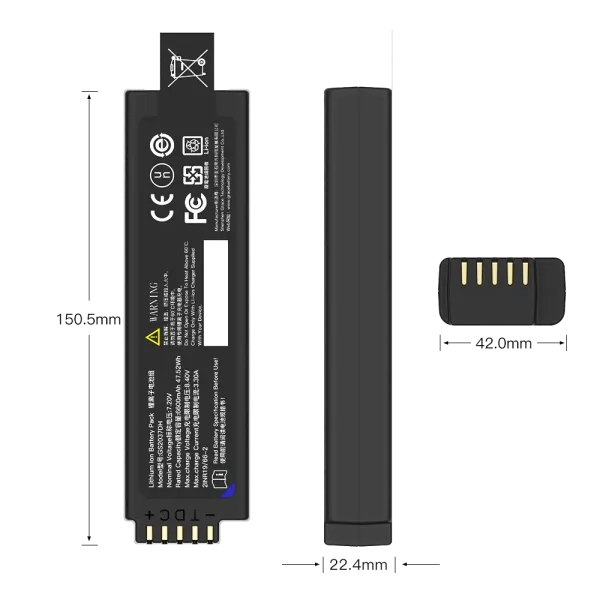
GS2037DH
7.2V/6900mAh/47.52Wh
3. Designing a Purpose-Built Wearable Battery Pack
3.1 Cell selection: energy density first
Pouch-format lithium cells (typically NMC chemistry) dominate wearable packs: they offer the highest gravimetric and volumetric energy density in the 2026 cell portfolio — around 250 Wh/kg and above at pack level in best-in-class designs — and they are thin and formable enough to follow the curves of the body. Cylindrical 18650/21700 cells deliver excellent energy and cost, but their diameter and rigidity make them a poor fit under a mocap suit. For on-body power, pouch is the default; choose cylindrical only where ruggedness and cost outweigh ergonomics.
Capacity sizing starts from the energy budget: average power × required runtime, derated for aging (capacity fade toward 80% of rated), low-temperature operation and a working reserve of roughly 20%. As a rule of thumb, a hub-centric suit averaging 5–8 W over a 4-hour take needs 20–32 Wh of usable energy; at around 200 Wh/kg that lands a pack in the 100–160 g range before packaging — a weight performers can live with.
3.2 The BMS is the product
Protection is non-negotiable for on-body use: overcharge, over-discharge, overcurrent, short-circuit, cell balancing and temperature cut-off must all be implemented in hardware and firmware. Beyond protection, a smart BMS adds what professional mocap really needs — telemetry. SMBus/I²C reporting of state of charge, state of health, cycle count and temperature lets the suit software show real remaining minutes instead of a guess, and supports charge control with the system’s own charger.
Certification-grade design matters before production: protection IC plus fuse and PTC/NTC temperature sensing, balanced layout, and test coverage designed to pass IEC 62133-2:2017 (safety requirements for portable sealed secondary lithium cells and batteries), UN 38.3 (transport safety), UL 2054/UL 1642 (North America) and CE/FCC for market entry [9][10][11]. Where a wearable doubles as a health or medical device, packs manufactured under ISO 13485 quality systems are the safer choice.
3.3 Mechanical and integration design
The best cell and BMS still fail if the package fights the performer. A purpose-built mocap pack is slim and low-profile, placed for a low center of mass, with strain-relieved cables, a quick-swap connector for takes, and a fabric pouch with an appropriate IP rating against sweat and rain. Charging should go through USB-C PD with negotiated power; the power path to the hub should use a rugged locking connector, not a flimsy pigtail. Thermal design is conservative: cells worn against the body need stricter charge/discharge temperature limits than a phone battery, and the smart BMS should report temperature rise before protection ever trips.
4. Choosing a Wearable Battery Partner
Not every project should design its own pack. A purpose-built wearable battery requires cell sourcing, BMS firmware, certification and mass production — a specialty in itself. This is the checklist we use with motion-capture and wearable OEM customers:
1. Energy and runtime match your power budget, with aging and cold-weather derating;
2. Continuous and peak current headroom — no brown-out during sensor load spikes;
3. Voltage, connector and communication interface compatible with your hub (e.g., USB-C PD, SMBus);
4. Smart BMS with accurate SoC/SoH telemetry and protection;
5. Certifications for your target markets: IEC 62133-2, UN 38.3, UL 2054/1642, CE, FCC;
6. Operating temperature and on-body thermal design validated for the use case;
7. Cycle life and warranty aligned to your product lifecycle;
8. Logistics readiness: UN 38.3 test report, MSDS and transport documentation;
9. Quality system: ISO 9001/ISO 13485/ISO 14001/ISO 45001 with traceability;
10. OEM/ODM capability: form factor, firmware, labeling and packaging.
At TEFOO, we have been designing and manufacturing lithium battery packs since 2012 under ISO 9001, ISO 13485, ISO 14001 and ISO 45001 quality systems; our products are manufactured to comply with IEC 62133, UN 38.3, UL 2054, CE and FCC requirements [7]. Our standard smart battery packs use SMBus communication and are paired with universal smart chargers, giving mocap and wearable OEMs a proven, certification-ready platform instead of a from-scratch development — cutting time-to-market and certification risk [8]. The same discipline we apply for medical, industrial and professional OEM clients, including Fortune 500 companies, is what mocap power demands: predictable energy, real telemetry, and a battery that never stops the show.
5. FAQ
Q1. How long does a mocap suit battery actually last? Runtime spans roughly 2.5 hours on built-in packs (e.g., Virdyn VDSuit) up to 8 hours on Xsens Link with an external pack, while per-module designs such as Noitom Perception Neuron Studio claim more than 10 hours per module charge [3][5]. The real number depends on sensor count, update rate, wireless streaming and battery condition.
Q2. Can I use an ordinary power bank to power a mocap suit? Some platforms expect it — Rokoko’s Smartsuit Pro II is explicitly powered by a USB power bank (5 V, 3 A) [4]. A good-quality bank works, but generic banks rarely provide certified cells, accurate SoC reporting, rugged connectors or load-spike headroom. For professional shoots, a purpose-built pack with a smart BMS is the reliable choice.
Q3. Why does a mocap battery need a smart BMS? Because mid-scene shutdown is expensive. A BMS protects against overcharge, over-discharge, overcurrent, short circuit and overheating, balances cells, and reports true SoC/SoH — so the suit software can show real remaining minutes and plan swaps instead of guessing.
Q4. Which certifications should a wearable mocap battery have? IEC 62133-2:2017 for portable secondary lithium cell and battery safety, UN 38.3 for air and sea transport, UL 2054/UL 1642 for North America, and CE/FCC for EU and US market entry [9][10][11]. Medical-adjacent wearables should additionally come from an ISO 13485-manufactured line.
Q5. Can I fly with a mocap suit and its batteries? As a general rule under IATA guidelines, spare lithium-ion batteries travel in carry-on baggage and larger packs are subject to airline approval, so always check the Wh rating and current airline rules before travel. Shipping batteries internationally requires the UN 38.3 test report and proper labeling.
Q6. How should I store mocap batteries between shoots? Store at roughly 40–60% state of charge in a cool, dry place. Long-term storage above about 80% SoC accelerates capacity fade, and deep discharge damages cells permanently. A smart BMS with storage-mode monitoring keeps the pack safe during downtime.
Q7. Can batteries be swapped during a capture session? Flagship systems support hot-swap — Xsens Link keeps the system alive on an internal backup battery while the external pack is changed [3]. For other platforms, plan takes around charging, or design dual-pouch quick-swap packs paired with the hub’s on-body buffering.
Q8. How long does a custom wearable battery take to develop? With a proven standard smart-pack platform — cells, BMS and certifications already in place — custom form factors and firmware can ship in weeks. Fully custom cells plus new certifications typically take several months. Ask your partner for standard-platform lead time first; it is usually the fast path.
6. Conclusion
The battery is the quietest component of a mocap suit and the fastest way to ruin a take. The industry’s trajectory is clear: from generic USB power banks toward engineered, swappable, smart wearable battery packs with certified safety and real telemetry. Whether you are a mocap studio, a suit OEM, or a robotics team collecting training data, power architecture deserves the same engineering attention as the sensors.That is exactly what we do at TEFOO: smart lithium battery packs, SMBus communication, certification-ready designs and OEM customization for professional wearable systems. If you are designing a mocap suit power bank or a wearable battery pack, start the conversation with an engineer who has already solved the medical- and industrial-grade version of your problem.
References
[1] Fortune Business Insights. 3D Motion Capture Market Size, Share & Global Report [2034]. https://www.fortunebusinessinsights.com/3d-motion-capturing-system-market-104827
[2] Research and Markets. Flexible Batteries Market Report 2026. https://www.researchandmarkets.com/reports/5948526/flexible-batteries-market-report
[3] Xsens (Movella). Next-Generation Xsens Link Specifications. https://www.xsens.com/motion-capture/xsens-link-specifications
[4] B&H Photo Video. Rokoko SmartSuit Pro II overview (power requirement 5 V / 3 A USB-A). https://www.bhphotovideo.com/c/product/1976990-REG/rokoko_rkk_ssp_02_x_xl_smartsuit_pro_ii_x_large.html/overview
[5] Noitom. Perception Neuron Studio specifications. https://www.noitom.com.cn/mobile/perception-neuron-studio.html
[6] Knoxlabs. MOXI MoCap Suit S100 product page. https://www.knoxlabs.com/products/moxi-s100-mocap-suit
[7] TEFOO / 深圳市圭石南方科技发展有限公司. Company profile. https://www.gracebattery.com/aboutus.html
[8] TEFOO Energy. Standard Smart Lithium Ion Battery Pack Supplier – Product. https://tefoo-energy.com/product/
[9] TYCORUN. Lithium Battery Pack Testing: The Complete Guide (IEC 62133-2 / IEC 62619 / UN 38.3 overview). https://www.tycorun.com/blogs/news/lithium-battery-pack-testing
[10] Hanery. How Manufacturers Test LiPo Battery Safety (UN 38.3). https://www.hanery.com/blog/test-lipo-battery-safety/
[11] Large Battery. Ultra-Thin Lithium Battery Safety Design for Wearable Devices (IEC 62133 / UN 38.3 / UL 1642 / UL 2054). https://www.large-battery.com/blog/ultra-thin-lithium-battery-safety-wearable-vital-signs/