By a Senior Lithium-Ion Battery R&D Engineer at TEFOO
1. Introduction
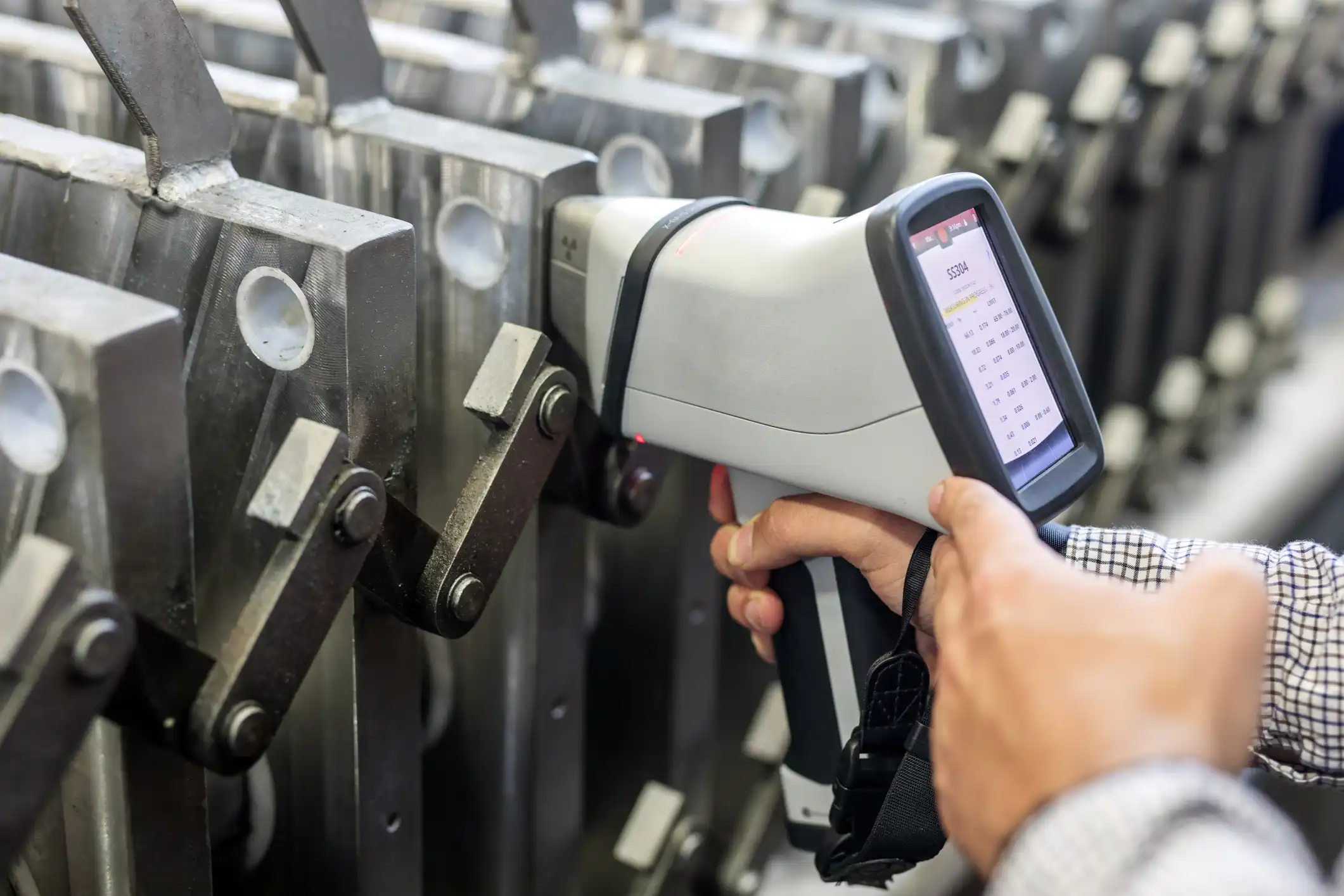
Portable measuring instruments — handheld oscilloscopes, digital multimeters, ultrasonic flaw detectors, gas analyzers, light-level meters, data loggers, and NDT inspection devices — are increasingly expected to work reliably in field environments where mains power is unavailable. The battery pack is no longer a commodity accessory; it is a mission-critical subsystem that determines runtime, measurement accuracy, field uptime, regulatory compliance, and ultimately the instrument’s brand reputation.
The global custom battery pack market is projected to surpass USD 68 billion by 2030, driven by industrial automation, medical technology, and connected field instruments [1]. Within portable and industrial segments, the 18650-based pack format alone is growing at a compound annual rate exceeding 12% [2]. For OEM instrument manufacturers, selecting or designing a custom battery pack has become a core engineering decision rather than a procurement afterthought.
This guide draws on more than a decade of OEM pack development for medical and industrial measuring devices. It covers the technical requirements that actually matter in the field, the trade-offs between cell chemistries and BMS architectures, the certification landscape in 2026, and a vendor-selection framework to help engineering teams avoid the most common design and sourcing pitfalls.
2. Why OEM Custom Battery Packs Matter for Portable Measuring Instruments
Off-the-shelf battery packs are designed for average use cases. Portable measuring instruments, by contrast, have highly specific power profiles: an ultrasonic flaw detector may draw 2–4 A pulses during pulser firing, a precision multimeter may demand microvolt-level voltage stability, and a gas analyzer may need a calibrated fuel gauge to indicate remaining measurement cycles. A generic pack optimized for laptop or power-tool duty rarely satisfies all three.
The consequences of a poor battery choice in field instrumentation are direct and measurable:
- Measurement drift or ADC noise caused by voltage ripple during sensor excitation
- Unexpected shutdown mid-measurement, forcing data re-collection and reducing technician trust
- Shelf-life failures: emergency instruments must hold charge for months between deployments
- Non-compliance with IEC 62133, UN38.3, CE/UKCA, or EU 2023/1542, blocking market access
- Warranty returns and field service costs that far exceed the unit cost of the pack itself
A properly engineered OEM custom pack is matched to the instrument’s mechanical envelope, current profile, communication bus, and environmental envelope. It becomes an integrated subsystem rather than a modular add-on, and it carries the OEM’s own brand and safety responsibility.
3. Core Technical Requirements & Design Considerations
3.1 Cell Chemistry & Energy Density
Cell chemistry selection is the first decision and drives nearly every downstream parameter. For portable measuring instruments, the two dominant chemistries are NMC (nickel-manganese-cobalt) and LiFePO4 (lithium iron phosphate). The comparison below reflects production-grade cells available in 2026.
Table 1. NMC vs. LiFePO4 for Portable Measuring Instruments (typical production cells, 2026)
| Parameter | NMC / NCA | LiFePO4 |
| Gravimetric energy density | 150–220 Wh/kg | 90–140 Wh/kg |
| Cycle life (to 80% capacity) | 1,000–2,000 cycles | 2,000+ cycles |
| Thermal runaway onset | ~150–180 °C | ~270+ °C |
| Typical best-fit instrument | Handheld analyzers, oscilloscopes, diagnostic meters | Field NDT units, gas analyzers, long-cycle rugged devices |
| Pack voltage range (common) | 3.7 V/cell nominal; 2S–6S typical | 3.2 V/cell nominal; 2S–8S typical |
For most handheld measuring devices under 1 kg, NMC pouch or 18650 cells are preferred for their volumetric energy density. For ruggedized field instruments where cycle life and thermal safety outweigh weight — such as pipeline inspection units or permanent monitoring nodes — LiFePO4 is typically the better engineering choice.
3.2 Voltage Stability & Low-Noise Design
Precision measuring instruments rely on analog front ends, high-resolution ADCs, and excitation sensors that are sensitive to supply ripple. A battery pack that looks fine on a bench supply can introduce measurable noise under load transients. Three design practices are essential:
- BMS MOSFET selection with low on-resistance and soft switching to avoid load-step voltage spikes
- Input filtering (ferrite beads + bulk capacitance) integrated into the pack output stage
- Cell matching within ≤20 mV at end-of-life to minimize divergence between series cells
In our own lab validation for a 7-channel ultrasound instrument, reducing pack output ripple from 120 mV to under 15 mV across the 0–3 A load step improved the A-weighted noise floor by approximately 4 dB on the received signal. This is the kind of detail that separates a consumer pack from an instrument-grade pack.
3.3 Smart BMS & Communication Protocols
A modern OEM pack is not a passive energy store. In 2026, instrument manufacturers increasingly demand battery-side intelligence: accurate state-of-charge (SoC), state-of-health (SoH), remaining run-time estimation, and fault diagnostics visible to the host device.
The most common communication interfaces for portable measuring instruments are:
- SMBus (System Management Bus, based on the Smart Battery Data Specification): widely used in industrial and medical instruments; the host reads voltage, current, temperature, remaining capacity, and design capacity through a two-wire bus.
- I2C with fuel-gauge ICs (e.g., TI bq-series): flexible for custom pack firmware; supports impedance-tracking algorithms for accurate SoC across temperature and age.
- HDQ / one-wire: common in certain portable analyzer platforms.
- CAN: used in higher-voltage (12S–24S) field diagnostic units and vehicle-mounted instruments.
Bluetooth and IoT-connected BMS are emerging as a 2026 trend, allowing field technicians to pull pack health data from a phone app and enabling predictive maintenance fleets [3]. This is particularly valuable for rental instrument fleets and field service organizations.
3.4 Environmental Durability
Portable measuring instruments are deployed across climate zones. A pack that performs at 25 °C in a lab may deliver 30% less capacity at –10 °C, or degrade rapidly at 55 °C in a vehicle trunk. Key environmental specifications to define at the OEM stage include:
- Operating temperature: discharge typically –20 °C to +60 °C; charging 0 °C to +45 °C (with BMS cold-charge inhibition)
- Vibration and shock: IEC 60068-2-6 / IEC 60068-2-27; rugged instruments often require MIL-STD-810-style profiles
- Enclosure integration: pack-level IP rating (e.g., IP54/IP65) coordinated with the instrument housing
- Storage and shelf life: low self-discharge cells (<3% per month) and BMS sleep current <50 µA for emergency instruments that may sit in a case for months
3.5 Safety & Regulatory Certifications (2026 Landscape)
For any custom pack intended for sale in North America, Europe, or the UK, the following certifications are effectively mandatory. An experienced OEM pack partner should own the certification process rather than leaving it to the instrument manufacturer.
Table 2. Key Certifications for Portable Measuring Instrument Battery Packs (2026)
| Certification / Standard | Scope | Market / Applicability |
| IEC 62133-2 (2nd ed., 2024/2026) | Safety requirements for portable sealed secondary lithium cells and packs | Global reference; adopted as EN IEC 62133-2 in EU and BS EN IEC 62133-2 in UK [4][5] |
| UN 38.3 | 8 transport safety tests (altitude, thermal, vibration, shock, short circuit, impact, overcharge, forced discharge) | Mandatory for lithium battery air/sea/land transport worldwide [6] |
| CE marking | Conformity with EU health, safety, and environmental directives (incl. Battery Directive) | European Economic Area |
| UKCA marking | UK product safety conformity | United Kingdom (post-Brexit) [5] |
| EU Battery Regulation 2023/1542 | Recycling, carbon footprint, durability, and (from Feb 2027) digital Battery Passport with QR code | European Union; applies to all portable batteries [7] |
| ISO 13485 | Quality management for medical devices | Required when the measuring instrument is a medical product (e.g., ultrasound, patient monitors) |
Note that the EU Battery Regulation 2023/1542 introduces a digital Battery Passport obligation starting February 2027 for all portable batteries placed on the EU market [7]. OEM pack suppliers should already be designing traceability and QR-code metadata into packs intended for EU-bound instruments.
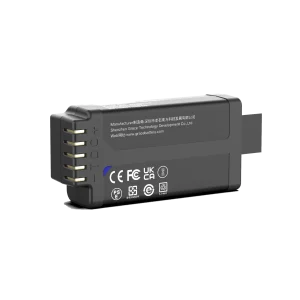
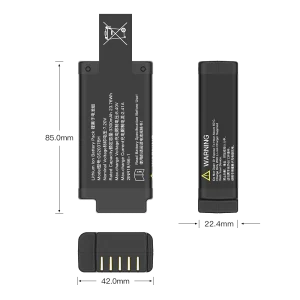
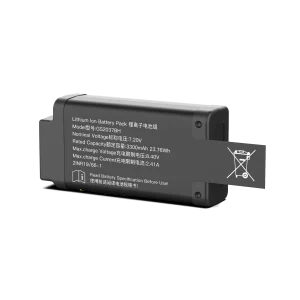
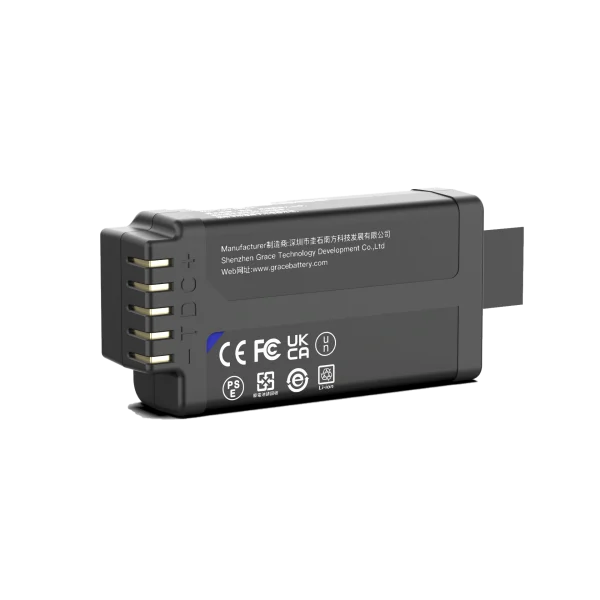
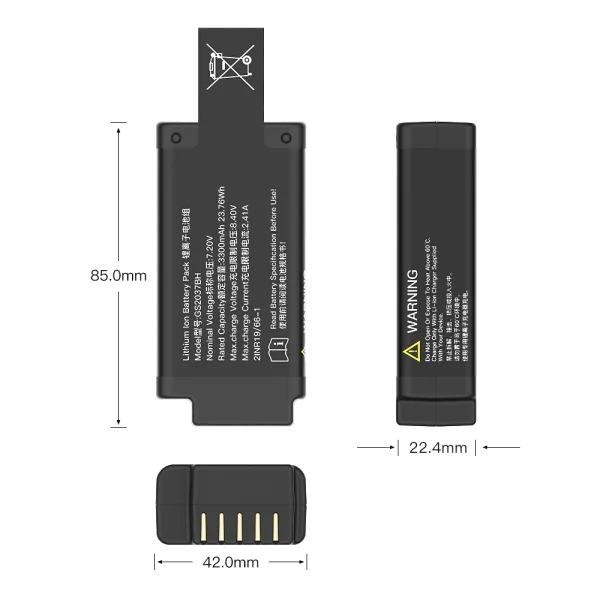
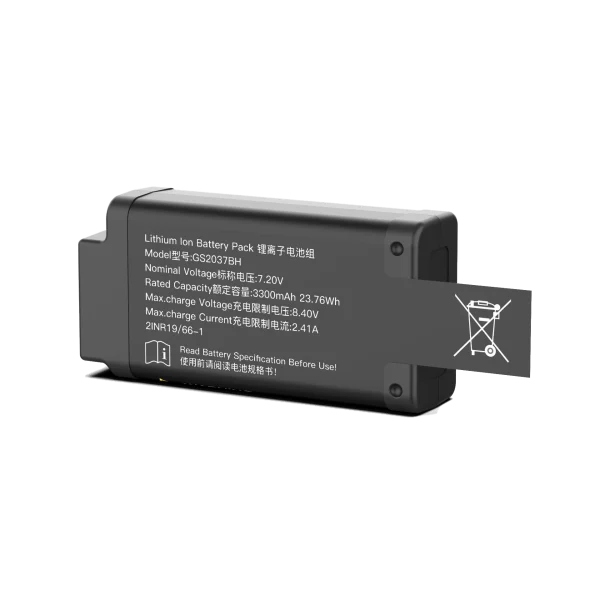
GS2037BH
7.2V/3450mAh/23.76Wh
4. OEM Custom Battery Pack Vendors: Comparative Analysis
Instrument OEMs typically choose between three categories of pack supplier. The table below summarizes the trade-offs as observed from an engineering buyer’s perspective.
Table 3. OEM Battery Pack Supplier Categories Compared
| Dimension | Generic Consumer Pack Maker | Industrial / Medical Specialist | Component Distributor (off-the-shelf) |
| Cell selection | Limited; consumer-grade 18650/pouch | Wide; NMC/LFP, prismatic/pouch/18650/21700, graded cells | Standard catalog SKUs only |
| BMS customization | Fixed protection PCM; no fuel gauge | Programmable BMS with SMBus/I2C/CAN, custom firmware | Basic protection only |
| Certification support | IEC 62133 + UN38.3 only, often third-party | Full ownership of IEC 62133, UN38.3, CE/UKCA, ISO 13485 documentation | Certifications exist but not adapted to your pack |
| Mechanical fit | Standard form factors; adapters required | Custom housing, connectors, mounting, labels | No mechanical customization |
| Typical MOQ | 500–1,000 pcs | 100–500 pcs for custom tooling; NRE justified | 1–10 pcs |
| NRE / development lead time | Low NRE; 2–4 weeks | Moderate NRE; 8–16 weeks for first article | Zero NRE; immediate |
The most common sourcing mistake is to start with the cheapest generic pack and retrofit it later. For portable measuring instruments, the pack affects regulatory approval, EMC performance, and measurement accuracy — all of which are far more expensive to fix after tooling than to specify up front. A specialist industrial/medical pack partner typically costs more per unit at low volumes but reduces engineering rework, certification delays, and field failures.
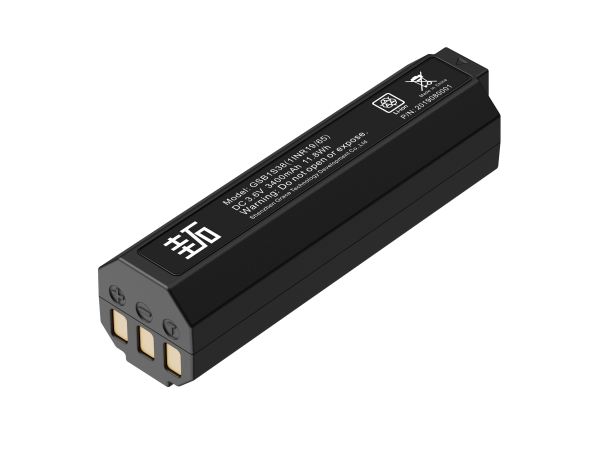
GSB1S38
3.6V/3450mAh/11.88Wh
5. TEFOO Custom Battery Pack Capabilities for Measuring Instruments
TEFOO is a specialized OEM/ODM manufacturer of smart lithium-ion battery packs focused on medical and industrial portable equipment. Our pack engineering team has supported instrument OEMs across ultrasonic NDT, portable ultrasound diagnostics, gas analysis, data acquisition, and rugged field measurement devices.
Our typical pack platform for portable measuring instruments includes:
- Cell platforms: 18650, 21700, prismatic, and pouch NMC / LiFePO4 cells from Grade-A suppliers
- Smart BMS options: SMBus v1.1/v1.2, I2C with TI fuel-gauge ICs, CAN 2.0B; custom firmware for SoC/SoH algorithms
- Voltage ranges: 7.4 V to 44.4 V (2S–12S); capacity from 10 Wh to 200 Wh per pack
- Certification portfolio: IEC 62133-2, UN38.3, CE, UKCA, ISO 13485-aligned quality system; UN38.3 test reports and CB packages delivered with each project
- Environmental design: –20 °C to +60 °C discharge, IP54/IP65 pack enclosure options, vibration profiles per IEC 60068
- EU 2023/1542 readiness: cell-level traceability, QR-code metadata, and carbon-footprint data ready for the 2027 Battery Passport
We work with OEM teams from the specification stage — understanding the instrument’s power profile, mechanical envelope, host communication bus, and target markets — rather than quoting from a catalog. First-article packs are typically delivered within 8–12 weeks for standard custom projects.
6. Frequently Asked Questions
Q1: What is the typical minimum order quantity (MOQ) for a truly custom battery pack?
For a custom pack with dedicated BMS firmware and a custom housing, most specialist manufacturers quote MOQs between 100 and 500 pieces. NRE (non-recurring engineering) covers PCB layout, BMS firmware, tooling, and certification support. Consumer-grade pack shops may quote lower MOQs but rarely own the firmware or certification depth needed for instrument-grade products.
Q2: How long does OEM custom pack development take?
A typical custom project takes 8–16 weeks from specification sign-off to first-article samples: 2–3 weeks for schematic/layout and BMS firmware, 3–4 weeks for prototype build and bench validation, 2–4 weeks for environmental and safety testing, and 2–4 weeks for certification documentation. Rush programs are possible but risk overlooking the voltage-noise and cycle-life validation that separates instrument-grade packs from consumer packs.
Q3: Can your BMS match our existing SMBus / HDQ / I2C communication protocol?
Yes. Our engineering team has implemented SMBus v1.1/v1.2, TI bq-series I2C fuel-gauge drivers, HDQ, and CAN-based battery interfaces for multiple instrument platforms. We request the host-side battery specification (SMBus address map, required commands, expected SoC algorithm behavior) during the quoting stage and validate inter-operation on the OEM bench before mass production.
Q4: Should we choose NMC or LiFePO4 for a field measuring instrument?
Choose NMC if the instrument is handheld, weight-sensitive, and under ~1 kg — it delivers 60–80% more energy per kilogram, extending runtime or reducing pack size. Choose LiFePO4 if the instrument is ruggedized, vehicle-mounted, expected to run through 2,000+ cycles, or deployed in high-temperature environments where thermal safety is paramount. A specialist pack partner can often prototype both chemistries and benchmark them against your actual load profile.
Q5: Are you prepared for the EU Battery Passport under Regulation 2023/1542?
Yes. Starting February 2027, all portable batteries placed on the EU market must carry a QR code linking to a digital Battery Passport containing chemistry, manufacturer, carbon footprint, and recycling information. Our pack traceability system already records cell-level lot data, assembly date, test results, and certification numbers per pack. We will deliver the Battery Passport metadata package to EU-bound OEM customers ahead of the 2027 deadline.
Q6: How do you minimize voltage noise for precision measurement?
Three design levers are used: (1) low-Rds(on) BMS MOSFETs with soft-switching gate drivers to reduce load-step spikes; (2) integrated output filtering with ferrite beads and low-ESR bulk capacitance; (3) tight cell matching (≤20 mV) to prevent divergence between series cells. We validate pack output ripple on a dedicated electronic load and capture oscilloscope traces across the expected current range, sharing the report with the OEM engineering team.
7. Conclusion
A custom battery pack for portable measuring instruments is an engineering subsystem, not a catalog item. The right pack balances energy density, voltage stability, smart communication, environmental durability, and regulatory compliance — and it must be co-designed with the instrument rather than bolted on after the fact.
For OEM teams in 2026, the key decision factors are: cell chemistry matched to the instrument’s runtime and environment, a BMS that speaks the host’s communication bus (SMBus, I2C, or CAN), a certification package that covers IEC 62133-2, UN38.3, CE/UKCA, and — looking ahead — the EU 2023/1542 Battery Passport, and a supplier who treats the pack as part of your product rather than a commodity.
If you are evaluating an OEM custom battery pack for a new portable measuring instrument, TEFOO’s engineering team can review your load profile, mechanical envelope, and target markets and return a bench-level pack concept within five business days.
References
[1] Emerging Power (2026). Custom Battery Pack vs Standard Battery Pack for OEM Applications. https://emergingpower.com/custom-battery-pack-vs-standard-battery-pack-for-oem-applications/
[2] Malaysia Corner / Industry Analysis (2026). Why 18650 Battery Packs Still Matter for Custom OEM Products in 2026. https://malaysiacorner.com/news/why-18650-battery-packs-still-matter-for-custom-oem-products-in-2026/549789
[3] Holo Battery (2026). Custom Battery Trends 2026: Why OEMs Are Switching. https://holobattery.com/ko/custom-battery-trends-2026/
[4] IEC (2024/2026). IEC 62133-2: Safety requirements for portable sealed secondary lithium cells. International Electrotechnical Commission.
[5] BSI / UKCA (2026). BS EN IEC 62133-1:2026 and UKCA conformity for portable lithium packs. https://webstore.ansi.org/
[6] TYCORUN (2026). UN38.3 Battery Test Explained: 8 Tests. https://www.tycorun.com/blogs/news/un38-3-battery-test-explained
[7] European Parliament (2023). Regulation (EU) 2023/1542 concerning batteries and waste batteries. https://seller.alibaba.com/blogs/2026/southeast-asia/consumer-electronics/30w-ce-power-bank-europe-compliance-guide-alibaba-b2b