-260719-4-edited.png)


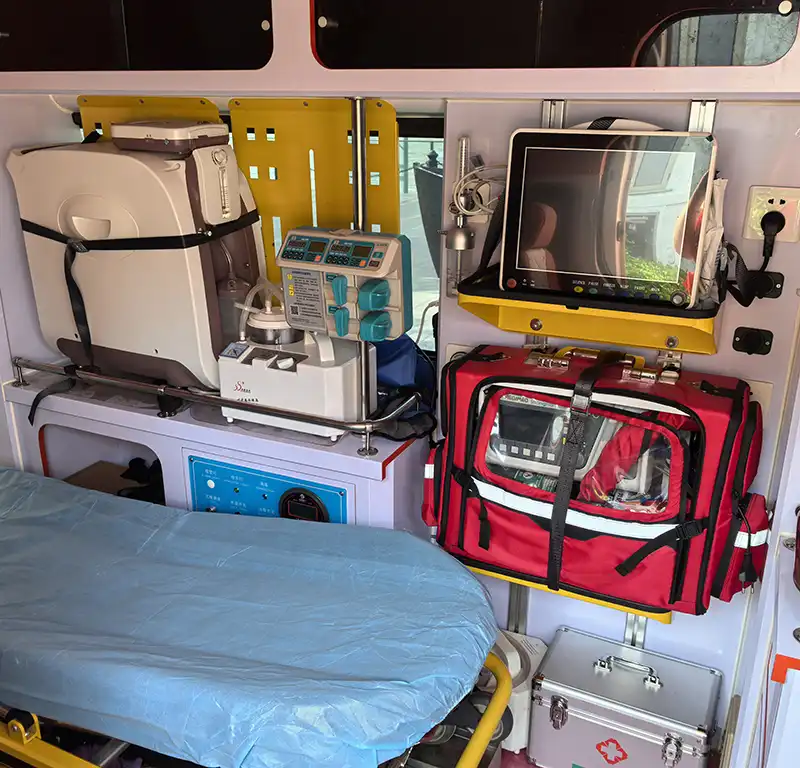
A patient monitor runs 24 hours a day, 7 days a week, across ICU beds, operating rooms, emergency departments, and ambulances. When it loses power, clinicians lose the waveform, the numeric vitals, and the alarm — all at once. The battery inside that monitor is not an accessory. It is part of the medical electrical system.
What “OEM” Means for a Patient Monitor Battery
An OEM patient monitor battery manufacturer does not sell a generic catalog pack and hope it fits. An OEM engagement means the battery is engineered around one specific monitor design: its voltage window, its load profile, its mechanical bay, its connector, and its software. The deliverable is not a battery — it is a validated power subsystem with documentation.
Three characteristics define a genuine OEM medical battery manufacturer:
- Design ownership. The manufacturer develops its own BMS hardware and firmware, its own fuel-gauge algorithms, and its own mechanical integration — rather than relabeling a commodity pack.
- Regulatory literacy. The manufacturer operates a medical-device quality management system and produces the certification and test documentation your regulatory affairs team needs.
- Lifecycle accountability. The manufacturer stands behind the pack in serial production with batch traceability, incoming inspection records, and field-failure isolation.
If a supplier cannot explain its BMS firmware architecture in detail, you are not talking to an OEM manufacturer.
Engineering the Pack: Voltage Platform and Cell Selection
Voltage Platform: 3S Is the Industry Standard
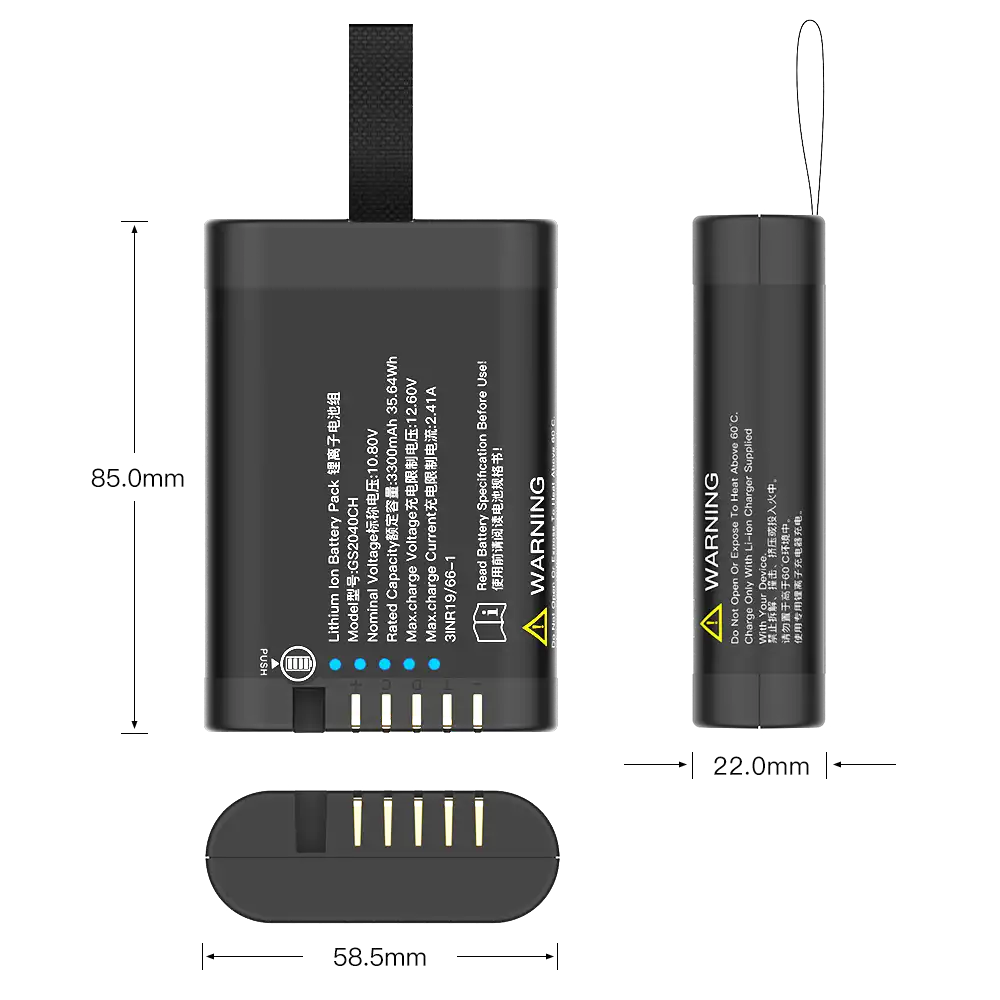
Most patient monitors run on a 3-series (3S) lithium-ion platform at 10.8V nominal (3.6V × 3), with a full-charge voltage of 12.6V for standard 4.2V-rated cells. The 3S architecture gives the monitor’s electronics comfortable voltage headroom while keeping the pack compact enough to fit a quick-release bay behind the display or under the chassis.
Some cart-based monitors step up to 14.4V (4S) where total energy, not footprint, is the limiting factor. The platform decision is driven by the monitor’s input range and its power budget — not by what is cheapest to source.
Cell Selection: Capacity, Rate, and Cycle Life
For a patient monitor, cell selection weighs four competing requirements:
- Energy density. Monitors draw meaningful power from displays, processors, and wireless modules. Typical packs land in the 6,000–10,000 mAh range for full-shift operation.
- Discharge rate. The pack must hold voltage flat under pulsed loads — the monitor’s radio and backlight create load transients that a weak cell cannot absorb without sag.
- Cycle life. A monitor battery is cycled daily for years. Cell chemistry and matching must support 500+ cycles to a defined end-of-life, not just the first year.
- Self-discharge. In hospitals, batteries sit on shelves and in docks. Quality lithium cells with self-discharge below roughly 3% per month keep a stored monitor ready for emergency use.
In our patient monitor programs, we qualify cells not just on datasheets but on matched capacity, internal resistance, and self-discharge — because in a series string, the weakest cell governs the pack.
The Smart BMS: SMBus Communication Is Non-Negotiable
The defining feature of a modern patient monitor battery is its smart BMS with SMBus (System Management Bus) communication. The Smart Battery System (SBS) specifications, maintained by the Smart Battery System Implementers Forum (SBS-IF), define how the battery reports its state to the host over the two-wire SMBus interface (SBS-IF specifications).
Through SMBus, the pack continuously reports:
- Relative and absolute state of charge (SOC) — the percentage the monitor displays on its status bar
- Remaining capacity and predicted run-time — what nurses and bio-med teams rely on
- Voltage, current, and temperature — the raw telemetry for battery health assessment
- Cycle count and state of health (SOH) — the data hospitals use to plan replacement
- Fault and alarm status — over-voltage, under-voltage, over-temperature, and short-circuit events
This data channel is what makes hot-swap possible and safe. When a nurse pulls a depleted pack and inserts a fresh one, the monitor’s power management and the battery’s own reporting must coordinate so that patient data, alarm settings, and live waveforms are never interrupted. A pack without a validated SMBus interface cannot participate in that handshake — which is why legacy “dumb” packs are being retired across the industry.
For the OEM, the practical implication is that your battery manufacturer must be able to develop and validate SMBus firmware against your monitor’s own software, tune the fuel gauge to your real load profile, and support custom command sets where your firmware requires them.
Safety and Reliability: The Layers That Matter
A patient monitor battery must fail gracefully or not at all. The engineering layers, in order of defense:
Cell-level protection
- Over-charge, over-discharge, over-current, and short-circuit protection with defined thresholds
- Cell balancing to keep every series cell inside its safe voltage window
Thermal management
- Temperature sensing at multiple points in the pack
- Charge and discharge derating outside safe temperature windows
- Thermal runaway mitigation through cell selection and pack mechanical design
Mechanical design
- Quick-release bay mechanics that are intuitive and foolproof — keyed connectors to prevent reverse insertion
- Vibration and shock resistance for ambulance and transport use
- Flame-retardant enclosure materials consistent with medical electrical equipment requirements
Hot-swap architecture
- Seamless handoff between AC adapter and battery, and between two batteries, with no voltage dropout visible to the monitor electronics
Each layer is documented and tested before the pack is released to serial production. In my experience, the validation data — not the cell brand — is what earns a battery its place in a regulated device.
Compliance and Standards: The Framework
For a patient monitor battery intended for global markets, the compliance framework includes:
| Standard / Regulation | Scope | Relevance to the Battery |
| IEC 60601-1 (Ed. 3.2) | General requirements for basic safety and essential performance of medical electrical equipment (IEC) | The system-level safety standard the monitor must meet; the battery is part of the medical electrical system and must not compromise it |
| IEC 60601-1-2 | EMC requirements for medical electrical equipment (IEC) | The battery and its BMS must not introduce electromagnetic disturbances that affect monitoring |
| IEC 62133-2:2017+A1:2021 | Safety requirements for portable sealed lithium cells and batteries (IEC) | The core cell- and pack-level safety standard for lithium systems in portable applications |
| ISO 13485:2016 | Quality management systems for medical devices (ISO) | The QMS framework the battery manufacturer must operate under |
| UN 38.3 | Transport of dangerous goods — lithium battery testing (IATA guidance) | Required for air and ground transport of the battery |
| 21 CFR 870.1025 (FDA) | Arrhythmia detector and alarm device classification — Class II (FDA classification) | Patient monitors with arrhythmia detection are regulated as Class II; battery documentation supports the monitor OEM’s 510(k) submissions |
Two practical notes from the field:
- Ask for the manufacturer’s ISO 13485 certificate and verify its scope. A certification for “battery design and manufacturing” is what you want — not a generic certificate with the medical scope excluded.
- Request the IEC 62133-2 test report and UN 38.3 summary for the exact pack configuration, not for a similar-looking product. The report must be traceable to the cell and pack design you are buying.
Manufacturing and Traceability: Where Trust Is Earned
The engineering is only half the story. A medical battery manufacturer proves itself in serial production through:
- Batch traceability. Every pack traces back to its cell lots, BMS PCBA lot, firmware version, and final-assembly record. When a field issue appears, the manufacturer must be able to isolate the affected serial range in hours, not weeks.
- Incoming inspection. Cells are verified against the qualified specification before they enter production — capacity, internal resistance, and self-discharge are measured, not assumed.
- In-process testing. Each pack undergoes functional testing of the BMS, SMBus communication, protection thresholds, and cell balance before it is sealed.
- Aging and cycling. Sample packs are aged and cycled to validate capacity retention and to catch infant mortality before shipment.
- Documented design changes. Any change to cells, BMS, or firmware goes through a controlled change process with impact assessment — because a silent cell substitution can invalidate your monitor’s regulatory submissions.
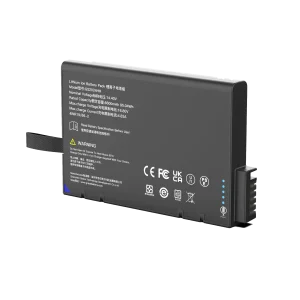
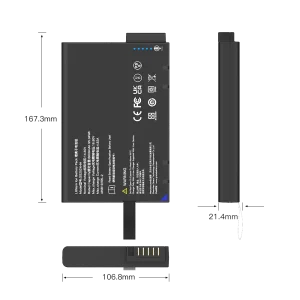
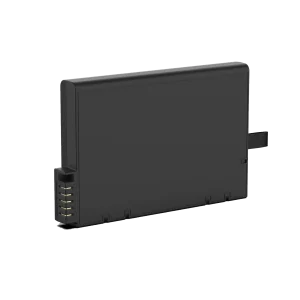
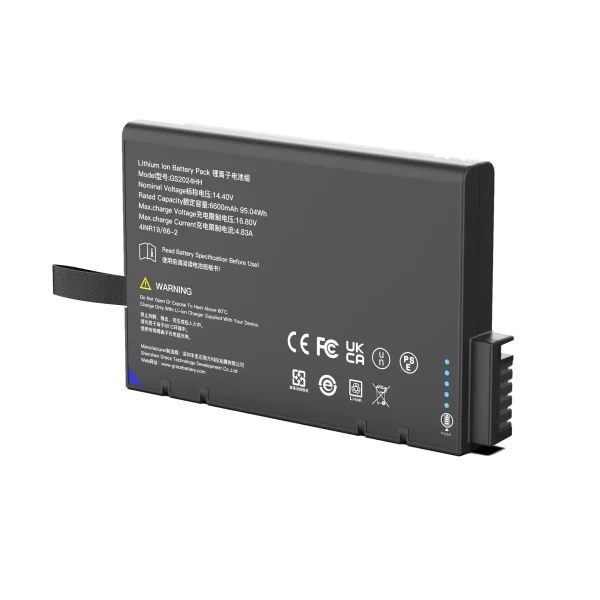
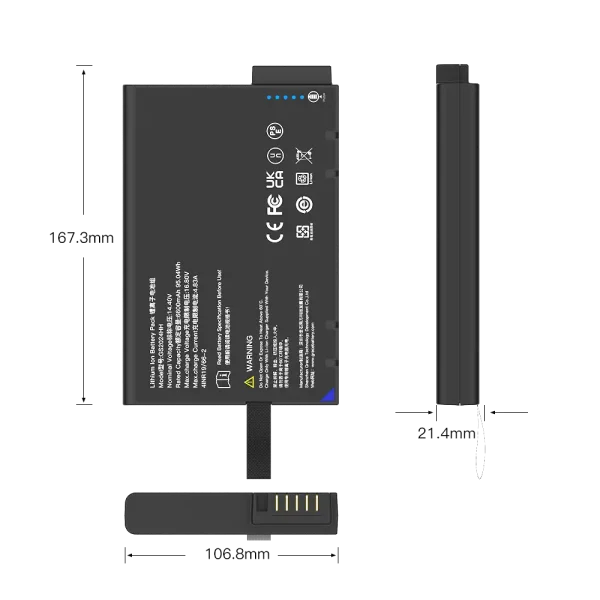
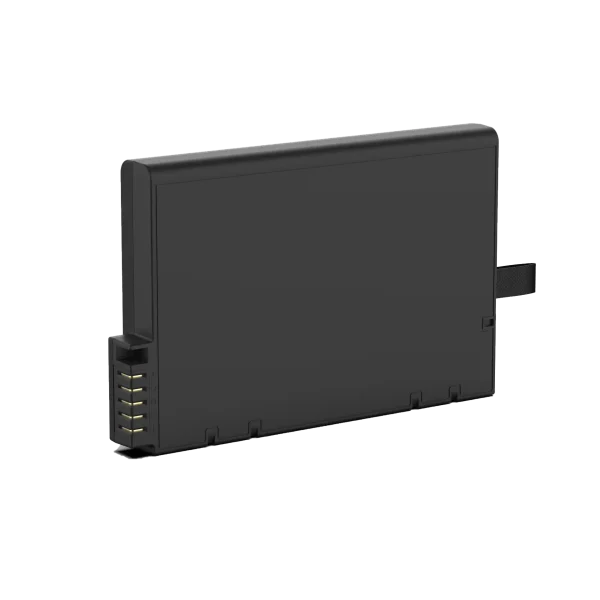
GS2024HH
14.4V/6900mAh/95.04Wh
Supplier Audit Checklist: What to Verify Before Qualifying
When you audit a patient monitor battery manufacturer, these are the dimensions that separate a genuine partner from a general pack assembler:
- QMS and certification depth. ISO 13485 certified with design controls and documented risk management — not just “we follow quality procedures.”
- BMS firmware capability. Does the supplier develop its own SMBus firmware and fuel-gauge algorithms? Can they adapt the data set to your monitor’s display and alarm logic?
- Validation infrastructure. In-house environmental testing (temperature, humidity, vibration), electrical safety testing, and aging/cycle testing — with evidence, not claims.
- Mechanical engineering. Do they co-develop the bay mechanics, connector keying, and quick-release features with your team?
- Traceability system. Batch-level traceability of cells, PCBA, and final assembly, with a demonstrated field-isolation process.
- Regulatory documentation. Can they supply cell certifications, test reports, MSDS, UN 38.3 summary, and BMS firmware specifications in the format your regulatory team needs for 510(k), CE, or other submissions?
- Lifecycle support. Will they support the battery for the life of the monitor program — including end-of-life cell availability planning?
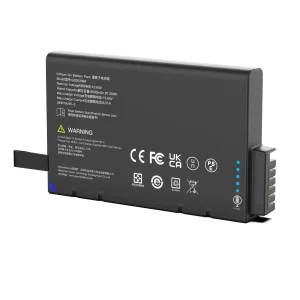
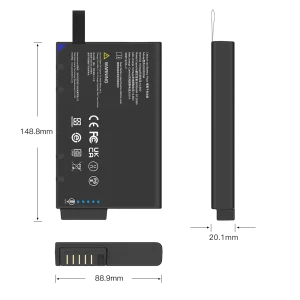
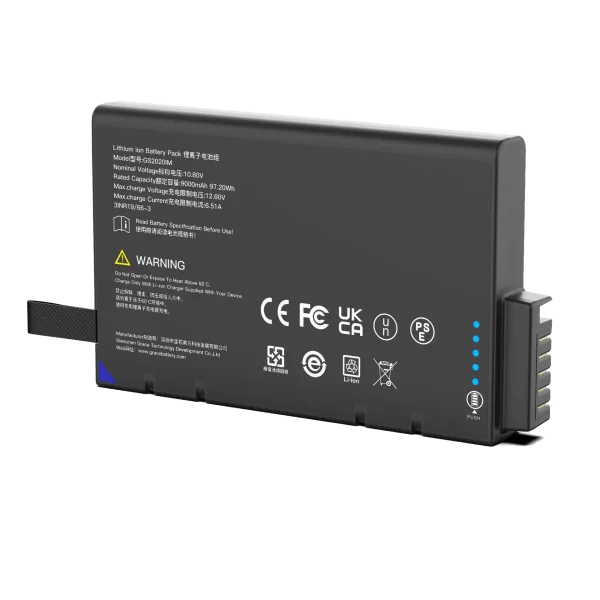
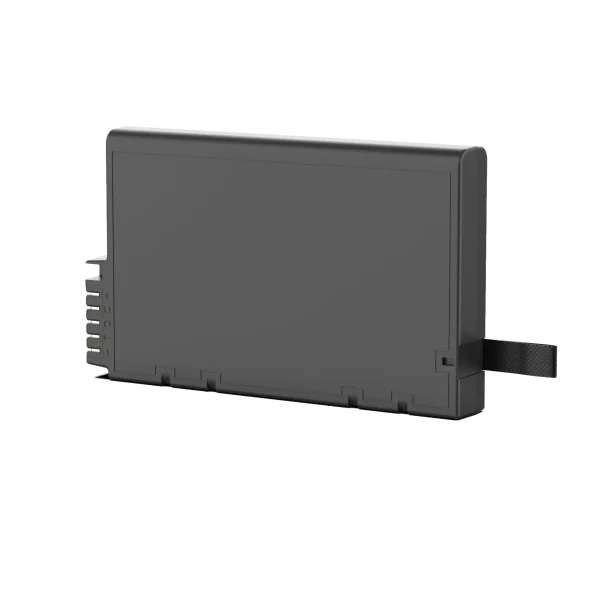
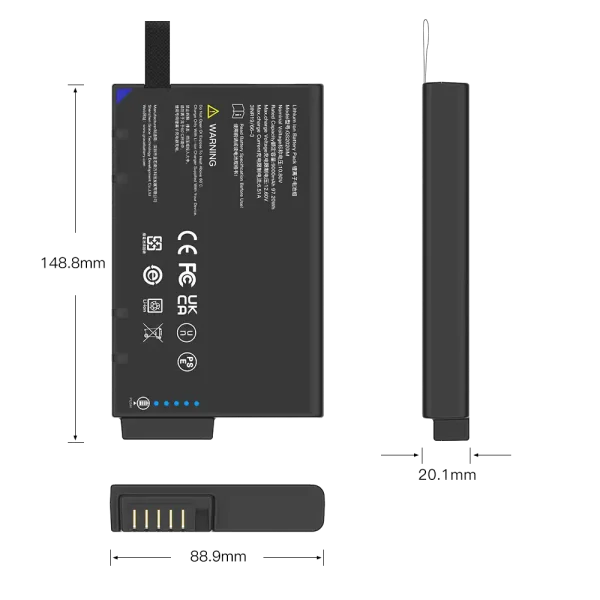
GS2020IM
10.8V/9300mAh/97.2Wh
Frequently Asked Questions
Why do patient monitors use 10.8V (3S) batteries?
3S lithium-ion at 10.8V nominal provides the voltage headroom the monitor’s electronics need while keeping the pack compact. It is the dominant platform across the category, which also means mature, well-documented supply chains.
Is SMBus required for every patient monitor battery?
Any monitor that displays accurate run-time, remaining capacity, or battery health needs a smart pack with SMBus communication. For new designs, SMBus-capable packs are the industry direction and simplify regulatory documentation of battery-related alarms.
What does “hot-swap” require from the battery?
Hot-swap requires the battery to hand off cleanly: the monitor’s power management and the battery’s SMBus reporting must coordinate so insertion and removal never cause a voltage dropout visible to the electronics. This is a firmware-level integration, not a connector feature.
How do I verify a supplier’s medical credentials?
Ask for the ISO 13485 certificate and its scope, the IEC 62133-2 test report for the exact pack configuration, the UN 38.3 summary, and evidence of batch traceability. Then visit or audit their production line — the documentation and the line should tell the same story.
About TEFOO
TEFOO is a medical battery manufacturer specializing in intelligent lithium battery packs for patient monitors, infusion pumps, and other medical devices. We develop our own SMBus smart BMS firmware, engineer custom 10.8V and multi-series pack architectures around each device’s mechanical and electrical constraints, and operate under a medical-device quality management system — from cell selection through firmware validation to serial production with full batch traceability.
If you are qualifying a battery partner for a patient monitor program, our engineering team can walk through your voltage window, load profile, hot-swap requirements, and regulatory documentation needs. Contact us to start the conversation.