
Battery Technology Blog | Written by the TEFOO Battery R&D Team | Updated: October 2026
1. Introduction: Why the Battery Pack Decides Whether a Field Study Succeeds
A data logger (data recorder / field data collection device) measures and stores physical quantities — temperature, relative humidity, pressure, vibration and shock, DC/AC current and voltage, analog sensor signals, or GPS position — and often transmits them over BLE, LoRa, NB-IoT, LTE-M, Wi-Fi or cellular networks. Typical deployments include cold-chain pharmaceutical and food shipments, warehouse and HVAC monitoring, pipeline and tank monitoring, environmental and agricultural research, energy and sub-metering, and transport shock monitoring for fragile goods.
In almost every deployment the logger is unattended for weeks, months or years. The battery pack, not the sensor, is the component most likely to end the study early: the cell dies before retrieval, the voltage sags during a radio burst and the microcontroller resets, long-stored primary cells enter a high-impedance passivated state, capacity collapses at low temperature, or a non-compliant pack is rejected in transport. This guide, written by senior lithium battery pack R&D engineers, explains how to size, select and specify a reliable data logger battery pack. It is an engineering selection framework, not a ranking of commercial brands.
2. The Load Profile a Data Logger Battery Pack Must Support
2.1 Duty cycle: microamp sleep, milliamp sampling, amp-level transmit bursts
A logger spends roughly 99% of its life in deep sleep at a microamp-level current (commonly single-digit to tens of µA). It wakes on a timer, powers the sensor and ADC for a few milliseconds, stores a record, and — for connected loggers — generates a short but high-current radio or GNSS burst (BLE/LoRa tens of mA; NB-IoT/LTE-M/GPS often 1–2 A for 1–3 s). A pack must therefore deliver both a very low quiescent drain and an occasional high pulse without collapsing voltage.
2.2 Power budget first, cell choice second
Daily energy consumption (mAh/day) = sleep current (µA) × 24 h ÷ 1000 + Σ[burst current (A) × burst duration (s) × events per day] ÷ 3.6. Divide the target field life in days into this daily figure, then add a 30–50% reserve for low-temperature derating, aging and margin. As an illustrative industry example (vendor technical blog, not a universal specification): a cellular tracker logging every 10 minutes and uploading hourly, with 15 µA sleep, a 2 mA/100 ms sensor read and a 2 A/3 s LTE-M burst, consumes on the order of 65 mAh/day; sizing must be recomputed against your own measured current profile.
2.3 Environmental and mechanical requirements
- Temperature: cold-chain loggers may sit near −25 to −40 °C; industrial enclosures can reach +60 to +85 °C. Effective capacity and internal resistance change sharply with temperature, so rate cells at the deployment extreme, not at 25 °C.
- Humidity, dust and vibration: sealed housing with appropriate IP rating; pack contacts welded or secured against transport vibration; cells retained against shock.
- Shelf life: spare units may sit in inventory for years; primary lithium self-discharge and storage conditions matter as much as rated capacity.
2.4 Regulatory and shipping compliance
- UN 38.3: all lithium cells and batteries must pass the UN Manual of Tests and Criteria Part III, subsection 38.3 (T.1 altitude simulation, T.2 thermal cycle, T.3 vibration, T.4 shock, T.5 external short circuit, T.6 impact/crush, T.7 overcharge for rechargeable cells, T.8 forced discharge) before transport.
- IEC 62133-2: safety requirements for portable sealed secondary lithium cells and packs (rechargeable lithium systems); IEC 62133-1 covers nickel systems. The consolidated edition IEC 62133-2:2017+AMD1:2021 is current, with Edition 2.0 under development at IEC SC 21A.
- European market: CE marking under Regulation (EU) 2023/1547 (the EU Battery Regulation), applicable to batteries placed on the EU market from 18 August 2024, plus RoHS and REACH documentation; radio equipment also follows the Radio Equipment Directive (RED) and EMC standards such as ETSI EN 301 489 series.
- United States: radio-containing loggers fall under FCC Part 15 (Subpart B unintentional radiators, Subpart C intentional radiators); packs themselves require the UN38.3 summary for air/ground shipping.
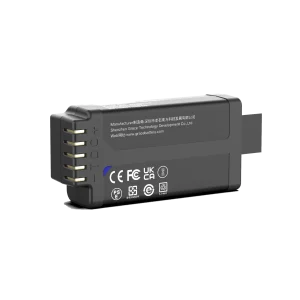
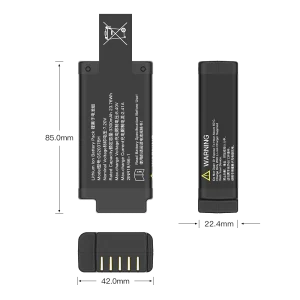
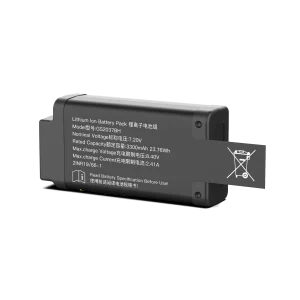
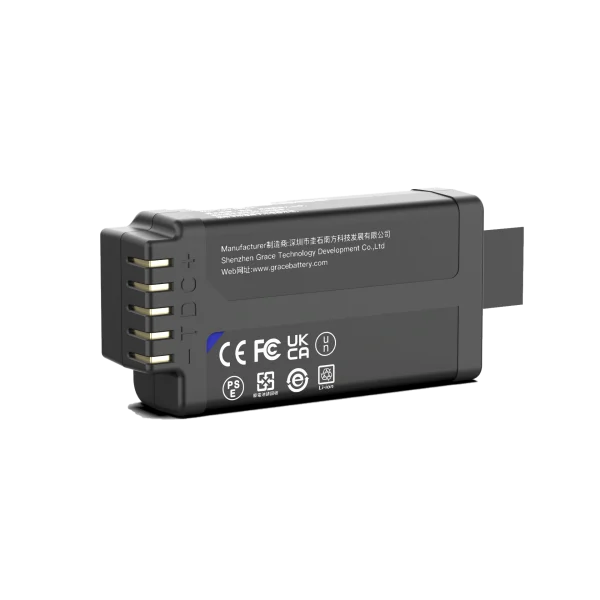
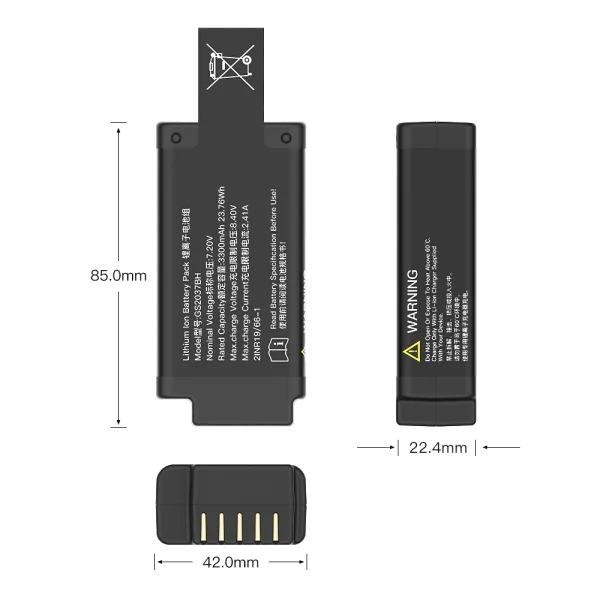
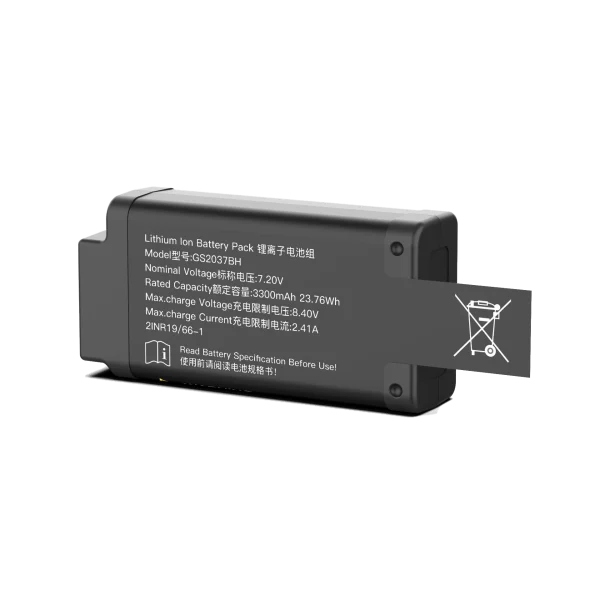
GS2037BH
7.2V/3450mAh/23.76Wh
3. Chemistry Comparison: Which Cell Family Fits Your Logger
Table 1 compares the five cell families commonly used in data logger battery packs. Figures are typical manufacturer ranges for qualified cells; actual values depend on grade, manufacturer and test conditions.
Table 1. Cell family comparison for data logger battery packs (typical manufacturer values)
| Cell family | Nominal voltage | Self-discharge / shelf life | Typical operating temp. | Cycle life | Best-fit scenario | Key limitation |
| Li-SOCl₂ primary (ER series) | 3.6 V | ≤1%/year; 10-year shelf life typical | −55 to +85 °C (special cells wider) | Non-rechargeable | Multi-year unattended metering, IoT sensors, remote loggers | Passivation / voltage delay on first pulse; limited continuous current |
| Li-MnO₂ primary (CR series) | 3.0 V | Low; long shelf life | −40 to +85 °C typical | Non-rechargeable | Coin cells for BLE/NFC disposable loggers | Limited pulse current; lower capacity per volume |
| Alkaline primary | 1.5 V | Moderate; shorter shelf life | 0 to +60 °C typical | Non-rechargeable | Low-cost disposable single-trip loggers | Poor low-temperature performance; higher self-discharge; leakage risk |
| NMC Li-ion rechargeable | 3.6 / 3.7 V | Moderate monthly self-discharge | −20 to +60 °C typical | ~1,000–3,000 cycles (typical range) | Rechargeable loggers, energy-harvested systems | Shorter cycle life; thermal sensitivity; needs charging management |
| LiFePO₄ (LFP) rechargeable | 3.2 V | Low monthly self-discharge | −20 to +60 °C (wide-temp grades wider) | ~2,000–6,000 cycles (typical range) | Rechargeable packs needing long cycle life and thermal safety | Heavier per Wh; lower nominal voltage; lower energy density |
3.1 Primary vs rechargeable: the decision logic
Choose a primary lithium pack (Li-SOCl₂ or Li-MnO₂) when the logger is sealed, deployed for multiple years, and cannot be recharged — the low self-discharge and wide temperature range dominate total cost of ownership. Choose a rechargeable pack (NMC or LiFePO₄) when the device returns to base regularly, is recharged from USB/solar/energy harvesting, or cycles predictably. LiFePO₄ is preferred where long cycle life and thermal stability matter; NMC offers higher energy density where weight and volume are constrained.
3.2 Hybrid primary + pulse capacitor for transmit bursts
High-resistance Li-SOCl₂ cells paired with a high-current radio benefit from a hybrid architecture: the primary cell supplies average energy while a hybrid pulse capacitor (HPC/SPC) or supercapacitor supplies the transmit current spike. This avoids the voltage sag that occurs when a passivated primary cell faces an instantaneous load.
4. OEM Supplier Comparison: Evaluation Dimensions (Not a Brand Ranking)
When comparing pack manufacturers, evaluate suppliers on the dimensions in Table 2 rather than on marketing claims. A credible OEM should provide test reports and traceable cell sourcing, not only a quoted capacity.
Table 2. OEM pack supplier evaluation checklist
| Evaluation dimension | What to verify in the audit or sample | Why it matters |
| Cell sourcing & grade | Brand, grade, date code, commercial vs industrial grade; cell datasheet on file | Grade determines cycle life, low-temperature performance and consistency |
| BMS protection | Over-/under-voltage, overcurrent, short-circuit, temperature protection; FET rating | Prevents field failure and transport abuse; protects rechargeable packs |
| Fuel gauge / communication | Coulomb-counter or voltage-based gauge; SMBus/I²C or HDQ SoC reporting | Lets the host read remaining capacity and predict replacement |
| Mechanical customization | Form factor, PCM/PCB, wires, connector, discharge rate, optional housing | Drop-in fit reduces device redesign and certification re-test |
| Certification documentation | UN38.3 test summary, IEC 62133-2 report, CE/DoC, RoHS, REACH, MSDS | Required for customs, platform approval and liability defense |
| Temperature derating data | Discharge curves at −20/−40 °C and +60/+85 °C | Rated 25 °C capacity overstates real field life in extremes |
| QC & traceability | 100% OCV/IR test, lot traceability, aging before shipment | Catches defective cells before they reach the field |
| Lead time, MOQ, warranty | Sample and mass-production lead time, warranty terms, after-sales support | Affects product launch and long-term service |
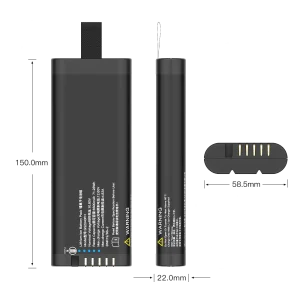
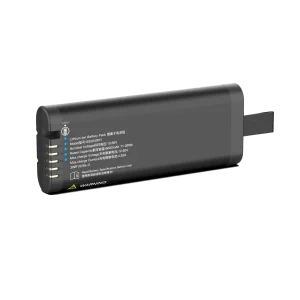
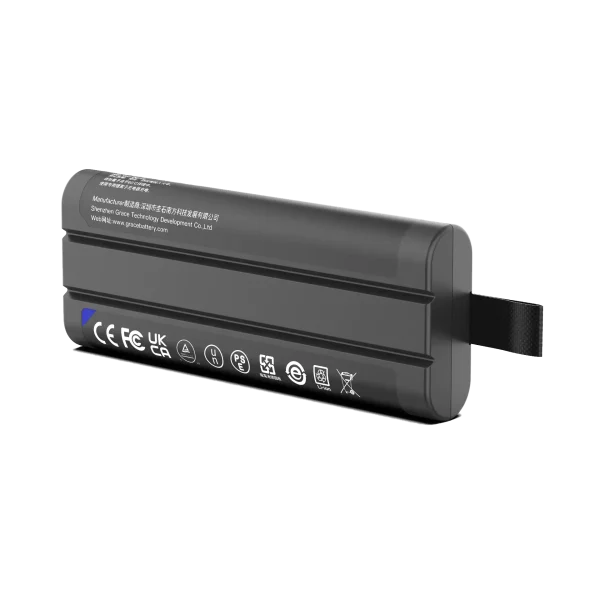
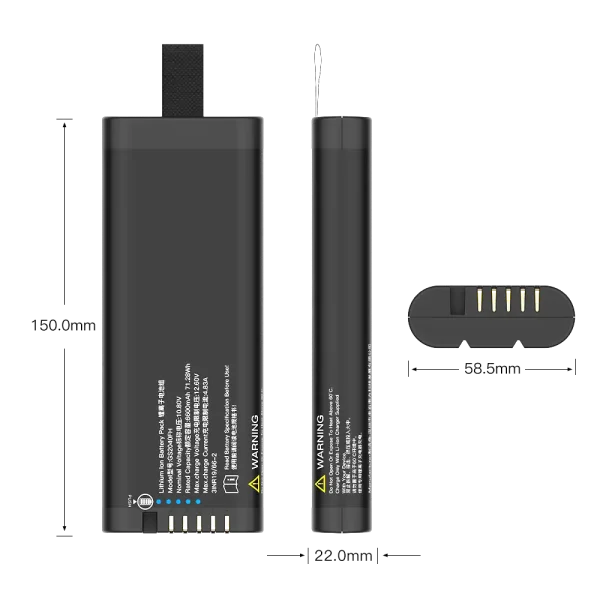
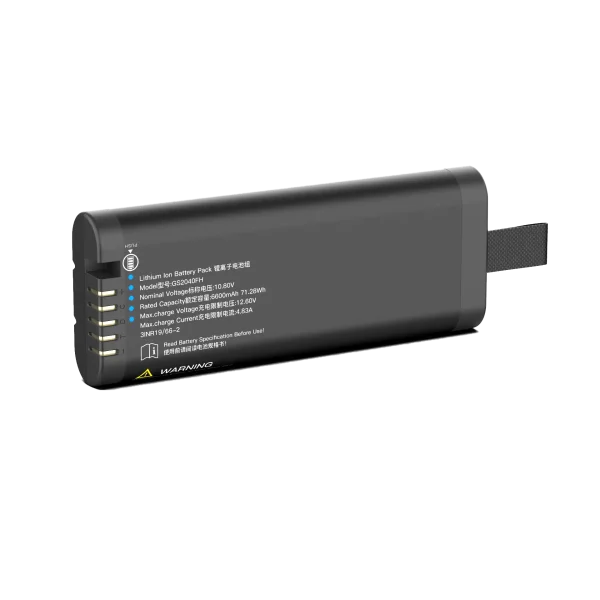
GS2040FH
10.8v/6900mAh/71.28h
5. Reliability Engineering: Five Failure Modes to Design Out
5.1 Passivation and voltage delay (Li-SOCl₂)
After long storage, a lithium chloride film forms on the Li-SOCl₂ anode, raising internal resistance. The first high-current pulse can produce a temporary voltage delay that drops below the microcontroller’s minimum operating voltage. Mitigations: hybrid pulse capacitor, a controlled wake-up/refresh pulse, conservative storage temperature, and de-passivation during burn-in.
5.2 Low-temperature capacity fade
All chemistries lose usable capacity and gain internal resistance as temperature falls. Rate the pack at the minimum deployment temperature, apply a derating factor, and prefer wide-temperature cells for cold chain and outdoor cabinets.
5.3 Radio-burst voltage sag
Undersized internal resistance or too-small a pack causes a brownout when the transmitter draws 1–2 A. Size for peak current, not average current; add a buffer capacitor at the host board.
5.4 BMS and state-of-charge accuracy
For rechargeable packs, a BMS with accurate fuel gauge prevents deep discharge and overcharge; SMBus/I²C reporting lets firmware show remaining runtime and alert before shutdown.
5.5 Documentation and shipment rejection
Missing UN38.3 summaries or non-CE packs can be held at customs or rejected by logistics partners; collect the compliance package before mass production.
6. Frequently Asked Questions
Q1. What is a data logger battery pack?
It is a custom or standardized battery assembly (cells + protection circuit, optionally a fuel gauge and connector) that powers an unattended data recorder, delivering microamp-level sleep current and occasional high-current sensor or radio bursts over weeks to years.
Q2. Should I choose a primary or rechargeable data logger battery pack?
Use primary lithium (Li-SOCl₂/Li-MnO₂) for sealed multi-year deployments that cannot be recharged; use NMC or LiFePO₄ rechargeable packs where the device returns to base, is charged regularly, or uses energy harvesting.
Q3. How long will a battery pack last in the field?
It depends on the duty cycle: compute daily mAh from measured sleep, sampling and burst currents, divide by target life, and add 30–50% reserve for temperature and aging; never estimate from rated capacity alone.
Q4. Why does my logger reset during data transmission?
Usually voltage sag during the radio burst: pack internal resistance is too high or the cell is passivated. Add a pulse capacitor/HPC, size for peak current, and check the undervoltage threshold.
Q5. Can Li-SOCl₂ cells power cellular LTE-M or NB-IoT loggers?
Yes, typically in a hybrid Li-SOCl₂ + pulse-capacitor architecture: the cell supplies average energy and the capacitor supplies the transmission spike; direct high-current discharge from a passivated primary cell should be avoided.
Q6. What certifications are required?
UN38.3 for transport worldwide; IEC 62133-2 for rechargeable lithium packs; CE under EU Battery Regulation 2023/1547 plus RoHS/REACH for the EU; FCC Part 15 for radio devices sold in the US; verify target-market rules during design.
Q7. What temperature range do cold-chain loggers need?
Pharmaceutical and frozen shipments commonly reach −25 to −40 °C; select wide-temperature cells and rate capacity at the minimum temperature rather than 25 °C.
Q8. Can the pack report remaining capacity over SMBus or I²C?
Yes, when a fuel-gauge BMS with SMBus/I²C (or HDQ) is integrated; the host reads state-of-charge, voltage and remaining runtime and can trigger low-battery alerts.
Q9. How do I size capacity for a multi-year deployment?
Build a measured current profile, calculate daily mAh, multiply by target days, apply temperature/aging derating and a safety margin, then match a cell family whose shelf life and temperature range cover the whole deployment.
Q10. Can an OEM customize voltage, connector and enclosure?
Yes: OEM/ODM partners specify cell arrangement (S/P configuration), BMS parameters, SMBus address, connector type and wires, and can fit a customer enclosure; provide the host current profile and target certifications at the RFQ.
7. Conclusion and Working with an OEM Partner
A reliable data logger battery pack is engineered from the measured current profile outward: define sleep, sampling and burst currents; choose primary Li-SOCl₂/Li-MnO₂ for multi-year sealed deployment or rechargeable NMC/LiFePO₄ for cycled devices; design out passivation, cold-temperature fade and burst sag; and lock in UN38.3, IEC 62133-2, CE and FCC documentation before production.
TEFOO (Shenzhen Guishi Nanfang Technology Development Co., Ltd.) designs and manufactures custom battery packs for industrial instruments, data acquisition devices and medical equipment, offering smart BMS protection, SMBus/I²C fuel-gauge options, wide-temperature cell matching, UN38.3/IEC 62133-2/CE/RoHS documentation support and flexible OEM/ODM cooperation. Share your current profile, target life, temperature range and destination markets; our engineering team returns a sized pack proposal rather than a generic catalog cell.
References and Sources
[1] IEC 62133-2:2017+AMD1:2021 CSV, Secondary cells and batteries — Part 2: Lithium systems, IEC Webstore: https://webstore.iec.ch/en/publication/70017
[2] IEC SC 21A work programme, IEC 62133-2 Edition 2.0 status: https://www.iec.ch/ (SC 21A publications dashboard)
[3] TÜV SÜD, UN/DOT 38.3 Transportation Testing: https://www.tuvsud.com/en-us/industries/mobility-and-automotive/automotive-and-oem/automotive-testing-solutions/battery-testing/un-dot-38-3
[4] Belmont Scientific, UN 38.3 eight-test overview: https://belmontscientific.com/battery-testing/regulatory-compliance/un-38-3-testing/
[5] Netherlands Enterprise Agency (RVO), CE marking of batteries under EU Regulation 2023/1547 (from 18 August 2024): https://www.rvo.nl/onderwerpen/eu-wetgeving/zakendoen-afspraken-en-landen/ce-markering/productgroepen/elektrische-2
[6] eCFR, 47 CFR Part 15 Radio Frequency Devices: https://www.ecfr.gov/current/title-47/chapter-I/subchapter-A/part-15/subpart-A
[7] Pkcell, ER18505 Li-SOCl2 pack typical specifications (3.6 V, ≤1%/yr self-discharge, −55 to +85 °C): https://www.pkcellpower.com/3-6v-er18505-16000mah-1s4p-lisocl2-battery-pack-product/
[8] Tadiran Batteries, Li-SOCl2 wireless sensor long-service white paper: https://tadiranbat.com/wp-content/uploads/2023/03/Power-your-wireless-sensors-for-40-years.pdf
[9] CNS Battery, Li-SOCl2 passivation causes and prevention: https://cnsbattery.com/what-causes-li-socl2-battery-passivation-and-how-to-prevent-it/
[10] BLUSENERGY, LiFePO4 vs NMC practical engineering comparison (2026): https://www.blusenergy.com/blog/lifepo4-vs-nmc-lithium-battery
[11] RS Online, data logger types and applications: https://nz.rs-online.com/web/c/test-measurement/data-acquisition-logging/data-loggers/[12] Cold-chain power budget illustrative example: https://chinalithiumbatteries.com/battery-solutions-for-cold-chain-monitoring/