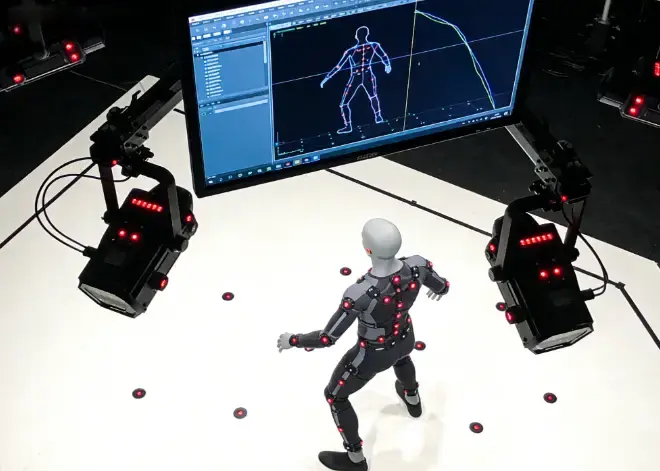
Specifying, selecting and sourcing power for inertial, optical and VR motion-capture hardware
By a senior lithium battery R&D engineer leading custom smart-battery projects at TEFOO (Shenzhen), a medical and industrial battery OEM
1. Introduction: The Battery Is the Silent Bottleneck of Motion Capture
For more than a decade, I have designed custom lithium battery packs with smart Battery Management Systems (BMS) for medical and industrial OEM equipment. When a motion capture session fails mid-take, the root cause is rarely the IMU or the camera. It is almost always the power system: a tracker that went flat, a pack that was not charged, or a shipment held at customs because the lithium battery paperwork was not right. This article explains, from the perspective of the engineer who actually builds the battery, how to specify, select and source the right motion capture tracker battery and motion capture system battery.
The market pressure behind this question is real. The global 3D motion capture market was valued at USD 340.6 million in 2025, is projected to reach USD 387.2 million in 2026 and about USD 1,025.4 million by 2034, a CAGR of 12.9% (Fortune Business Insights, 2026). A broader measure, the motion capture system market, was USD 486.2 million in 2025 with an expected CAGR of 12.6% (Emergen Research, 2026). Growth is driven by virtual production, VR/AR, gaming, sports science, healthcare and robotics. As systems move from cabled studios to wireless suits and body-worn trackers, every node now carries a battery, and the battery defines runtime, weight, charging logistics, safety compliance and total cost of ownership.
Two keywords matter when you search for this category: motion capture tracker battery (the small cell inside each body-worn sensor or VR tracker) and motion capture system battery (the pack or power architecture that keeps a whole suit, hub or studio rig alive). They are related but different engineering problems. This guide covers both.
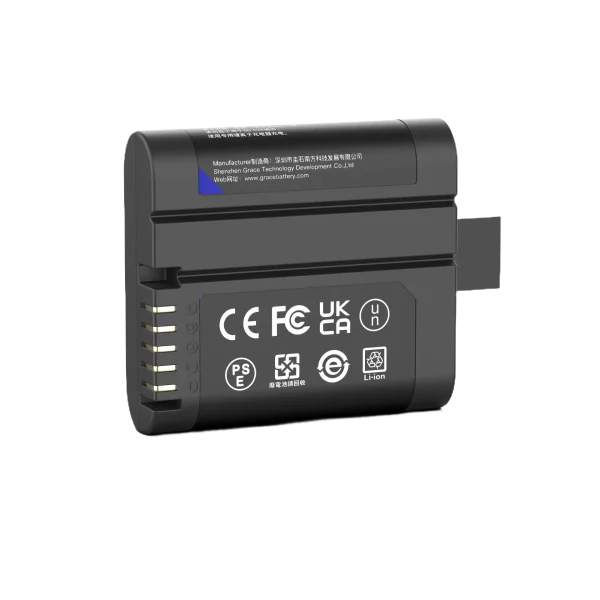
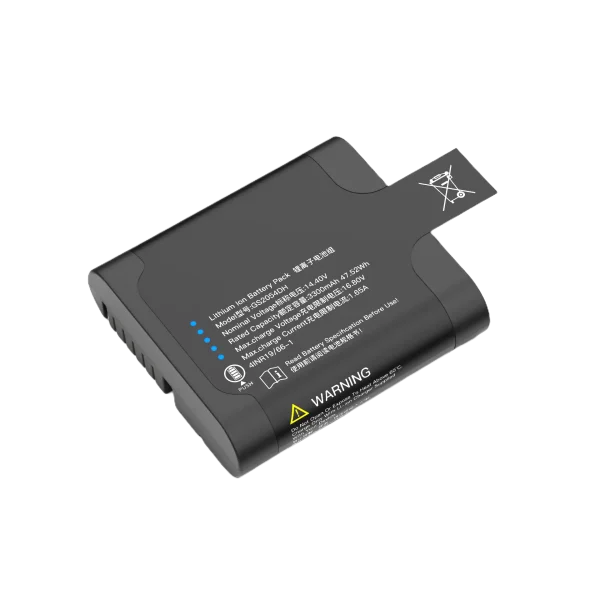
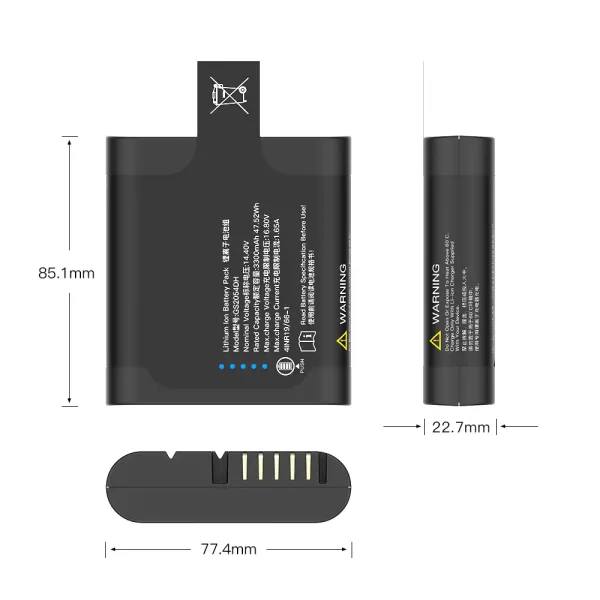
2. What a Motion Capture Battery Must Endure: Load Profiles
Before choosing a cell, you must understand the load. Different motion capture architectures put very different demands on the battery.
2.1 Inertial (IMU) trackers: the biggest battery population
An inertial motion capture suit typically carries 17 to 24 wireless sensor nodes, each containing an IMU, a microcontroller and a radio. The load is continuous: the system computes and streams at 60 to 240 Hz, with some platforms computing internally at up to 600 Hz (Noitom). There is no sleep mode during a take, which makes the battery duty cycle one of the harshest in wearables.
Manufacturer data gives a clear benchmark for a single node. Noitom lists a sensor of 15.8 g with a 280 mAh battery at 5 V providing 10 hours of runtime; Xsens Awinda runs 17 sensors for 12 hours from integrated cells charged in a charging station. System-level architectures differ: the newer Xsens Link uses a hub with an external battery (8 hours) plus an internal backup (4 hours) and supports hot-swapping the external pack mid-capture; Rokoko Smartsuit Pro II is powered by a 5 V/3 A power bank, with a 10,000 mAh bank giving roughly 6+ hours. Note that Rokoko ships the suit without the battery for customs reasons — a reminder of how strongly transport rules shape motion capture system battery logistics.
Because the radio operates in the 2.4 GHz band, the battery sits next to the antenna and the IMU. Current spikes, grounding and electromagnetic compatibility (EMC) are part of the battery design, not an afterthought.
2.2 VR body trackers
VR full-body tracking adds 3 to 8+ body-worn trackers. HTC VIVE states up to 7 hours for the VIVE Ultimate Tracker (about 2.2 hours to charge with Qualcomm Quick Charge 3.0, 3.2 hours with a 5 V/1 A supply) and up to 7.5 hours for VIVE Tracker 3.0, which it says is 75% longer than the 2018 model. These are small, hard-worn devices where battery weight and charge time directly affect the user experience and the studio turnaround between sessions.
2.3 Glove and hand sensors, hubs and accessories
Hand and finger capture adds another 10 to 20 micro sensor nodes per hand. Each node has an even tighter energy budget, and gloves are typically powered from a small wrist or palm pack. Hubs consolidate power and data for a whole suit, which is where slightly larger, higher-capacity motion capture system battery packs with hot-swap support earn their place.
2.4 Optical systems still need batteries
Optical systems remain the professional standard for film, animation and biomechanics (Meticulous Research, 2026) and accounted for roughly 68% of adoption in 2026 versus about 32% for non-optical systems (Global Market Statistics, 2026). Passive reflective markers need no power, but active LED markers, camera synchronization units, portable rigs and wireless encoder packs do. And inertial suits — the main battery-driven category — are preferred for outdoor and field capture precisely because they are portable (Vicon, 2026). In every architecture, there is a battery problem to solve.
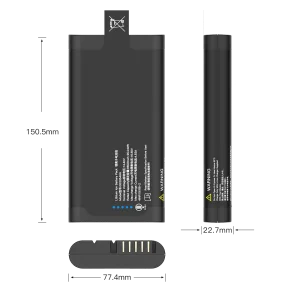
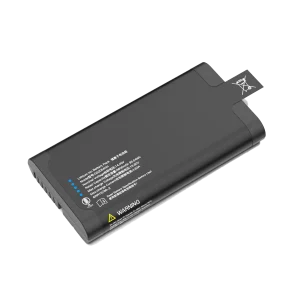
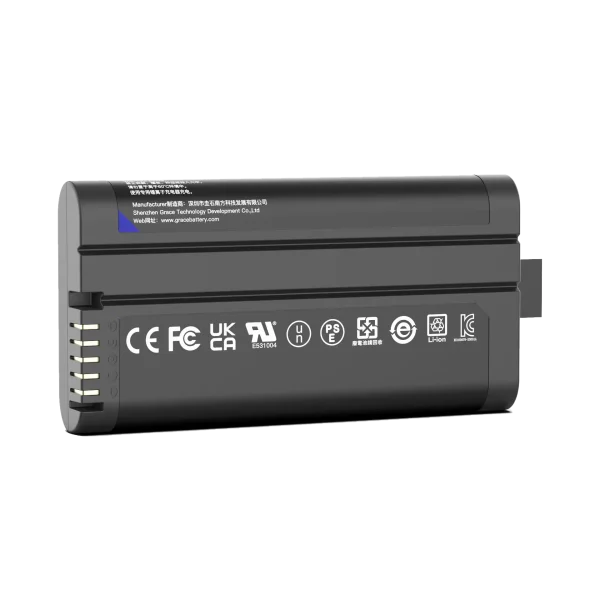
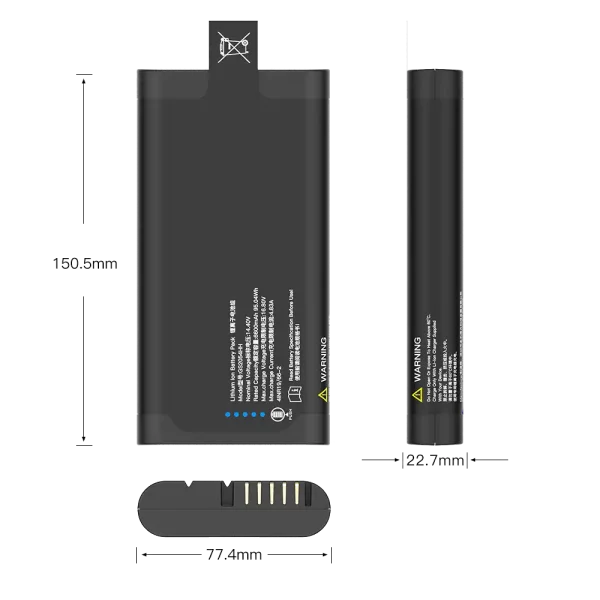
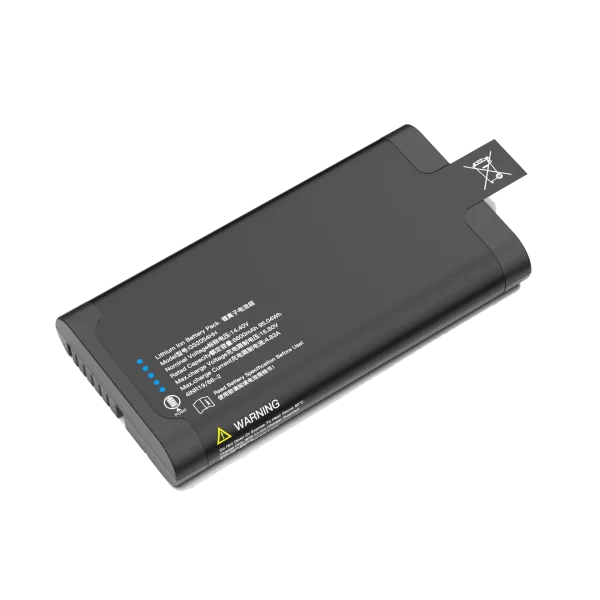
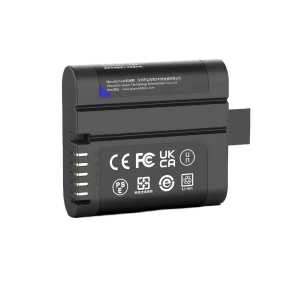
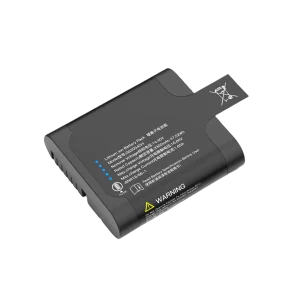
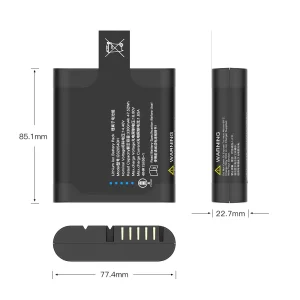
GS2054HH
14.4V/6900mAh/95.04Wh
3. The Eight-Point Specification Checklist
Based on the load profiles above, here is the specification checklist I use when an OEM asks for a motion capture tracker battery or a motion capture system battery:
- Voltage and capacity. A single 3.6–3.7 V nominal cell is common for body-worn nodes. Define capacity as runtime × average load current, plus at least 20% margin for radio burst current, aging and cold.
- Weight and form factor. Keep the node including cell in the 15–25 g class where possible (Noitom’s 15.8 g sensor is a good reference). Thin pouch cells fit curved body surfaces best.
- Runtime target. Decide the minimum continuous capture window: a full studio day (8–12 h) or per-take operation with hot-swap (4–8 h per pack).
- Charge time and logistics. Multi-bay charging stations and USB-C PD or Quick Charge support turn “five minutes between takes” into a real operational plan.
- Hot-swap and redundant power. An internal backup cell or hub buffer lets you exchange packs without stopping capture (as with Xsens Link).
- Safety and transport compliance. Design to IEC 62133-2:2017/AMD1:2021 for product safety and to UN 38.3 for transport, plus UL, CE or PSE as required by target markets.
- Environmental range. Studios run warm; outdoor and sports capture runs cold and humid. Specify wide-temperature cells (roughly −20 to +60 °C operating) and sweat/moisture protection.
- Telemetry and BMS. Require a smart battery interface (SMBus) that reports state of charge, state of health, temperature and cycle count — this turns battery failures from surprises into scheduled events.
4. Cell and Pack Technology Choices
4.1 Chemistry and format
Published 2026 data gives a practical energy-density map (Dataintelo, 2026; Wiki Battery, 2026):
Table 1. Cell format vs. typical energy density (2026 published data)
| Cell format | Typical cell energy density | Fit for motion capture |
| Cylindrical (18650/21700) | 210–240 Wh/kg | Poor form factor for body-worn nodes; good for hub-level packs |
| Prismatic | 220–250 Wh/kg | Good capacity, rigid shape, limited body fit |
| Pouch (LiPo) | 250–280 Wh/kg | Best for thin, curved, custom wearable shapes |
| Pack-level NMC (typical) | 170–255 Wh/kg | Mainstream high-energy packs |
| Pack-level LFP | 126–190 Wh/kg | Longer life and safer, but heavier; niche use |
Sources: Dataintelo (2026); Wiki Battery (2026). See References.
For body-worn motion capture trackers, pouch LiPo cells dominate because of shape freedom and weight. Solid-state batteries are still pilot-stage in 2026; do not let a roadmap promise override a cell that exists today.
4.2 Why a smart BMS with SMBus matters
A protection-only circuit is not enough. A smart battery interface based on the SMBus protocol reports real-time state of charge, state of health, temperature, cycle count and charge control. On a 17–24 node suit, per-node health telemetry is the difference between “the battery died” and “battery reported 14 minutes remaining, schedule the swap.” This is exactly the capability that an engineering-led pack maker such as TEFOO builds into its SMBus smart-BMS platform for medical and industrial OEMs, and the same engineering discipline transfers directly to motion capture hardware.
4.3 Thermal and mechanical design
Body contact adds heat and sweat; capture involves drops and repeated plugging. Specify potting or encapsulation for ingress protection, a connector rated for thousands of cycles, drop and crush margins in the mechanical design, and charging current limits that respect cell temperature. Grounding and shielding must be designed together with the 2.4 GHz radio to avoid noise injection into the IMU data stream.
5. Manufacturer Comparison: Choosing the Right Battery Partner
5.1 Three supply models
When you compare motion capture battery suppliers, you are usually comparing three business models, not three products:
Table 2. Battery supply models compared
| Supply model | What you get | Strengths | Watch-outs |
| Cell manufacturer | High-quality cells only | Chemistry and process mastery | You own pack design, BMS, certification and logistics |
| Pack assembler / trader | Standard packs at low cost | Price and stock | Thin BMS/firmware depth; certificates often not transferable to you |
| Engineering-led custom partner | Cell + BMS + structure integration, custom firmware, certifications, NPI support | One accountable vendor; full traceability; design iterations with your team | Higher non-recurring engineering cost; partner depth must be verified |
Examples of the engineering-led model are easy to find: Grepow advertises integrated cell + BMS + structure customization with strict project confidentiality; LithoTop lists more than 360 certified models with UL, KC, PSE, CE, IEC and UN 38.3; RHY publishes a custom VR-equipment pack built on high-rate cells; PKCell offers OEM/ODM packs with UN 38.3/MSDS support. The differentiation question is not whether a vendor can assemble a pack, but who owns the BMS firmware, who owns the certificates, and who stands behind the field failures.
5.2 Six acceptance criteria for a motion capture battery supplier
- BMS and firmware depth. Can the vendor write SMBus firmware, custom charge profiles and telemetry, or only fit a protection IC?
- Certification ownership. Are IEC 62133-2, UN 38.3, UL, CE and PSE test reports issued in your name (not just the vendor’s)?
- Customization depth. Shape, connector, firmware, charging profile and wide-temperature cells — all changeable per project.
- Traceability and quality. Full traceability from cell batch to finished pack, with incoming, in-process and outgoing inspection data.
- NPI and engineering support. Sample turnaround, validation data and fast iteration during development.
- Supply reliability. Long-term cell sourcing commitments and documented capacity for volume.
5.3 What an engineering-led partner adds
This is where a company like TEFOO fits the picture. We do not sell generic off-the-shelf packs; we design power systems with the customer’s team. Our SMBus smart-BMS platform, standard battery platforms combined with flexible customization (structure, connectors and BMS firmware), wide-temperature designs, full traceability and OEM experience in medical and industrial equipment are the same capabilities a motion capture OEM needs when reliability is part of the product promise. Ask any candidate partner: show me your SMBus firmware, your test reports and your traceability system — the answers separate a battery supplier from a battery engineering partner.
6. FAQ: Motion Capture Tracker Battery and Motion Capture System Battery Questions
What battery do motion capture trackers use?
Most body-worn motion capture tracker batteries are small rechargeable lithium-ion or lithium-polymer cells, typically 3.7 V nominal, from about 280 mAh per IMU node up to 1,000+ mAh for VR trackers and hub-level packs.
How long should a motion capture system battery last?
Published benchmarks range from 7 to 12 hours per charge (HTC VIVE 7–7.5 h; Noitom 10 h; Xsens Awinda 12 h; Xsens Link 8 h external plus a 4 h internal backup). Target 8–12 hours for a full studio day, or design hot-swap so per-pack runtime only needs to cover one take.
Can I power a motion capture suit with a standard power bank?
Yes, if the suit specifies it — Rokoko’s Smartsuit Pro II, for example, is designed for a 5 V/3 A USB-A power bank, and warns that more than 5 V can damage the hardware. Always follow the system’s voltage and current limits.
What certifications do motion capture batteries need?
At minimum IEC 62133-2:2017/AMD1:2021 (product safety for portable sealed lithium cells) and UN 38.3 (transport testing). For target markets add UL (North America), CE (EU) and PSE (Japan), usually via the IECEE CB scheme.
Why can lithium batteries not be shipped with the motion capture suit?
Air transport of lithium batteries is restricted under UN 38.3 and IATA rules, and some vendors choose to ship the device without the cell to avoid customs hold-ups (as Rokoko does). This is exactly why a motion capture system battery supply chain needs documented transport compliance.
Should I buy off-the-shelf batteries or a custom motion capture system battery?
Off-the-shelf works for prototypes and low-volume runs. Once you need a specific form factor, per-node telemetry, certification in your name or production traceability, a custom engineering-led pack is the lower-risk path.
Does temperature matter for outdoor motion capture?
Yes. Cold increases internal resistance and cuts usable capacity; heat accelerates aging. Specify wide-temperature cells (roughly −20 to +60 °C) and a BMS that throttles charge outside the safe window.
How do I estimate the battery capacity for my motion capture system?
Measure or estimate average load current per node (Noitom’s 280 mAh / 10 h implies about 28 mA average), multiply by the required runtime, add 20% margin, then add radio burst peaks and temperature derating.
7. Summary: The Practical Selection Checklist
The right motion capture tracker battery is small, light, safe, certified and instrumented. The right motion capture system battery architecture keeps a whole suit or studio running through a full working day with predictable charging and hot-swap. Before you buy or specify:
- Define nodes, runtime and load current first; capacity is arithmetic, not guesswork.
- Budget weight and form factor against a real benchmark (15–25 g per node class).
- Require a smart BMS with SMBus telemetry — protection ICs are not enough.
- Demand IEC 62133-2 and UN 38.3 compliance with reports in your name.
- Choose an engineering-led partner who owns firmware, certificates and traceability.
- Prototype, validate over the real duty cycle, then scale.
If you are designing a motion capture product and the battery is currently an afterthought, treat it as a subsystem. Talk to an engineer who designs batteries for a living — that is what TEFOO is here for.
References
[1] Fortune Business Insights, 3D Motion Capture Market Size & Global Report (2026). https://www.fortunebusinessinsights.com/3d-motion-capturing-system-market-104827
[2] Emergen Research, Motion Capture System Market Size & Trends (2026). https://www.emergenresearch.com/industry-report/motion-capture-system-market
[3] Meticulous Research, 3D Motion Capture System Market Size & Growth 2026–2036. https://www.meticulousresearch.com/product/3d-motion-capture-system-market-6479
[4] Global Market Statistics, 3D Motion Capture Market — Growth, Analysis & Trends (2026). https://www.globalmarketstatistics.com/market-reports/3d-motion-capture-market-16777
[5] Vicon, Types of Motion Capture: A Complete Guide (2026). https://www.vicon.com/resources/blog/types-of-motion-capture-a-complete-guide/
[6] Noitom, Perception Neuron Studio — inertial sensor hardware specifications. https://www.noitom.com.cn/mobile/perception-neuron-studio.html
[7] Xsens, MVN Awinda — wireless motion capture system. https://www.xsens.com/motion-capture/xsens-mvn-awinda
[8] Xsens, Next-Generation Xsens Link — specifications. https://www.xsens.com/motion-capture/xsens-link-specifications
[9] Rokoko, Smartsuit Pro II — battery and power requirements. https://www.rokoko.com/products/smartsuit-pro
[10] HTC VIVE, VIVE Ultimate Tracker — battery life and charging. https://www.vive.com/eu/accessory/vive-ultimate-tracker/
[11] HTC VIVE, VIVE Tracker (3.0) — battery life. https://www.vive.com/eu/accessory/tracker3/
[12] Dataintelo, Lithium Ion Battery Cells Market Report (2026) — energy density by format. https://dataintelo.com/report/global-lithium-ion-battery-cells-market
[13] Wiki Battery, Lithium-Ionen Batterien: Kosten und Energiedichte (2026). https://wikibattery.org/wp-content/uploads/2026/06/Lithium-Ionen-Batterien-Kosten-Energiedichte-Ed2026-v1.pdf
[14] IEC Webstore, IEC 62133-2:2017 + AMD1:2021. https://webstore.iec.ch/publication/32662
[15] UN 38.3 — Lithium metal and lithium ion batteries, UN Manual of Tests and Criteria (test report example). https://docs.rs-online.com/3fea/A700000013714476.pdf
[16] TradeAider, IEC 62133 — Safety requirements and certification paths. https://www.tradeaiders.com/wiki/iec-62133
[17] Grepow, Custom Lithium Polymer Battery Packs. https://www.grepow.com/custom-battery.html
[18] RHY Battery, Custom Lithium Battery Pack for VR Gaming Equipment. https://www.rhybattery.com/news/custom-lithium-battery-pack-for-vr-gaming-equipment-in-japan.html
[19] LithoTop, Wearable Device Battery — Custom LiPo Battery Manufacturer. https://lithotop.com/wearable-devices
[20] PKCELL, OEM Lithium Battery for Consumer Electronics. https://batterypkcell.com/consumer-electronics/