If you source lithium-ion battery packs for medical devices, industrial instrumentation, field-test equipment, or any portable electronic product, two certification names will appear on almost every datasheet and supplier quote: UN38.3 and IEC 62133. Yet in our daily engineering review of incoming pack designs, these two marks are still the most commonly misunderstood. A UN38.3 report does not prove that your pack is safe to use in the field, and an IEC 62133 certificate does not authorize the pack to be shipped by air, sea, or road. This survey explains what each standard actually covers, how the 2026 regulatory changes affect your qualification process, and how to evaluate a supplier that claims both.
1. Introduction
Lithium-ion cells carry high energy density in a compact form, which is exactly why regulators treat them as dangerous goods once they leave the factory. Two parallel frameworks govern them: one focused on transport, the other on end-product safety. Understanding the boundary between them is the first step toward avoiding costly rejections at customs, failed type approval, or product recalls.
From 1 January 2026, the UN Manual of Tests and Criteria, Revision 8 (Rev.8), became mandatory for new lithium battery air transport submissions. Test reports issued under Revision 6 or Revision 7 are no longer accepted by most airlines and IATA member states. At the same time, IEC Subcommittee 21A continues to maintain IEC 62133-2, the international safety specification for portable sealed secondary lithium cells and the batteries made from them. Buyers who still work from a pre-2026 qualification checklist risk accepting documentation that is already out of date.
2. What Is UN38.3?
UN38.3 is sub-section 38.3 of the United Nations Recommendations on the Transport of Dangerous Goods, Manual of Tests and Criteria. It is a transport test program, not a product safety standard. Its sole purpose is to demonstrate that a lithium cell or battery will not rupture, vent dangerously, catch fire, or explode when subjected to the stresses reasonably expected during normal transport and reasonably foreseeable mishandling.
2.1 Scope and applicable cells
UN38.3 applies to all lithium-ion and lithium-metal cells and batteries, whether packed with equipment or alone, and regardless of weight under most regulatory regimes. Large batteries above 35 kg, such as those used in energy storage and electromobility, receive additional attention under the 2026 IATA Dangerous Goods Regulations, but the core eight tests remain the qualification baseline. Sodium-ion cells are increasingly being mapped into the same test framework as the chemistry enters commercial production.
2.2 The eight tests: T.1 through T.8
The program consists of eight sequential or related tests. Cells and batteries are pre-conditioned to a defined state of charge before each test, and each has explicit pass/fail criteria (no fire, no explosion, no leakage, and in most cases no rupture):
| Test | Name | What it simulates |
| T.1 | Altitude simulation | Low pressure of 11.6 kPa, simulating air cargo hold conditions at roughly 15,000 ft. |
| T.2 | Thermal test (temperature cycling) | Extreme temperature shifts, typically between -40 C and +72 C, with long soak times. |
| T.3 | Vibration | Logarithmic sine sweep from 7 Hz to 200 Hz, repeated along three mutually perpendicular axes. |
| T.4 | Mechanical shock | Half-sine impact pulses representative of drop, rail shunting, and rough cargo handling. |
| T.5 | External short circuit | Short circuit at 55 C with low external resistance, until the pack cools. |
| T.6 | Impact / crush | Applied only to cells, to internal mechanical abuse that can trigger an internal short. |
| T.7 | Overcharge | Applied only to rechargeable secondary batteries, charging beyond the manufacturer’s limit. |
| T.8 | Forced discharge | Applied only to secondary cells, forcing them into reverse charge. |
Table 1 – The eight UN38.3 transport tests (T.1 to T.8).
2.3 The 2026 Rev.8 change
Under Revision 8, laboratories must issue test reports that reflect the updated test conditions and clarified mounting/fixation methods for securing large cells and batteries to the test rig. Reports stamped under Rev.6 or Rev.7 are no longer accepted by air carriers. In practice, this means a supplier whose UN38.3 report predates 2026 must re-test or obtain a letter of equivalence before the pack can ship by air. Every consignment must also be accompanied by a compliant UN38.3 Test Summary – a one-to-two page document listing the lab identity, report number, model number, watt-hour rating or lithium content, and pass/fail results – not the full multi-hundred-page report.
3. What Is IEC 62133?
IEC 62133, prepared by IEC Subcommittee 21A, is the product safety standard for portable sealed secondary cells and batteries containing alkaline or other non-acid electrolytes. Part 2 (IEC 62133-2) covers the lithium systems; Part 1 covers nickel-based systems. The edition most widely referenced in product certification today is IEC 62133-2:2017, incorporating Amendment 1:2021 (edition 1.1), with the next edition advanced through the IEC publication cycle.
3.1 Scope: end-use safety, not transport
Where UN38.3 asks whether the pack survives shipping, IEC 62133-2 asks whether the pack is safe to operate under normal use and reasonably foreseeable misuse. It evaluates electrical, mechanical, and environmental safety across both cells and the assembled battery. Typical test items include continuous charging at constant voltage (a fully charged lithium-ion cell held for seven days), abnormal charging, external short circuit, thermal abuse, drop, vibration, and mechanical shock. Newer editions also introduce a forced internal short circuit test, designed to replicate an internal cell defect rather than an external abuse.
3.2 Why it matters to OEMs
For a medical device or industrial instrument, IEC 62133-2 is often the safety demonstration that a notified body, test house, or national regulator expects alongside the product standard (for example IEC 60601-1 for medical electrical equipment). It addresses the battery’s behavior over its service life, including aging and prolonged float charge – scenarios that UN38.3 never examines. A pack can pass UN38.3 and still fail a seven-day continuous charge test because the protection circuit does not terminate correctly; that failure only shows up under IEC 62133-2.
4. UN38.3 vs IEC 62133-2: Side by Side
The two standards answer different questions, and neither replaces the other. The comparison below is the quickest way to communicate the boundary to internal stakeholders and customers.
| Dimension | UN38.3 | IEC 62133-2 |
| Primary purpose | Safe transport of cells and batteries | Safe operation of portable cells/batteries in use |
| Issuing body | UNECE (transported by IATA, IMDG, RID, ADR, DOT) | IEC / SC 21A |
| Scope | Lithium-ion, lithium-metal (and mapping sodium-ion) | Portable sealed secondary lithium systems |
| Test focus | Altitude, thermal cycling, vibration, shock, short, crush, overcharge, forced discharge | Continuous charge, abnormal charge, short, thermal abuse, drop, internal short |
| Time horizon | Transport event (hours to days) | Service life (years) |
| Is it a certificate? | No – a self-certified test report + Test Summary | Yes – often used in CB scheme / type approval |
| Mandatory for shipping? | Yes, for air/sea/road transport of lithium batteries | No, but frequently required by product standards and buyers |
| 2026 status | Rev.8 mandatory from 1 Jan 2026; older reports invalid | Maintained by IEC SC 21A; ed.1.1 (2017+AMD1:2021) in market |
Table 2 – UN38.3 versus IEC 62133-2: scope and role.
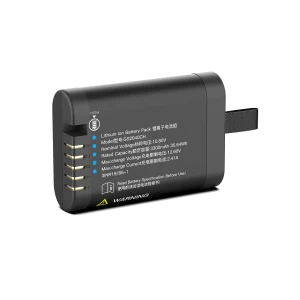
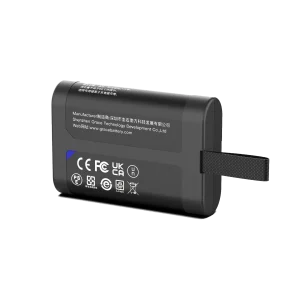
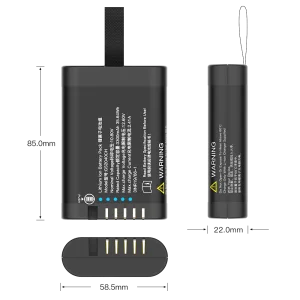
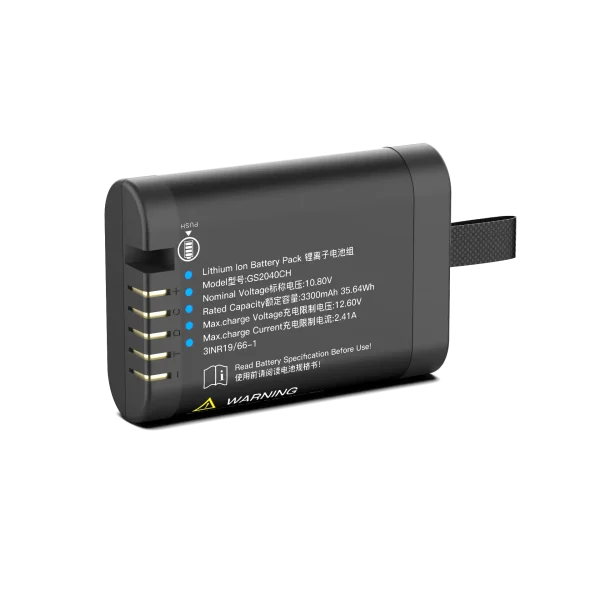
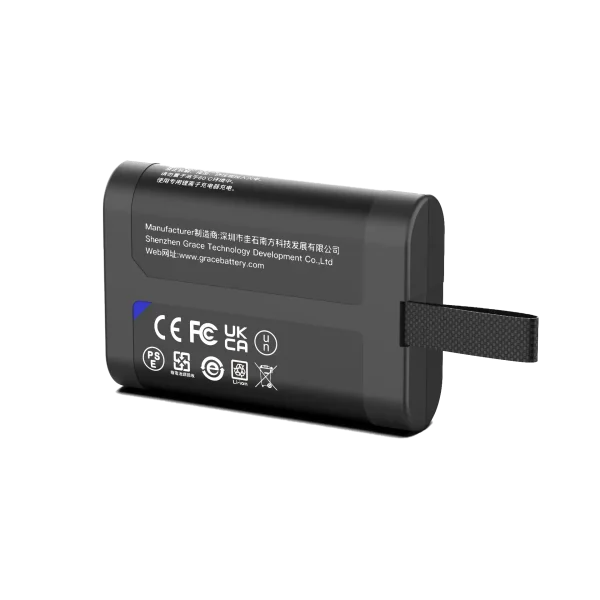
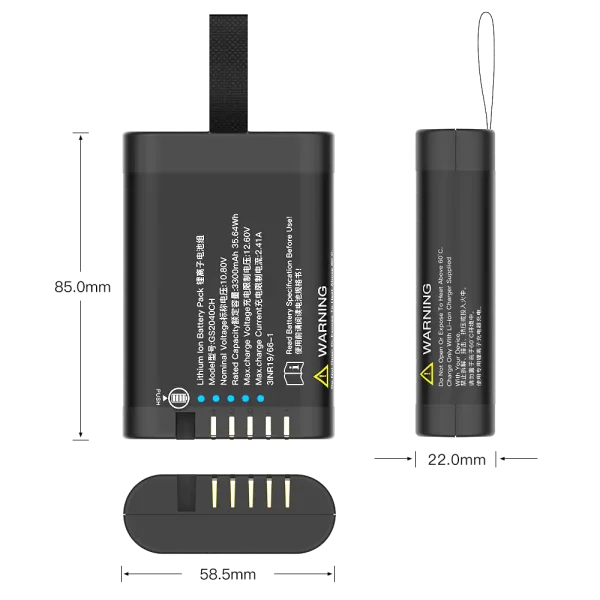
GS2040CH
10.8V/3450mAh/35.64Wh
5. Why You Normally Need Both
A single product program almost always requires both. UN38.3 is the customs and carrier gate: without a valid Test Summary, your shipment will not move. IEC 62133-2 is the market access and end-product safety gate: without it, a notified body or end customer may refuse the design, even though the pack arrived safely. Many buyers and test houses cross-reference the two – for example, IEC 62133-2 acknowledges UN38.3 for certain transport-oriented mechanical tests rather than re-running them – but the coverage is partial, not a substitution.
A common engineering mistake is to treat a passing UN38.3 external short circuit test as proof that the pack’s BMS short-circuit protection is designed correctly for end use. The UN38.3 test is performed at a fixed 55 C on a fresh pack; IEC 62133-2 additionally probes abnormal charging and prolonged float, which is where a weak BMS design usually surfaces. For OEMs that integrate smart BMS with SMBus or I2C communication, the communication layer and cell-level balancing strategy must be validated against both programs.
6. Surveying a Qualified Battery Pack Supplier
When you survey suppliers claiming UN38.3 and IEC 62133 certification, do not stop at the certificate PDF. Use the following checklist to separate a qualified pack engineer from a trading company that resells commodity cells.
| Check item | What to ask for / verify |
| Report revision | UN38.3 report issued under Rev.8 (2026 or later); Rev.6/7 reports are obsolete for air freight. |
| Test Summary | A stand-alone UN38.3 Test Summary that matches your exact model number, cell configuration, and watt-hour rating. |
| Standard precision | Certificate clearly states IEC 62133-2 (not Part 1 nickel), edition year, and whether CB scheme report is used. |
| Cell-level traceability | Cell supplier, model, and part number on the report; pack built from the exact cells tested. |
| BMS design | Schematic or description of protection: over/under voltage, over-current, short, temperature, balancing; SMBus/SBDBus or HDQ protocol if smart. |
| Manufacturing site | Pack assembly location and ISO 9001 (and ISO 13485 if medical) quality system; not merely a trading address. |
| Change control | Policy on what triggers re-test (cell substitution, BMS swap, enclosure change, capacity change). |
| Other market access | CE/UKCA, UL 2054 / UL 2271, KC, PSE, or battery regulation (EU) 2023/1542 documentation as relevant. |
Table 3 – Supplier qualification checklist for certified battery packs.
At TEFOO (Shenzhen Guishi Nanfang Technology), our pack program is built around smart BMS design with SMBus communication and OEM customization for medical and industrial equipment. We qualify cell partners against UN38.3 Rev.8 and IEC 62133-2 before tooling, and we treat any cell, BMS, or enclosure change as a re-qualification event rather than a silent update. That approach is what allows customers in medical devices, field instrumentation, and rugged computing to carry both documents through their own type approval without re-testing the pack on their side.
7. Frequently Asked Questions
7.1 Does a UN38.3 certificate mean the battery is safe to use?
No. UN38.3 only demonstrates transport safety. It does not evaluate long-term charging behavior, float charge, or end-product misuse. For end-use safety, you need IEC 62133-2 (or UL 2054, or the relevant product standard such as IEC 60601-1 for medical devices).
7.2 Is IEC 62133-2 enough to ship my battery by air?
No. IEC 62133-2 is not a transport document. Airlines and customs require a UN38.3 test report and a compliant Test Summary, regardless of which product safety certificates the pack holds.
7.3 My existing UN38.3 report is from 2023. Is it still valid?
For air freight from 1 January 2026, most carriers require a Rev.8 report. Reports issued under Revision 6 or Revision 7 are generally no longer accepted. Ask your laboratory whether an equivalence letter or a re-test under Rev.8 is required for your specific pack.
7.4 Do I need separate tests for cells and for the finished pack?
Yes. Cells are tested at the cell level (including T.6 impact/crush), and the assembled battery is tested at the pack level. A supplier should provide cell-level UN38.3 data from the cell maker and pack-level UN38.3 and IEC 62133-2 data for the finished assembly.
7.5 What is the UN38.3 Test Summary and why is it required?
It is a short document, required with every consignment, that identifies the test laboratory, report number, battery model, chemistry, watt-hour rating or lithium content, and pass/fail results. It must match the shipped product exactly; a mismatch is a common reason for customs or carrier rejection.
7.6 How does EU Battery Regulation 2023/1542 interact with these standards?
Regulation (EU) 2023/1542 is an overarching market-access framework for batteries sold in the EU. It does not replace UN38.3 (transport) or IEC 62133-2 (product safety); rather, it adds documentation, carbon footprint, due-diligence, and recycling requirements on top of the existing safety and transport conformity. Qualification programs should treat all three as part of one compliance package.
8. Conclusion
UN38.3 and IEC 62133-2 are complementary, not interchangeable. UN38.3 is the transport gate, refreshed to Rev.8 in 2026 and enforced by airlines and customs; IEC 62133-2 is the product safety gate that demonstrates safe operation over the battery’s service life. When you survey a battery pack supplier, ask for both documents, verify the revision dates, match the model numbers, and confirm that the BMS design and change-control process will hold up under both programs. A pack engineer who understands the boundary between the two will save your program months of re-testing and avoidable market delays.
References
– UN ECE, Recommendations on the Transport of Dangerous Goods – Manual of Tests and Criteria, Revision 8 (sub-section 38.3).
– IEC 62133-2:2017 + AMD1:2021, Secondary cells and batteries containing alkaline or other non-acid electrolytes – Part 2: Lithium systems, IEC SC 21A.
– IATA Dangerous Goods Regulations, 67th Edition (2026), lithium battery transport requirements.
– TUV SUD, UN/DOT 38.3 Transportation Testing for lithium batteries.
– Regulation (EU) 2023/1542 concerning batteries and waste batteries.