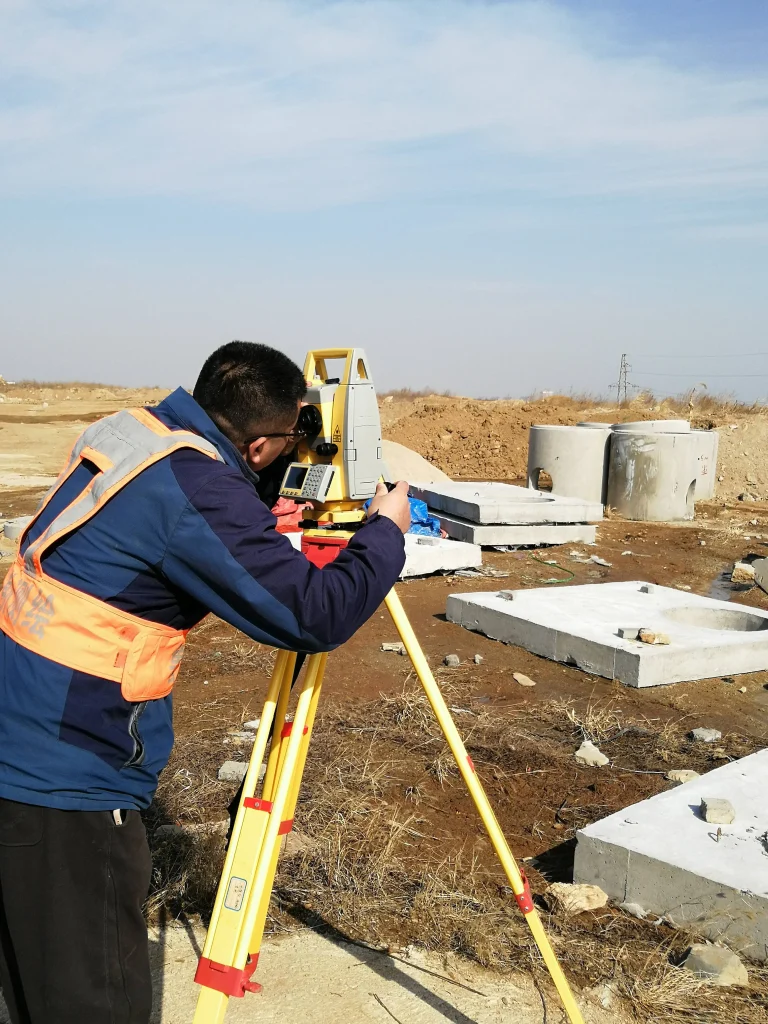
1. Introduction: The Quiet Challenge of Powering Acoustic Monitors
Acoustic monitoring systems — from urban noise stations and construction-site sound level meters to wildlife bioacoustic recorders and industrial vibration monitors — share one operational reality: they must run unattended, outdoors, for weeks or months at a time. In our years designing lithium battery packs for industrial and environmental sensing equipment, we have seen that the battery is rarely the most glamorous component in a noise monitor, yet it is the single most common reason a deployed station goes offline.
A dropped 4G transmission, a truncated LEQ measurement, or a missed noise event during a regulatory compliance window all trace back to the same root cause: an undersized or poorly matched battery pack. This article walks through the engineering considerations that go into designing a reliable lithium-ion battery pack for acoustic and noise monitoring applications — from power profiling and cell chemistry selection to BMS architecture, environmental design, and certification.
2. Understanding the Power Profile of Acoustic Monitoring Systems
Before sizing any battery, you must understand exactly what the load draws. Acoustic monitors have a distinctive power profile: low quiescent current interspersed with sharp, short-duration current spikes during data transmission and signal processing.
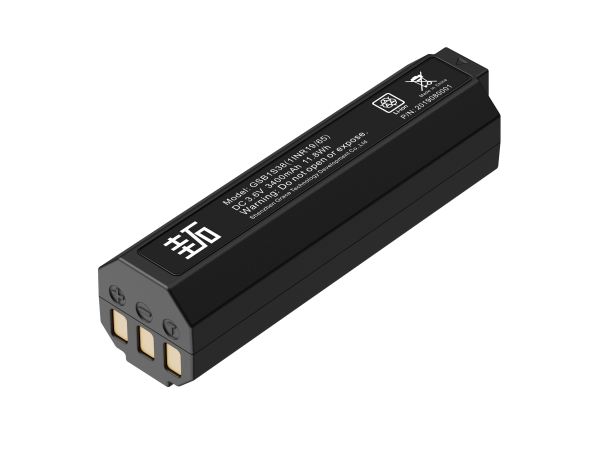
GSB1S38
3.6V/3450mAh/11.88Wh
2.1 Typical Power Consumption Breakdown
Based on bench measurements and published datasheets for Class 1 noise monitoring stations, the load typically breaks down as follows:
| Subsystem | Typical Power Draw | Duty Cycle Notes |
| Microphone preamp + ADC | 30 – 120 mW | Continuous during measurement; ultra-low-power mode drops to µA level |
| MCU / signal processing | 50 – 150 mW | Active sampling bursts at 1 Hz – continuous; sleeps between events |
| 4G / LoRa communication | 0.5 – 2 W (peak) | Short bursts (1 – 10 s) every few minutes; the dominant peak load |
| GPS module | 20 – 50 mW avg. | Periodic fix acquisition; can consume up to 67% of total energy in weak-signal conditions |
| Heated inlet / environmental sensors | Up to 0.4 W | Active only in cold/humid conditions; particulate monitors with heated inlets are a notable load |
A typical compliant urban noise station — measuring continuously, transmitting via 4G every 10 minutes, with a particulate sensor attached — draws roughly 1.1 W average, or about 27 Wh per day. A standalone acoustic sensor node optimized for event-triggered recording can average as low as 3 – 5 mA (at 3.7 V), which translates to roughly 40 – 60 mW.
2.2 Peak vs. Average Current: Why It Matters
The critical design mistake we see repeatedly is sizing the battery only on average current, ignoring peak current demands. When the cellular modem wakes up to transmit, it can pull 150 – 500 mA at 3.3 – 4 V — a current spike that lasts only 1 – 3 seconds but creates a momentary voltage sag if the battery and protection circuitry cannot deliver it cleanly.
For precision acoustic measurement, voltage stability is not a luxury — it is a measurement integrity requirement. A 50 mV sag on the analog supply rail can introduce noise floor artifacts that corrupt low-level sound pressure level readings, especially in the 1/3-octave band analysis used for environmental compliance. This means the battery pack must have sufficiently low internal resistance and the BMS must not introduce excessive series impedance.
3. Critical Battery Design Requirements for Noise Monitors
3.1 Long Deployment Intervals
Outdoor noise stations are typically installed on streetlight poles, building facades, or construction fences where routine maintenance visits are costly and logistically difficult. A design target of 3 – 6 months of continuous operation on a single charge (or indefinite operation with solar assist) is standard for municipal and industrial deployments. This drives both capacity sizing and low self-discharge requirements.
3.2 Wide Operating Temperature Range
Outdoor acoustic monitors face the full climate envelope: -20°C in Nordic winters, +60°C in summer sun-exposed enclosures, and high humidity in tropical coastal deployments. Lithium chemistry performance shifts dramatically across this range:
- LiFePO4 cells deliver reliable discharge down to -20°C and tolerate charging down to 0°C with proper BMS cold-charge inhibition.
- NMC cells offer better low-temperature discharge performance (down to -30°C with derating) but have narrower thermal safety margins at the upper end.
- Above 45°C, calendar aging accelerates significantly for all chemistries — thermal management (ventilated enclosure, heat sinking, or active heating) directly determines service life.
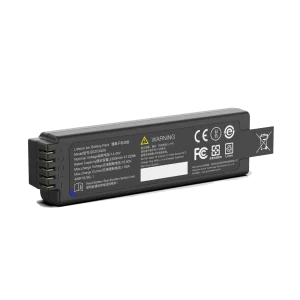
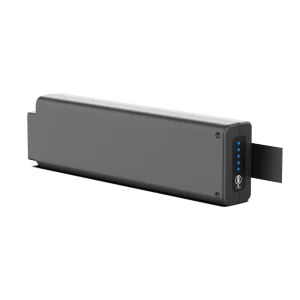
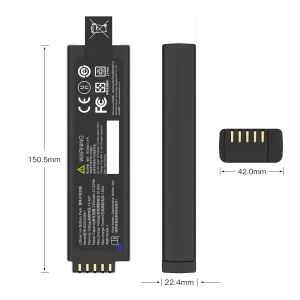
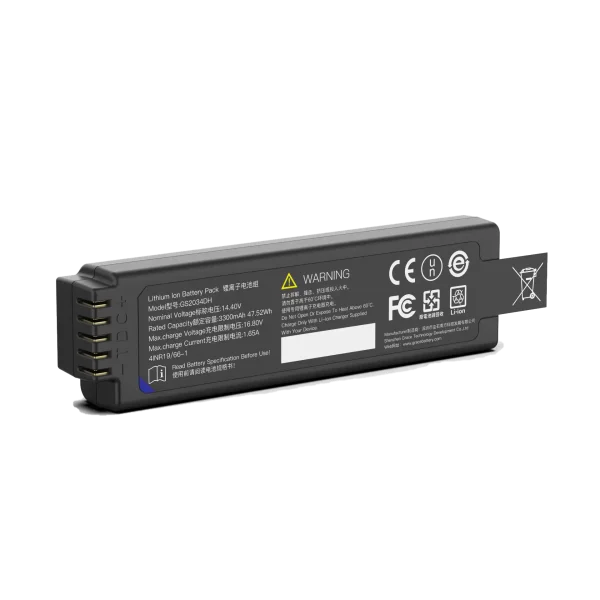
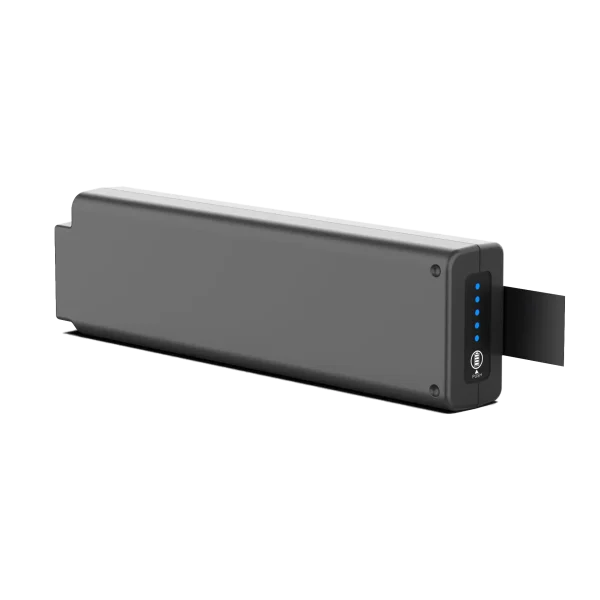
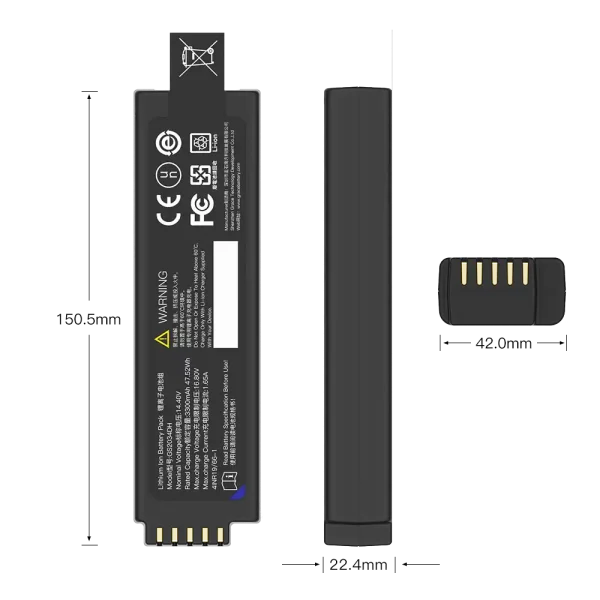
GS2034DH
14.4V/3450mAh/47.52Wh
3.3 Low Self-Discharge and Standby Life
Many acoustic monitoring applications involve seasonal or event-driven deployment: a construction noise monitor that runs for 6 months on a project, then sits on a shelf for 8 months before the next contract. The battery must retain charge during storage. We specify cells with ≤ 3% monthly self-discharge at 25°C, and design the BMS quiescent current to below 50 µA — preferably under 20 µA — so that the protection circuit itself does not drain the pack during long standby.
3.4 Deep-Discharge Protection for Unattended Operation
When a noise monitor runs out of battery in the field, no one is there to recharge it immediately. A good BMS will cut off discharge at a programmable threshold (e.g., 2.5 V per cell for LiFePO4, 3.0 V for NMC) and enter a low-power transport or storage mode, preventing cell damage from deep discharge while preserving enough state-of-charge for a safe recharge when maintenance arrives.
4. Cell Chemistry Selection: LiFePO4 vs. NMC
The choice between lithium iron phosphate (LiFePO4 / LFP) and nickel manganese cobalt oxide (NMC) is one of the most consequential decisions in pack design for acoustic monitoring. Each has clear trade-offs:
| Parameter | LiFePO4 (LFP) | NMC (NCM) |
| Nominal voltage per cell | 3.2 V | 3.6 – 3.7 V |
| Cycle life (to 80% capacity) | 3,000 – 6,000 cycles | 1,000 – 2,000 cycles |
| Energy density (volumetric) | 200 – 280 Wh/L | 300 – 380 Wh/L |
| Thermal runaway onset | ~270°C | ~210 – 240°C |
| Low-temp discharge limit | -20°C (derated) | -30°C (derated) |
| Calendar life (25°C, 50% SOC) | 10 – 15 years | 5 – 8 years |
| Typical best fit | Permanent outdoor stations, solar-assisted, long-life deployments | Portable / handheld monitors, space-constrained units, cold climates |
For permanently installed urban and industrial noise monitoring stations — where the pack lives in a weatherproof enclosure alongside the measurement electronics and often pairs with a solar panel — LiFePO4 is our default recommendation. The longer cycle life matters because solar-assisted packs undergo daily charge-discharge cycling; a 5,000-cycle LFP pack will deliver 10+ years of service, whereas an NMC pack cycling daily would reach end-of-life in 3 – 5 years. The inherently safer chemistry is also a meaningful advantage for unattended outdoor installations.
For portable, battery-only acoustic recorders (e.g., wildlife bioacoustics units, hand-held sound level meters) where weight and volume are primary constraints, NMC makes sense. The higher energy density lets you fit more watt-hours into a compact form factor, and the lower self-heating risk during discharge is less critical when the unit is carried by an operator.
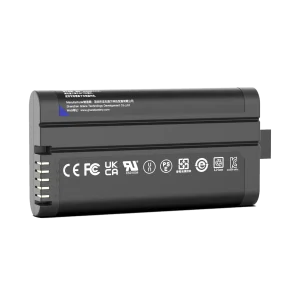
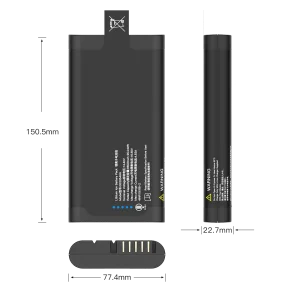
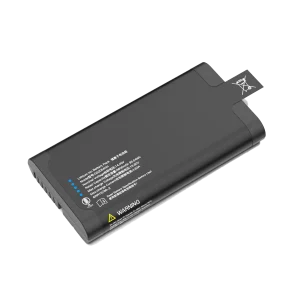
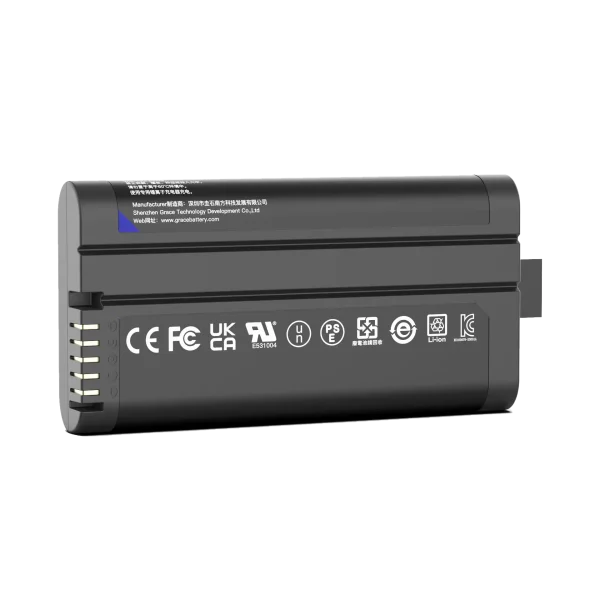
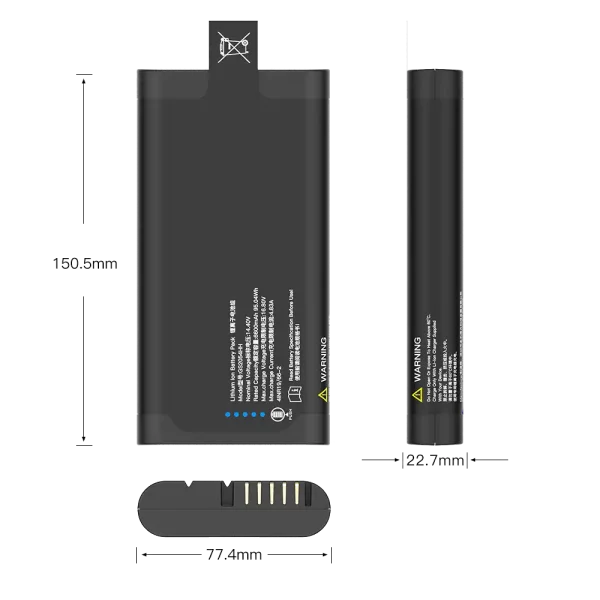
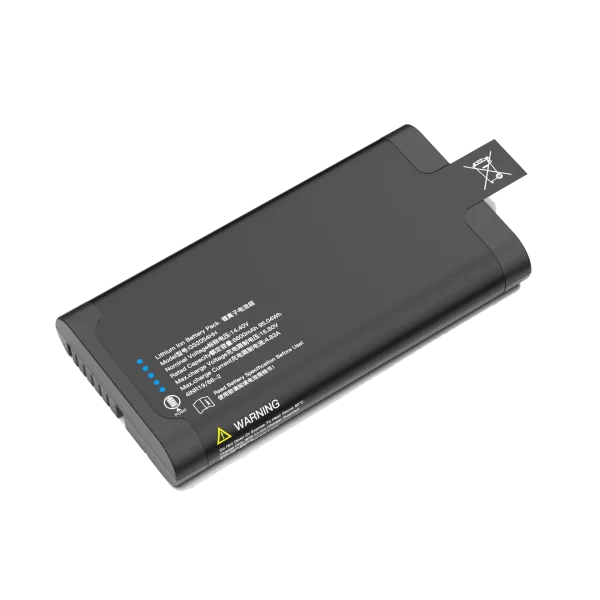
GS2054HH
14.4V/6900mAh/95.04Wh
5. BMS Design: The Brain of Your Battery Pack
The battery management system is where most field failures are prevented — or caused. For acoustic monitoring applications, we specify BMS architectures with the following non-negotiable features:
5.1 Per-Cell Monitoring and Balancing
Every series-connected cell must be individually monitored for voltage and temperature. For 4S – 8S packs typical of 12 V – 24 V monitor systems, passive balancing (50 – 100 mA bleed resistors) is adequate and cost-effective. For higher-voltage or higher-capacity packs, active balancing recovers more energy but adds cost and complexity. The BMS should update cell voltage measurements at least once per second during active operation and log fault events to non-volatile memory for remote diagnostics.
5.2 Ultra-Low Quiescent Current
A noise monitor spends most of its life in low-power modes. If the BMS itself draws 1 mA continuously, that is 24 mAh per day — roughly equivalent to running the microphone preamp 24 hours a day. Our engineering target for outdoor monitor packs is a BMS sleep current below 20 µA, with a separate ship/storage mode that drops below 5 µA for long warehouse or shelf storage.
5.3 Smart Communication: SMBus / I2C / UART
For OEM integration, the BMS should expose state-of-charge, state-of-health, cell voltage, temperature, and fault history via a standard digital interface. SMBus (System Management Bus) is a common choice because it is widely supported by host MCUs and provides a well-defined command set. Alternatives include I2C for simpler point-to-point links and CAN bus for higher-noise industrial environments.
This telemetry is not a nice-to-have feature — it is what enables the host system to implement intelligent power management: adjusting sampling intervals when battery voltage drops, sending low-battery alerts to the cloud dashboard, and predicting end-of-life so maintenance can be scheduled proactively rather than reactively.
5.4 Protection Layer
Every pack should have, at minimum:
- Overcharge protection (per-cell voltage threshold, typically 3.65 V for LFP, 4.2 V for NMC)
- Over-discharge protection (2.5 V/cell LFP, 3.0 V/cell NMC)
- Over-current and short-circuit protection (hardware comparator trips in < 10 µs for short circuit)
- Temperature sensing with charge inhibit below 0°C and discharge derating above 60°C
- Status LEDs and optional fuel gauge display for on-site verification
6. Environmental and Mechanical Design
6.1 Enclosure and Ingress Protection
Outdoor noise monitor enclosures typically carry IP65 or IP67 ratings. The battery pack must be designed to live inside that environment — which means choosing connectors rated for outdoor use (e.g., M12 circular connectors or sealed JST-PA with silicone gaskets), potting or conformal coating on the PCB, and cell retention that withstands thermal expansion and contraction without loosening.
6.2 Thermal Management
Battery life halves roughly for every 10°C rise in operating temperature. In a sun-exposed enclosure, internal temperatures can reach 50 – 60°C even when ambient is 30°C. Design strategies include:
- Mounting the battery pack on the shaded side of the enclosure, away from heat-generating components (cellular modems, DC-DC converters)
- Using thermally conductive potting or heat pads to conduct cell heat to the enclosure wall
- For cold-climate deployments, integrating a small positive-temperature-coefficient (PTC) heater that the BMS activates when charging below 0°C
6.3 Solar Integration
Most permanent outdoor noise stations pair the battery pack with a small solar panel (10 – 50 W). The BMS or an external charge controller must handle MPPT (maximum power point tracking) or at least linear charge regulation, and must prevent overcharging on long sunny stretches while accepting trickle charge through extended cloudy periods. A well-designed solar+battery system can deliver multi-month autonomy during the darkest winter months and indefinite operation during the rest of the year.
7. Compliance and Certification
Shipping and deploying lithium battery packs internationally requires a layered set of certifications. As a pack design engineer, these are the standards we build to and test against:
| Standard | Scope | Why It Matters |
| UN 38.3 | Transport safety (8 tests: altitude, thermal, vibration, shock, short circuit, impact, overcharge, forced discharge) | Mandatory for air, sea, and land transport of all lithium batteries globally |
| IEC 62133-2 | Safety requirements for portable sealed secondary lithium cells | Baseline safety certification for packs integrated into portable equipment |
| IEC 62619 | Safety requirements for secondary lithium batteries for industrial applications | More stringent than 62133; required for stationary and industrial deployments, includes thermal propagation testing |
| CE / UKCA | EU / UK market conformity | Required for sale in the European Economic Area and the UK |
| UL 1973 | Standard for batteries for stationary applications | Frequently specified for North American infrastructure and municipal deployments |
| IEC 61672-1 | Electroacoustics — Sound level meters | The measurement standard for the host device; relevant because battery-induced noise must not compromise Class 1 accuracy |
One point we emphasize to OEM customers: cell-level certificates do not prove pack-level safety. The wiring, busbar welds, enclosure strength, BMS fault-handling logic, and mechanical arrangement all change the failure modes. A properly certified pack is tested as a complete assembly — budget 4 – 12 weeks per certification and plan retesting whenever cell model, series-parallel configuration, or enclosure design changes materially.
8. Design Example: 12.8 V 50 Ah LiFePO4 Pack for Urban Noise Monitoring
To make this concrete, consider a representative design: a 12.8 V 50 Ah LiFePO4 smart battery pack built for a solar-assisted urban noise monitoring station.
System Architecture
- Chemistry: 4S1P LiFePO4 cells (3.2 V, 50 Ah prismatic or cylindrical)
- Nominal energy: 640 Wh
- BMS: Smart BMS with SMBus communication, 30 A continuous discharge, 60 A peak
- Protection: Overcharge, over-discharge, over-current, short circuit, NTC temperature sensing
- Enclosure: IP66 aluminum or ABS enclosure, pole-mountable
- Solar input: Integrated charge controller supporting 10 – 50 W panels, 12 V system
Run-Time Calculation
Assuming a worst-case load of 1.1 W average (full noise + particulate + vibration sensor station) and zero solar input: 640 Wh ÷ 1.1 W ≈ 582 hours ≈ 24 days of continuous operation. With a 30 W solar panel harvesting 3 – 4 hours of effective peak sun per day in winter, the system gains roughly 90 – 120 Wh per day against 27 Wh daily consumption — comfortably energy-positive even in mid-winter at mid-latitudes.
This is the kind of design that lets a municipal environmental agency install hundreds of noise stations across a city and forget about them for years — the battery pack is sized for worst-case winter autonomy, the BMS reports status to the cloud, and the solar panel handles the rest.
- Standard Smart Battery Pack16 products
- Charger8 products
- Adapter5 products
- Accessories6 products
- Tool1 product
9. Conclusion: Key Takeaways for OEM Engineers
Designing a battery pack for acoustic and noise monitoring systems is not a matter of picking the highest-capacity cell and bolting on a protection board. It requires understanding the specific power profile of the measurement electronics, selecting the right chemistry for the deployment environment, designing a BMS that supports intelligent telemetry, and building to the certification standards that govern your target markets.
The core principles we apply on every project:
- Profile the load first — average current sets capacity sizing, but peak current sets the internal resistance and connector requirements.
- Choose chemistry based on deployment profile — LFP for permanent outdoor stations, NMC for portable and cold-climate units.
- Treat the BMS as a product feature, not just a protection circuit — SMBus telemetry enables predictive maintenance and extends station uptime.
- Design for the environment — thermal management and ingress protection determine real-world service life, not just datasheet cycle count.
- Certify the full pack, not just the cells — plan for UN 38.3, IEC 62133-2 / 62619, and regional market markings from the start.
At TEFOO, we have engineered custom lithium battery packs for a wide range of industrial and environmental monitoring applications, from compact acoustic recorders to grid-connected monitoring stations. If you are developing a new noise monitor or acoustic sensor product and need a battery pack designed for your specific power profile, operating environment, and certification requirements, our engineering team can work with you from cell selection through production validation.