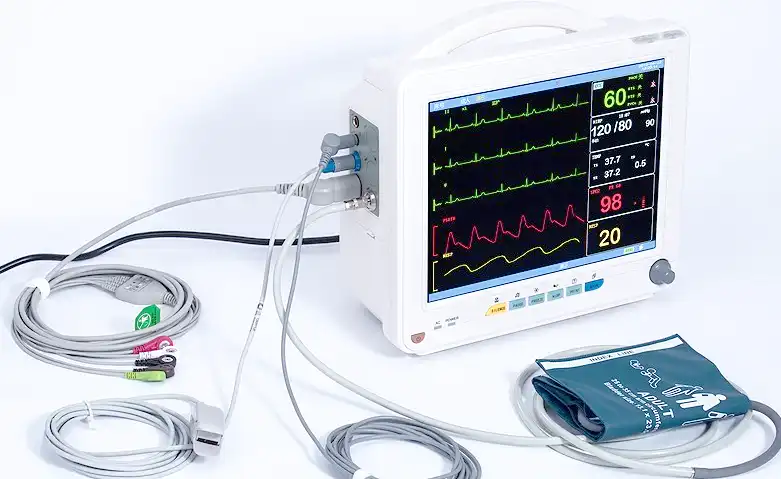
By the Senior Battery R&D Engineering Team, TEFOO
Introduction: The Power Supply Is Part of the Signal Chain
An electrocardiogram captures the electrical activity of the heart through surface electrodes, and the waveforms it records are remarkably small. Surface ECG signals typically span 0.01 mV to 5 mV[9] in amplitude, within a bandwidth of roughly 0.05 Hz to 250 Hz. A normal QRS complex, the most prominent feature of the trace, peaks around 1.0–1.5 mV[10]. At these levels, any electrical noise of comparable magnitude can distort the morphology of the beat, obscure subtle ST-segment shifts, or trigger false arrhythmia alarms.
For portable, wearable, and ambulatory ECG devices, the battery is therefore not an accessory that can be added after the analog front end is designed. It is part of the signal chain. The pack must deliver clean, stable power in a form factor small enough for a chest patch or a pocket-sized recorder, sustain days of continuous operation, and meet the safety and electromagnetic compatibility requirements of a medical device.
In this article, the battery engineering team at TEFOO shares how we design compact battery packs with low-noise output for ECG applications: why noise matters, how we select cells and build packs, and how we verify that a pack behaves as a reliable medical subsystem.
Why Low-Noise Power Matters in ECG Acquisition
The analog front end of an ECG measures differences of tens of microvolts on a baseline of roughly 3 V. Power-supply noise couples into this measurement through several paths: ripple on the supply rails, switching harmonics radiated from DC-DC converters, ground bounce shared between the power stage and the amplifier, and electromagnetic interference picked up by internal wiring.
A battery pack contributes to this picture in ways that are often underestimated. High internal impedance lets load transients modulate the terminal voltage; an aggressive charge profile can couple current transients into the analog ground; and a poorly shielded pack can behave as an antenna for switching noise. The result is baseline wander, an elevated noise floor, or intermittent artifacts that can be mistaken for cardiac events.
Low-noise design starts inside the pack. We select cells with low internal resistance, keep the current path short and direct, use star-point grounding so that charge and discharge currents do not share a return path with sensitive circuits, and place protection circuitry and the communication interface so that their switching activity stays away from the output terminals. Where the device uses a switching pre-regulator, a low-dropout regulator at the point of load provides the clean rail the ECG front end needs.
These engineering choices are backed by standards. ANSI/AAMI EC11 sets minimum performance expectations[2] for diagnostic ECG devices, and IEC 60601-2-25:2011 defines the frequency-response[1] and noise requirements that electrocardiographs must satisfy. The FDA’s Diagnostic ECG Guidance likewise recommends[7] conformance to AAMI EC11 for devices intended for diagnostic interpretation. When we deliver a battery pack, we design it to be compatible with the power-cleanliness assumptions these standards imply.
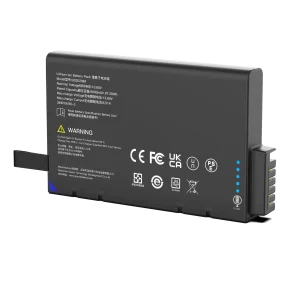
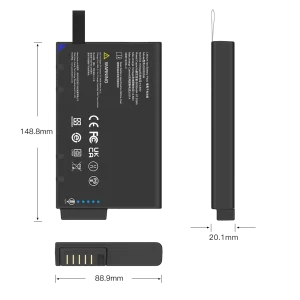
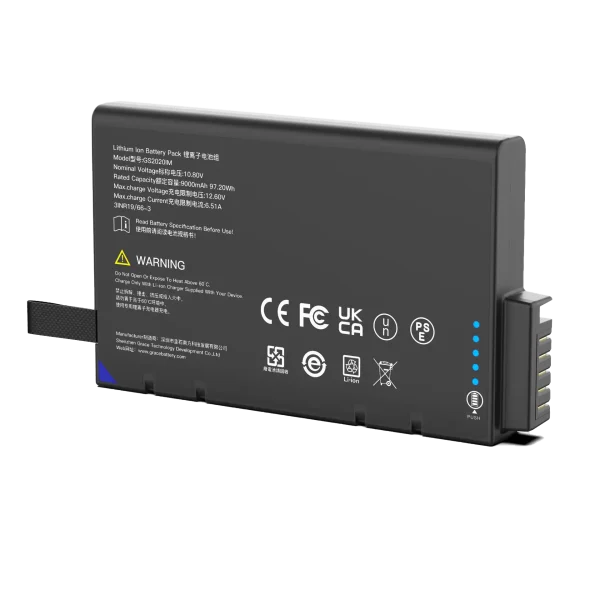
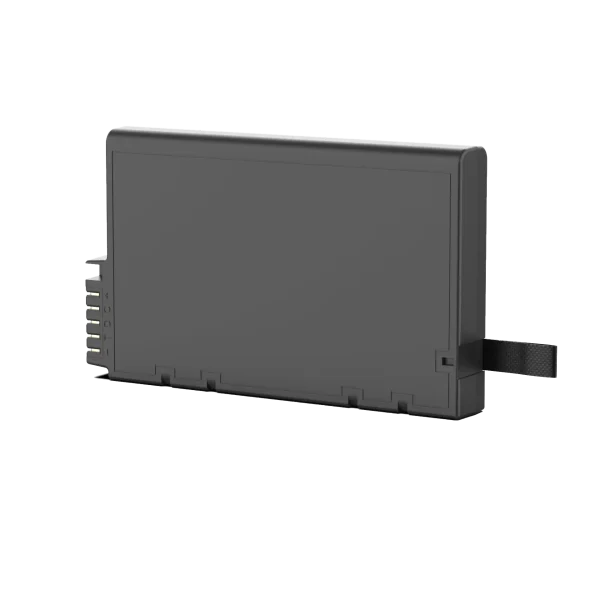
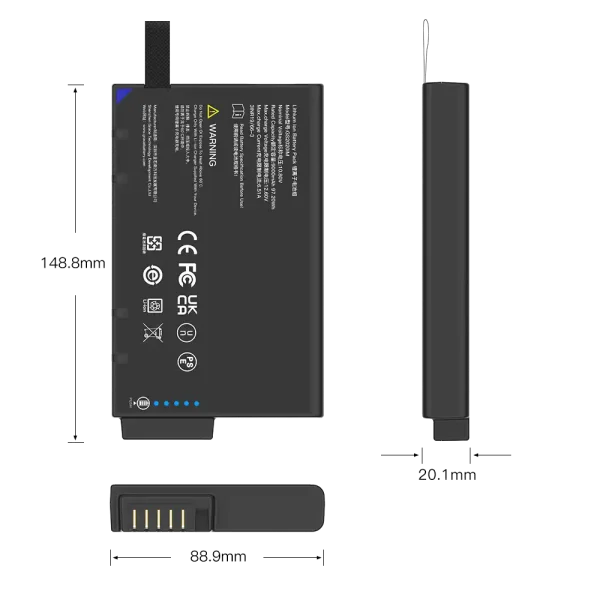
GS2020IM
10.8V/9300mAh/97.2Wh
The Engineering of Compact Battery Packs
Compactness is a matter of geometry as much as chemistry. A single-use ECG patch must be thin enough to be worn under clothing; a Holter recorder must fit in a pocket or on a belt; a handheld 12-lead device must balance weight against battery life. Each form factor changes the trade-off between energy capacity, volume, and output performance.
The starting point is an energy budget. We work with the device team to define the average power consumption of the complete system — analog front end, microcontroller, wireless link, and display — and multiply by the required run time plus a design margin. From that budget we derive the minimum usable capacity, then translate it into a physical envelope using the volumetric and gravimetric energy density of the candidate cells.
For wearable and ambulatory ECG devices, lithium-polymer pouch cells are usually the first choice. They can be made thin, flexible in shape, and matched to the irregular internal volume of a product. A typical cell in this class delivers a nominal voltage of 3.7 V[8], with a discharge cut-off near 3.0 V, so a 3.3 V analog rail needs regulators sized with enough headroom across the discharge window.
Mechanical design is just as important as electrical design in a compact pack. The pack must survive the vibration and shock of everyday wear, hold connectors under strain, and protect the cell from puncture. We design the enclosure, cell restraint, and connector retention together, then validate them with the drop, vibration, and torque tests that our customers’ quality systems require.
Cell Chemistry: Li-ion vs Li-Polymer
Both lithium-ion and lithium-polymer chemistries have a place in ECG devices, and the choice is driven by the application, not by preference.
Lithium-polymer cells use a pouch format with a laminated aluminum enclosure. They offer the greatest freedom in shape and thickness, which is why they dominate wearables and patches. Their trade-offs are a softer enclosure that needs mechanical protection and somewhat more conservative charge limits.
Cylindrical lithium-ion cells offer robust steel cans, mature manufacturing, and excellent energy density at larger sizes. They suit recorders and monitors with a more conventional internal layout, and for a device that can accommodate a cylinder they often provide the most cost-effective capacity.
In practice, we evaluate five properties for every candidate cell: usable energy density, cycle life at the expected depth of discharge, self-discharge and calendar aging, performance across the operating temperature range, and supply-chain robustness. We also screen for lot-to-lot consistency, because a medical device cannot tolerate cell batches that drift in impedance or capacity. The final selection is documented against the device specification.
Intelligent BMS and SMBus Communication
A medical battery pack must protect the patient, the device, and itself. An intelligent battery management system provides overcharge, over-discharge, overcurrent, short-circuit, and temperature protection, and it does so with the redundancy and fail-safe behavior that medical risk analysis expects.
Beyond protection, the BMS monitors state. It tracks voltage, current, temperature, state of charge, and, over time, state of health. Through SMBus — the standard two-wire battery communication bus — the pack reports this data to the host device. The host can then manage charging precisely, budget power for the remaining run time, and warn the clinician before a recording is interrupted.
This reporting capability is not a convenience; it is part of the reliability story of an ECG system. A Holter study that runs for 24 or 48 hours cannot afford a silent battery failure at hour 20. With accurate state-of-charge reporting and charge management, the device can alert the user, extend the recording gracefully, and document the battery condition in the study record. It also simplifies regulatory documentation, because the interaction between the battery and the host is defined, measured, and controlled.
Safety and Regulatory Compliance
Compliance is the foundation of trust in medical devices. IEC 60601-1:2005+A1:2012 establishes the general requirements[4] for the basic safety and essential performance of medical electrical equipment. On top of this, ECG equipment must meet the particular requirements of IEC 60601-2-25:2011[1] for electrocardiographs, and ambulatory ECG systems must satisfy IEC 60601-2-47:2012[3].
The battery itself is governed by its own safety standards. IEC 62133-2:2017 specifies the safety requirements[5] and tests for portable sealed lithium cells and batteries. Packs destined for international distribution are also tested to UN 38.3[11], the transport test regime of the UN Manual of Tests and Criteria, before they can be shipped by air.
Beyond standards, the design must anticipate clinical realities. An ECG device may be exposed to a defibrillator discharge, so the pack and its protection circuitry must tolerate the associated transients and recover cleanly. Electromagnetic compatibility and electrostatic-discharge requirements shape shielding and layout. Leakage-current limits affect the choice of insulation and the placement of the battery relative to applied parts.
At TEFOO, battery packs for medical devices are designed, manufactured, and documented under an ISO 13485:2016 quality management system[6]. Every design decision — from cell selection to BMS behavior to labeling — is traceable, which is exactly what our customers need when they prepare their own regulatory submissions.
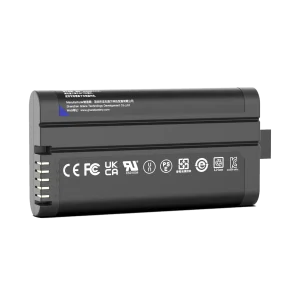
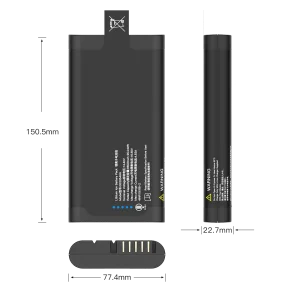
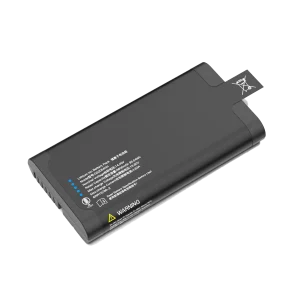
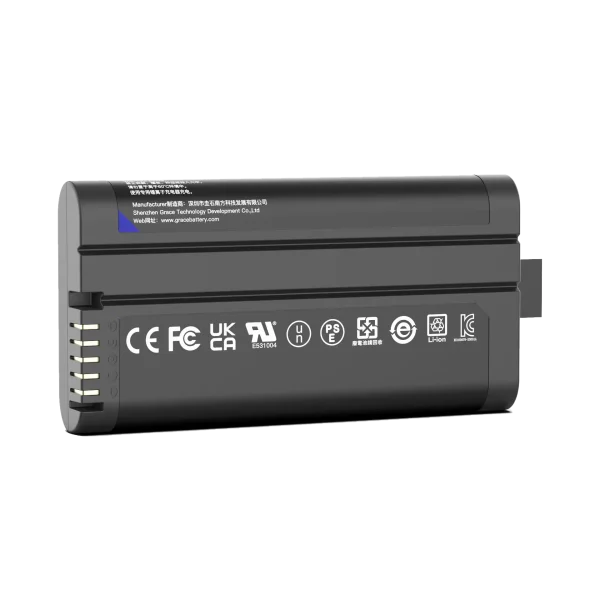
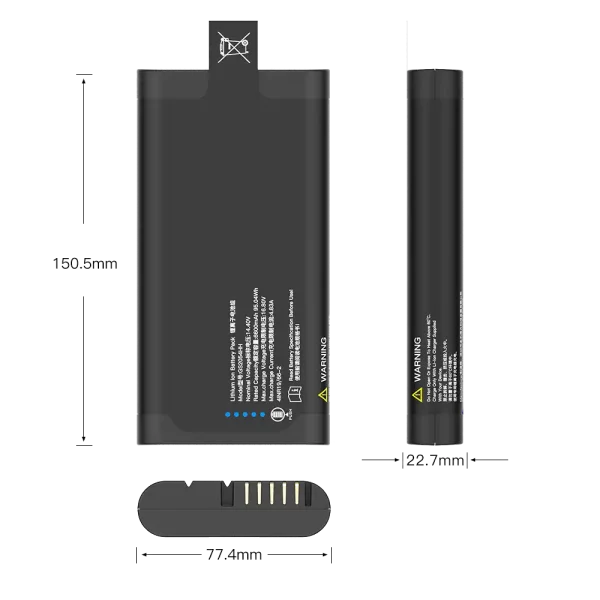
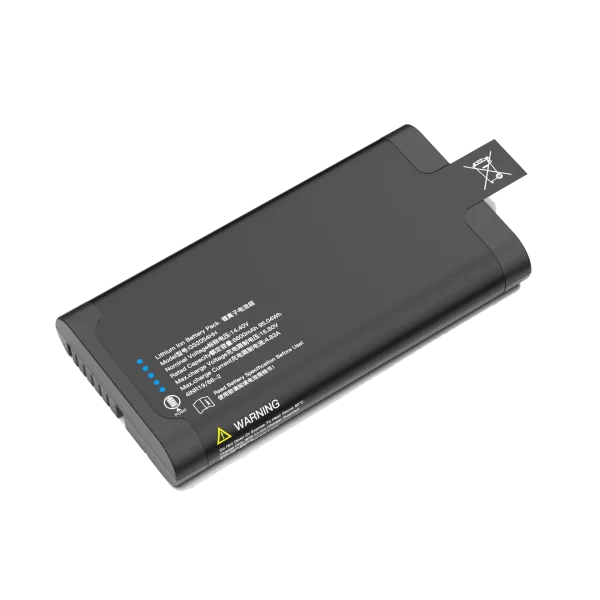
GS2054HH
14.4V/6900mAh/95.04Wh
Verification: Testing the Pack as a Medical Subsystem
A battery pack for an ECG device is verified the way a medical subsystem is verified, not the way a consumer battery is tested. Our verification program has four layers.
First, electrical performance. We measure output voltage stability and ripple under realistic load profiles — the pulsed loads of a wireless transmitter, the steady draw of an analog front end — and we confirm the pack’s noise contribution against the target budget agreed with the device team. Where possible, we test the pack together with the customer’s front end so that baseline noise is measured end to end.
Second, safety and abuse testing. Packs are subjected to overcharge, short-circuit, thermal, crush, and drop tests in line with IEC 62133-2:2017[5] and the customer’s risk analysis. We document pass criteria, measured results, and protective behavior before a design is released.
Third, life and environmental testing. We run cycle-aging and calendar-aging tests to confirm capacity retention, and we characterize performance across the operating temperature and humidity range of the device.
Fourth, consistency. We track impedance, capacity, and internal resistance across production lots and feed the data back into cell qualification, so that the pack delivered in volume matches the pack validated in development. Every released design ships with a verification report our customers can use in device-level testing and submissions.
Conclusion: Partner with an Experienced Battery Engineering Team
Low-noise, compact battery power for ECG devices is engineered, not assumed. It begins with understanding that the pack is part of the signal chain, continues with careful cell selection and intelligent battery management, and ends with verification that leaves nothing to chance.
TEFOO designs and manufactures custom lithium battery packs for medical device OEMs. Our core capabilities — intelligent BMS design, SMBus communication, and OEM/ODM customization — map directly to the requirements of ECG devices: clean output, accurate state reporting, and a form factor built around your product. Our packs are developed under an ISO 13485 quality management system[6], and we provide the documentation and engineering support that medical device teams need for regulatory submission and production.
If you are developing an ECG patch, recorder, or monitor and need a battery partner that treats noise as seriously as you do, contact our engineering team to discuss your requirements.
References
- IEC 60601-2-25:2011, Medical electrical equipment — Part 2-25: Particular requirements for the basic safety and essential performance of electrocardiographs. International Electrotechnical Commission. https://webstore.iec.ch/en/publication/2636
- ANSI/AAMI EC11:1991 (R2007), Diagnostic electrocardiographic devices. Association for the Advancement of Medical Instrumentation. https://webstore.ansi.org/standards/aami/ansiaamiec111991r2007
- IEC 60601-2-47:2012, Medical electrical equipment — Part 2-47: Particular requirements for the basic safety and essential performance of ambulatory electrocardiographic systems. International Electrotechnical Commission. https://webstore.iec.ch/en/publication/2666
- IEC 60601-1:2005+A1:2012, Medical electrical equipment — Part 1: General requirements for basic safety and essential performance. International Electrotechnical Commission. https://webstore.iec.ch/publication/2612
- IEC 62133-2:2017+AMD1:2021, Secondary cells and batteries containing alkaline or other non-acid electrolytes — Safety requirements for portable sealed secondary cells, and for batteries made from them, for use in portable applications — Part 2: Lithium systems. International Electrotechnical Commission. https://webstore.iec.ch/en/publication/70017
- ISO 13485:2016, Medical devices — Quality management systems — Requirements for regulatory purposes. International Organization for Standardization. https://www.iso.org/standard/59752.html
- U.S. Food and Drug Administration, Guidance for Industry: Diagnostic ECG Guidance (Including Non-Alarming ST Segment Measurement). https://www.hhs.gov/guidance/sites/default/files/hhs-guidance-documents/FDA/Guidance-for-Industry–Diagnostic-ECG-Guidance-(Including-Non-Alarming-ST-Segment-Measurement)-(PDF-Version).PDF
- Analog Devices, CN0308 Circuit Note — Portable ECG System Reference Design (Circuits from the Lab). https://www.analog.com/en/resources/reference-designs/circuits-from-the-lab/cn0308.html
- Advanced Bioelectrical Signal Processing Methods: Past, Present and Future Approach — Part I: Cardiac Signals. PMC. https://pmc.ncbi.nlm.nih.gov/articles/PMC8346990/
- Cardiovascular Physiology — The Electrocardiogram. https://humsc.net/download/1425/scientific-team/13749/cardiovascular-physiology-ecg.pdf
- United Nations, Manual of Tests and Criteria, Sub-Section 38.3 — Lithium battery transport testing. https://unece.org/sites/default/files/2025-06/UN-SCETDG-66-INF56e.pdf