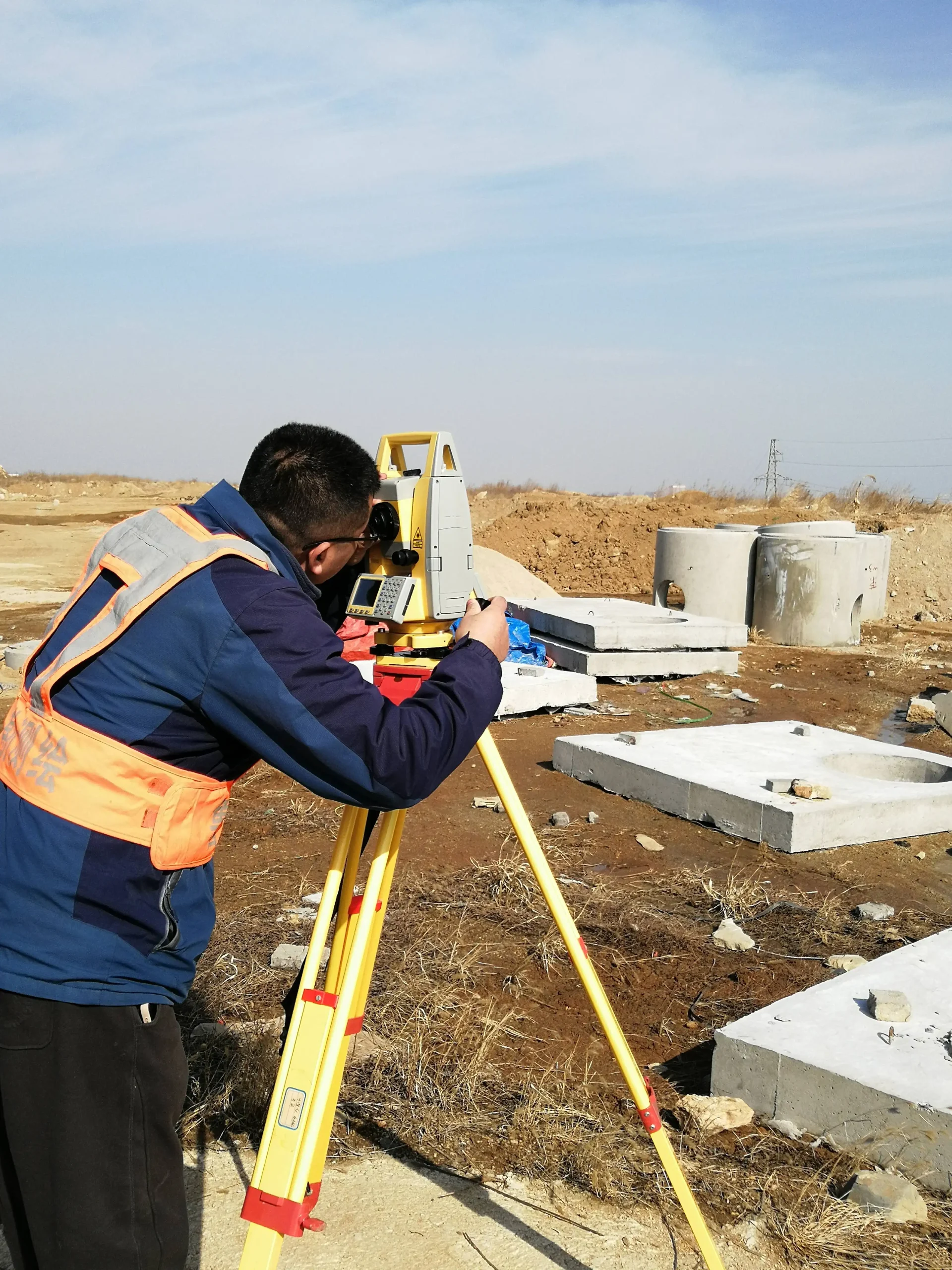
Replacement Battery Pack for Surveying Equipment / Spare Battery for Electronic Surveying Instruments: An Engineering Guide
1. Introduction
Every field surveyor knows the feeling: a total station locked up at a remote control point, a GNSS rover dropping satellites because the pack voltage sagged, or a 3D scanner cutting off mid-scan on a tight construction deadline. In the surveying and geomatics industry, a battery is not a consumable accessory—it is part of the measurement chain. A power failure does not merely stop work; it creates data gaps, forces re-occupation of points, and can invalidate control networks that took days to establish.
As a lithium-ion pack engineer who has spent more than a decade designing smart battery systems for field instrumentation, I am regularly asked the same questions by surveyors, equipment fleet managers, and OEM procurement teams: Can I buy a cheaper third-party replacement? Is higher mAh always better? What temperature range is realistic on a winter job? Which certifications actually matter? This guide answers those questions from an engineering perspective, so you can specify a spare or replacement battery pack for electronic surveying instruments with confidence rather than guesswork.
2. Why Surveying Instrument Packs Are Different from Consumer Batteries
A power bank for a phone operates in a pocket, at room temperature, and at a near-constant low current. A surveying instrument pack operates in a fundamentally different environment, and the pack design must reflect that.
- Wide thermal envelope. Field-rated packs are expected to discharge from roughly -20 °C to +60 °C, while charging is typically restricted to 0–45 °C (and even lower at reduced current for NMC cells below -10 °C per IEC 62133-2 guidance).
- Mechanical abuse. Instruments are set on tripods, carried over rough terrain, dropped from shoulder height, and exposed to dust and rain. The pack enclosure, cell compression, and connector retention must survive this.
- Servo inrush on motorized total stations. A motorized total station can draw roughly 3× its nominal current for 200–300 ms during servo start-up or angle correction. A generic BMS that trips at a fixed over-current threshold will nuisance-trip mid-measurement.
- Low self-discharge and long storage. Surveyors often store instruments for weeks between projects. A good Li-ion pack should lose less than 3–5% per month, not 15% like a legacy NiMH pack.
- Form-factor and connector lockout. The pack must physically fit the OEM cradle, match the connector pinout, and respect the instrument’s undervoltage lockout point. Two packs of identical dimensions are not automatically interchangeable.
3. Core Electrical Specifications You Must Match
When evaluating a replacement pack, do not start with price. Start with the electrical window the instrument expects. The following parameters should be read directly from the instrument service manual or OEM battery datasheet, not from a reseller listing.
3.1 Nominal Voltage and Acceptable Voltage Window
Most modern surveying packs use NMC lithium-ion chemistry built from 2-series, 3-series, or 4-series cell configurations. Common nominal voltages are 7.2 V (2S), 11.1 V (3S), and 14.4 V (4S). What matters as much as the nominal value is the full operating window: a 14.4 V pack may be locked out by the instrument at 11.0 V, meaning you cannot simply drop in a 3S (11.1 V nominal, ~12.6 V fully charged) pack and expect the instrument to boot.
3.2 Capacity Is Not the Whole Story
Capacity is quoted in mAh, and typical surveying packs range from 2,200 mAh (compact BDC46-style packs) to 5,200–6,700 mAh (larger BDC70 / GEB242-style packs). A higher-mAh pack can extend runtime, but only if the voltage window, discharge curve, and end-of-discharge cutoff match. If the instrument shuts down at a voltage that leaves 20% of the higher-mAh pack unused, the extra capacity is wasted.
3.3 Continuous vs. Peak Discharge Current
A datasheet that says only “about 5 A” is not useful. Ask for two numbers: the continuous discharge current the instrument draws during normal operation, and the peak/servo inrush current with its duration (for example, “18 W typical, 4 A peak for 300 ms”). The BMS over-current protection must be set above the peak, not above the continuous value.
3.4 Operating vs. Storage Temperature
These are two different numbers and must be specified separately. A pack that discharges from -20 °C to +60 °C may only charge safely from 0 °C to +45 °C. Storage temperature should also be listed; long-term storage above 35 °C accelerates calendar aging even at partial state of charge.
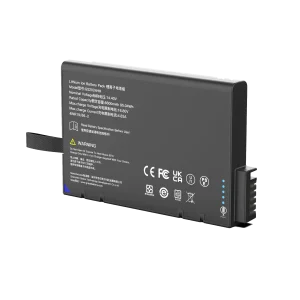
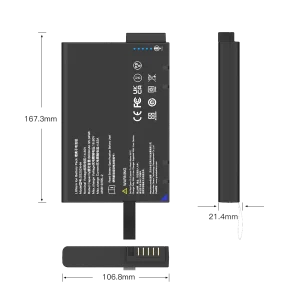
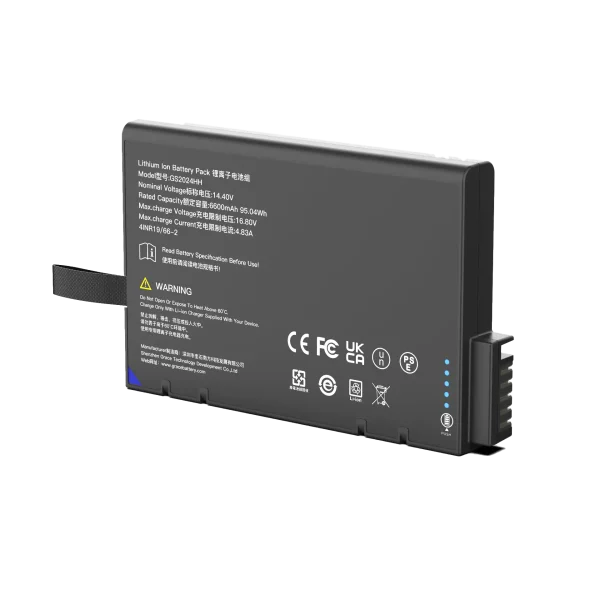
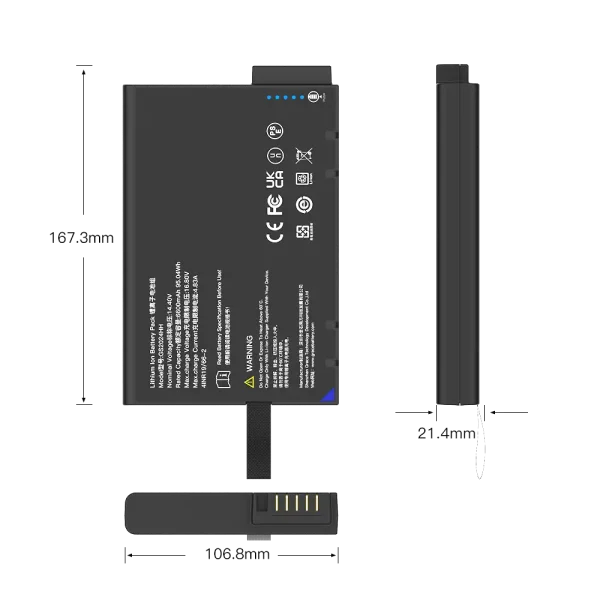
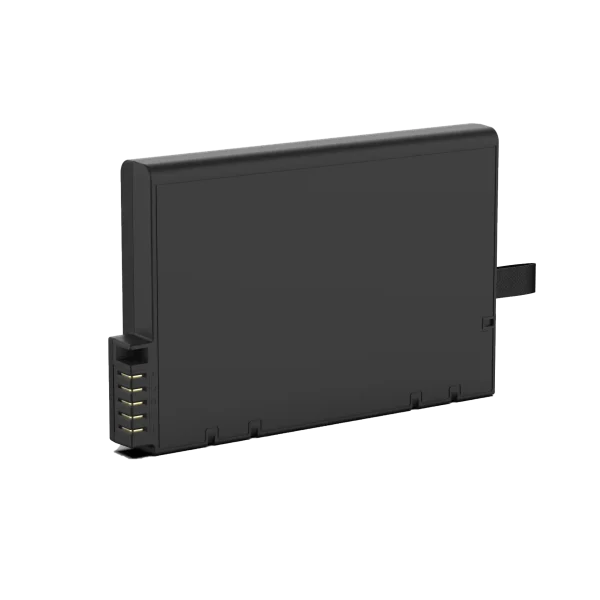
GS2024HH
14.4V/6900mAh/95.04Wh
4. Major Brands and Common Spare Battery Models
The following table summarizes the most common surveying instrument families and their typical rechargeable Li-ion packs. Use it as a starting point to identify the OEM model number your instrument requires—do not assume cross-brand compatibility based on physical size alone.
Table 1. Common surveying instrument battery families (2026 reference)
| Brand | Typical Instruments | OEM / Common Model | Nominal Voltage | Typical Capacity | Chemistry |
| Topcon / Sokkia | Total stations, GNSS receivers | BDC70, BDC46, BDC25 | 7.2 V | 2,200–5,200 mAh | Li-ion |
| Leica Geosystems | TS30/TS50/TS60, TM30, MS60 | GEB241/GEB242, GEB121 | 7.4 V / 6.0 V | 4,200–5,800 mAh | Li-ion |
| Trimble | M3, S-series, R10/R12 GNSS | BC-65, 702722-9030 | 7.4 V (legacy NiMH on older units) | Varies | Li-ion / NiMH |
| GeoMax | Zoom series total stations | ZBA200, ZBA302, ZBA600 | 7.4 V | Varies | Li-ion |
If you are procuring replacement packs for a mixed fleet, inventory each instrument’s OEM model number rather than ordering by brand. Many brands share rebadged platforms, and the model number on the pack label is the only reliable compatibility key.
5. OEM vs. Third-Party Replacement: An Engineer’s Assessment
The question is not “OEM or cheap clone?” It is “what engineering went into this pack?” A genuine OEM pack is engineered to the instrument’s exact power profile, includes the correct fuel-gauge firmware handshake, and is covered by the instrument warranty. A reputable third-party manufacturer can match that performance at a lower price, provided they have done the engineering work.
5.1 OEM Pack Advantages
- Certified compatibility with the instrument’s fuel-gauge and battery authentication.
- Warranty coverage that does not void the instrument warranty.
- Tested against the full instrument power profile, including servo inrush and sleep-mode wake-up.
5.2 Third-Party Pack Advantages
- Significantly lower per-pack cost, which matters for fleets of 10+ instruments.
- Faster lead times and local stocking for replacement and spare packs.
- Option to specify higher capacity, different connector, or custom BMS features for special projects.
5.3 Engineering Red Flags on Cheap Clones
- Generic BMS board that trips on total-station servo inrush.
- Unprotected cells or cells with no traceable manufacturer (no brand, no date code).
- No temperature-based charge derating or charge inhibit below 0 °C.
- Connector pinout that is visually similar but electrically reversed.
- No UN 38.3 test report, no IEC 62133-2 certification, and no CE/UKCA documentation.
In our own product validation work for surveying OEMs, we routinely see packs that look identical to the OEM from the outside but fail the instrument’s wake-up current test or overheat during a two-hour continuous GNSS observation. The savings on the pack are erased by a single re-survey.
6. BMS and Smart Battery Features to Demand
The Battery Management System (BMS) is the difference between a safe, predictable pack and a fire hazard that will nuisance-trip in the field. For surveying instruments, specify the following:
- Primary protection: over-charge, over-discharge, over-current, short-circuit, and over-temperature on both charge and discharge.
- Separate charge and discharge FETs, so that charging is inhibited below 0 °C while discharge continues (at reduced current) in cold weather.
- Inrush ride-through window: the over-current protection must ride through a 200–300 ms servo inrush at 3× nominal current without tripping.
- Cell balancing for series packs, especially on 3S and 4S configurations where cell mismatch shortens runtime.
- Optional smart features: fuel-gauge state-of-charge, SMBus or 1-Wire communication for instrument-side battery readout, and cycle-count logging.
Smart BMS packs with SMBus communication are increasingly expected on modern GNSS receivers and motorized total stations, because the instrument firmware uses the fuel-gauge data to estimate remaining runtime and warn the surveyor. A “dumb” pack may physically fit but will report incorrect or missing battery status on the instrument display.
7. Certification & Safety Standards Checklist
A replacement pack sold into the global surveying market must carry the right certifications. These are not paperwork exercises; they are third-party evidence that the pack has survived the tests required to ship and use it safely.
Table 2. Key lithium-ion battery standards for surveying packs
| Standard | Scope | Why It Matters |
| IEC 62133-2:2017 | Safety requirements for portable sealed secondary lithium cells and batteries | Entry-level safety certification; covers external short circuit, free fall, over-charging, and high-temperature case stress; recognized under the CB Scheme. |
| UN 38.3 | Transport of lithium batteries by air, sea, and road | Mandatory to legally ship any lithium battery. Includes altitude simulation, thermal cycling, vibration, shock, external short circuit, impact, over-charge, and forced discharge tests. |
| CE / UKCA | EU / UK market access | Demonstrates compliance with the EMC Directive, Battery Directive, and REACH/RoHS requirements. |
| IEC 62619 | Safety of industrial lithium batteries | Required if the pack is classified as an industrial battery rather than a portable consumer pack. |
| ISO 9001 / ISO 14001 | Manufacturer quality and environmental management | Process-level confidence that the pack is built on a controlled line, not hand-assembled in a garage. |
Ask the supplier for the actual test report numbers, not just a copy of the certificate. A legitimate manufacturer will provide UN 38.3 summaries, IEC 62133-2 CB reports, and the cell manufacturer’s datasheet on request.
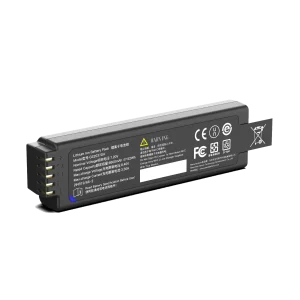
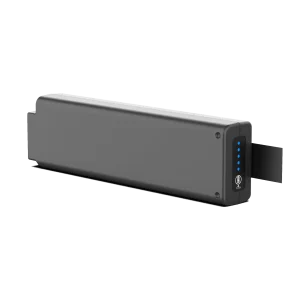
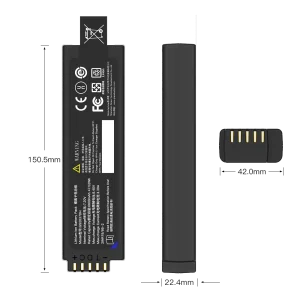
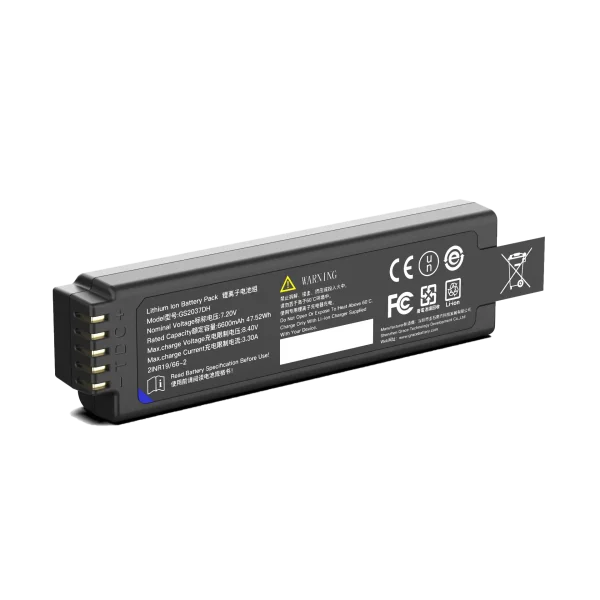
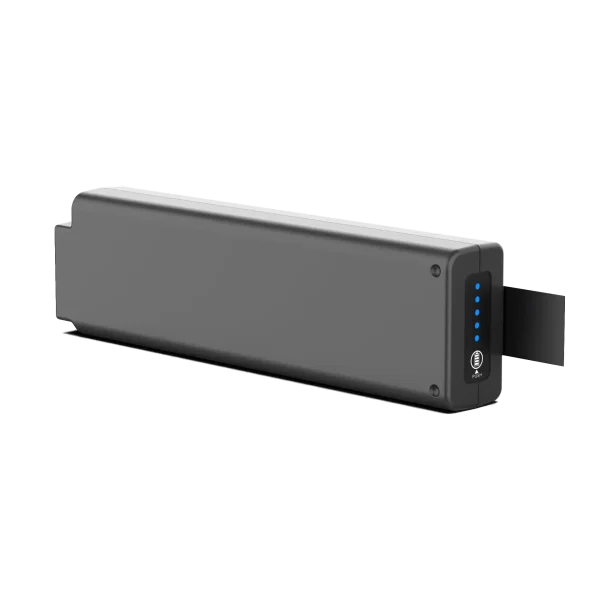
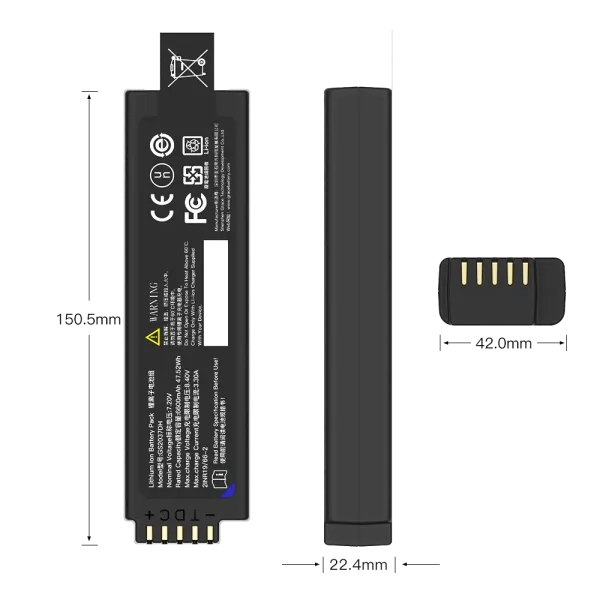
GS2037DH
7.2V/6900mAh/47.52Wh
8. Field Best Practices for Spare Surveying Batteries
- Carry at least two packs per instrument on multi-day jobs, and keep spares warm in cold weather—Li-ion runtime drops sharply below freezing.
- Store packs at 40–60% state of charge, not fully charged, for long shelf life; fully charged storage accelerates calendar aging.
- Rotate packs and mark date codes; retire a pack after roughly 500 full cycles or when measured capacity drops below 80% of nameplate.
- Use only the charger specified for the pack; do not mix chargers across brands, even if the barrel connector fits.
- Inspect connectors and enclosure cracks before each field season; a cracked pack compromises both ingress protection and cell compression.
9. Frequently Asked Questions
Q1: Can I use a higher-mAh battery in my total station?
Yes, provided the nominal voltage, voltage window, connector, and BMS protection match the OEM specification. Higher mAh will extend runtime only if the instrument’s undervoltage lockout point allows the extra capacity to be delivered. Do not assume that two packs of the same physical size are interchangeable.
Q2: How long does a surveying battery last on a full charge?
A typical 5,200 mAh 7.2 V pack (such as the BDC70 class) is rated for up to roughly 12 hours of continuous use on a total station. GNSS receivers and 3D scanners draw different currents, so runtime varies. Expect 30–50% less runtime at temperatures below 0 °C.
Q3: Are third-party replacement batteries safe?
Reputable third-party packs built with name-brand cells, a certified BMS, and valid IEC 62133-2 and UN 38.3 certifications are safe. Cheap clones without those certifications are not. Always request the test reports and verify the cell brand before purchasing.
Q4: What temperature range should I expect?
A field-grade Li-ion pack should discharge reliably from about -20 °C to +60 °C. Charging is restricted to roughly 0–45 °C; charging below 0 °C causes lithium plating and permanent capacity loss.
Q5: How do I know my pack is reaching end of life?
Warning signs are: runtime noticeably shorter than when new, voltage sagging under load, swelling of the enclosure, or the instrument reporting battery errors. Measure actual capacity against the nameplate; if it falls below 80%, retire the pack.
Q6: Can I fly with spare surveying batteries?
Yes, but they must be carried in carry-on luggage, not checked baggage. They must carry UN 38.3 certification, and each pack must be protected against short circuit (original packaging or terminal cover). Airline rules typically limit loose lithium batteries to packs under 100 Wh without airline approval; most surveying packs are well below this threshold.
10. Conclusion
A replacement or spare battery pack for surveying equipment is a power-engineering decision, not a commodity purchase. The pack must match the instrument’s voltage window, survive servo inrush and wide outdoor temperatures, carry the right safety certifications, and be built on a controlled BMS platform. A well-engineered third-party pack can deliver OEM-grade runtime at a lower cost; a poorly engineered clone risks the instrument, the survey, and the surveyor.
At TEFOO, we design and manufacture custom smart Li-ion battery packs—including SMBus and fuel-gauge-enabled solutions—for surveying, medical, and industrial OEMs. Every pack we ship is built with traceable cells, a protection BMS tuned to the customer’s load profile, and full IEC 62133-2, UN 38.3, CE, and UKCA documentation. If your fleet or product line needs a replacement or custom surveying instrument battery, start the conversation with the electrical window, not the price.