A Complete Engineering Guide (2026 Edition)
By Senior Lithium Battery R&D Engineer, TEFOO Battery
1. Introduction
An echo sounder (also called a depth sounder or fish finder) is only as reliable as its power source. Modern marine sonar systems — from compact 5-inch kayaking units to high-end LiveScope and Active Imaging arrays — depend on stable, ripple-free DC voltage to deliver accurate bottom contours, fish targets, and structural readings. A battery that sags under load, drifts in voltage, or fails in cold, wet conditions can turn a day on the water into a costly problem.
As a lithium battery engineer specializing in marine electronics OEM solutions for over 15 years, I have seen firsthand how the right battery pack design transforms echo sounder performance. This guide walks through the engineering requirements of depth sounder batteries, compares lithium and lead-acid chemistries, reviews major device OEM power specifications, and outlines the critical design considerations for custom battery pack development in 2026.
Whether you are a boat builder specifying a factory-installed system, a fishing equipment distributor sourcing private-label packs, or an angler upgrading your on-board power, this article provides the technical foundation for making the right battery decision.
2. Technical Power Requirements of Modern Echo Sounders
2.1 Voltage Range and Compatibility
Virtually all marine echo sounders on the market today are designed for a 12 V DC electrical system. Official specifications from leading OEMs such as Lowrance confirm a supply voltage range of 10.8 V to 17 V DC, which accommodates both a fully charged lithium battery (13.2–13.6 V at rest) and a running engine charging system (up to 14.4 V). This wide tolerance means that both 12 V lead-acid and 12.8 V LiFePO4 packs are electrically compatible out of the box.
Some high-performance sonar bundles (e.g., LiveScope-enabled systems) are also offered with 16 V lithium options, which can boost sonar transducer output and screen brightness. However, 16 V packs must be explicitly rated by the device manufacturer — applying 16 V to a unit specified only for 12 V operation will void the warranty and may damage sensitive electronics.
2.2 Current Draw by Device Class
Power consumption varies dramatically depending on screen size, sonar technology, backlight level, and whether networking accessories are connected. Based on official 2026 product specifications from Lowrance and comparable OEM data, we can categorize echo sounders into three tiers:
Table 1: Typical Power Consumption by Echo Sounder Class (2026)
| Device Class | Screen Size | Typical Current Draw | Peak Current | Representative Models |
| Entry-level Portable | 4–5 inch | 190–650 mA @ 12 V | ~0.8 A | Lowrance Eagle 5, Lucky LH-1B |
| Mid-range Chartplotter/Sonar | 7–9 inch | 1.75–2.5 A @ 13.8 V | ~3.0 A | Lowrance Elite FS, Garmin echoMAP |
| High-end Live Sonar | 9–12 inch | 2.0–2.9 A @ 13.8 V | ~3.5 A | Lowrance HDS Pro, Garmin LiveScope |
Note: Maximum current is measured with full backlight, active sonar, and optional transducers connected. Actual runtime will vary with screen brightness settings, GPS operation, temperature, and battery age.
2.3 Why Voltage Stability Matters for Sonar Performance
This is an often-overlooked engineering point: echo sounders are precision analog-to-digital systems. The sonar module transmits high-frequency acoustic pulses and listens for returning echoes measured in microvolts. Any voltage ripple or sag on the power rail directly degrades signal-to-noise ratio, producing noise on the display and masking weak fish targets.
Lead-acid batteries experience a steadily declining terminal voltage from ~12.7 V (fully charged) down to ~11.8 V (50% discharged). LiFePO4 batteries, by contrast, maintain a nearly flat discharge curve — holding above 13.0 V until approximately 80% depth of discharge. This flat curve means consistent sonar performance from the first hour on the water to the last, with no gradual loss of screen clarity or sonar sensitivity.
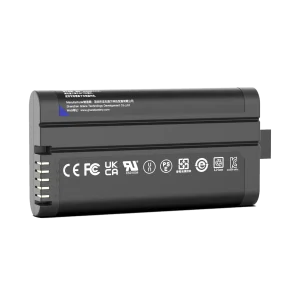
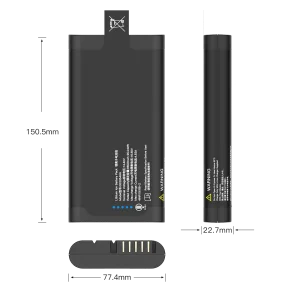
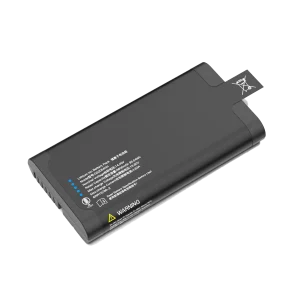
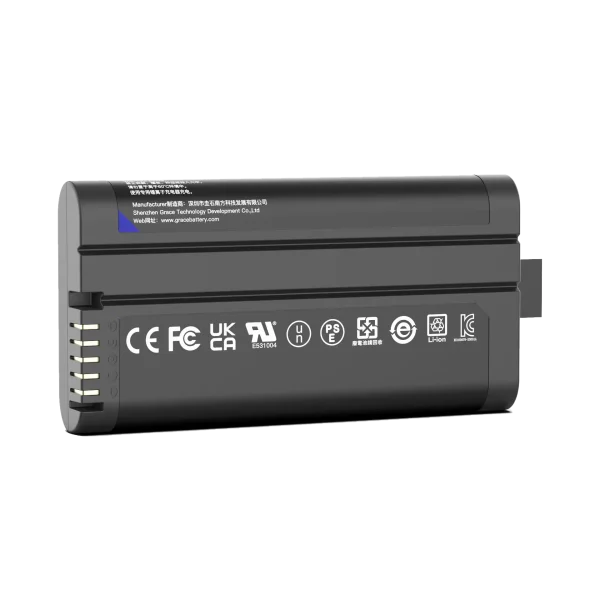
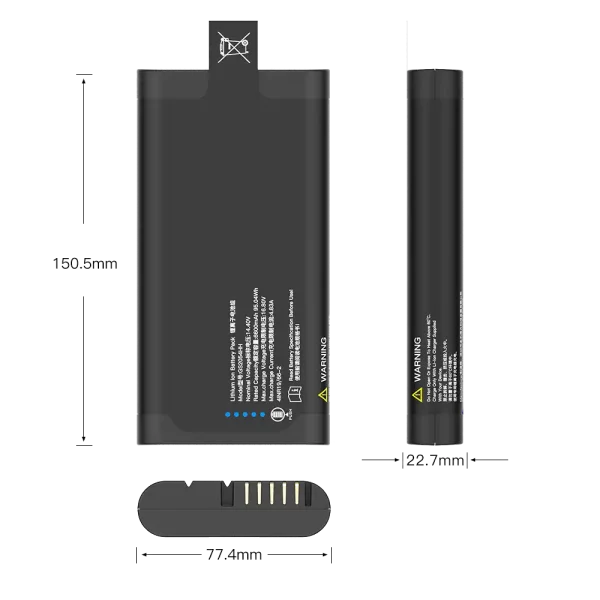
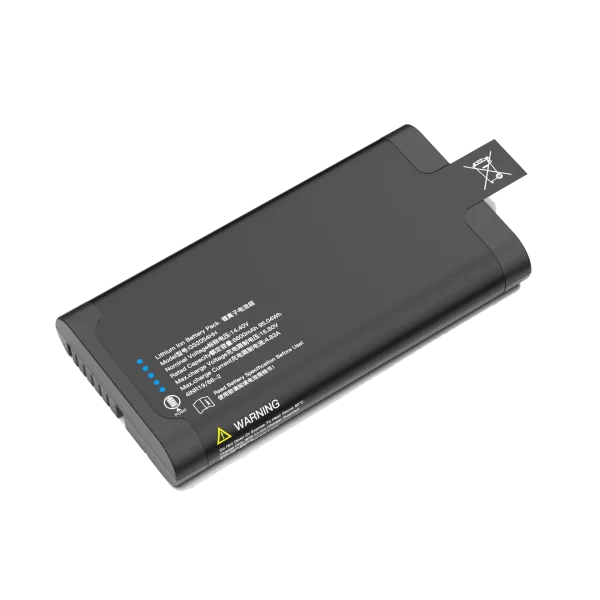
GS2054HH
14.4V/6900mAh/95.04Wh
3. LiFePO4 vs. Lead-Acid (AGM): Chemistry Comparison
For decades, absorbed glass mat (AGM) and flooded lead-acid batteries were the default choice for marine electronics. In 2026, however, lithium iron phosphate (LiFePO4) has become the preferred chemistry for depth sounder battery packs — and for good engineering reasons. The table below compares the two chemistries on the parameters that matter most for marine applications:
Table 2: LiFePO4 vs. AGM Lead-Acid for Echo Sounder Applications
| Parameter | LiFePO4 (Lithium Iron Phosphate) | AGM Lead-Acid |
| Nominal Voltage | 12.8 V (4S) | 12 V (6-cell) |
| Cycle Life (80% DoD) | 4,000 – 15,000 cycles | 300 – 500 cycles |
| Usable Capacity | ~90% (deep-cycle tolerant) | ~50% (limited to prevent damage) |
| Weight (12V 50Ah equiv.) | ~6.5 kg (14.3 lbs) | ~18 kg (40 lbs) — 65% heavier |
| Discharge Curve | Flat: ≥13.0 V until 80% DoD | Sloped: drops steadily from 12.7 V |
| Self-Discharge Rate | ~2–3% per month | ~3–5% per month (plus sulfation risk) |
| Deep Discharge Tolerance | Excellent — no damage from full drain | Poor — one full drain can halve lifespan |
| Maintenance | Zero maintenance | Periodic equalization, terminal cleaning |
| Expected Service Life | 10–15 years | 3–5 years |
| Vibration Resistance | Excellent (sealed prismatic cells) | Good (but plates can shed over time) |
3.1 Total Cost of Ownership
Although the upfront purchase price of a LiFePO4 pack is typically 2–3 times that of an equivalent AGM battery, the total cost of ownership over a 5-year period strongly favors lithium. Consider: a 50 Ah AGM battery will likely need replacement every 2–3 years under regular deep-cycling, while a well-designed LiFePO4 pack with a quality BMS will deliver 8–10 years of service. Factor in the 60–70% weight savings (critical for kayak and small-boat applications) and zero maintenance, and the economic case is clear.
For OEM customers specifying battery packs at scale, the durability advantage is even more significant — fewer warranty claims, longer product lifespan, and a stronger value proposition for the end user.
4. Major Device OEM Battery Demand Comparison
Understanding the specific power requirements of popular echo sounder models helps OEM battery designers size packs correctly. Below is a comparison of three leading marine electronics brands and their typical battery capacity recommendations:
Table 3: Battery Recommendations by Major Echo Sounder OEM (2026)
| OEM Brand | Popular Series | Voltage Spec | Recommended LiFePO4 Pack | Typical Runtime |
| Lowrance | Eagle / Elite FS / HDS Pro | 10.8–17 V DC | 12V 20–50 Ah | 12–48 hours |
| Garmin | Striker / echoMAP / LiveScope | 10–18 V DC | 12V 20–100 Ah | 10–40 hours |
| Humminbird | Helix / Solix / Apex | 10.5–20 V DC | 12V 15–50 Ah | 15–50 hours |
4.1 Capacity Sizing by Use Case
There is no one-size-fits-all battery capacity. The correct pack size depends entirely on how and where the echo sounder is used:
- Kayak fishing / portable ice fishing: 12 V 8–20 Ah LiFePO4. Compact, lightweight, and easily transported. A 20 Ah pack will power a typical 5–7 inch display for 24+ hours between charges.
- Small boat / inland lake fishing: 12 V 20–50 Ah LiFePO4. Enough capacity for full-day trips with additional accessories (GPS, lighting, phone charging) without draining the bank.
- Offshore / multi-day expedition: 12 V 50–100 Ah+ LiFePO4. Required for high-end LiveScope systems with multiple displays, networking modules, and extended runtime away from shore power.
As a design rule of thumb: size the battery so that your typical fishing day uses no more than 50–60% of the rated capacity. This leaves headroom for unexpected conditions and maximizes cycle life — especially important for LiFePO4 packs, which last longest when cycled between 20% and 80% state of charge.
5. Critical Design Considerations for OEM Depth Sounder Battery Packs
5.1 Battery Management System (BMS) Architecture
The BMS is the “brain” of any lithium battery pack, and for marine echo sounder applications it must be engineered with specific features:
- Overcharge and over-discharge protection with accurate voltage thresholds (3.65 V / 2.5 V per cell for LiFePO4).
- Over-current and short-circuit protection to handle inrush current when the sonar transducer activates.
- Cell balancing (passive or active) to ensure uniform capacity across the series string over thousands of cycles.
- Temperature monitoring with charging cutoff at low temperatures (< 0°C) to prevent lithium plating.
- State-of-Charge (SOC) accuracy within ±3% — critical for end-users who need reliable remaining-runtime estimates.
At TEFOO, we design our marine-grade BMS boards with industry-leading component selection and conformal coating to withstand the humid, vibration-prone environment of a boat hull. For smart-battery applications, we also support SMBus and I2C communication protocols that allow the host device to read pack telemetry in real time.
5.2 Waterproofing and Enclosure Design
Marine electronics are exposed to spray, humidity, and occasional submersion. A depth sounder battery pack should meet at minimum IP65 (dust-tight, water-jet protected), with IP67 (temporary immersion) recommended for transom-mounted or trolling motor-companion installations. The enclosure material must be UV-stabilized and corrosion-resistant — typically ABS or polycarbonate with gasketed connectors.
5.3 Cold-Weather Performance
LiFePO4 chemistry has a well-known limitation: charging below 0°C can cause permanent cell damage. For anglers fishing in cold climates — ice fishing in particular, where ambient temperatures can drop to -20°C or lower — the BMS must implement cold-charging lockout. Discharging at low temperatures is generally safe, though available capacity decreases (roughly 70–80% at -10°C). For extreme cold applications, NMC (lithium-ion) chemistry may be a better choice, with appropriate thermal management design.
5.4 Certification and Compliance
Any battery pack intended for sale in global marine markets must carry the appropriate safety and transportation certifications. For echo sounder battery packs, the essential standards include:
- UN38.3 — United Nations transportation safety certification (mandatory for shipping lithium batteries by air/sea/land).
- IEC 62133 — International safety standard for portable sealed secondary cells.
- UL 2054 / UL 1973 — North American safety standards for household and stationary battery packs.
- CE / UKCA — European and UK market conformity marking.
- IEC 61000-6-1 / 61000-6-3 — Electromagnetic compatibility (EMC) standards, critical to avoid sonar interference.
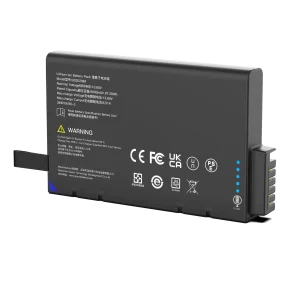
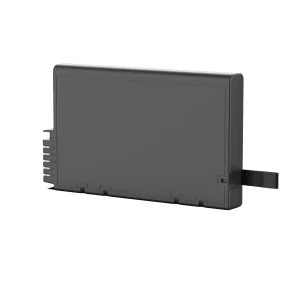
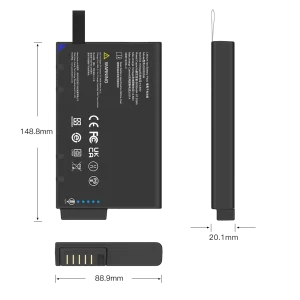
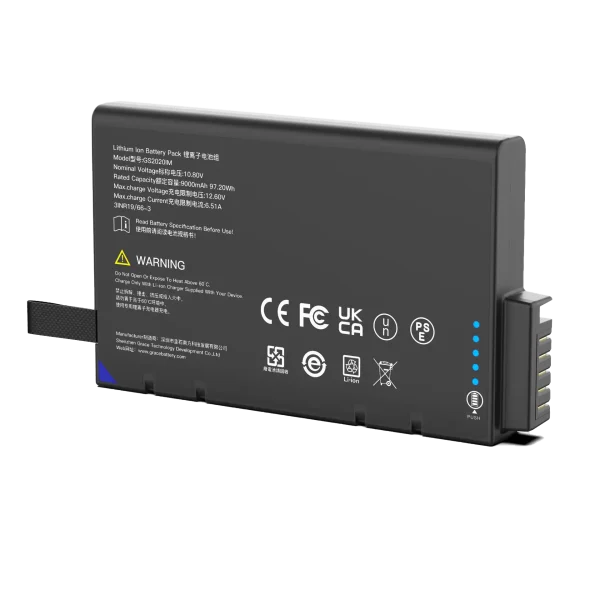
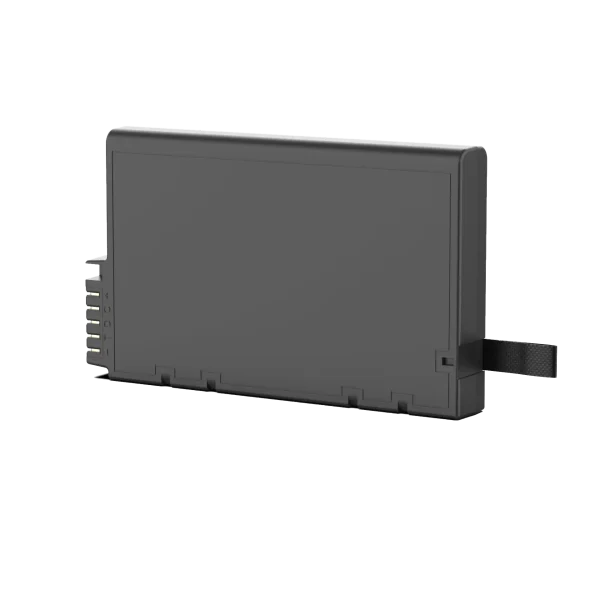
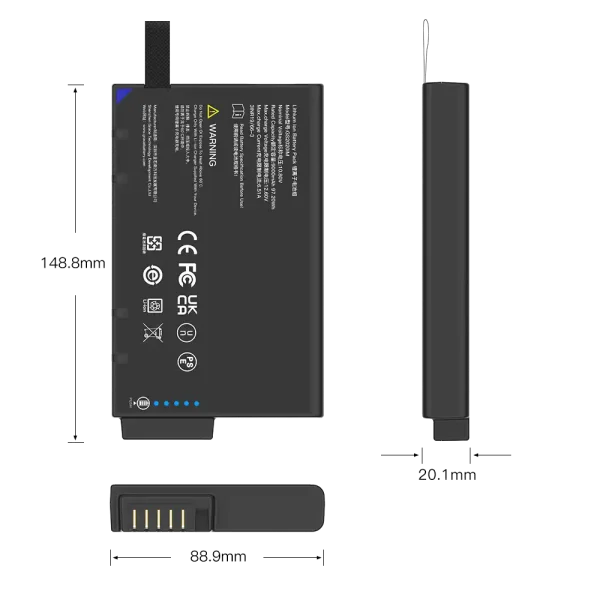
GS2020IM
10.8V/9300mAh/97.2Wh
6. TEFOO Custom Depth Sounder Battery Solutions
At TEFOO (Shenzhen Guishi Nanfang Technology Co., Ltd.), we specialize in designing and manufacturing custom lithium battery packs for marine and industrial electronics OEMs. Our depth sounder battery program combines LiFePO4 cell technology, smart BMS architecture, and marine-grade enclosure design to deliver power solutions that meet the exacting requirements of modern echo sounder systems.
6.1 Key Capabilities
- Custom voltage (12.8 V, 14.8 V, 24 V) and capacity (5 Ah – 100 Ah+) configurations tailored to your device.
- Smart BMS with SOC/SOH reporting, SMBus / RS485 communication options, and low-power sleep mode.
- IP67-rated sealed enclosures with waterproof connectors (Anderson, XT60, or custom OEM connectors).
- Full certification support: UN38.3, IEC 62133, UL, CE, UKCA, and ISO 9001 quality management.
- OEM/ODM service: your branding, your form factor, your performance requirements — engineered and manufactured to spec.
6.2 Why Choose TEFOO
With over a decade of experience in custom lithium battery pack development, TEFOO understands that marine electronics customers demand reliability above all. Our engineering team works directly with OEM clients from the initial concept phase — performing power budget analysis, BMS feature definition, thermal simulation, and mechanical enclosure design — to deliver a production-ready pack that integrates seamlessly with the host device. Whether you need a compact 8 Ah pack for a portable fish finder or a 100 Ah high-current system for an offshore multi-display installation, we have the technical capability and manufacturing scale to bring your product to market.
7. Frequently Asked Questions
Q1: Can I use a regular car battery for my fish finder?
Technically yes, but it is not recommended. A starter-type automotive battery is designed for short, high-current cranking pulses, not for the sustained low-current discharge that a fish finder requires. Repeated deep discharging will quickly destroy a starting battery. Use either a deep-cycle AGM battery or, preferably, a dedicated LiFePO4 deep-cycle battery pack sized for electronics use.
Q2: How long will a 12V 20Ah LiFePO4 battery last on a depth sounder?
As a rough estimate, a typical 7–9 inch echo sounder draws about 1.5–2.0 A at 12 V with moderate backlight. A 20 Ah LiFePO4 pack (with ~90% usable capacity) will deliver approximately 9–12 hours of continuous runtime. Smaller 5-inch displays may run 24+ hours on the same pack, while high-end LiveScope systems may reduce runtime to 6–8 hours. Always calculate based on your specific device’s rated current draw.
Q3: Is a 16V battery safe for my 12V fish finder?
Only if your device manufacturer explicitly states 16 V compatibility. Most 12 V echo sounders have an upper voltage limit of 17 V DC, and a fully charged 16 V LiFePO4 pack (20.8 V for a 5S configuration) will exceed this limit and damage the unit. Some high-performance brands offer 16 V options specifically for compatible LiveScope-enabled transducers — always verify with the device manual.
Q4: Do I need a special charger for LiFePO4 echo sounder batteries?
Yes. LiFePO4 batteries require a charger specifically designed for the 3.65 V per-cell charge voltage (14.6 V for a 12.8 V pack). Using a standard lead-acid charger (which charges to 14.4–14.8 V) may work temporarily but will not fully charge the pack and can damage the cells over time. A dedicated LiFePO4 charger also implements the correct charge termination (constant-current / constant-voltage profile) and may include temperature compensation.
Q5: How does cold weather affect depth sounder battery performance?
LiFePO4 batteries lose usable capacity at low temperatures — typically 70–80% of rated capacity at -10°C. More critically, charging LiFePO4 below 0°C can cause irreversible cell damage, which is why a quality BMS includes low-temperature charge cutoff. For ice fishing or cold-climate applications, store the battery indoors between trips, use an insulated battery box, and choose a pack with a conservative capacity margin to compensate for cold-weather capacity loss.
8. Conclusion
Selecting the right echo sounder battery is an engineering decision that directly impacts the performance, reliability, and longevity of marine sonar systems. In 2026, the evidence is clear: LiFePO4 lithium battery packs outperform lead-acid alternatives on nearly every metric that matters — voltage stability, cycle life, weight, usable capacity, and maintenance-free operation.
For OEM manufacturers, the opportunity is even greater. A custom-designed lithium battery pack with a smart BMS, marine-grade waterproof enclosure, and full certification support can differentiate your product in a competitive market, reduce warranty costs, and deliver a superior user experience. At TEFOO, we partner with marine electronics brands around the world to develop exactly these kinds of power solutions — engineered to spec, certified for global markets, and built to last.
If you are developing a new echo sounder, fish finder, or marine electronics product line and need a reliable custom battery pack partner, our engineering team is ready to discuss your requirements. Contact TEFOO today to learn how our custom lithium battery solutions can power your next product.