1. Introduction
A hospital’s surgical tool fleet is one of the most mission-critical mobile assets in any operating room: powered orthopedic drills and saws, high-speed cranial burr drivers, endoscopic camera controls, wireless light sources, surgical navigation probes, and portable C-arm batteries all share one dependency—a reliable, certified battery pack. When a pack fails mid-case, the result is not an inconvenience: it is a delayed procedure, a room turnover penalty, and a documented clinical risk event. Yet as OEMs discontinue packs, raise list prices, or lock diagnostics behind proprietary chargers, clinical engineering (CE) teams are increasingly forced to source a replacement battery supplier for hospital surgical tool fleets outside the original equipment channel.
This guide is written from the perspective of a senior lithium-battery R&D engineer who has designed packs for surgical and diagnostic OEMs. It explains what a hospital’s biomed team should actually specify, which compliance documents are non-negotiable in 2026, how the three common supplier models compare on total cost of ownership, and a 12-point technical evaluation framework you can hand directly to procurement. The goal is not to sell you a pack—it is to help you write a specification that survives an FDA inspection, an EU MDR audit, and a five-year fleet service window.
2. Why Surgical Tool Fleets Need a Dedicated Replacement Battery Supplier
Unlike a consumer cordless drill, a surgical power tool is a Class II (or higher) medical device. Its battery is therefore not a consumable—it is a regulated accessory that interacts with the device’s thermal, mechanical, and electrical safety systems. A hospital fleet typically spans 40–200 wireless instruments from three to six different OEMs, each with its own form factor, SMBus communication protocol, and fuel-gauge IC. Sourcing replacements one-off through distributors, or worse through e-commerce marketplaces, creates three structural problems:
- Obsolescence risk. Orthopedic power tools often enjoy 10–15 years of field service, while OEM packs are typically EOL’d within 5–7 years. A hospital that has not qualified a secondary source can face a room outage the moment the OEM’s last buy is exhausted.
- Total-cost drift. OEM packs routinely sell for $450—$950 per unit. Across a 120-pack fleet refreshed every 18—24 months, a 40% price reduction from a qualified alternate supplier compounds to a mid-five-figure annual saving, without touching clinical safety.
- Procurement fragmentation. Without a single supplier that can consolidate Stryker-, Medtronic-, Conmed-, Zimmer- and B. Braun-compatible packs under one quality agreement, the biomed team is forced to manage five different COAs, five different UN 38.3 summaries, and five different complaint-handling chains.
A dedicated replacement battery supplier for hospital surgical tool fleets solves this by acting as a secondary source: it reverse-engineers or design-copies the OEM pack, revalidates it against the same medical-grade safety standards, and holds inventory so the hospital’s safety stock is predictable.
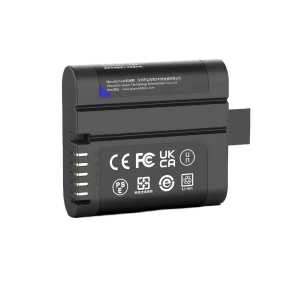
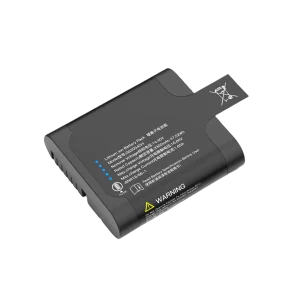
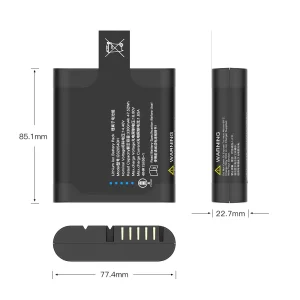
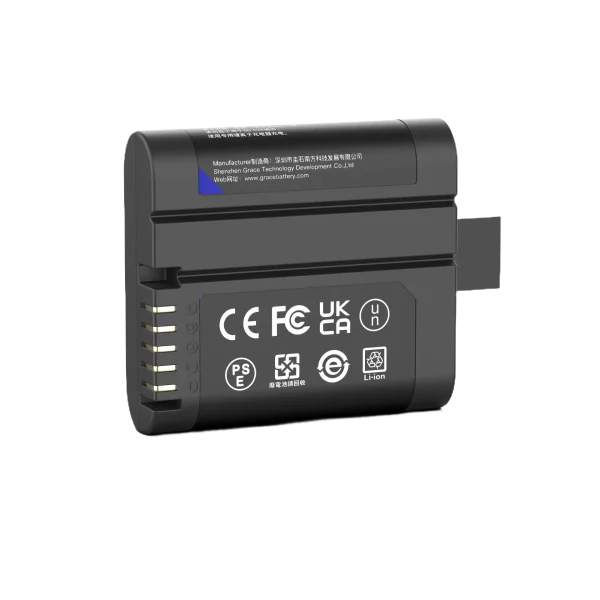
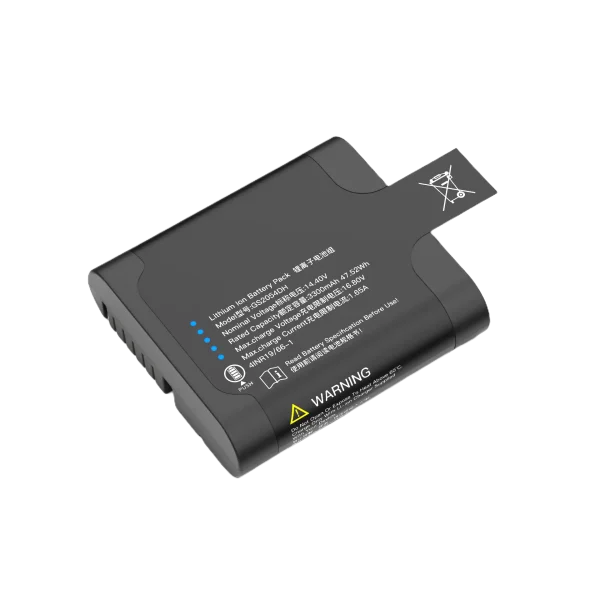
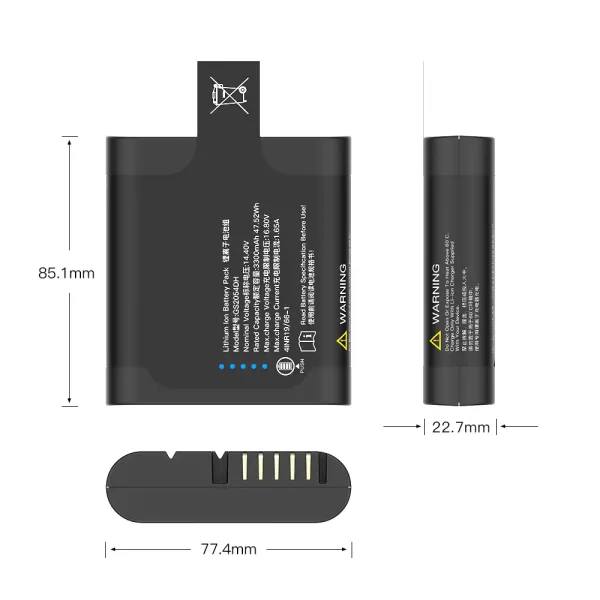
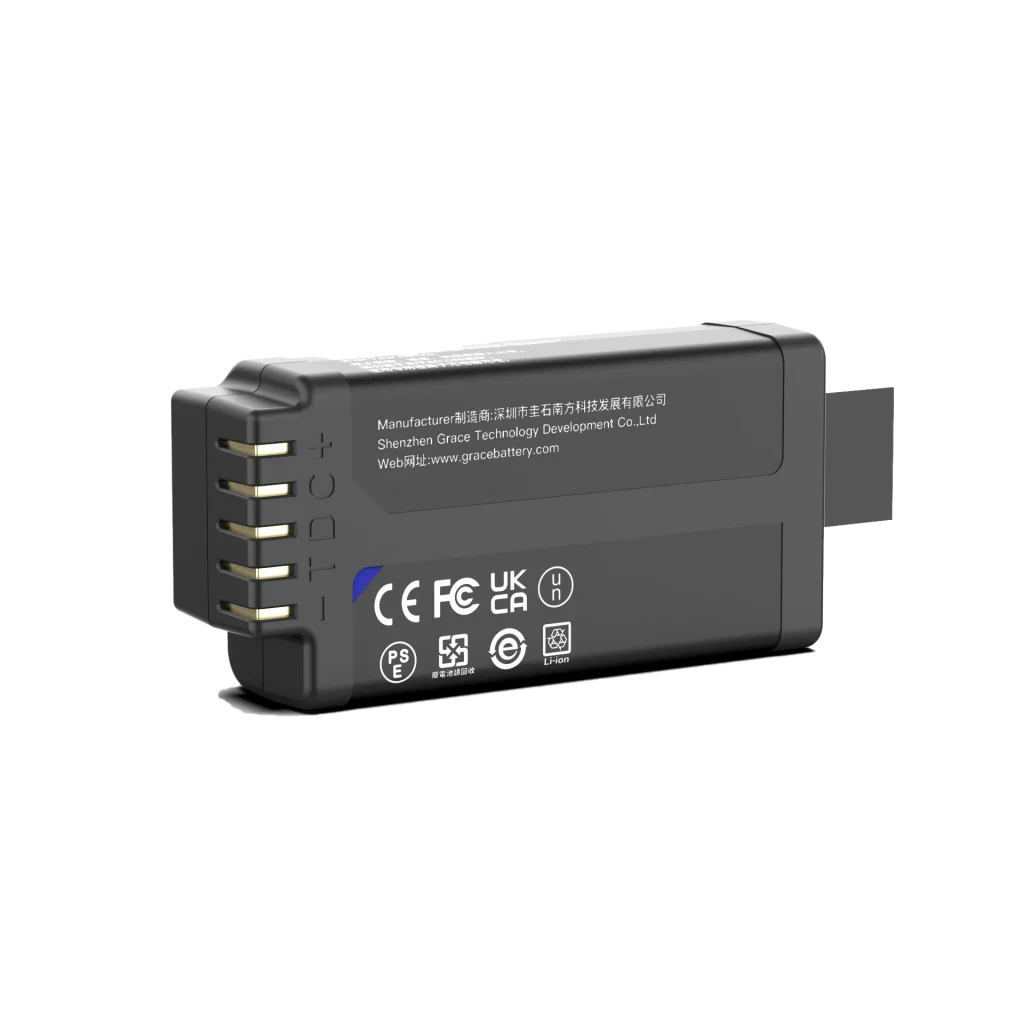
GS2054DH
14.4V/3450mAh/47.52Wh
3. Non-Negotiable Compliance and Safety Standards in 2026
Before comparing suppliers, the biomed specification should name the following standards explicitly. A supplier that cannot produce the actual test reports—not marketing brochures—should be removed from the shortlist. The exact set depends on where the hospital operates, but the core list below covers the US, EU, UK, and most APAC procurement contracts.
| Standard / Regulation | Scope for Surgical Tool Batteries | What to Audit |
| IEC 62133-2:2017+A1:2021 | Safety of sealed secondary lithium cells for portable use; the baseline cell-level safety standard required by most medical device notified bodies. | Full test report on the exact cell model and chemistry (NMC vs. LFP), not a family claim. |
| UN 38.3 (Rev. 9) | Transport safety of lithium cells and batteries (T1–T8). Mandatory for air, sea and ground shipment. | Test summary signed by the test house, matching the exact pack configuration and watt-hour rating. |
| IEC 60601-1 + IEC 60601-1-2 | General safety and EMC of medical electrical equipment; the battery is part of the applied-part / internal-power safety chain. | Gap analysis or integration test report showing the pack meets the device’s MOOP/MOPS requirements. |
| ISO 13485:2016 | Quality management system for medical device manufacturers. | Validated certificate covering design controls, DHF, CAPA and complaint handling for battery assemblies. |
| ISO 9001:2015 / ISO 14001:2015 | Quality and environmental management. | Useful as a baseline; ISO 13485 is the controlling medical QMS. |
| UL 2054 / UL 2271 | US safety certification for household and light-EV batteries; frequently requested by hospital GPOs even when not legally required. | UL follow-up service (USL) number on the certificate. |
| CE / UKCA marking | EU and UK market access under the applicable New Legislative Framework and the medical-device / battery regime. | DoC, technical file index, and authorized representative contact in the EU/UK. |
| EU Battery Regulation 2023/1542 | New EU-wide regulation binding from February 2027 (with earlier milestones in 2025–2026). Applies to all portable and industrial packs placed on the EU market. | Supplier’s roadmap for carbon footprint declaration, battery passport, and recycled-content claims; ask for the gap analysis now. |
| RoHS 2 / REACH / Proposition 65 | Substance restrictions. | Material declarations (IEC 62474 format) and supplier declarations for cadmium, lead, DEHP and SVHC. |
Table 1. Compliance checklist a hospital biomed team should require before awarding a replacement battery contract.
3.1 The Smart BMS and Communication Stack
Modern surgical tools do not just draw current—they talk to the pack. Stryker System 7, Medtronic Midas Rex, Conmed Hall, and several endoscopic camera bases use SMBus (SMBus 1.1/2.0) or a proprietary I2C layer to read capacity, state-of-health, cell temperatures, and cycle count. A replacement pack that emulates only power-and-ground will physically run the tool but will cause three silent failures: the charger will not authenticate the pack and will refuse fast-charge, the device firmware will throw a “non-genuine accessory” warning and log it, and the hospital’s asset-management software will stop seeing the pack’s state-of-health telemetry. When evaluating a supplier, ask specifically:
- Which fuel-gauge IC (e.g. TI bq series, SBS 1.1-compliant) is used, and has the SMBus address map been reverse-engineered and validated against the original charger?
- Is the state-of-health (SoH) gauge calibrated, and can the pack report remaining runtime in minutes on the device’s UI?
- What protection features are implemented: over-current, short-circuit, cell-undervoltage lockout, NTC-based thermal cut-off, and FET failure redundancy?
A pack without a properly emulated SMBus stack is a liability, not a cost saving. In our own lab we have seen generic packs fail charger authentication at a rate above 30%, which is an unacceptable field-failure budget for an OR.
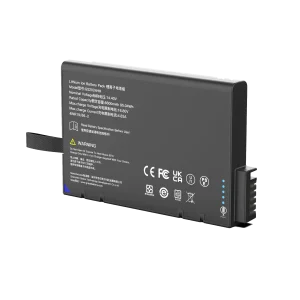
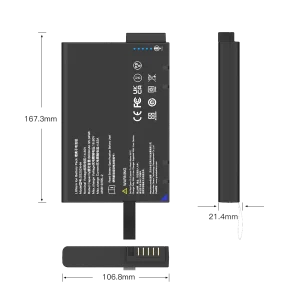
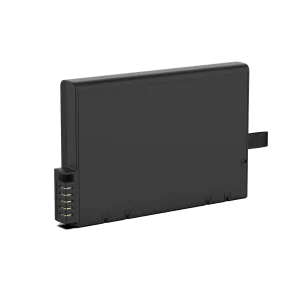
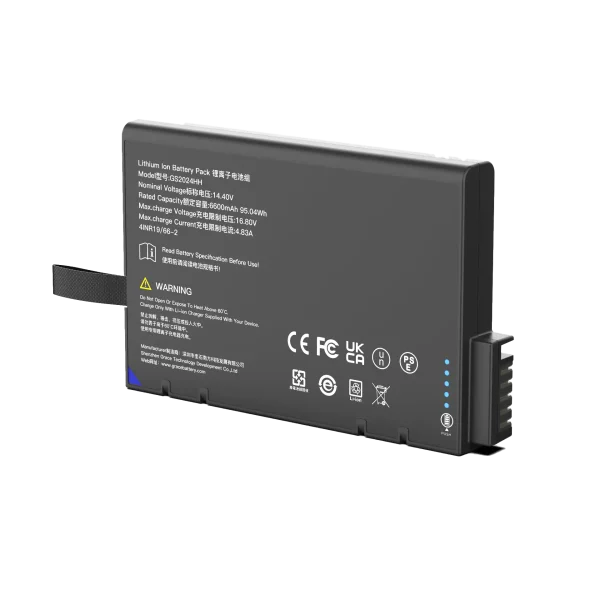
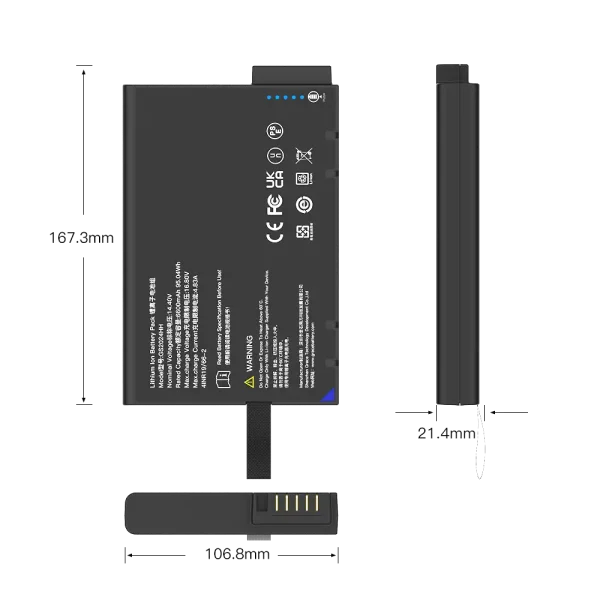
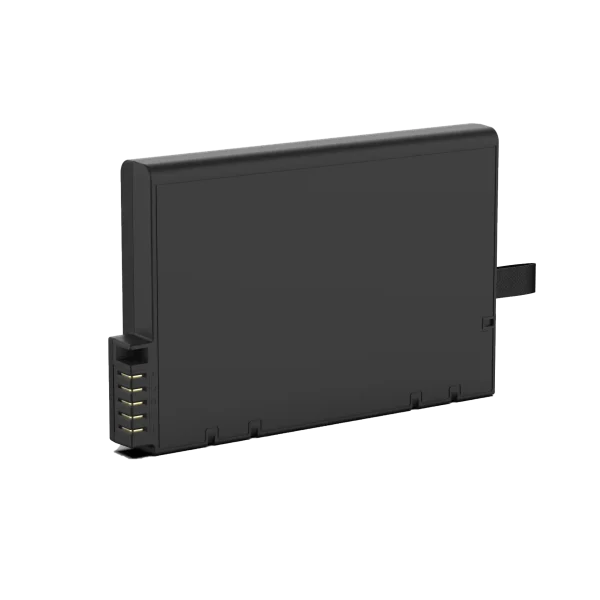
GS2024HH
14.4V/6900mAh/95.04Wh
4. Three Supplier Models Compared
Clinical engineering teams usually end up evaluating three structurally different categories of replacement battery supplier for hospital surgical tool fleets. They are not interchangeable, and the right choice depends on fleet size, risk tolerance, and the hospital’s internal regulatory capacity.
| Dimension | OEM / Original Manufacturer | Generic Aftermarket / E-Commerce | Specialist Custom Battery OEM |
| Unit price (typical) | $450—$950 | $90—$220 | $180—$380 (volume dependent) |
| Lead time | 4—12 weeks; often longer post-EOL | 1—3 days from stock | 2—6 weeks for qualified build; standing safety stock typical |
| Compliance file | Complete; direct from the device manufacturer | Usually partial; UN 38.3 only, often no medical-grade test data | Full file: IEC 62133-2, UN 38.3, ISO 13485 QMS, CE/UKCA, ISO 9001/14001 |
| SMBus / fuel-gauge emulation | Native, fully supported | Rare; often power-only | Engineered to match the original charger and device UI |
| Warranty | 12—18 months | 6—12 months, frequently honoured poorly | 12—24 months, with documented RMA and CAPA process |
| IP & regulatory risk to hospital | None (direct OEM relationship) | High: counterfeit cells, no traceability, recall exposure | Low—medium: depends on supplier’s design-history file |
| Best fit | Very small fleets; devices under active OEM warranty | Disposable / non-clinical tools; never for OR use | Multi-vendor fleets > 40 packs; GPO contracts; 5+ year service window |
Table 2. Side-by-side comparison of the three supplier categories hospitals typically evaluate.
4.1 Why the Middle Option Is a Trap
Price is the obvious attraction of generic aftermarket packs, but it hides three costs that only surface in the first 12 months of deployment. First, cell inconsistency: bulk packs sourced from unidentified 18650 bins typically show 15—25% capacity spread between packs, which means chargers and asset management see unpredictable runtimes. Second, cycle life: without a properly configured BMS, a pack advertised at 500 cycles often delivers 150—250 cycles before dropping below 80% SoH, so the “cheaper” pack is replaced twice as often. Third—and most importantly for a hospital—there is no design-history file to hand the Joint Commission, FDA, or a notified body if a pack overheats. Procurement saving on unit price is wiped out by a single patient-safety event.
5. A 12-Point Technical Evaluation Framework
Use the following checklist when scoring any candidate replacement battery supplier for hospital surgical tool fleets. It is deliberately written so procurement can paste it directly into an RFP; each criterion maps to a document or demo the supplier must produce.
5.1 Regulatory file completeness
Can the supplier produce, within 5 working days, the full set of IEC 62133-2, UN 38.3, IEC 60601-1 gap analysis, ISO 13485 certificate, and EU 2023/1542 compliance roadmap?
5.2 Cell traceability
Are cells purchased directly from branded manufacturers (Samsung SDI, LG Energy Solution, Murata, Panasonic, EVE, CATL) with full cell-level COO and lot traceability? Request a 23-passage traceability diagram.
5.3 BMS & SMBus validation
Can the supplier demonstrate, on video, the pack charging on the original OEM charger and reporting SoC / SoH on the original device UI?
5.4 Cycle-life data
Ask for the supplier’s own cycle-curve at 25°C, 1C/1C, 100% DOD, to 80% capacity retention. Treat any number below 450 cycles as a red flag for OR duty.
5.5 Safety testing
Over-charge, over-discharge, short-circuit, free-fall, thermal abuse (130°C hot-box), and nail-penetration tests—all witnessed or third-party.
5.6 Mechanical & drop performance
Pack must survive the device manufacturer’s drop test (typically 1.0—1.5 m onto concrete) without deformation, venting, or disconnection.
5.7 IP rating
Surgical instruments are reprocessed between cases. Confirm the pack housing withstands the manufacturer’s defined sterilization / wipe-down chemistry (typically ISO 11134 / vaporized H2O2-compatible polymers).
5.8 Cycle and calendar warranty
Minimum 12-month warranty, with an explicit SoH threshold (e.g. >80% at 300 cycles).
5.9 Lot consistency
Ask for capacity and internal-resistance distribution on a sample of 30 packs from one lot. Capacitance spread should be under ±3%.
5.10 Supply continuity
What is the committed buy-commitment horizon? Specialist suppliers should offer 5—7 years of pack availability against the device’s service life.
5.11 Documentation for the hospital QMS
Will the supplier sign an agreement to provide DHF excerpts, risk-management files per ISO 14971, change-control notices (PCNs), and recall support?
5.12 Total landed cost
Include unit price, freight, import duty (where relevant), warranty replacement rate, and expected cycle life. The cheapest unit is rarely the lowest cost per procedure.
6. Frequently Asked Questions
6.1 Q: Can a hospital legally use a third-party replacement battery on a Class II surgical power tool?
A: Yes, provided the hospital’s biomed team has performed a documented risk file (per ISO 14971), qualified the alternate pack through its own change-control process, and retained the supplier’s test reports. The device’s regulatory status is not voided by an equivalent accessory; what voids it is an unqualified, undocumented substitute.
6.2 Q: Does using an aftermarket battery invalidate the OEM device warranty?
A: It can. US FTC rules and EU MDR guidance require the OEM to demonstrate the accessory caused the fault before denying a claim, but the hospital still bears the burden of proof. A specialist supplier that provides full traceability and test data makes this burden manageable; a no-name e-commerce pack does not.
6.3 Q: What is the expected service life of a replacement surgical-tool battery in active OR use?
A: With a properly configured BMS and 1C/1C cycling, expect 450—600 cycles to 80% capacity retention, which translates to roughly 18—24 months in a two-shift hospital fleet. Packs below 300 cycles should be challenged on their BMS configuration and cell grade.
6.4 Q: How does EU Battery Regulation 2023/1542 affect hospital procurement in 2026–2027?
A: From February 2027 all portable industrial batteries placed on the EU market must carry a declared carbon footprint, a performance and durability specification, and (in a later phase) a battery passport. Hospitals sourcing packs from outside the EU should confirm their supplier already has a declaration roadmap; packs without one will be unplaceable on EU shelves in 2027.
6.5 Q: Should a hospital buy packs through a GPO or directly from the manufacturer?
A: Both are valid. GPO contracts already bundle quality agreements and can simplify invoicing, but they rarely include engineering support for SMBus emulation or custom form-factor work. Direct engagement with a specialist OEM is preferable for fleets larger than 50 packs or with multi-OEM instruments; GPO arrangements are fine for standard packs where the supplier already holds ISO 13485.
6.6 Q: What is the typical MOQ and lead time for a custom surgical-tool battery pack?
A: For a form-factor-correct replacement pack on an existing tool platform, specialist OEMs typically quote a 50—100 piece first article, followed by 2—6 week lead times at steady state. Engineering samples (with full SMBus bring-up) usually take 4—8 weeks.
7. Conclusion and Next Steps
Choosing the right replacement battery supplier for hospital surgical tool fleets is not a procurement commodity decision—it is a clinical-risk and device-life-cycle decision. The cheapest pack will look right on a spreadsheet for one quarter, but it will surface as a charger that refuses to authenticate, a pack that dies at case 30 instead of case 500, or a missing test file when a notified body asks. The supplier that wins in 2026 is the one that brings ISO 13485-level design controls, a real SMBus emulation lab, a published cycle-life curve, and a credible roadmap to EU Battery Regulation 2023/1542.
Recommended next steps for a biomed director: (1) inventory the fleet and list every pack SKU, its OEM, its current unit cost, and its EOL status; (2) issue a short RFP to three suppliers—the OEM, one specialist medical battery OEM, and one e-commerce alternative—using the 12-point framework above; (3) request engineering samples and run a 60-day side-by-side trial on the two busiest OR instruments, measuring run-time per case, charge-cycle count, and charger authentication rate; and (4) award the contract only after the supplier’s regulatory file has been reviewed by your quality department.
If your team is mapping out a multi-year battery procurement strategy for orthopedic power tools, endoscopic camera bases, or surgical navigation instruments, a 30-minute engineering review with a specialist pack designer is the highest-leverage next step—it will surface SMBus and form-factor risks that an RFP process alone cannot.
About the Author
This article was written by the senior R&D engineering team at TEFOO, a specialist manufacturer of lithium-ion battery packs for medical and industrial devices. The engineering group has designed smart BMS packs with SMBus / I2C communication for powered surgical tools, patient monitors, infusion pumps, and portable diagnostic equipment, and holds ISO 13485, ISO 9001, ISO 14001, UN 38.3, CE, UKCA and UL certifications across its pack lines. The views expressed here are engineering opinions based on in-house qualification data and are not legal or regulatory advice; hospital teams should confirm the final specification with their own quality and regulatory affairs teams.