1. Introduction
Portable medical devices—from patient monitors, infusion pumps and ventilators to defibrillators, surgical power tools and wearable diagnostic patches—depend on their battery packs as much as on their firmware. A battery failure in a consumer electronics product is an inconvenience; the same failure in a Class II or Class III medical device can compromise patient safety, trigger a field corrective action, or invalidate a regulatory submission. This is why medical device OEMs and their contract manufacturers increasingly specify a medical grade lithium battery that carries two of the most recognized portable-battery safety certifications in the world: IEC 62133 and UL 2054.
The global medical device battery market was valued at approximately USD 2.1–2.3 billion in 2025 and is projected to grow at a compound annual growth rate (CAGR) of roughly 6–8.5% through 2030–2032, driven by aging populations, the shift from tethered to wearable and bedside-rotating devices, and the electrification of surgical tools. Against this backdrop, selecting a battery pack that is both IEC 62133 certified and UL 2054 certified is no longer a marketing claim—it is a regulatory and supply-chain decision.
This article is written from the perspective of a lithium-ion R&D engineer who has designed and certified packs for patient-worn and hospital-carried medical equipment. It explains what each standard actually covers, where they overlap and diverge, what a dual-certified medical battery pack must contain at the board and cell level, and the questions every regulatory or procurement engineer should ask a supplier before signing a drawing.
2. What Defines a “Medical Grade” Lithium Battery
The term “medical grade” is not, by itself, a certification. It describes a battery engineering and manufacturing package that exceeds the requirements of a commercial or consumer-grade Li-ion pack in five dimensions:
2.1 Reliability and cycle life
Medical packs must survive 500–1,000+ full charge–discharge cycles at 80% state-of-health (SOH) under hospital duty cycles, and typically maintain 80% capacity after five years on the shelf or in service, compared with 300–500 cycles for a typical consumer power bank. This forces the use of high-quality prismatic or pouch cells with controlled impedance, and a conservative charge cutoff (often 4.15 V/cell instead of 4.20 V) to extend calendar life.
2.2 Functional safety of the BMS
A medical pack relies on a dedicated battery management system (BMS) with primary and secondary protection: redundant voltage sensing, dedicated safety FETs, a thermal fuse or Positive Temperature Coefficient (PTC) device, and often a SMBus 3.0 or I2C fuel-gauge IC that reports state-of-charge (SoC), state-of-health (SoH), cell temperature and cycle count directly to the host device. The host can then warn the clinician before the pack degrades, rather than after it drops a treatment.
2.3 Traceability and quality system
Medical packs are manufactured under an ISO 13485 quality management system (often alongside ISO 9001 and ISO 14001), with full lot traceability from cell supplier lot code through final pack serial number. Cell substitutions, PCBA revisions and firmware updates are controlled via change-notice procedures that require re-validation—not just a visual approval.
2.4 Compliance stack
Beyond IEC 62133 and UL 2054, a medical pack must also meet UN 38.3 for transport, comply with the host device’s IEC 60601-1 / 60601-2-x requirements, and, for units placed on the EU market, satisfy the EU Battery Regulation (EU) 2023/1542 for labeling, carbon footprint and due-diligence documentation.
2.5 Application-fit design
Defibrillator packs require high pulse-current delivery (10–30 A peaks) at low temperature; infusion pumps require low self-discharge (<3% per month) over long standby; wearable monitors require low profile, soft-pack construction and biocompatible enclosure materials per ISO 10993. A true medical grade pack is optimized for one duty cycle, not a generic “11.1 V 2,600 mAh” SKU.
3. IEC 62133 Certified: Scope and Test Program
IEC 62133 is the International Electrotechnical Commission standard that defines safety requirements for portable sealed secondary cells and batteries (excluding button cells) containing alkaline or other non-acid electrolytes, under both intended use and reasonably foreseeable misuse. It is the de facto portable-battery safety gate for the EU, UK, Japan, Korea, China and most of Southeast Asia, and is widely accepted as the basis for CB Scheme test reports that can be converted into national certifications such as KC, PSE, BIS and CCC.
3.1 Current editions relevant to lithium systems
Lithium packs are tested against Part 2 of the standard. The current consolidated edition is IEC 62133-2:2017+AMD1:2021 CSV (Edition 1.1), which cancels and replaces the lithium annex of the older IEC 62133:2012. The nickel-based counterpart, IEC 62133-1:2017, was updated to a second edition in March 2026; it does not apply to Li-ion packs but is often referenced in battery-family datasheets.
3.2 Key test items a medical pack must pass
IEC 62133-2 evaluates both cells and the assembled battery pack. The principal abuse tests are summarized below.
Table 1. Principal safety tests under IEC 62133-2:2017+AMD1:2021
| Clause | Test | Level / Condition | Applicable to |
| 7.3.1 | External short circuit | Short-circuit through ≤80 mΩ at 55 °C until surface temperature returns to ambient | Cell & pack |
| 7.3.2 | Free fall | 1.0 m drop onto concrete, three times from different orientations | Cell & pack |
| 7.3.3 | Thermal abuse | Soak at 72 °C for 6 h, then −40 °C thermal shock cycling | Cell |
| 7.3.4 | Crush | Crush between flat surfaces, hydraulic ram force 13 kN ± 1 kN, or until voltage drops by one-third | Cell |
| 7.3.5 | Over-charging (pack) | Charge at 2× manufacturer-recommended current to 2× recommended voltage (or 12 V/cell, whichever is lower) | Pack |
| 7.3.6 | Forced discharge | Discharge at 1 It to 0 V, reverse-charged for 90 min | Cell |
| 7.3.7 | Vibration & mechanical shock | Sinusoidal sweep 10–55 Hz, 30 min per axis; 1500 g / 6 ms half-sine shock, 6 faces | Pack |
| Annex A | Forced internal short circuit | Nickel-foil insertion internal short, temperature and pressure monitored | Cell |
Source: IEC 62133-2:2017+AMD1:2021 CSV, clauses 7.3 and Annex A; IEC Webstore preview.
3.3 Why medical OEMs should require IEC 62133-2
IEC 62133-2 is a system-level standard: it tests the finished pack, including the protection circuit, wiring harness, enclosure and thermal interfaces, not just the cell. For a medical device sold into the EU, UK, Japan, Korea or Australia, an IEC 62133-2 CB report is frequently accepted by notified bodies as evidence that the battery pack satisfies the hazard-analysed requirements of IEC 60601-1 Clause 11 (overheating) and Clause 15 (building and installation of medical electrical equipment). It also shortens transport and customs clearance because UN 38.3 and IEC 62133 share many of the same altitude, thermal and vibration sequences.
4. UL 2054 Certified: Pack-Level Safety for North America
UL 2054, the UL Standard for Safety Household and Commercial Batteries, is the North American counterpart that governs portable primary and secondary battery packs used as power sources in end products. The current Third Edition was published on November 17, 2021, and on December 23, 2024, the U.S. FDA added UL 2054 Third Edition to its Recognized Consensus Standards database for medical devices—meaning FDA reviewers now explicitly accept UL 2054 as a recognized means to satisfy battery-safety expectations in a 510(k) or De Novo submission.
4.1 Where UL 2054 sits in the UL battery family
It is important not to confuse UL 2054 with UL 1642. UL 1642 (Lithium Batteries, Fifth Edition) certifies individual cells at the cell level. UL 2054, by contrast, certifies the assembled battery pack—the cells plus the protection circuit, interconnects, enclosure, connectors and mechanical mounting. A pack can only successfully complete UL 2054 if it is built from cells that are already UL Recognized (UL 1642 / UL 62133-2) or that pass equivalent cell-level testing inside the UL 2054 programme.
4.2 What UL 2054 evaluates
UL 2054 exercises the pack under electrical, mechanical and environmental abuse. Representative tests include:
- Abnormal charging and overcharging at the pack protection-circuit level.
- External short circuit at both 20 °C and elevated temperature, evaluating fuse, PTC and protection-FET response.
- Free fall, impact, vibration and crush of the finished pack.
- Temperature rise during charging and discharging, and limited-power-source evaluation of the output terminals.
- Enclosure stress, moulded-case strain-relief and thermal-bonding integrity.
- Grounding and continuity evaluation for packs that include exposed conductive parts.
4.3 Certification effort and timeline
Based on public certification-programme data, a typical UL 2054 project requires 60–80 sample packs, a budget in the range of USD 4,000–15,000 (depending on pack configuration and number of cells), and an 8–12 week programme including factory inspection and follow-up service. The resulting cULus mark allows the pack to be listed on UL’s Online Certifications Directory and accepted by OSHA-recognized Nationally Recognized Testing Laboratories (NRTLs) for the Canadian and U.S. markets.
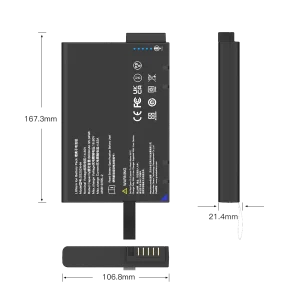
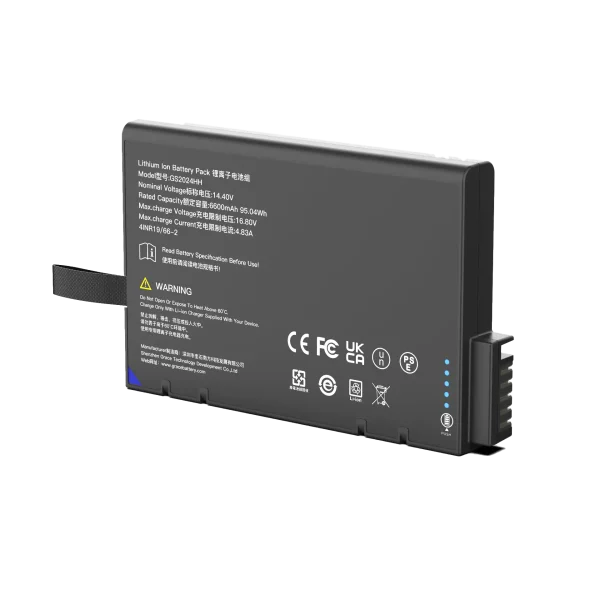
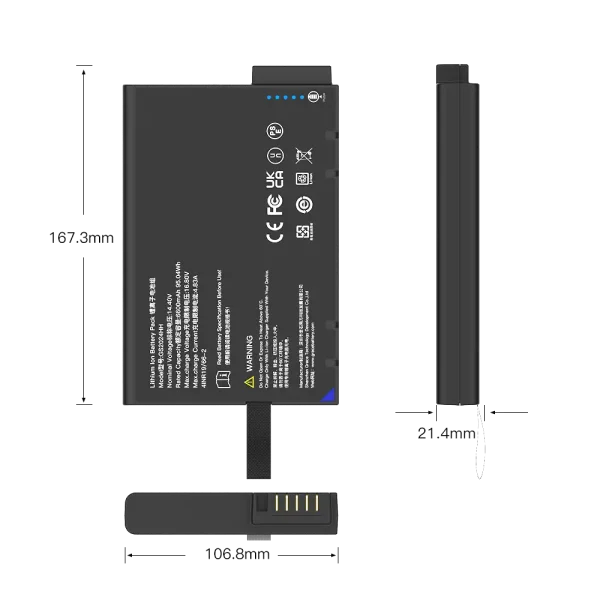
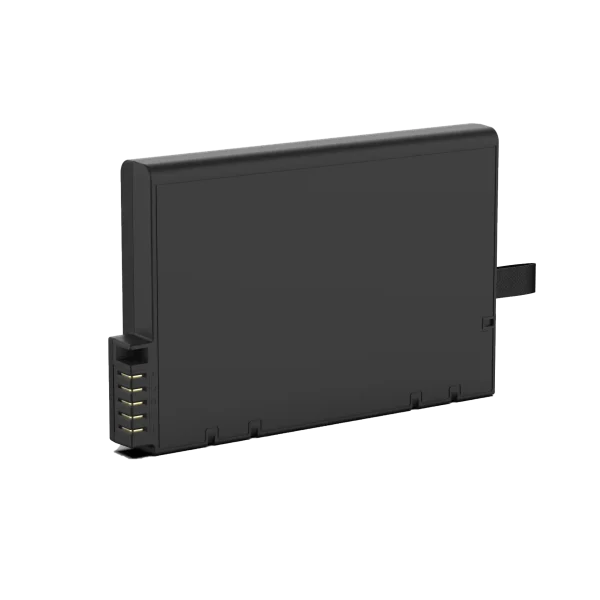
GS2024HH
14.4V/6900mAh/95.04Wh
5. IEC 62133 vs UL 2054: A Side-by-Side Comparison
For a medical device OEM choosing a battery partner, the two standards are complementary rather than interchangeable. Table 2 summarizes the practical differences engineering and regulatory teams care about.
Table 2. IEC 62133-2 vs UL 2054 at a glance
| Dimension | IEC 62133-2:2017+A1:2021 | UL 2054, 3rd Ed. (2021) |
| Scope | Portable sealed secondary lithium cells and batteries, global | Household and commercial portable battery packs, North America |
| Level evaluated | Cell + pack system, including protection circuit | Pack system; cells must already be UL Recognized (UL 1642 / UL 62133) |
| Primary market access | EU, UK, Japan (PSE), Korea (KC), China, SE Asia via CB Scheme | United States and Canada (cULus) |
| FDA recognition status | Referenced within IEC 60601-1 battery-evaluation harmonization | Explicitly recognized consensus standard, FDA entry Dec 23, 2024 |
| Internal short circuit | Required (Annex A, nickel-foil method) | Required via cell-level evaluation and pack internal-probing tests |
| Crush force on cell | 13 kN ± 1 kN hydraulic ram | Comparable crush / impact programme applied to pack |
| Protection circuit | Tested as part of pack | Critical focus; abnormal charge and short-circuit response deeply evaluated |
| Typical samples | 10–25 packs | 60–80 packs |
| Indicative cost | USD 650–1,000 (CB report) | USD 4,000–15,000 (cULus listing) |
| Typical timeline | 4–6 weeks | 8–12 weeks |
| Follow-up factory inspection | CB scheme; varies by national certification | Yes, UL follow-up services at manufacturing site |
Sources: IEC Webstore (IEC 62133-2:2017+AMD1:2021); ANSI Webstore (UL 2054 Ed.3-2021); FDA Recognized Consensus Standards entry (Dec 23, 2024); CM Batteries certification white paper (2025); Element battery certification guide (2026).
The practical takeaway is straightforward: IEC 62133-2 opens the rest-of-world door, UL 2054 opens the U.S./Canada door, and a pack holding both marks eliminates a second certification cycle when a device platform is launched simultaneously in the EU, the UK, East Asia and North America.
6. Why Dual Certification Matters for Medical Devices
6.1 Regulatory convergence, not duplication
Although the two standards share many abuse tests, they are not redundant. UL 2054 adds North American expectations for limited-power circuits, moulded-enclosure flame ratings and grounding continuity, while IEC 62133-2 adds the internal short-circuit protocol and CB Scheme acceptance that notified bodies in the EU and Asia rely on. Building once to both sets of requirements at the design stage is materially cheaper than certifying to one and then re-testing to the other after the fact.
6.2 Integration with IEC 60601-1
A medical device must still carry IEC 60601-1 (general basic safety and essential performance) and the relevant particular standard, such as IEC 60601-2-4 for cardiac defibrillators, IEC 60601-2-24 for infusion pumps, or IEC 60601-2-47 for electrocardiographic monitoring. The battery pack is treated as an accessory or a component within that system-level evaluation. A dual IEC 62133-2 / UL 2054 pack shortens the hazard analysis and reduces the number of risk-control measures that the manufacturer must justify in its ISO 14971 risk file.
6.3 Transport, supply chain and aftermarket
Both certifications pair naturally with UN 38.3, which governs transport of lithium cells and batteries by air, sea and road. Hospitals and original-equipment service organizations also prefer dual-certified packs because they can stock one SKU that supports both U.S. and EU service depots, and because the traceability required by UL follow-up services doubles as the lot-recall evidence base a medical quality system expects.
7. Engineering a Dual-Certified Medical Pack: What to Specify
From an R&D standpoint, a medical grade lithium battery that will be certified to both IEC 62133-2 and UL 2054 should be specified at drawing release with the following non-negotiable elements.
7.1 Cell selection
Use cells from a reputable manufacturer with a UL 1642 / IEC 62133-2 recognized cell listing, an IEC 62133-2 CB certificate, and a UN 38.3 test summary. For patient-contact or wearable devices, favour cells with a controlled self-discharge rate and a proven calendar-life data sheet of at least five years. Never design a medical pack around a consumer cell selected purely on price; the re-test cost during a change-control event dwarfs the unit-cell saving.
7.2 BMS and protection architecture
- Primary protection: a dedicated analog front-end (AFE) IC with over-voltage, under-voltage, over-current and short-circuit detection per cell.
- Secondary protection: a dedicated secondary protection IC or voltage-sensitive device that disconnects the pack if the primary path fails.
- Current interrupt: a polymer PTC and/or a thermal fuse that opens on sustained over-current or over-temperature.
- Fuel gauge: an I2C- or SMBus 3.0-compatible gauge (e.g., TI bq series, Renesas / RAA series, Microchip) that reports SoC, SoH, cycle count and cell temperature to the host.
- Connector: a keyed, latching medical connector with pin-1/pin-2 reverse-polarity protection and, where required, an NTC thermistor line.
7.3 Mechanical and thermal design
The enclosure should meet the UL 94 V-0 flame rating expected by UL 2054, with proper strain relief on the output cable and potting or gasketing for the ingress rating specified by the host device (often IP22 inside a monitor, IP54 or higher for portable ultrasound). Cell-to-cell spacing and the position of the BMS PCB should be laid out so that a single-cell fault cannot propagate to adjacent cells, and so that heat from the protection FETs does not feed back into the cell stack.
7.4 Quality and regulatory documentation
Request from the supplier, before design freeze: the cell manufacturer’s IEC 62133-2 and UL 1642 certificates; the pack-level IEC 62133-2 test report; the UL 2054 / cULus listing card; the UN 38.3 Test Summary; ISO 13485 and ISO 9001 certificates for the pack manufacturer; and a declaration of conformity to EU Battery Regulation 2023/1542 where the pack is placed on the EU market. A supplier that cannot produce these documents at the quotation stage will not produce them at the audit stage either.
8. Frequently Asked Questions
Q1. Is a UL 2054 certified battery the same as a UL 1642 certified battery?
No. UL 1642 certifies individual lithium cells, while UL 2054 certifies the finished battery pack (cells plus protection circuit, enclosure and connectors). A UL 2054 pack must be built from cells that are already UL Recognized.
Q2. Do I need both IEC 62133 and UL 2054 for a medical device sold only in Europe?
If you sell only in the EU, IEC 62133-2 (as transposed into EN 62133-2) is typically sufficient for battery safety. UL 2054 becomes necessary when you launch into the U.S. or Canadian market, or when a U.S. hospital group or distributor writes cULus into its procurement specification.
Q3. When did FDA start recognizing UL 2054 for medical devices?
The FDA added the UL 2054 Third Edition (November 17, 2021) to its Recognized Consensus Standards database on December 23, 2024, under General II (Electrical Safety / EMC). It is now an accepted means to demonstrate battery-pack safety in 510(k) and De Novo submissions.
Q4. Can I use an IEC 62133 certificate as a CB report for other markets?
Yes. IEC 62133-2 testing performed by an NCB under the CB Scheme can be converted into national certifications such as KC (Korea), PSE (Japan), CCC (China), BIS (India) and others, saving re-testing time—but always confirm national differences with the certification body before quotation.
Q5. What is the difference between a medical grade battery and an industrial grade battery?
Both may carry the same IEC 62133 and UL 2054 marks. The distinction lies in the quality system (ISO 13485 for medical vs ISO 9001 for industrial), lot traceability, long-cycle and calendar-life validation, and the presence of a SMBus/I2C fuel-gauge interface that the host medical device uses for SoC/SoH reporting and clinical alarm logic.
Q6. How long does a typical certification take?
IEC 62133-2 CB testing typically takes 4–6 weeks with 10–25 samples; UL 2054 listing typically takes 8–12 weeks with 60–80 samples and a factory inspection. Combined programmes that share samples and test data can be completed in roughly 10–14 weeks when started at design freeze.
Q7. Does the EU Battery Regulation (EU) 2023/1542 affect medical device batteries?
Yes. From 2025 onward, portable and industrial batteries placed on the EU market must carry CE marking under the regulation, provide a compliance declaration, and eventually meet carbon-footprint, recycled-content and digital-battery-passport requirements. Medical batteries are not categorically exempt; buyers should request the supplier’s 2023/1542 compliance plan at RFQ stage.
Q8. What happens if I change a cell supplier after certification?
A cell change is a major design change. It usually triggers re-testing of the cell-level and pack-level safety programme, and may require a new UL follow-up service visit. For medical OEMs, this change must also go through ISO 14971 risk-file update and, if the device is already on the market, a regulatory change assessment. This is why locking the cell source at design freeze is critical.
9. Conclusion
A medical grade lithium battery that is both IEC 62133 certified and UL 2054 certified represents the practical baseline for any portable medical device intended for global markets. IEC 62133-2:2017+AMD1:2021 gives the device access to the EU, UK, Japan, Korea and Southeast Asia through the CB Scheme; UL 2054 Third Edition gives it acceptance in the U.S. and Canada, and has been explicitly recognized by the FDA since December 2024 as a consensus standard for medical devices. Together with UN 38.3, IEC 60601-1 system-level integration, ISO 13485 manufacturing control, and the EU Battery Regulation 2023/1542, they form the compliance stack that patients, clinicians and notified bodies can rely on.
As an R&D engineer, my recommendation to medical device program managers is simple: define the dual-certification target at the drawing stage, specify recognized cells and a redundant SMBus BMS, and demand the complete certificate package—cell UL 1642 / IEC 62133-2, pack IEC 62133-2, pack UL 2054 cULus, UN 38.3, ISO 13485 and 2023/1542 conformity—at RFQ time. The up-front engineering cost is dwarfed by the field-failure, recall and re-certification cost of a pack designed to the wrong standard.
References and Further Reading
- IEC 62133-2:2017+AMD1:2021 CSV — Secondary cells and batteries containing alkaline or other non-acid electrolytes — Part 2: Lithium systems. IEC Webstore.
- IEC 62133-1:2026-03 — Part 1: Nickel systems, Edition 2.0. IEC Webstore.
- UL 2054, Third Edition (November 17, 2021) — Standard for Safety Household and Commercial Batteries. UL Solutions / ANSI Webstore.
- FDA Recognized Consensus Standards: Medical Devices — entry for UL 2054 Third Edition, added December 23, 2024. U.S. FDA.
- IEC 60601-1 and particular standards (e.g., IEC 60601-2-4 defibrillators, IEC 60601-2-24 infusion pumps). IEC.
- UN 38.3 — Recommendations on the Transport of Dangerous Goods, Manual of Tests and Criteria.
- Regulation (EU) 2023/1542 concerning batteries and waste batteries. Official Journal of the European Union.
- Mordor Intelligence, PW Consulting and GII market reports on medical / Li-ion medical battery market size and CAGR, 2025–2032.