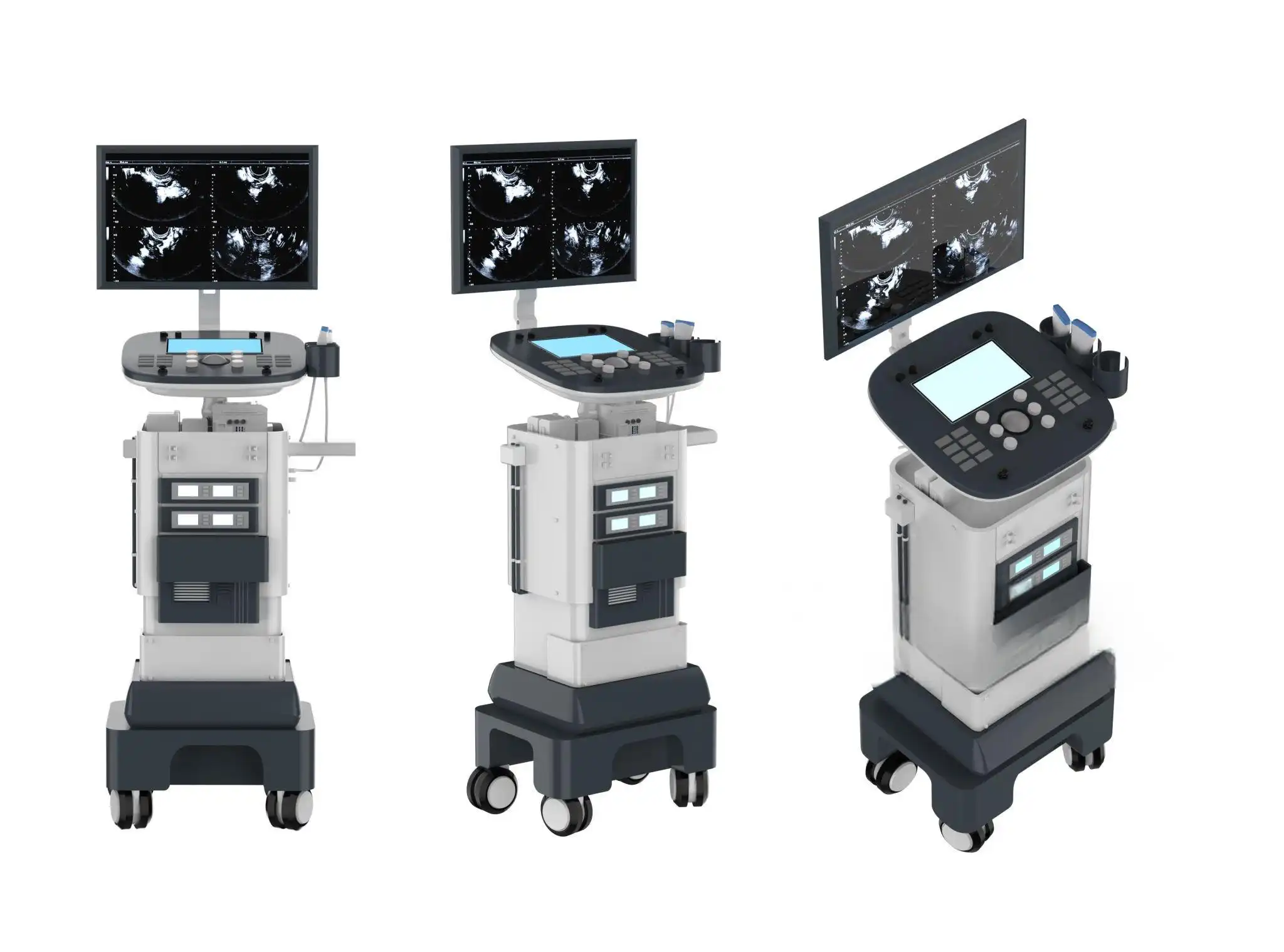
By Senior Lithium Battery R&D Engineer, TEFOO Medical Battery Division
1. Introduction
Mobile X-ray machines have become essential imaging tools in emergency rooms, field hospitals, disaster-relief operations, and rural clinics where fixed wall-mounted radiography systems cannot reach. Unlike stationary digital radiography (DR) systems that draw continuous power from the mains, a mobile X-ray unit must generate high-voltage pulses—typically 60–125 kV and 0.5–5 mA exposure currents—from a rechargeable lithium battery pack carried on board the cart or integrated into a handheld probe. As of 2026, the global portable and mobile X-ray device market continues to expand at a double-digit CAGR, driven by aging populations, point-of-care imaging demand, and military/field medical requirements.
From a battery-engineering perspective, a mobile X-ray battery is not a larger laptop battery. It is a safety-critical medical power system that must deliver short, high-current pulses while maintaining cell-voltage stability, predictable state-of-charge (SoC), and compliance with ISO 13485, IEC 62133, UN 38.3, and the EU Battery Regulation (EU) 2023/1542. This article walks through the core design challenges, reference specifications, regulatory landscape, and how leading OEM battery suppliers compare—with engineering data drawn from current-generation medical lithium packs.
2. Why Mobile X-Ray Battery Design Differs from Consumer Packs
Most consumer lithium-ion packs (smartphones, power banks) discharge at a continuous 0.5C–1C load. A mobile X-ray generator, by contrast, behaves like a pulsed high-power load: it draws a burst of current for 5–100 ms during each exposure, then returns to near-idle quiescent current while the detector reads the image. This pulse-duty cycle creates three distinct engineering problems that ordinary packs are not optimized for:
- Voltage sag during high-current pulses must stay within the generator’s undervoltage lockout threshold—typically no more than 5–8% dip at maximum kV/mA settings.
- Cell heating is concentrated during pulses, and repeated cycles accelerate capacity fade if thermal margins are not designed in.
- SoC estimation must remain accurate despite wide current swings, otherwise the clinician cannot trust the remaining-shots indicator.
3. Core Engineering Challenges
3.1 High Pulse Current Discharge
A typical handheld or mobile DR unit operates at 60–90 kV with tube currents of 0.5–5 mA and exposure times of 0.5–4.0 ms. On the low-voltage side, the battery may see peak currents of 15–40 A for a few milliseconds, depending on the high-voltage transformer efficiency and battery nominal voltage. Standard 18650 or 21700 cells rated for 2C continuous discharge will sag too much under such pulses; medical-grade packs therefore use high-rate cells with continuous discharge ratings of 5C–10C and pulse ratings of 15C–20C for short durations.
Series-parallel configuration matters. A 4S2P (four cells in series, two in parallel) 14.8 V pack using high-rate NMC cells is common for mid-range mobile units; larger cart-based systems may use 6S4P or 7S2P configurations to keep per-cell current within safe pulse limits. Parallel groups also reduce internal resistance and smooth voltage sag.
3.2 Energy Density vs. Weight Trade-off
Fujifilm’s FDR Xair, one of the lightest portable digital X-ray systems on the market in 2026, weighs about 3.5 kg total and its built-in lithium-polymer battery supports over 100 exposures on a single charge. This level of portability forces battery designers to prioritize volumetric energy density (Wh/L) over absolute capacity. High-nickel NMC or NCA pouch cells typically deliver 250–300 Wh/kg, while LiFePO4 cells offer longer cycle life and better thermal stability but at lower energy density—making them more suitable for cart-based mobile systems than for handheld probes.
3.3 Thermal Management
Each exposure dissipates heat inside the cell stack and the BMS MOSFET array. In a clinical environment where the device may be used continuously for hours, thermal design directly affects both battery life and patient safety. Medical battery packs typically include:
- NTC thermistors bonded to cell groups and the BMS PCB for overtemperature cut-off.
- Thermal pads or aluminum frames that conduct heat from cell surfaces to the pack housing.
- Design limits that keep surface temperature below 45 °C under repeated pulsing at 25 °C ambient.
3.4 Smart BMS and Host Communication
Modern mobile X-ray hosts need real-time battery data—remaining capacity, cell voltages, pack temperature, cycle count, and safety status—to display an accurate remaining-exposure count and trigger low-battery alerts. SMBus v1.1 (System Management Bus) is the dominant communication protocol in medical smart battery packs, compatible with the Smart Battery Data (SBData) specification. A well-designed BMS for X-ray applications should support:
- Per-cell voltage monitoring with passive balancing.
- Over-current, short-circuit, over-charge, over-discharge, and overtemperature protection.
- Fuel-gauge IC with Coulomb counting + impedance tracking for accurate SoC under pulsed loads.
- LED or host-reported SOC indicator visible to the operator.
4. Reference Design Specifications (Typical 2026 Mobile X-Ray Packs)
The table below summarizes representative specifications observed across current-generation portable and mobile X-ray battery systems, from handheld units to cart-based mobile DR systems.
| Parameter | Handheld / Lightweight Unit | Cart-Based Mobile DR |
| Cell Chemistry | Li-polymer / High-rate NMC | NMC or LiFePO4 high-rate 21700 |
| Nominal Voltage | 7.4 V – 14.8 V (2S–4S) | 14.8 V – 29.6 V (4S–8S) |
| Typical Capacity | 2.5 Ah – 3.5 Ah | 4.0 Ah – 10.0 Ah |
| Peak Pulse Current | 15 A – 25 A (5–10 ms) | 30 A – 50 A (5–20 ms) |
| Exposures per Charge | ≥ 100 shots | ≥ 200 shots / 4 h runtime |
| Cycle Life (to 80%) | ≥ 500 cycles | ≥ 1000 cycles (LiFePO4: ≥ 2000) |
| Communication | SMBus v1.1 / SMBus v3.0 | SMBus v1.1 / CAN / RS-485 |
Table 1. Representative mobile X-ray battery pack specifications (2026 generation)
5. Regulatory and Safety Compliance Landscape (2026)
A mobile X-ray battery pack is classified as a component of a medical device, so it must satisfy both battery-specific safety standards and medical-device quality-system requirements. The key certifications an OEM should request from its battery supplier include:
- ISO 13485:2016 — Medical devices quality management system; the pack manufacturer should hold this certification if the battery is a regulated medical component.
- IEC 62133-1 / 62133-2 — Safety requirements for portable sealed secondary cells (lithium systems). Recognized by FDA as a consensus standard for medical device batteries.
- UN 38.3 — Transport safety testing for lithium batteries (T.1–T.8: altitude, thermal, vibration, shock, short circuit, impact, overcharge, forced discharge). Mandatory for air/ground shipping.
- CE / UKCA — EU and UK market conformity, including EMC (EN IEC 61000 series) and battery directive compliance.
- FCC Part 15 / ICES — North American EMC requirements for digital electronics.
- EU Battery Regulation (EU) 2023/1542 — Effective from 2024 onward, requiring carbon-footprint declarations, due-diligence obligations, and later battery passport for industrial/medical batteries placed on the EU market.
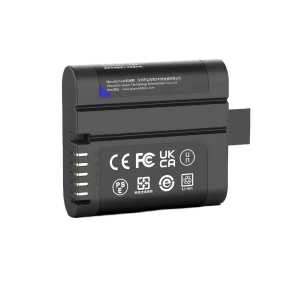
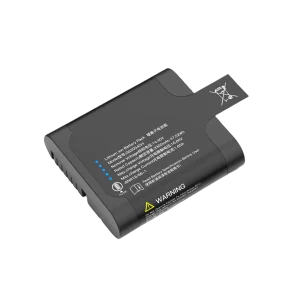
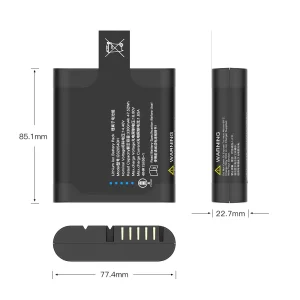
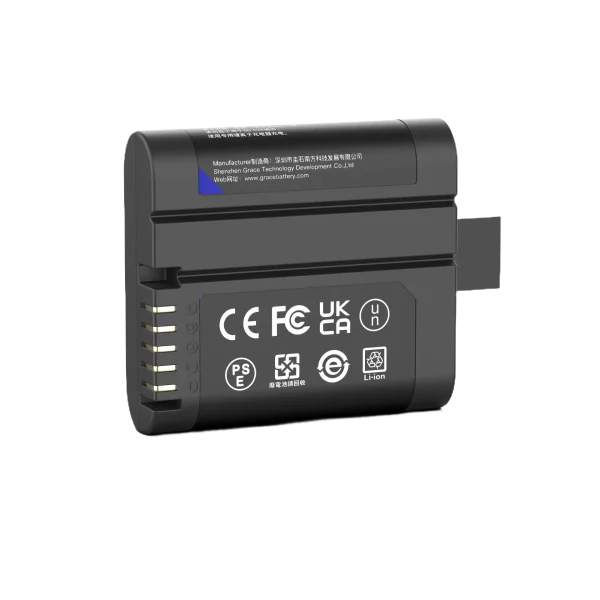
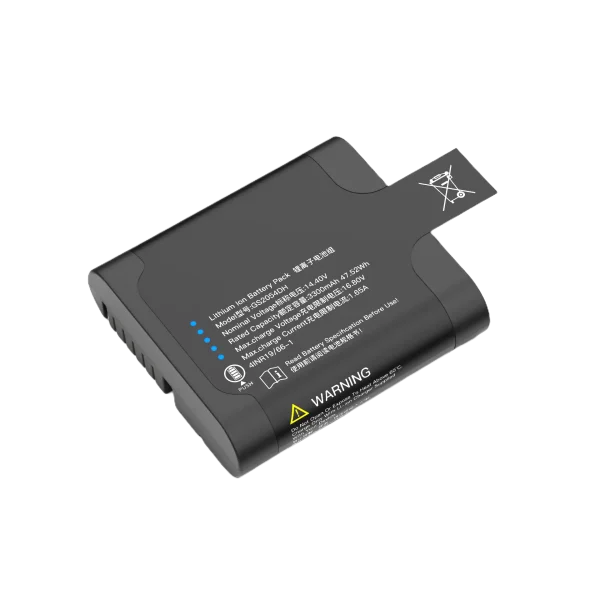
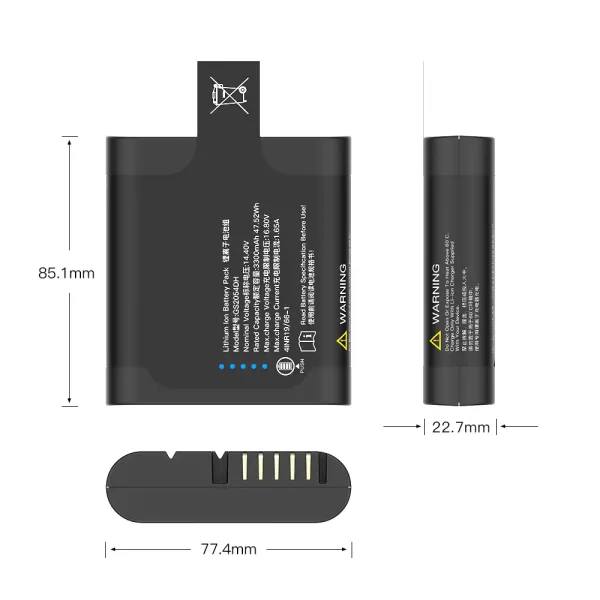
GS2054DH
14.4V/3450mAh/47.52Wh
6. Leading Battery Pack Suppliers for Mobile X-Ray Applications
The medical battery market is served by a mix of multinational medical-device power specialists, Asian custom-pack OEMs, and standard smart-battery module vendors. The table below compares representative suppliers active in the mobile X-ray segment as of 2026, based on publicly listed certifications, product lines, and stated capabilities.
| Supplier | ISO 13485 | Core Strength | BMS / Protocol | Typical X-Ray Fit |
| TEFOO (China) | Yes | Custom OEM, smart BMS, SMBus standard packs, medical focus | SMBus v1.1, LED SOC, high-pulse NMC/LiFePO4 | Handheld & cart-based mobile X-ray OEMs |
| Cadence / Epec (US) | Partner program | Regional medical pack integration, fast prototyping | Custom BMS, UN38.3 facilitated | North American mobile DR OEMs |
| Nova Battery Systems (US) | Yes | UL / CE / CB / PSE certified, broad medical portfolio | Custom smart BMS | Premium mobile imaging platforms |
| BAKTH (China) | Yes | SMBus v1.1 standard smart packs, global certifications | SMBus v1.1, temperature sensing | Replacement & mid-tier OEM packs |
| GGT (Taiwan) | Yes | High-rate LiFePO4 packs, medical power integration | Multi-protection BMS, passive balancing | Cart-based & field-use X-ray systems |
Table 2. Representative battery pack suppliers for mobile X-ray systems (2026)
7. TEFOO Mobile X-Ray Battery Solutions
At TEFOO, our medical battery division designs and manufactures custom lithium packs for portable imaging OEMs under an ISO 13485-certified quality system. For mobile X-ray applications, we offer three product variants matched to different device form factors:
- Standard Variant — 14.8 V high-rate NMC packs with SMBus v1.1, suited to cart-based mobile DR systems requiring 200+ exposures per charge.
- High-Capacity Variant — Larger capacity configurations with extended runtime for field and emergency medicine.
- Low-Temperature Variant — Optimized cell chemistry and BMS charging profiles for operation and charging at sub-zero ambient temperatures (field/hospital deployments).
All TEFOO medical packs feature integrated LED SOC indicators, multi-layer protection (over-voltage, under-voltage, over-current, short-circuit, over-temperature), and are tested to IEC 62133, UN 38.3, CE, UKCA, and FCC requirements. Our standard smart battery line (e.g., the GS-series 3S/4S platform) uses SMBus-compliant fuel-gauge ICs that directly report remaining capacity to the host imaging system—eliminating the need for OEM-side custom SoC firmware development.
8. Frequently Asked Questions (FAQ)
Q1. How many exposures can a typical mobile X-ray battery deliver on one charge?
A. A well-designed 14.8 V, 4–5 Ah high-rate NMC pack typically supports 150–250 exposures at standard 60–90 kV settings. Lightweight handheld units (e.g., Fujifilm FDR Xair class) deliver about 100+ shots from a smaller Li-polymer pack. Actual numbers depend on kVp, mA, exposure time, and detector standby power.
Q2. What is the expected cycle life of a mobile X-ray battery pack?
A. High-rate NMC packs typically reach 500–800 cycles at 80% capacity retention. LiFePO4-based packs for cart systems can exceed 1,000–2,000 cycles. Cycle life is heavily affected by pulse-current depth and thermal management—designing for lower per-cell current via parallel groups is the most effective way to extend life.
Q3. Can I use a generic laptop or power-tool battery in a mobile X-ray machine?
A. No. Mobile X-ray batteries must be certified as part of a medical device system. Generic packs lack medical-grade BMS accuracy, SMBus communication, ISO 13485 traceability, and often cannot sustain the required pulse currents without excessive voltage sag or overheating.
Q4. How does the EU Battery Regulation 2023/1542 affect medical battery packs?
A. From 2024 onward, battery suppliers placing industrial/medical batteries on the EU market must comply with carbon-footprint declarations, due-diligence obligations for raw materials (cobalt, lithium, nickel), and labeling requirements. A battery passport will follow in later phases. OEMs should verify their battery supplier has a compliance roadmap for this regulation.
Q5. What should I ask my battery supplier for a custom mobile X-ray project?
A. Request: (1) ISO 13485 certification scope covering battery pack assembly; (2) IEC 62133 test report; (3) UN 38.3 summary; (4) sample pulse-discharge curves at your target current; (5) SMBus fuel-gauge compatibility with your host firmware; (6) failure-mode analysis data and warranty terms.
9. Conclusion
A mobile X-ray machine battery pack is a highly specialized medical power system—not merely a scaled-up consumer battery. The core engineering challenges—high pulse-current discharge, weight optimization, thermal management, and accurate SoC reporting under pulsed loads—directly determine clinical usability and device safety. As of 2026, the market expects packs to combine high-rate NMC or LiFePO4 chemistry, SMBus smart BMS communication, and full regulatory compliance across ISO 13485, IEC 62133, UN 38.3, and the evolving EU Battery Regulation 2023/1542.
For OEMs developing next-generation mobile imaging systems, selecting a battery partner with medical-grade quality systems, proven high-pulse BMS design, and global certification coverage is as important as selecting the X-ray generator or flat-panel detector itself. TEFOO’s medical battery division works with device manufacturers from early-stage prototype through mass production, delivering custom packs engineered specifically for the pulsed, portable, safety-critical demands of mobile radiography.
© 2026 TEFOO . This article is for technical information purposes and does not constitute medical device regulatory advice. Specifications are representative and may vary by model.