
1. Why the Battery Is a Design Project, Not a Shopping Decision
Portable medical devices — patient monitors, infusion pumps, ventilators, defibrillators, and a growing family of wearable and home-care products — share a dependency that is easy to underestimate: the battery pack. When a device fails mid-procedure, during a night shift, or in a patient’s home, the battery is usually the first suspect, and it is often the actual cause. In my years leading custom battery development programs for medical device manufacturers, I have watched the same pattern repeat. The electronics are designed around the clinical function, the enclosure is signed off, and the battery is treated as the last box to tick. That ordering is a mistake.
The battery defines far more than run time. It constrains the enclosure’s shape and thermal behavior, the device’s electromagnetic emissions, the logistics chain that ships the finished product around the world, and the regulatory file that puts it on the market. A battery pack built for a medical device is therefore not a commodity purchase. It is an engineering project with its own design reviews, risk analysis, verification testing, and quality records — and it deserves the same discipline as any other safety-critical subsystem.
2. When Off-the-Shelf Packs Fall Short in Medical Devices
The attraction of an off-the-shelf pack is obvious: it is cheaper, available immediately, and already certified to some standard. The problem is that consumer packs are engineered for consumer duty cycles. A power bank is designed to discharge at modest rates, tolerate casual handling, live for two or three years, and be replaced without ceremony. A medical device is expected to run reliably for years, survive clinical transport, operate across a wide temperature range, and keep a documented chain of evidence for every unit shipped.
The mismatches show up in specific, engineering terms. Form factor and mounting: standard packs rarely match the device’s internal envelope, so the enclosure grows or the pack is wedged into a space it was never designed for. Electrical duty cycle: many medical devices draw sharp pulse loads — a pump actuation, a heater pulse, a capacitor charge — that a pack sized for average power cannot deliver without voltage sag or premature cutoff. Lifetime: a device may remain in service for five to ten years, while consumer cells are optimized for shorter lives. Environment: home-care equipment is handled by patients and family members, stored in garages and bedrooms, and must tolerate conditions a retail power bank never sees. Communication: modern devices increasingly need true state-of-charge and state-of-health data over SMBus, I²C, or CAN, not a voltage reading. And documentation: device manufacturers need lot traceability, test evidence, and risk documentation that a commodity supply chain cannot provide.
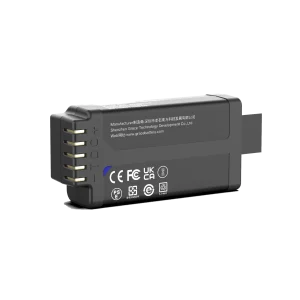
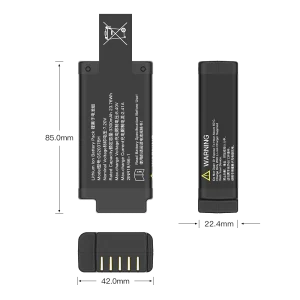
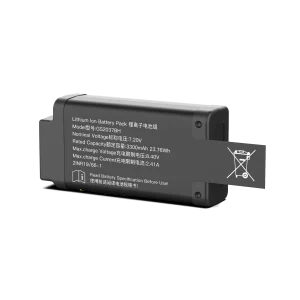
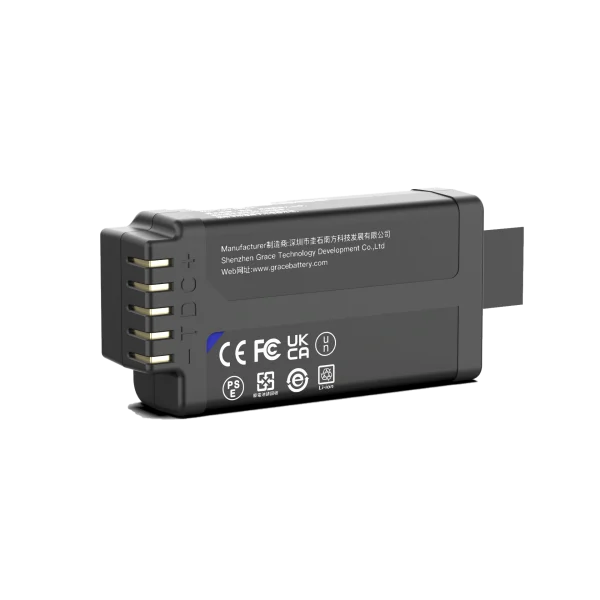
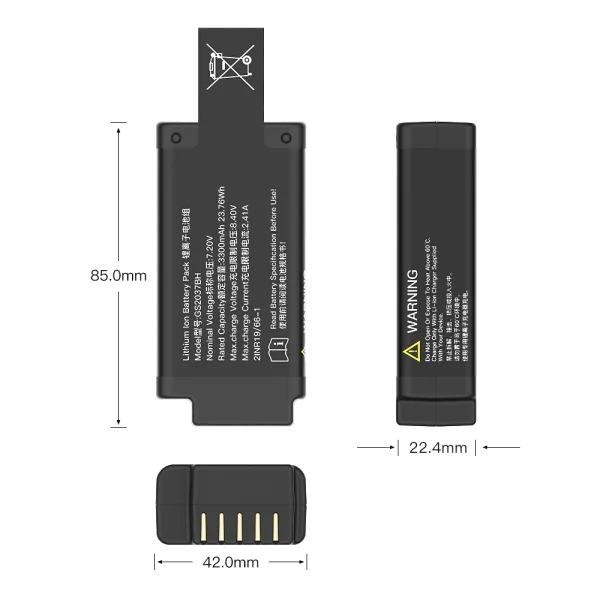
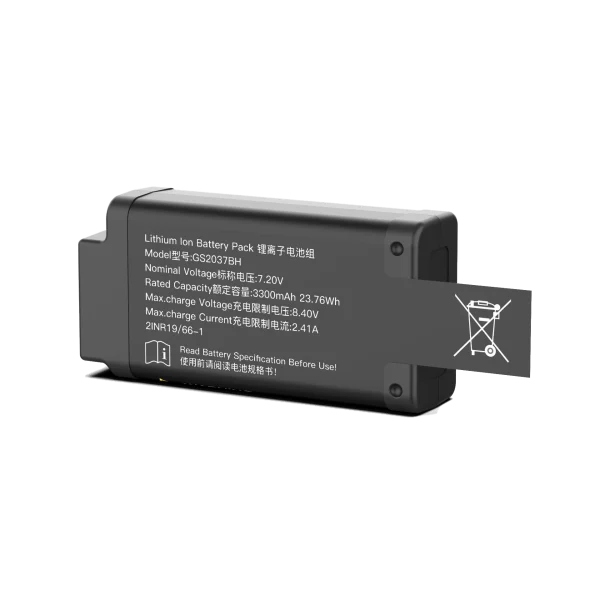
GS2037BH
7.2V/3450mAh/23.76Wh
None of this means a standard cell cannot be used — most custom packs are built around proven, off-the-shelf cells. The point is that the pack, the protection electronics, and the qualification evidence must be engineered for the device and its clinical environment, not adapted after the fact.
3. Designing the Pack Around the Clinical Requirement
3.1 Define the Electrical and Duty-Cycle Requirements First
The single highest-leverage step in a battery project happens before any cell is selected: writing a complete electrical and mechanical requirements specification. In my experience, the most expensive change orders come from assumptions made in month one — a discharge-rate figure borrowed from a similar product, a temperature range copied from a datasheet, a connector chosen for convenience — that surface later during verification. The specification should capture, at minimum: the device’s input voltage window; energy and capacity targets in watt-hours; continuous and peak discharge currents with their durations; the charge regime and allowed charge time; target cycle life and calendar life; operating, storage, and transport temperature ranges; mechanical constraints such as envelope, mounting, shock, and vibration; and the communication interface, typically SMBus, I²C, or CAN.
3.2 Cell Chemistry: Matching Energy, Power, and Longevity
No single chemistry is “best” for medical devices; every project optimizes a different set of trade-offs. What matters is that the choice is driven by validated cell data — datasheet, qualification test results, and supplier quality history — rather than by habit or marketing claims. The table below summarizes the chemistries most commonly qualified in medical packs. The values are typical under moderate operating conditions; always confirm them against the qualified cell’s datasheet and test data.
Table 1. Common lithium chemistries in medical battery packs
| Chemistry | Nominal voltage (per cell) | Key strengths | Typical trade-offs | Common medical uses |
| NMC (nickel-manganese-cobalt) | 3.6–3.7 V | Balanced energy density and power; flexible formulation; widely available with mature quality data | Lower volumetric energy density than LCO; cycle life varies with formulation | Patient monitors, infusion pumps, multi-function portable devices |
| LCO (lithium cobalt oxide) | 3.7 V | Highest volumetric energy density; enables compact designs | Shorter cycle life at deep discharge; thermal stability demands careful management | Compact wearables and hand-held devices where space is critical |
| LFP (lithium iron phosphate) | 3.2–3.3 V | Very long cycle life; excellent thermal stability; forgiving failure behavior | Lower energy density; more cells needed for the same pack voltage | Long-life devices, home-care equipment, powered mobility aids |
| LMO (lithium manganese oxide) | 3.7 V (nominal) | High power capability; strong rate performance | Moderate calendar life at elevated temperature | High-pulse applications such as capacitor-charging loads |
Beyond chemistry, the cell itself must be selected for safety features — ceramic-coated or reinforced separators, safety vents, current interrupt devices — and qualified with the lot traceability that medical quality systems require. Form factor matters too: pouch cells enable the thin, contoured shapes wearable devices need, while cylindrical cells offer robust mechanical construction and a very mature manufacturing base.
3.3 Mechanical Integration and Enclosure Design
A custom pack is engineered around the device, not the other way around. Mechanical design covers the enclosure, cell arrangement, connectors, sealing, and mounting. Enclosure materials are typically flame-retardant engineering plastics rated to UL 94 V-0, and the assembly must survive the shock and vibration profile of clinical transport and everyday handling. Connectors must be rated for the device’s insertion cycles and locked against accidental disconnection. Sealing is designed to the device’s ingress protection (IP) rating, and strain relief protects wiring at every entry point. Serviceability is a decision, not an accident: a sealed, single-use pack follows different design rules than a field-replaceable one, and that choice affects labeling, connector selection, and maintenance documentation.
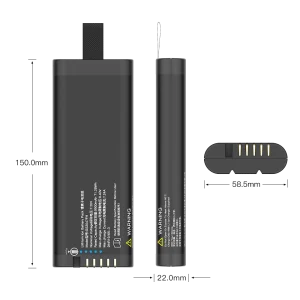
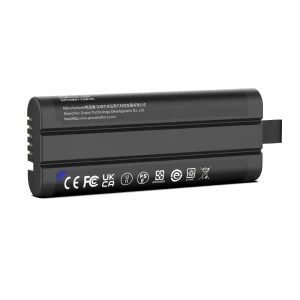
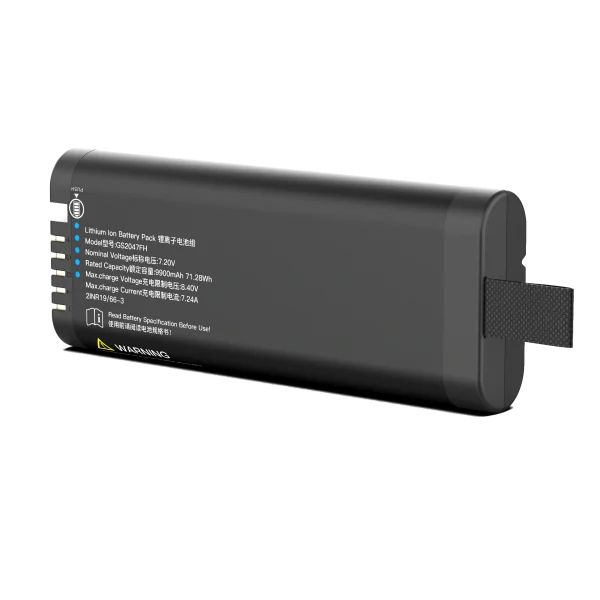
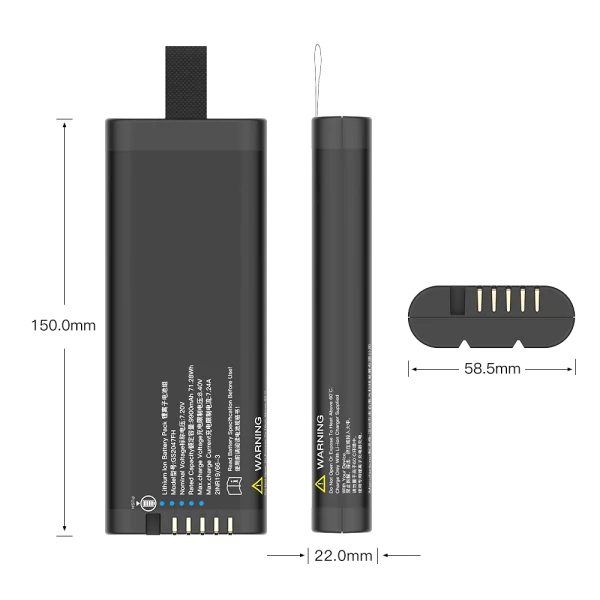
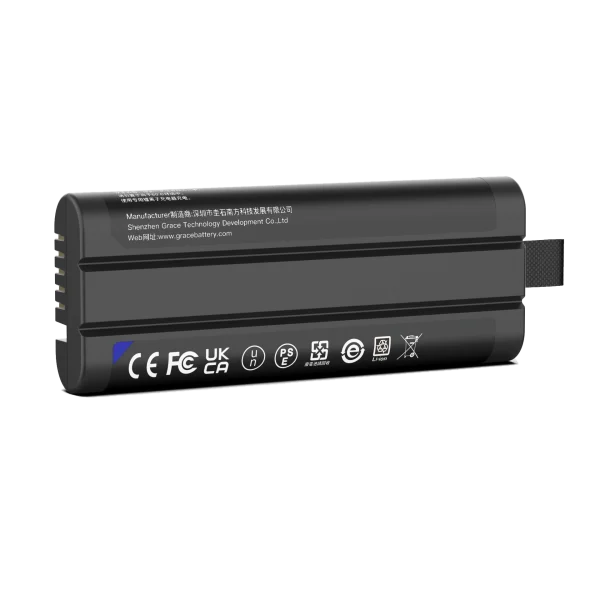
GS2047FH
7.2V/10350mAh/71.28Wh
3.4 The BMS: Where Safety and Intelligence Meet
The battery management system is where a pack earns its medical-grade label. A medical BMS provides protection in layers: hardware-based protection against overcharge, over-discharge, overcurrent, and short circuit, backed by firmware monitoring of cell voltage, current, and temperature, with charge and discharge lockouts outside safe windows. It performs cell balancing to keep series strings within tolerance, estimates state of charge and state of health, and communicates with the host device over SMBus, I²C, or CAN so that clinicians and service engineers see true remaining run time rather than a voltage guess.
Two details separate a medical BMS from a consumer one. First, the protection thresholds and fault behavior are defined through the device’s risk management process in accordance with ISO 14971[5], so every protection decision is traceable to a documented hazard analysis. Second, the pack logs its own history — cycles, temperature exposure, protection events — which turns field returns from guesswork into data. In our projects, field data from logged packs has repeatedly caught design assumptions that laboratory testing could not replicate.
3.5 Thermal Design and Thermal Management
Lithium-ion cells have narrow comfort zones. Charging below 0 °C risks lithium plating and permanent cell damage; high temperature accelerates aging and, in the worst case, can initiate thermal runaway. Thermal design therefore covers sensor placement, thermal coupling between cells and enclosure, derating of peak current in hot environments, and cold-charge lockout logic. The pack’s surface temperature is itself a safety parameter, evaluated against the touch-temperature requirements of the device standard. The enclosure and cell arrangement are designed to keep cells inside their rated window across the device’s operating envelope — a requirement that only becomes visible when the pack is designed together with the device, not bolted on afterwards.
4. Standards and Compliance: The Regulatory Map
A medical battery pack does not exist in a regulatory vacuum. It is qualified against a small set of internationally recognized standards, and the evidence feeds directly into the device manufacturer’s regulatory file. Table 2 summarizes the standards that most frequently govern medical battery packs.
Table 2. Key standards for medical battery packs
| Standard | Scope | Why it matters for the pack |
| IEC 60601-1 (Ed. 3.2, 2020) | Medical electrical equipment — general requirements for basic safety and essential performance | The parent safety standard of the device; the internal battery is analyzed within its single-fault-condition and safety requirements |
| IEC 60601-1-2 (Ed. 4.1) | Collateral standard: electromagnetic disturbances | EMC requirements and tests for medical electrical equipment; the pack’s emissions and immunity contribute to device-level compliance |
| IEC 62133-2:2017 | Safety of portable sealed secondary lithium cells and batteries — Part 2: lithium systems | Type tests for cell and pack safety under intended use and reasonably foreseeable misuse |
| ISO 13485:2016 | Quality management systems for medical devices | The QMS framework governing design, production, and post-market processes |
| ISO 14971:2019 | Application of risk management to medical devices | Hazard identification and risk control that tie every protection decision to documented analysis |
| UN 38.3 (Manual of Tests and Criteria) | Transport safety testing of lithium cells and batteries | Eight tests — altitude, thermal, vibration, shock, external short, impact/crush, overcharge, forced discharge — required before shipping |
| 49 CFR 173.185 (U.S.) | DOT hazardous materials regulations for lithium cells and batteries | Enforces UN 38.3 testing and packaging controls for shipments from, to, or within the United States |
| UL 2054 (Ed. 3) | North American safety standard for household and commercial batteries | Commonly referenced for pack-level safety certification in North American markets |
| EU RoHS Directive 2011/65/EU | Restriction of hazardous substances in electrical and electronic equipment | Substance restrictions (lead, mercury, cadmium, and others) apply to the pack’s electrical and electronic materials |
Three standards deserve particular attention. IEC 60601-1, the parent safety standard for medical electrical equipment, evaluates the device — including its internal battery — under normal and single-fault conditions[1]. IEC 62133-2 defines the type tests that lithium cells and packs must pass under intended use and reasonably foreseeable misuse[3]. And ISO 13485 provides the quality management framework that governs how the pack is designed, produced, and traced[4].
At the device level, electromagnetic compatibility is assessed against the collateral standard IEC 60601-1-2[2], and the pack’s emissions and immunity are part of that evidence. For North American markets, pack-level safety is often assessed against UL 2054[8], the standard for household and commercial batteries. Material compliance — such as the substance restrictions of the EU RoHS Directive[9] — must also be demonstrated for the electrical and electronic materials in the pack.
Before any lithium battery can be shipped, it must pass the eight transport safety tests of Section 38.3[6] of the UN Manual of Tests and Criteria (UN 38.3), a requirement enforced in the United States through the DOT hazardous materials regulations at 49 CFR 173.185[7].
The U.S. Food and Drug Administration (FDA) recognizes IEC 62133-2 as a consensus standard relevant to medical devices[10]. Device manufacturers build this battery evidence into their own regulatory submissions, and the standard map should be reviewed at the start of every new program — IEC 60601-1 is being revised toward a fourth edition[11], a reminder that compliance is a moving target.
5. Validation and Testing: Proving Safety Under Real-World Faults
Certification is the minimum; verification is where a pack is actually proven. A comprehensive program has three layers. Electrical and performance verification measures capacity at rated and extreme temperatures, internal resistance, charge retention, cycle life to the agreed end-of-life definition, and charge and discharge efficiency — every claim in the specification is tested at the pack level, not inferred from cell data. Environmental testing covers temperature, humidity, thermal shock, altitude, vibration, shock, drop, and ingress protection. Safety and abuse testing exercises external short circuit, overcharge, over-discharge, abnormal charging, crush or impact, and thermal abuse under the applicable cell and pack standards, with EMC and ESD testing at pack and device level.
In our laboratory we test to failure, not merely to pass. A pack that survives its certification tests by a narrow margin is a risk we do not ship. We also verify the fault behavior the BMS is supposed to deliver — the trip points, the recovery behavior, the fail-safe state — because a protection feature that has never been exercised is a protection feature that has never been proven.
Traceability is part of the test program. Every tested unit is serialized, and test results, firmware version, and cell lot numbers are recorded against the serial number. This sounds administrative, but it is the difference between a recall and a targeted field action.
6. Manufacturing Quality and Traceability
A medical battery pack is only as trustworthy as the system that builds it. The manufacturing organization should operate an ISO 13485-based quality management system that covers design control, purchasing, production, and post-market processes[4]. In practice, that means cells sourced only from qualified suppliers with lot-level certificates and incoming inspection; assembly on automated lines where critical joints — cell-to-cell and cell-to-PCB connections — are made by controlled processes such as laser welding rather than by hand; inline electrical testing of every unit, including open and short checks, BMS communication, and protection-trip verification; a controlled aging or screening step before final test; and serialized records that link every pack to its cells, firmware, test data, and release documents.
Documentation is part of the product. The design history file, the risk management file, the test reports, and the certificates of conformity are what a device manufacturer’s regulatory and quality teams need to close their own files. If a battery partner treats documents as overhead, the partnership will fail at the audit table, not at the bench.
7. From Specification to Production: A Realistic Roadmap
A custom medical battery program looks like any disciplined engineering program, with a few medical-specific gates. Table 3 shows the phases we typically run. Durations depend heavily on complexity, certification scope, and cell availability, so plan for contingencies.
Table 3. Typical project phases from specification to production
| Phase | Focus | Key outputs and gates |
| Requirements and feasibility | Requirements specification, cell selection study, risk analysis kick-off | Signed specification; shortlisted candidate cells; feasibility report |
| Prototype (EVT) | First functional packs for integration, mechanical fit, and early electrical testing | Prototype samples; design-for-manufacturing feedback; initial test data |
| Design verification (DVT) | Full verification and certification testing; risk management update | Test reports; certification evidence; design freeze |
| Production validation (PVT) | Process qualification, pilot production, inline test validation | Qualified line; pilot batch release; process documentation |
| Mass production and sustaining | Series production, field monitoring, post-market support | Released product; field data loop; change control |
Two gates deserve emphasis. The design freeze is signed only when the verification evidence exists, not when the schedule demands it. And production validation is where process quality is proven — a pack that passes design verification but fails to hold tolerances in pilot production was never really ready.
8. Choosing a Custom Battery Partner: A Practical Checklist
The engineering is only half the decision; the partner must be able to carry the evidence. When we evaluate a battery supplier for a medical project — and when our customers evaluate us — the same questions come up. Use them as your checklist.
- Quality system in scope. Is the ISO 13485 certificate valid, and does its scope cover the design and manufacture of custom battery packs — not just trading or assembly?
- Cell supply chain. Can the supplier name its cell sources, show lot traceability, and share cell qualification data and certificates?
- In-house test capability. Which tests are run internally — electrical, environmental, safety — and which are outsourced? What is the laboratory’s scope?
- Documentation culture. Ask to see a sample design history file, risk file, and test report. The quality of the paperwork predicts the quality of the program.
- Communication protocol depth. SMBus, I²C, CAN — does the team actually design the smart battery interface, or resell a reference design?
- Sustaining support. What happens at year three when the device needs a firmware update, a cell change, or a field investigation? Sustaining engineering is where partnerships prove themselves.
- Reference projects. Ask for case studies in your device class — monitoring, infusion, wearables — and follow up with the references. Medical experience is not interchangeable.
A custom battery pack is not the cheapest component in a medical device, but it is one of the few whose failure can stop the device entirely — and one of the few that will be shipped, stored, and handled around the world. Engineered properly, it becomes a quiet contributor to the device’s reliability story. Engineered casually, it becomes the story. For our team, that is the difference we design for: a battery that the clinician never has to think about, because we thought about it first.
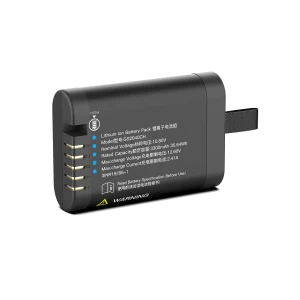
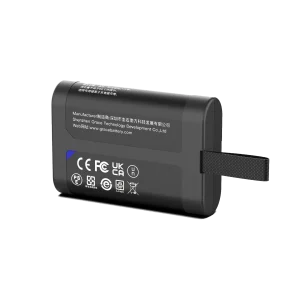
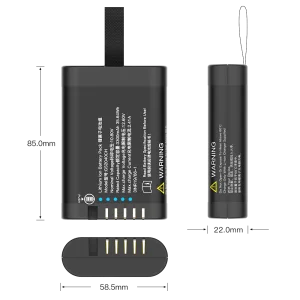
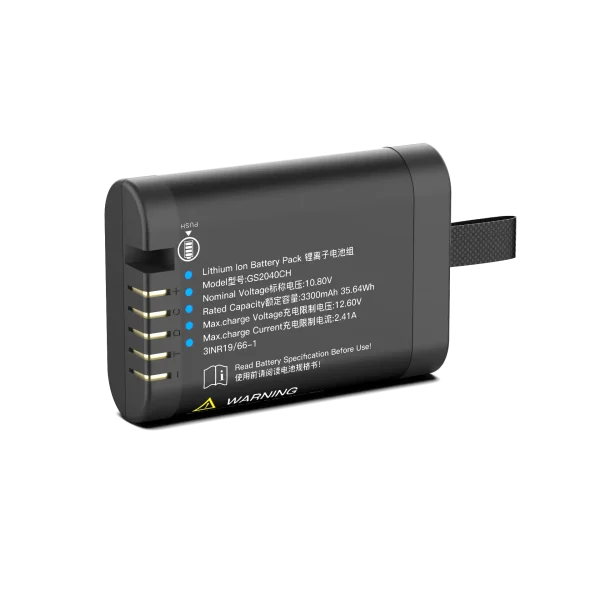
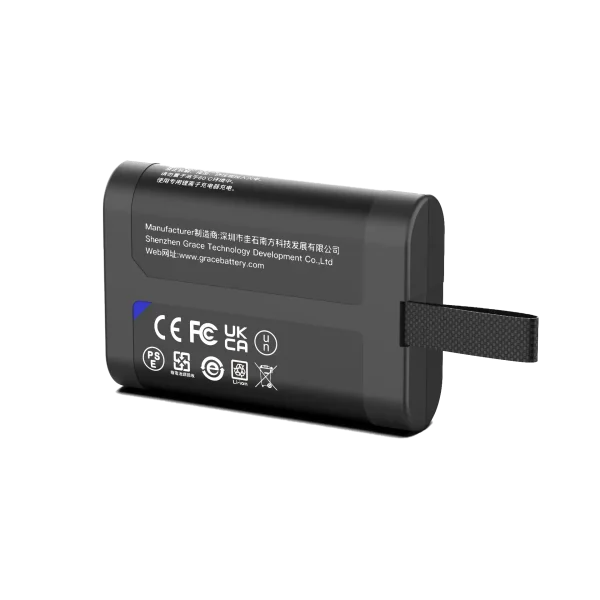
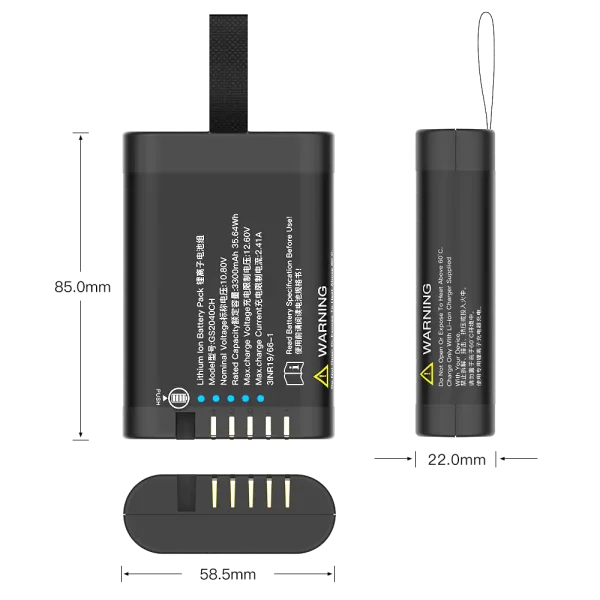
GS2040CH
10.8V/3450mAh/35.64Wh
About the Author
Author is a Senior R&D Engineer at TEFOO, leading custom lithium battery development programs for medical device manufacturers. The author’s work spans cell selection, battery management system design, certification testing, and manufacturing transfer, with a focus on the documentation and risk evidence that medical products demand.
References
- IEC 60601-1:2020, Medical electrical equipment — Part 1: General requirements for basic safety and essential performance, Edition 3.2. International Electrotechnical Commission (IEC). https://webstore.iec.ch/preview/info_iec60601-1%7Bed3.2%7Den.pdf
- IEC 60601-1-2:2014+AMD1:2020 CSV, Medical electrical equipment — Part 1-2: Collateral Standard: Electromagnetic disturbances — Requirements and tests, Edition 4.1. IEC. https://webstore.iec.ch/en/publication/67554
- IEC 62133-2:2017, Secondary cells and batteries containing alkaline or other non-acid electrolytes — Safety requirements for portable sealed secondary lithium cells, and for batteries made from them, for use in portable applications — Part 2: Lithium systems. IEC. https://webstore.iec.ch/en/publication/32662
- ISO 13485:2016, Medical devices — Quality management systems — Requirements for regulatory purposes. International Organization for Standardization (ISO). https://www.iso.org/standard/59752.html
- ISO 14971:2019, Medical devices — Application of risk management to medical devices. ISO. https://www.iso.org/standard/72704.html
- UN Manual of Tests and Criteria, Subsection 38.3 (UN 38.3) — lithium battery transport safety tests. United Nations Economic Commission for Europe (UNECE). https://tc.canada.ca/en/dangerous-goods/publications/lithium-battery-transport-research/research-summary-evaluation-analysis-substandard-lithium-ion-batteries-383-testing
- 49 CFR § 173.185, Lithium cells and batteries — U.S. Department of Transportation Hazardous Materials Regulations. Electronic Code of Federal Regulations (eCFR). https://www.ecfr.gov/current/title-49/subtitle-B/chapter-I/subchapter-C/part-173/subpart-E/section-173.185
- UL 2054, Standard for Household and Commercial Batteries, Edition 3. UL Standards & Engagement. https://shopulstandards.com/ProductDetail.aspx?productId=UL2054
- Directive 2011/65/EU (RoHS) — on the restriction of the use of certain hazardous substances in electrical and electronic equipment (recast). EUR-Lex. https://eur-lex.europa.eu/legal-content/EN/TXT/PDF/?uri=CELEX:02011L0065-20160715
- Recognized Consensus Standards: Medical Devices — recognition record of IEC 62133-2:2017. U.S. Food and Drug Administration (FDA). https://www.accessdata.fda.gov/SCRIPTs/cdrh/cfdocs/cfstandards/detail.cfm?standard__identification_no=46161
- Core medical standard gets overhauled — IEC 60601-1 Edition 4 development update. IEC. https://www.iec.ch/blog/core-medical-standard-gets-overhauled